Tanzania Peaberry Coffee: Flavor, Origins, and Why It Stands Out
Tanzania Peaberry coffee is the kind of cup that wakes up your palate before it wakes up your brain. If you like coffees with snap, sparkle, and a clean finish, this Tanzania Peaberry coffee guide is for you.
Peaberry lots from Tanzania often come from high elevations and careful sorting, so they tend to roast evenly and taste focused. When a roaster nails it, you get sweetness that feels polished, plus acidity that stays bright instead of sour.
I also like how Tanzania coffee beans can feel both familiar and surprising, especially if you usually drink Kenya or Ethiopia. The best peaberry coffee Tanzania produces has a direct, juicy personality, and it does not hide behind heavy roast flavors.
It is also a coffee that rewards attention, because small brew tweaks show up quickly in the cup. That makes it fun if you like dialing in, but it is still approachable if you keep the basics steady.
When Tanzania Peaberry is on, it tastes like a clean piece of fruit rather than fruit candy. The sweetness feels natural, and the finish stays neat instead of turning smoky or ashy.
What is a peaberry and why does it taste different
A peaberry is a coffee cherry that grows a single rounded seed instead of the usual two flat-sided seeds. That happens in a small percentage of cherries, and farmers or mills separate them during sorting.
What Would You Like to Learn Next?
Choose an option below:
Most coffee cherries develop two seeds that press against each other, which is why standard beans have a flat face. A peaberry does not have that pressure, so it ends up smaller, rounder, and often a bit denser.
Because the bean is rounder and denser, it often roasts more evenly than a mixed lot of flat beans. Even roasting matters, since uneven development can turn bright coffees sharp or grassy.
Roasters also like that a peaberry lot tends to move through the drum in a more uniform way. When the beans share similar size and shape, heat transfer is easier to predict and easier to repeat.
People sometimes claim peaberries are automatically better, and that is not always true. What I notice more is consistency, since a well-sorted peaberry lot gives the roaster fewer odd shapes to manage.
Quality still starts on the farm, because a peaberry from under-ripe picking or poor drying will taste flat no matter how cute the bean looks. The peaberry label is a clue about sorting, not a guarantee of flavor.
In the cup, peaberry lots often feel a touch more concentrated, with a slightly tighter sweetness and clearer high notes. When you drink Tanzania Peaberry next to a standard AA lot, the peaberry can taste cleaner and more pointed.
That “pointed” feeling can show up as a brighter pop at the front of the sip and a more defined finish. It is not necessarily more intense overall, but it often feels more organized and less smeared.
Peaberries can also be a little less forgiving if you roast too dark, because the smaller bean can tip into roasty flavors quickly. If you want the fruit to stay present, medium and medium-light profiles usually make more sense.
On the brewing side, the difference is subtle, but it can show up as clarity when you hit the right extraction. If you overextract, that same clarity can turn into a dry, tea-like bite that feels too strict.
Tanzania’s coffee growing regions: Kilimanjaro, Arusha, and Mbeya
Tanzania grows arabica in several highland areas, and each one nudges flavor in a different direction. If you are shopping with a Tanzania Peaberry coffee guide in mind, region is one of the first clues to the cup.
Elevation is a big part of the story, because cooler temperatures slow cherry maturation and build density. Dense beans tend to take heat well in the roaster and hold onto acidity in a way that tastes crisp rather than thin.
Kilimanjaro coffee often comes from the slopes around Mount Kilimanjaro and Mount Meru, where elevation and cooler nights keep acidity crisp. Many lots from this area show citrus, black tea, and a tidy sweetness that works well for filter brewing.
In Kilimanjaro coffees, I often notice a structured kind of brightness that feels like citrus peel instead of lemonade. When the roast is clean, the cup can taste almost sparkling, with a finish that reminds me of tea tannin in a good way.
Farming in this region is frequently smallholder-based, with cherries delivered to local collection points or cooperative mills. That can create variation from lot to lot, so the best bags usually name a specific cooperative or washing station.
Arusha and nearby districts can produce coffees with a slightly softer acidity and more stone-fruit sweetness, depending on the specific altitude and processing. I have had Arusha peaberries that leaned toward apricot and honey, which can be a nice change from sharper profiles.
Arusha coffees can feel a little more “golden” in character, with sweetness that shows up earlier in the sip. That makes them great for people who want brightness but do not want the cup to feel edgy.
Some Arusha lots also carry a gentle spice note, like clove or soft cinnamon, especially as the cup cools. That kind of complexity is easy to miss if you drink it too hot, so it is worth letting it sit for a few minutes.
Mbeya, in the southwest, often brings deeper sweetness and a rounder body, especially when producers use careful fermentation and drying. When a Mbeya peaberry is well roasted, it can taste like berry jam with a cocoa edge, which is hard to forget.
Mbeya can also show a slightly heavier mouthfeel that makes it satisfying as a daily coffee. If you like your cup to feel a bit more substantial without losing fruit, this region is a smart place to start.
Weather patterns and infrastructure matter here, because drying conditions can swing depending on the season. The best Mbeya coffees usually come from producers who are patient with drying and strict about turning and coverage.
Across all regions, the specific variety and the way the lot is separated can change the outcome as much as the map does. Two “Kilimanjaro peaberries” can taste totally different if one is cleanly washed and the other is rushed through drying.
If you can find bags that list altitude ranges, that detail often correlates with a brighter and more transparent cup. It is not a magic number, but it helps you guess whether the coffee will lean citrusy or more cocoa-sweet.
Flavor profile: bright acidity, berry notes, and wine-like finish
The classic Tanzania coffee flavor profile in peaberry form is bright, juicy acidity with berry or citrus on top. I look for cups that feel lively but still sweet, since harsh acidity usually means the roast or the green coffee had issues.
When it is brewed well, the acidity feels like biting into a ripe orange rather than sipping something sour. The sweetness should show up quickly to balance it, even if the coffee still feels energetic.
Berry notes in Tanzania Peaberry often read as red berries rather than the deep blueberry you get in some naturals. I get raspberry, red currant, or grape more often than anything that feels jammy or fermented.
There is also a tea-like dimension that can make the cup feel elegant instead of loud. That black tea note is one reason Tanzania Peaberry works so well as a clean morning brew.
A good Tanzania Peaberry can finish with a wine-like note, closer to red fruit and dry cocoa than boozy funk. That finish is where the coffee earns its reputation, because it lingers without turning bitter.
When people say “wine-like,” I think they often mean a drying sensation paired with fruit, not actual alcohol flavors. The best versions feel like a neat red-fruit aftertaste with a cocoa nib edge.
Body is usually medium, which is enough to feel satisfying without weighing down the fruit. If the body feels watery, it is often an extraction issue, and if it feels heavy and dull, it might be too darkly roasted.
As the cup cools, Tanzania Peaberry can get sweeter and more aromatic, so it is worth tasting it at different temperatures. Some of the nicest notes show up late, when the acidity calms down and the sugar comes forward.
If you taste a papery or woody note, that can point to drying problems or age in the green coffee. If you taste a harsh, smoky bitterness, that is more likely roast-related than origin-related.
I also pay attention to how clean the finish feels, because that is where defects tend to show. A clean Tanzania peaberry should fade gently, not snap into astringency or leave a dusty aftertaste.
| Cup attribute | Common notes in Tanzania Peaberry | What it can indicate |
|---|---|---|
| Acidity | Orange, tangerine, red currant | High elevation and good drying control |
| Sweetness | Brown sugar, honey, caramel | Even roast development and ripe picking |
| Fruit character | Raspberry, blackberry, grape | Clean fermentation and careful sorting |
| Finish | Cocoa, black tea, wine-like dryness | Balanced extraction and solid bean density |
Use tasting notes as a direction, not a promise, because your grinder and water can shift the cup a lot. If the bag says “grape” and you taste “citrus,” you might just be brewing a little too fast.
It also helps to compare Tanzania Peaberry against another washed East African coffee in the same brew method. That side-by-side makes the cocoa-and-tea finish stand out, which is easy to overlook when you drink it alone.
If you are new to bright coffees, Tanzania Peaberry can be a friendly entry point because it usually keeps sweetness in the center. It can be vivid without being aggressive, especially in a balanced roast.
How Tanzania Peaberry compares to Kenya and Ethiopian coffees
If you love Kenya, Tanzania Peaberry can feel like a cousin with slightly less tomato-like intensity and a bit more cocoa in the finish. Kenya often hits with sharper blackcurrant and a punchier structure, while Tanzania tends to feel rounder and easier to drink daily.
Kenya also tends to have a very distinct savory-sweet edge in some lots, which can be thrilling or weird depending on your taste. Tanzania usually stays more straightforward, with fruit that reads as fruit and not as a culinary curveball.
In terms of mouthfeel, Kenya can feel more angular and snappy, while Tanzania often feels smoother in the mid-palate. That difference is subtle, but it matters if you want a coffee that is bright without feeling sharp.
Compared with washed Ethiopian coffees, Tanzania Peaberry usually has less jasmine and fewer high floral notes. It trades perfume for a sturdier sweetness, and I think that makes it more forgiving when you brew it a little too hot or too fine.
Washed Ethiopia can taste like citrus and flowers floating above a light body, which is beautiful when it is done well. Tanzania tends to anchor the cup with tea and cocoa tones, so it feels more grounded.
Natural Ethiopian coffees can go heavy on blueberry and fermenty fruit, and that style is not what most Tanzania peaberries aim for. Tanzania can still show berry, but it usually stays clean, with a clearer line between fruit, sugar, and finish.
If you do find a natural Tanzania, it can be fun, but it is often a different experience than the classic washed peaberry profile. I treat those as their own category and judge them by cleanliness and sweetness rather than by “typical” expectations.
For espresso, Tanzania Peaberry often lands between the two, with enough acidity to stay interesting but enough body to hold milk. If you want a bright shot without the sharp edges that some Kenya lots bring, Tanzania is a smart pick.
In milk, Tanzania’s cocoa-and-tea finish can read like chocolate and caramel, while the fruit becomes more like a gentle jam note. That balance can make cappuccinos taste lively without turning sour.
As a straight shot, Tanzania can be very sensitive to underextraction, because the acidity shows up first. If you push extraction a bit, the sweetness comes through and the shot tastes more complete.
Price-wise, Tanzania peaberry sometimes sits in a sweet spot where you get East African character without the highest premiums. That is not always true, but it is common enough that it is worth checking when you want value.
If you like to build a rotation, Tanzania Peaberry pairs well with a chocolatey Central American coffee and a floral Ethiopian. It gives you a bright option that is still structured, so your palate does not get tired.
Processing methods and how they shape the cup
Most Tanzania coffee beans you see labeled peaberry are washed, and that is where the clean berry and tea notes come from. Washed processing strips fruit quickly and leans into clarity, so defects show fast if the mill gets sloppy.
In a classic washed process, the fruit is removed, the coffee is fermented to break down mucilage, and then it is washed clean before drying. That sequence tends to highlight acidity and make the cup taste more transparent.
You will also find honey and natural processed Tanzania lots, though they are less common and more variable. When they are done well, they add heavier sweetness and more ripe fruit, but they can also pick up muddiness if drying runs too slow.
Honey processing keeps some mucilage on the bean during drying, which can add a syrupy sweetness without going full natural. It can be a nice middle ground if you want more body but still want a clean finish.
Natural processing dries the whole cherry, and that can amplify fruit character dramatically. The risk is that inconsistent drying or over-fermentation can create flavors that taste like vinegar, alcohol, or generic “funk.”
Fermentation time and water quality matter a lot in washed coffees, and Tanzania mills vary in how tight their control is. If a washed Tanzania peaberry tastes overly sour or salty, I usually suspect fermentation problems or poor drying rather than the variety itself.
Clean water and clean equipment are underrated, because contamination can show up as off flavors that no roast can fix. A coffee can still look great on paper and taste dull if the wet mill is not careful.
Drying is the quiet factor that decides whether the cup tastes crisp or dusty. Slow, even drying on raised beds or clean patios tends to preserve sweetness, while rushed drying can flatten the fruit and bring papery flavors.
Moisture stability matters too, because coffee that is dried unevenly can taste both sour and flat at the same time. That is when you get a confusing cup that has brightness but no sweetness to support it.
Sorting after drying is another step that shapes quality, and peaberry lots often get extra attention there. Better sorting usually means fewer quakers and fewer defects that show up as peanutty or cereal-like flavors.
Processing also affects how you should roast, because washed coffees usually like a profile that builds sweetness without muting acidity. Naturals often need a bit more care to avoid baked flavors, since fruit-heavy coffees can taste dull if development drags.
If you are buying, “washed” is often the safest bet for a classic Tanzania peaberry experience. If you want to explore, honey and natural lots can be great, but I would only buy them from roasters who are transparent about the producer and process.
How to brew Tanzania Peaberry at home
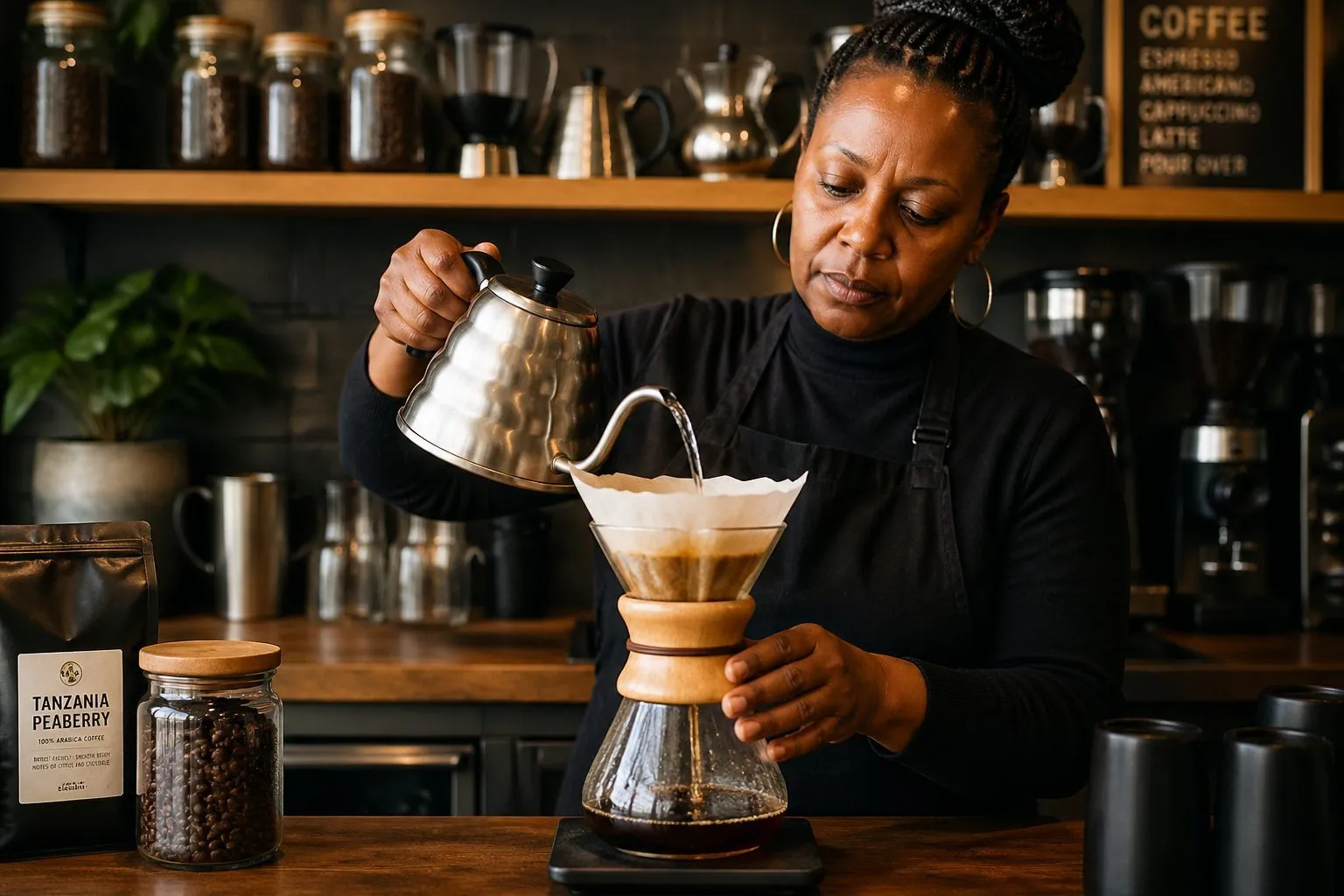
Tanzania Peaberry loves a brew that respects its acidity, so I avoid ultra-hot water and super fine grinds that push it into sharp territory. I usually start around 200°F with a medium grind for pour over, then adjust by taste.
If your kettle does not show temperature, just let it sit off boil for about 30 to 60 seconds. That small pause can keep the cup bright and sweet instead of aggressively tart.
Water quality matters more than most people think, because bright coffees expose bad water fast. If your coffee tastes dull or chalky, try filtered water before you change your recipe.
For V60 or similar drippers, a 1:16 ratio is a clean baseline, like 20 grams of coffee to 320 grams of water. If the cup tastes thin, tighten to 1:15, and if it tastes too tart, grind a bit coarser before you lower the ratio.
I also like a bloom that is generous enough to fully wet the grounds, because Tanzania peaberry can be dense and hold onto gas. A 30 to 45 second bloom helps the later pours extract more evenly.
Pouring style can change the cup, since aggressive agitation can pull more dryness from the finish. If you want more sweetness, try fewer pours and a gentler swirl instead of stirring hard.
For AeroPress, I like a short steep, since it keeps the berry notes crisp and avoids pulling too much dryness from the finish. Try 15 grams coffee, 240 grams water, two-minute steep, then press gently, and dilute if it feels heavy.
If the AeroPress cup tastes too intense, dilution is not cheating, it is control. A small bypass of 20 to 40 grams of hot water can open up fruit and make the finish cleaner.
For French press, I go slightly coarser than usual and keep the steep around four minutes. Tanzania Peaberry can taste great as immersion, but too fine a grind can make the tea-like finish turn astringent.
Espresso is trickier, because the same bright notes that taste great in filter can turn sour if you underextract. I aim for a slightly longer shot, like 1:2.2 to 1:2.5, and I do not fear a few extra seconds if the flavor starts to sweeten.
If the shot tastes like lemon peel without sugar, grind a touch finer or increase yield, because you are probably not pulling enough sweetness. If it tastes dry and hollow, back off the extraction a bit or lower the temperature.
Rest time after roasting matters for espresso, and Tanzania peaberry often improves after a week or so. If you pull it too fresh, the shot can taste gassy and sharp even if your recipe is solid.
Whatever method you use, write down one change at a time so you do not chase your tail. Tanzania Peaberry responds quickly, so small adjustments can teach you a lot about your grinder and your water.
How to buy Tanzania Peaberry and what to look for
Buying peaberry coffee Tanzania offers is easier when you treat the label like a checklist instead of a trophy. Look for origin details beyond the country name, since “Kilimanjaro coffee” on a bag can mean many different things.
Specificity usually signals care, because a roaster who knows the lot can tell you where it came from and how it was processed. If the bag is vague, you are basically buying a story instead of a coffee.
Fresh roast date matters, but so does the roaster’s intent, since a dark roast can erase the Tanzania coffee flavor profile you are paying for. If the bag only promises “bold” and “smooth,” I assume the roaster is hiding the coffee rather than showing it.
That does not mean Tanzania peaberry cannot handle medium-dark roasting, but it should still taste like fruit and tea, not just roast. If you want the classic profile, look for “light” to “medium” language and bright tasting notes.
Pay attention to processing labels, because washed lots are usually the cleanest and most predictable. If you are buying natural or honey, I would rather buy from a roaster with a track record of clean fruit coffees.
Grade terms can be confusing, since Tanzania uses a mix of screen sizes and traditional labels. “PB” or “Peaberry” tells you shape, while “AA” usually points to larger screen size, and neither guarantees quality on its own.
Harvest and arrival timing can matter too, because older green coffee can lose brightness and sweetness. If the roaster shares harvest year or crop season, that transparency is a good sign.
Price is not a perfect indicator, but extremely cheap peaberry can be a red flag for stale inventory or weak sorting. I would rather buy a smaller bag from a careful roaster than a big bag that tastes generic.
- Roast date within the last 2 to 6 weeks
- Region listed, such as Kilimanjaro, Arusha, or Mbeya
- Processing named, washed, honey, or natural
- Producer, cooperative, or washing station identified
- Screening or grade details, like Peaberry, PB, or AA
- Tasting notes that match, citrus, berry, tea, cocoa
If you buy online, look for roasters who publish more than just tasting notes, like elevation, variety, and import partner. Those details tend to correlate with coffees that are traceable and thoughtfully selected.
When you get the bag home, smell the beans and then taste the coffee with a simple recipe before you start changing everything. That first cup tells you whether the roast is aiming for clarity, sweetness, or a more developed chocolate profile.
Storage matters too, because bright coffees fade faster when they sit open on the counter. Keep the bag sealed, away from heat and light, and try to finish it while the aromatics are still lively.
If you are buying as a gift, Tanzania Peaberry is a safe “interesting” coffee because it is distinctive without being weird. It feels special, but it still tastes like coffee, which is not always true with more experimental lots.
Conclusion
Tanzania Peaberry is a coffee I reach for when I want brightness with control, not chaos. This Tanzania Peaberry coffee guide boils down to one idea, buy a well-processed lot and brew it to keep the sweetness intact.
It is also a reminder that “bright” does not have to mean sour, as long as the coffee is clean and the extraction is balanced. When you hit the sweet spot, the cup tastes juicy, tidy, and confident.
When you find a great bag, you will taste why Tanzania coffee beans keep a loyal following, especially from Kilimanjaro coffee areas and careful Mbeya producers. Peaberry or not, the best cups taste clean, fruity, and finished, and they make you want another sip.
If you are building a home coffee routine, Tanzania Peaberry is a fun coffee to revisit across different brew methods. It can teach you what clarity tastes like, and it can still be comforting when you just want a good cup without drama.
Ecuador Specialty Coffee: The Hidden Origin Worth Trying
» Discover special tips and stories about coffee