Honduras Specialty Coffee: Origins, Flavor, and What to Buy
If you have only tried Honduras coffee in a dark, oily “Central American blend,” you have missed what the country does best. A good Honduras specialty coffee guide starts with one simple point, the best lots are clean, sweet, and quietly complex.
Honduras can taste like caramel and cocoa one day, then like orange, peach, and florals the next, depending on region and processing. That range is why roasters keep coming back for Honduran coffee beans even when other origins get more hype.
I like Honduran coffee when it is roasted with restraint and brewed with care because the sweetness shows up without forcing it. If you want the best Honduran coffee to buy right now, you need to know where it grew, how it was processed, and what those details usually mean in the cup.
Honduras Coffee at a Glance: Production and Global Standing
Honduras is one of the largest coffee producers in Central America, and coffee is a major export for the country. Most farms are smallholder operations, and that structure shapes everything from harvest timing to how lots are separated.
Those small farms are often measured in a few hectares, which means a family might manage coffee alongside corn, beans, or livestock. That mixed reality is part of why quality can vary, because time and labor are always limited during peak harvest.
For years, Honduras was treated as a “bulk” origin, partly because coffee moved through big channels that mixed regions together. Specialty buyers changed that by paying premiums for traceable microlots and by pushing mills to keep lots separate.
What Would You Like to Learn Next?
Choose an option below:
When coffee is blended at the mill, you lose the fingerprints of elevation, variety, and careful picking, and the cup gets flatter. When coffee is kept separate, you can taste the difference between a high ridge lot and a warmer valley lot even if they are only a few miles apart.
Today you see Honduras specialty coffee on cafe menus with farm names, variety details, and processing notes, which was rare a couple decades ago. That shift happened because producers invested in better picking, fermentation control, and drying, then proved the results with cup scores.
Competitions and structured quality programs helped too, because they gave producers a clear target and a way to get noticed. When a farmer can place well and then sell a similar profile the next year, the incentive to keep improving becomes real.
Honduras also built a reputation for value, meaning you can often get a high scoring coffee for less than a similar lot from Panama or Costa Rica. If you are shopping with a budget, that value is one reason a Honduras specialty coffee guide belongs in your bookmarks.
Value does not mean “cheap,” it means the cup quality is strong for the price you pay. For home brewers, that can translate into buying better green or roasted coffee more often, instead of saving the good stuff for weekends.
It also means Honduras is a smart origin for cafes that need consistency, because there are enough producers and enough volume to support repeatable buying. When a roaster can return to the same cooperative or exporter, the profile becomes something you can rely on instead of a one-off surprise.
Key growing regions: Copán, Marcala, Montecillos, and more
Honduras coffee regions matter because elevation, rainfall, and local practice change fast as you cross mountain ranges. When a bag says “Honduras” only, you are giving up information that often predicts cup quality.
Even within one department, farms can sit on different slopes with different sun exposure, which changes ripening and drying conditions. That is why two washed coffees can taste totally different even when both are technically from the same region.
Copán, near the Guatemalan border, often produces coffees with cocoa, brown sugar, and gentle citrus, especially when washed. Many roasters use Copán lots as espresso components because they keep structure without tasting heavy.
Copán coffees also tend to be friendly at a range of roast levels, which is useful if you like medium roasts that still keep sweetness. If you are building a daily driver, Copán is one of the easiest places to start because it rarely tastes thin.
Marcala, in La Paz, is known for sweet, bright coffees and has a protected origin designation tied to regional identity. If you like a tidy cup with apple or orange acidity and a clear finish, Marcala is a safe bet.
Marcala lots often show a tea-like structure that works well in pour over, where clarity is the whole point. When a roaster nails the profile, you get sweetness first and then a crisp fruit note that feels intentional rather than random.
Montecillos, spanning parts of La Paz, Intibucá, and Comayagua, is a high elevation zone that can produce surprisingly floral profiles. Santa Bárbara, El Paraíso, and Ocotepeque also show up often in specialty sourcing, and each can swing from chocolatey to fruit forward based on process.
Montecillos is one of the areas where you see a lot of honey and natural experiments, partly because the climate can support slow drying when handled carefully. When those lots are clean, they can taste like peach rings, cocoa nib, and flowers without turning boozy.
Santa Bárbara has earned a name for higher-end microlots, and it is a region where producer identity often shows up on the bag. If you see a Santa Bárbara natural with detailed drying notes, it is often a sign the roaster is chasing a specific style rather than just buying a label.
El Paraíso can be a fun region to explore if you like brighter profiles, because you sometimes get citrus and tropical hints even in washed lots. Ocotepeque, closer to the western border areas, often leans more classic with chocolate, nuts, and a steady sweetness.
One practical way to use regions is to treat them like a first filter, then let processing and roast level do the fine tuning. If you know you like clean and sweet, you can start with washed Copán or washed Marcala and then branch out from there.
Flavor profile: what Honduran coffee tastes like
The Honduras coffee flavor profile is usually built on sweetness first, with caramel, panela, and milk chocolate showing up a lot. When the coffee is picked ripe and dried well, the sweetness tastes round instead of sticky.
That sweetness is why Honduras works so well as a single origin espresso, because it gives you body without having to roast dark. It is also why Honduran coffees can handle slightly longer ratios in filter without tasting hollow.
Acidity in good Honduran coffee tends to read as citrus, apple, or stone fruit rather than sharp lemon bite. Natural and honey lots can push into strawberry, grape, or tropical notes, but the best ones still keep a clean finish.
In washed coffees, the fruit often feels like a top note rather than the whole song, and that balance is what makes them easy to drink. In honey coffees, you often get a thicker mouthfeel and a jammy sweetness that still stays controlled when the drying is done right.
Body is usually medium, and the best cups feel silky rather than heavy. If a Honduran coffee tastes watery, it is often a sign of low density beans, a tired roast, or a brew that is under-extracting.
Finish is where you can spot quality quickly, because good Honduran coffee ends clean with lingering sweetness. If the aftertaste turns papery, peanutty, or ashy, it is usually not the origin failing, it is the lot selection or the roast.
Another pattern is that Honduran coffees can get more expressive as they cool, especially high elevation washed lots. If you sip slowly, you might go from cocoa to orange to floral hints without changing anything except time.
| Style or cue | Common tasting notes | Best brew match |
|---|---|---|
| Washed, Copán or Ocotepeque | Cocoa, orange, almond | Espresso or moka pot |
| Washed, Marcala | Caramel, red apple, black tea | Pour over |
| Honey, Montecillos | Peach, honey, cocoa nib | AeroPress |
| Natural, Santa Bárbara | Strawberry, grape, dark chocolate | Immersion or iced |
| High elevation washed (1,700m+) | Jasmine, lime, cane sugar | Pour over with soft water |
Use tasting notes as a direction, not a promise, because roast development and water chemistry can change what you perceive. If you want the “apple and tea” thing from Marcala, a too-hot brew or too-fine grind can turn it into generic sharpness.
If you are new to Honduras, start with washed coffees to learn the baseline sweetness and structure. Once you know that baseline, honey and natural lots become easier to judge because you can tell whether the fruit is clean or just loud.
Altitude and microclimate: why Honduran coffee quality has improved
Altitude is a simple predictor of density, and dense beans usually roast more evenly and taste sweeter. Many Honduras coffee regions sit well above 1,300 meters, and some farms push past 1,700 meters where nights cool down fast.
Cool nights slow down cherry maturation, which can help sugars and acids develop with more balance. That is one reason a high grown Honduran coffee can taste bright without tasting thin.
Microclimate matters as much as elevation because shade cover, wind, and rainfall patterns change ripening speed. Slower ripening often means more developed sugars, which is why a high grown lot can taste like caramel instead of plain peanut.
Wind can be a hidden factor, because it affects how quickly cherries and parchment dry after rain. A farm with steady airflow can dry coffee more evenly, while a sheltered farm might need more careful bed management to avoid moldy flavors.
Quality improved because producers started treating fermentation and drying like controlled steps instead of chores to finish quickly. You can taste the difference when a washed coffee has crisp fruit and zero muddy notes.
Fermentation control does not have to mean fancy tanks, because even timing and clean water can change the result. When producers track hours, temperature, and washing steps, they can repeat what works instead of guessing next harvest.
Another reason is better access to training and equipment, including raised beds, moisture meters, and small depulpers that let farmers process their own coffee. When a farm can separate a day’s best picking and dry it slowly, Honduran coffee beans stop tasting generic.
Raised beds are especially important in humid stretches, because airflow under the bed helps prevent the grassy, sour flavors you get from stalled drying. Moisture meters help farmers stop drying at the right point, which protects sweetness and keeps the coffee stable in storage.
Better logistics also helped, because faster transport from farm to mill reduces the chance of overripe cherry sitting too long. When cherry sits in bags for hours in heat, you can get a dull, fermented taste that no roast can fix.
None of this guarantees perfection, but it raises the floor, and that is why Honduras has become more consistent in specialty channels. The ceiling has risen too, because the best producers now have the tools to chase truly high-end profiles.
Processing methods used in Honduras
Washed processing is still the default in Honduras, and it is where many producers built their specialty reputation. A good washed Honduran coffee tastes clean and sweet, with fruit that sits on top of chocolate instead of fighting it.
In practical terms, washed lots are often the easiest way to taste what a region is doing, because the process is less likely to dominate the cup. If you are comparing Copán to Marcala, washed coffees make those differences clearer.
Honey processing is common too, and it can mean anything from a light mucilage coat to a sticky, slow dried lot. When it is done well, honey Honduras specialty coffee brings more body and stone fruit without the fermented edge some naturals can show.
Honey lots are also where you may see more variation between producers, because drying decisions matter so much. A careful honey can taste like peach and toffee, while a rushed one can taste like bruised fruit and grain.
Natural processing has grown a lot in the last decade, especially for microlots aimed at adventurous buyers. The best naturals from Santa Bárbara or Montecillos taste like ripe berries and cocoa, but the weaker ones can go winey and flat.
With naturals, sorting is everything, because underripe or damaged cherry will show up as harshness in the cup. When naturals are done with strict picking and slow drying, they can taste vivid without crossing into funky territory.
Experimental styles like anaerobic fermentation show up more each harvest, usually through progressive producer groups and export partners. I buy these only when a roaster has a track record with clean ferment coffees, because the same method can taste either amazing or messy.
Anaerobic and other controlled ferments can add spice, tropical fruit, or a candy-like aroma, but they can also cover up defects if the coffee is not solid to begin with. If the bag talks more about the tank than the farm and harvest, I take that as a caution sign.
One detail worth watching is drying style, because patio drying versus raised bed drying can shift clarity and sweetness. Many producers use a mix, starting on patios for stability and finishing on beds for control, and that hybrid approach can work really well.
Processing terms can also be used loosely, so it helps to buy from roasters who explain what they mean by “honey” or “anaerobic.” The more specific the description, the more likely the coffee was handled with intention rather than trend chasing.
Production, sustainability, and what “responsible” looks like on the ground
Coffee in Honduras is tied to small farms, family labor, and tight margins, so sustainability has to be practical to last. A producer can care about soil health and still need cash flow after harvest, and both truths show up in how coffee gets sold.
When prices are low, farmers may be forced to sell quickly instead of holding parchment for a better offer, even if that means less profit. When prices are stable and buyers commit early, farmers can invest in better drying, better storage, and better separation of lots.
Shade management is common in many areas, and it can protect soils and slow cherry ripening, but it also reduces yield if done poorly. Water use is another pressure point, since washed processing can burn through water unless a mill recycles and treats it.
Responsible water use often looks boring, like cleaning channels, reusing water where possible, and keeping wastewater out of streams. Those steps do not show up in tasting notes, but they matter for communities living near mills.
Soil health can mean composting coffee pulp, managing erosion on steep slopes, and keeping ground cover during heavy rains. Those practices support long-term productivity, which matters when a farm is the main income for a household.
Certifications can help, but they are not magic, and I do not treat a logo as proof of quality or ethics. I trust traceability more, meaning the roaster can tell you the farm or cooperative, the region, the process, and what premium they paid.
Traceability also makes it easier to reward good work, because you can connect a better cup to a specific producer group. When everything is anonymous, there is no reason for a farmer to take on extra labor for better picking and drying.
If you care about impact, buy Honduran coffee beans from roasters who publish sourcing details and keep buying from the same partners year after year. That repeat purchasing is often what lets a farmer risk a slower dry or a separated microlot that could fail.
Repeat purchasing also creates feedback loops, because roasters can share what worked and what did not in the roast and in the cup. When that feedback is respectful and specific, it becomes a tool producers can use to refine the next harvest.
Another responsible cue is whether a roaster talks about paying for quality, not just paying for a story. If the coffee is traceable, priced fairly, and bought consistently, that is usually more meaningful than a vague claim about being “ethical.”
How to choose and buy quality Honduran coffee
Buying the best Honduran coffee starts with reading the label like you mean it, because vague bags usually mean blended lots. Look for a named region like Marcala or Copán, a farm or cooperative name, and a processing method that matches your taste.
If the bag includes elevation, that is another helpful clue, because higher elevations often correlate with more sweetness and clarity. If the bag includes a lot number or community name, that is usually a sign the coffee was separated with care.
Roast level matters a lot for the Honduras coffee flavor profile, since darker roasts can bury the fruit and turn sweetness into smoke. If you like nuance, pick light to medium roasts and avoid anything described as “French” or “extra dark.”
Rest time matters too, because very fresh coffee can taste sharp or gassy, especially in pour over. For most Honduran coffees, I like them best starting around day 7 after roast and continuing for a couple weeks after that.
Pay attention to how the roaster describes the coffee, because good descriptions usually mention structure, sweetness, and acidity instead of just listing three random fruits. If a roaster says “brown sugar sweetness with orange and cocoa,” that tells you more than “tropical explosion.”
If you can, buy from roasters who rotate Honduras offerings each season rather than keeping one generic “Honduras” year-round. Seasonal rotation is often a sign they are buying fresh crop and selecting lots rather than relying on leftover inventory.
- Region named on the bag (Marcala, Copán, Santa Bárbara)
- Harvest year or recent crop listed
- Processing method stated (washed, honey, natural)
- Roast date within the last 2 to 6 weeks
- Variety listed (Catuai, Bourbon, Pacas, IHCAFE 90, Parainema)
- Importer or producer group named for traceability
If you are buying in a store, check that the bag has a one-way valve and that it is not sitting in direct sunlight. Heat and light can stale coffee faster than most people realize, and Honduras coffees lose their sweetness when they go flat.
If you are buying online, look for a clear roast date policy and reasonable shipping times. A great Honduras microlot is not so great if it arrives three weeks late and tastes like cardboard.
Price can be a clue, but it is not a guarantee, because some roasters price Honduras fairly and some price it like a luxury just because it is a microlot. I would rather buy a well selected washed Marcala at a fair price than an overpriced experimental lot that tastes like fermentation.
Brewing Honduran coffee at home: methods that fit the origin
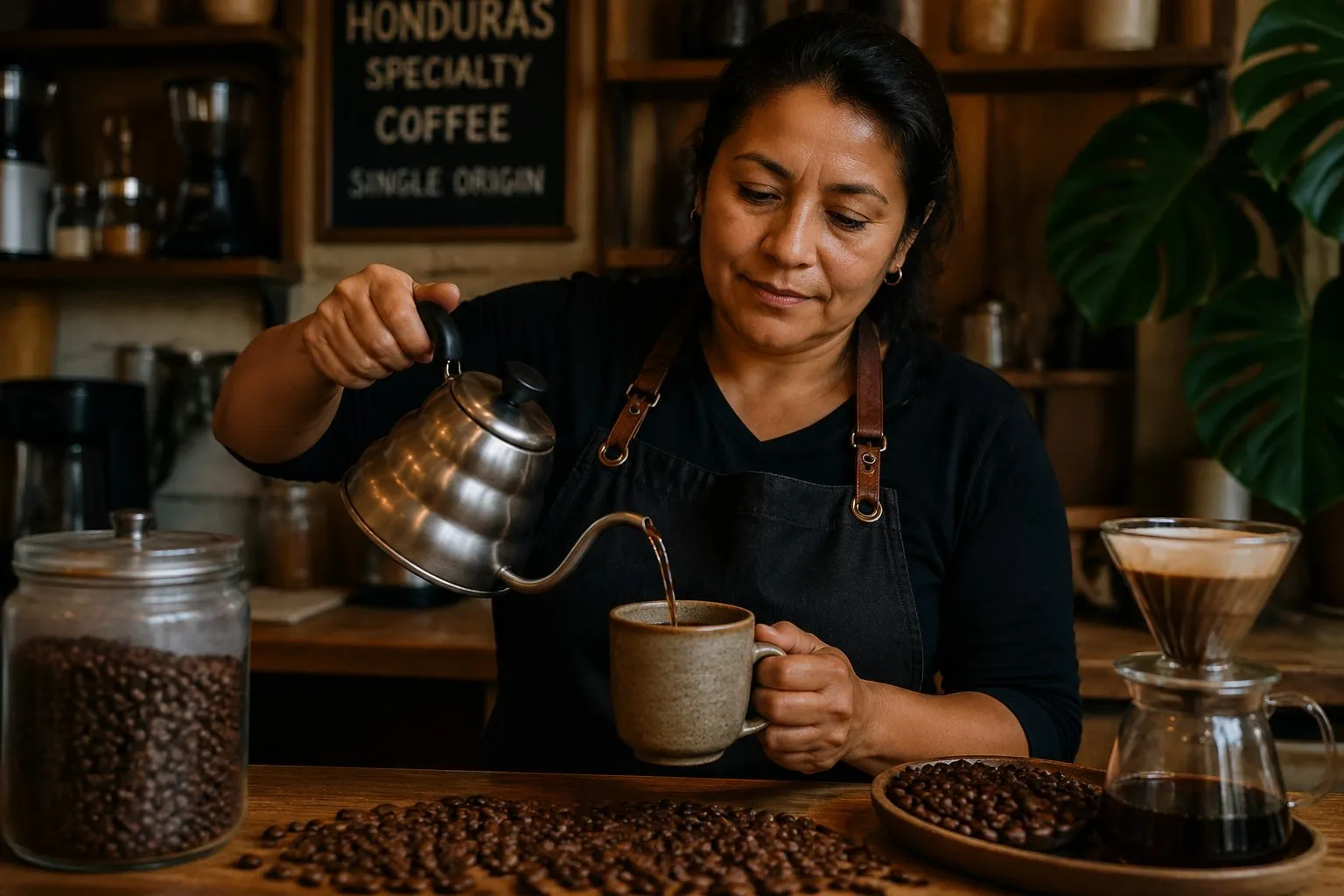
Honduras specialty coffee tends to reward clarity, so pour over is my default when I want to taste the region and process. A V60 or Kalita can pull out apple, cocoa, and brown sugar without turning the cup heavy.
For a starting point, I like a 1:16 to 1:17 ratio and a medium-fine grind, then adjust based on sweetness and finish. If the cup tastes thin, grind a bit finer, and if it tastes dry or bitter, back off and go slightly coarser.
If you drink espresso, washed Copán or Ocotepeque can give you chocolate and orange with a steady crema, especially in medium roasts. Natural lots can taste great as espresso too, but they can also go syrupy and loud if your grinder or dose is off.
For espresso, I like keeping the yield moderate so the chocolate stays present and the fruit does not turn sharp. If you pull very long shots on a bright washed Marcala, you may end up with a tea-like cup that is interesting but not what most people want from espresso.
Immersion methods like French press and AeroPress work well for honey processed coffees because they lean into body and sweetness. I keep water temperature a touch lower for naturals, around 198 to 202°F, to avoid pulling too much funk.
AeroPress is also a good tool for dialing in a new bag, because it is forgiving and fast, and you can taste changes quickly. If a coffee tastes overly intense in AeroPress, it will probably be even more intense as espresso.
Water makes or breaks these coffees, and hard water can mute acidity and turn sweetness chalky. If your tap water tastes like minerals, try filtered water and you may suddenly understand why people chase specific Honduras coffee regions.
If you want a simple upgrade, aim for water that tastes neutral and does not leave heavy scale in a kettle. Soft, clean water tends to make Honduran coffees taste more like fruit and caramel, while very hard water can make them taste like cocoa powder and nothing else.
Grind consistency matters more than people think, because fines can add bitterness that masks sweetness. If your Honduras coffee always tastes harsher than the tasting notes suggest, a better grinder can change the whole experience.
Finally, do not ignore storage, because oxygen and humidity will flatten the cup quickly once the bag is open. Keep the coffee sealed, cool, and dry, and try to finish it while it still tastes sweet and alive.
Common varieties in Honduras and what they mean in the cup
You will see classic varieties like Bourbon, Catuai, Caturra, and Pacas across many farms, and they often deliver chocolate, nuts, and mild fruit. Those varieties can taste “simple” in the best way when the coffee is clean and the roast is careful.
Pacas in particular can show a nice balance of sweetness and gentle acidity, which is why it shows up in a lot of approachable washed lots. Bourbon can be elegant, but it can also be neutral if the farm practices and processing are not dialed in.
Honduras also grows disease resistant varieties like IHCAFE 90 and Lempira, plus newer options like Parainema that can score high when grown at altitude. I have tasted Parainema lots with jasmine and citrus that could fool you into guessing Ethiopia, but only when processing is tight.
These resistant varieties exist for a reason, because leaf rust and other pressures can wipe out a harvest and push families into debt. When producers can grow healthier trees, they can focus on quality work like selective picking instead of just trying to survive the season.
Variety alone does not guarantee quality, and I have had boring Bourbon and great IHCAFE 90 from the same region. Treat variety as a hint, then trust the producer, the process, and the roast date more.
If a roaster lists variety but cannot tell you anything else, that is not very helpful, because the cup is shaped by many steps after the tree. If a roaster lists variety and also tells you the elevation, process, and producer, then variety becomes a useful piece of the puzzle.
If you are buying online, look for roasters who list variety and explain why they bought the lot, because that shows real selection. That level of detail is a good sign that the bag belongs in a Honduras specialty coffee guide rather than a generic origin page.
Over time, you can learn your own preferences, like whether you tend to like Parainema in washed form or prefer it as honey. Keeping quick notes on what you brewed and what you tasted will teach you more than any single label ever will.
Also remember that variety names are sometimes simplified on retail bags, especially when a cooperative blends multiple small lots. If the coffee tastes great and the roaster is transparent about the blend, that can still be a responsible and delicious purchase.
What to buy: picking the best Honduran coffee for your taste
If you want comfort and balance, buy washed Honduran coffee beans from Copán or Ocotepeque and brew them as drip or espresso. Expect cocoa, caramel, and a little orange, with enough structure to handle milk.
This is also the lane for people who like coffee to taste like coffee, not like a fruit bowl. A solid washed lot with a medium roast can be sweet and satisfying without demanding that you recalibrate your palate.
If you want brightness without sourness, look for washed Marcala or high elevation Montecillos lots roasted light to medium. These often taste like apple, cane sugar, and tea, and they stay clean as they cool.
These coffees are great for morning pour overs because they feel crisp and refreshing but still have sweetness underneath. If you like to drink coffee black, this is where Honduras can quietly outperform louder origins.
If you want fruit and a bigger aroma, try a honey or natural lot from Santa Bárbara or Montecillos, but buy from a roaster you trust. The best naturals taste like strawberry and chocolate, while the weaker ones taste boozy in a way that gets old fast.
For these fruit-forward lots, I like buying smaller bags first, because the profile can be intense and not everyone wants it every day. If you love it, then you can go back for a larger bag before the lot sells out.
If you are gifting, pick a washed lot with clear traceability because it tends to please more people than an experimental ferment coffee. A simple, well roasted washed Honduras specialty coffee is often the safest “wow” because it tastes sweet and familiar yet still special.
If you know the person likes adventurous coffee, a clean honey process can be a good middle ground that feels exciting without being polarizing. If you do not know their preferences, stay classic and let the sweetness do the work.
If you are trying to save money without sacrificing quality, look for cooperative lots that still list region, elevation range, and process. A well sorted regional lot can taste excellent and often costs less than a tiny microlot with a fancy story.
If you want to learn fast, buy two Honduras coffees at once that differ by process, like a washed Marcala and a honey Montecillos. Brewing them back to back will teach you what processing changes more clearly than reading tasting notes ever will.
Conclusion
Honduras earns its place in specialty coffee because the best producers manage ripeness, fermentation, and drying with real discipline. When you buy with region and process in mind, the Honduras coffee flavor profile stops being a guess and starts being a choice.
The origin is no longer just a filler in blends, because the best Honduran coffee can be as distinctive as anything on a modern menu. If you pay attention to labels and buy fresh, you will taste how much the country has leveled up.
Use this Honduras specialty coffee guide to shop for traceable lots from Marcala, Copán, Montecillos, and Santa Bárbara, then match the coffee to a brew method that fits your taste. If you chase sweetness and clean fruit instead of roast flavor, you will find plenty of best Honduran coffee options worth repeating.
Ecuador Specialty Coffee: The Hidden Origin Worth Trying
» Discover special tips and stories about coffee