Liberica Coffee: The Rare Bean With a Flavor Like No Other
Liberica coffee is the bean that makes even seasoned coffee people stop mid sip and ask what they are drinking. If you have only bounced between Arabica and Robusta, this Liberica coffee beans guide will feel like meeting a third, stranger cousin in the family.
It is rare, it is polarizing, and it is worth trying at least once when you can get it fresh. The flavor can lean smoky and woody, then swing into floral fruit in a way that does not behave like the coffees most of us grew up with.
I like Liberica most when it is treated seriously, roasted with restraint, and brewed with a little patience. When it is roasted too dark to “smooth it out,” you lose the weird magic that makes Coffea liberica different in the first place.
Think of it less like a replacement for your usual coffee and more like a different category of experience. The goal is not to make it taste like Arabica, but to let it taste like itself.
Some bags will be love at first sip, and some will make you wonder why anyone bothers. That range is part of the story, and it is why buying, brewing, and tasting with a little attention pays off.
What is Liberica? A brief botanical overview
Liberica coffee comes from the species Coffea liberica, which sits outside the usual Arabica and Robusta conversation. It grows as a larger tree with bigger leaves and cherries, and it tends to look a bit wild compared with neat Arabica rows.
What Would You Like to Learn Next?
Choose an option below:
The beans themselves are often larger and more asymmetrical, sometimes with a teardrop look that stands out in a bag. That shape is not a quality marker by itself, but it does hint that your grinder and dose may need small adjustments.
Botanically, Coffea liberica has a reputation for toughness in hot, humid conditions where Arabica struggles. It can tolerate lower elevations and higher temperatures, which matters more every year as farms deal with shifting weather patterns.
People sometimes lump Liberica into “rare coffee” as if rarity is the whole point, but the biology explains the taste too. Different genetics influence aromatics and how the bean develops sugars, so you get a profile that refuses to mimic Arabica.
Liberica is also not one uniform thing, because local varieties and farm selections can behave differently. Two Liberica lots can share that woody backbone and still diverge wildly on fruit, spice, and finish.
The tree itself can grow tall enough that harvesting becomes a real labor issue if it is not managed with pruning. When farms keep the canopy under control, you tend to see more consistent ripeness and better cup clarity.
Those larger cherries can be a blessing and a headache, because they can carry a lot of mucilage and ferment quickly. That is one reason processing choices show up so strongly in the cup compared with many familiar Arabicas.
On the roaster side, that unusual bean shape can create uneven heat transfer if you roast it like a standard batch of Arabica. A thoughtful roast plan is basically part of the species, not an optional upgrade.
If you are used to judging coffee by screen size and uniformity, Liberica will challenge that habit. The cup can be excellent even when the green coffee looks irregular, as long as it is clean and well processed.
Where Liberica grows: the Philippines, Malaysia, and West Africa
If you are asking where Liberica coffee is grown today, start with Southeast Asia and then swing back to its roots in West Africa. You will see it in the Philippines, Malaysia, and parts of Indonesia, plus smaller pockets in countries like Liberia, Cameroon, and Ivory Coast.
In the Philippines, Liberica is often called kapeng barako, and it has a long association with Batangas and Cavite. Some lots are rustic and earthy, while better managed farms can produce cups that smell like jackfruit, flowers, and cedar.
Malaysia has its own Liberica identity, especially in Johor where local coffee culture grew around it. Traditional kopitiam style roasting can push it dark, but modern roasters there are proving it can handle lighter profiles too.
West Africa is where Coffea liberica originates, but you do not see it widely marketed as specialty coffee from that region. Part of the reason is infrastructure and demand, and part of it is that many farms shifted to other crops or other coffee species over time.
Indonesia sometimes gets mentioned in Liberica conversations because you will find it planted in certain areas alongside other species. When it is grown and processed carefully, it can carry a similar incense-like aroma with a more herbal edge.
In many of these places, Liberica is not grown for export first, but for local drinking traditions. That local demand can keep trees in the ground even when global buyers are not paying attention.
Elevation is part of the story, because Liberica can perform at lower altitudes where Arabica quality can drop off. That does not mean it is a low-quality coffee by default, but it does mean the flavor structure starts from a different baseline.
Climate matters too, because high humidity can make drying coffee a real challenge without proper patios, raised beds, or mechanical help. When drying is rushed, Liberica’s bold aromatics can turn from interesting to harsh.
If you see a bag that names a specific province, municipality, or cooperative, that is usually a good sign. The more specific the sourcing, the more likely someone cared enough to separate and present it intentionally.
Liberica also tends to show up in blends locally, which can hide its identity in export channels. When you find a true single-species offering, it is often because a producer or roaster deliberately wanted you to taste the difference.
Flavor profile: smoky, floral, and boldly different
The Liberica coffee taste profile can shock you if you expect chocolate and caramel comfort notes. I often get smoky wood, dried fruit, and a perfume like wildflowers, with a funky edge that can read as tropical fruit or fermented sweetness.
That funk is the dividing line, because some people hear “fruit and flowers” and others hear “barnyard and cedar closet.” Freshness and roast style decide which side wins, so buying from a roaster who treats Liberica as a feature matters a lot.
When Liberica is roasted too dark, the smoke becomes the whole story and the cup loses dimension. When it is roasted with restraint, the smoke becomes a background note that makes the florals feel even louder.
Body can range from tea-like to syrupy depending on processing and brew method. A clean washed Liberica can feel surprisingly light, while a natural can bring a heavier mouthfeel and a sweeter, riper aroma.
The finish is where I notice Liberica most, because it tends to linger with wood, resin, and spice. That long aftertaste can be pleasant and incense-like, or it can feel drying if extraction runs too high.
Acidity is often lower than what people expect from modern light-roast Arabica, but it is not always flat. Instead of citrus snap, you might get something like dried stone fruit or the tang of pineapple rind.
If you like coffees that smell like flowers, Liberica can be a fun surprise because the aroma can be intense even when the cup is not sharply acidic. It can feel like drinking a coffee while smelling a bouquet at the same time.
If you hate anything that reads as fermented or funky, you will want to choose washed lots and avoid ultra-dark roasts. Even then, you should expect some wildness, because that is part of the species’ personality.
| Common note | How it shows up in the cup | What affects it most |
|---|---|---|
| Smoky wood | Cedar, campfire, pipe tobacco | Roast level and brew temperature |
| Floral perfume | Jasmine, dried flowers, potpourri | Freshness and lighter roasts |
| Tropical fruit | Jackfruit, pineapple rind, ripe banana | Processing method and ripeness |
| Spice and resin | Clove, eucalyptus, sap like sweetness | Origin and roast development time |
One helpful way to taste Liberica is to focus on aroma first, then sweetness, then the woody finish. If you chase acidity like you would with a Kenyan or Ethiopian, you can miss what it is actually offering.
Milk changes Liberica in a dramatic way, because the wood and smoke can turn into something like toasted spice. In small amounts, milk can make it dessert-like, but too much can flatten the florals into a generic roast taste.
Sweeteners can also shift the experience, because sugar can amplify the tropical fruit impression and make the cup feel rounder. If you are unsure about the funk, trying it with a small amount of sugar is a fair experiment.
Temperature in the cup matters, because Liberica often opens up as it cools. What tastes like smoke at first can become cedar and dried fruit ten minutes later.
Liberica vs. Arabica vs. Robusta: key differences
Liberica vs Arabica is not a simple “one is better” argument, because they aim at different pleasures. Arabica often leans sweet and structured, while Liberica can be loud and aromatic, sometimes with a savory twist that surprises people.
Robusta enters the chat with higher caffeine and a heavier, grittier intensity, which is why it shows up in espresso blends and instant coffee. Liberica can feel bold like Robusta, but the aroma tends to be more perfumed and the finish more woody than rubbery.
Bean density and shape can change how you roast and grind, and Liberica often behaves differently than Arabica in both steps. If you roast it like a generic dark “strong coffee,” you flatten the unique aromatics and end up with smoke without charm.
Price and availability also separate them in a practical way, because Arabica dominates specialty shelves and Robusta dominates commodity volume. Liberica sits in a narrow lane, so you may pay more per pound and still have fewer choices for origin and processing.
In terms of flavor expectations, Arabica is usually described with familiar sweetness and fruit, while Robusta is often described with intensity and bitterness. Liberica can contain elements of both, but it tends to express them through aroma rather than pure strength.
Caffeine content is not the main reason to buy Liberica, because the draw is character, not stimulation. If you want a caffeine hammer, Robusta is the more predictable tool.
In espresso blends, Arabica brings sweetness and acidity, and Robusta brings crema and punch. Liberica can bring a unique aromatic top note, but it can also dominate a blend if the percentage is too high.
For filter brewing, Arabica is usually forgiving across grinders and kettles, while Liberica can be sensitive to small changes in extraction. That sensitivity is not a flaw, but it does mean you may need a couple of brews to dial it in.
If you are buying for guests, Arabica is the safe choice and Liberica is the conversation choice. Robusta is the practical choice when you want strong coffee flavor to cut through milk and sugar.
It also helps to remember that quality exists across all three species, even if the market does not treat them equally. A careful Liberica can be more interesting than a mediocre Arabica, and a good Robusta can be cleaner than people expect.
Why Liberica is so rare: history and near-extinction
Liberica became famous in the late 1800s for a simple reason, farmers needed something that could survive coffee leaf rust. When rust hammered Arabica plantings in places like Sri Lanka and parts of Southeast Asia, Coffea liberica looked like a practical lifeboat.
Then the market moved on, because taste preferences and trade systems favored Arabica again, and later Robusta filled the need for hardy, high yield coffee. Liberica hung on in local traditions, but global buyers rarely asked for it, so farmers had little incentive to expand it.
Near-extinction is not a dramatic metaphor here, because many Liberica plantings were replaced or neglected over generations. Once trees age out and no one replants, you lose local genetics and the knowledge of how to process and roast the coffee well.
Rarity also comes from logistics, since small volumes are hard to mill, sort, ship, and market with consistent quality. If a roaster can buy ten containers of Arabica with predictable specs, it is easy to see why a few bags of Liberica get ignored.
There is also a branding problem, because Liberica has often been sold as “strong” rather than “distinct.” When the story is only strength, the coffee gets pushed into dark roasts, and dark roasts make everything taste similar.
Once a coffee is typecast, it is hard to get buyers to pay for careful harvesting and processing. Farmers respond to what the market rewards, and the market has not consistently rewarded Liberica nuance.
Another quiet factor is that specialty infrastructure, like lots separated by day and variety, is built around Arabica in many exporting countries. If a mill does not have a clean workflow for Liberica, it becomes easier to treat it as an afterthought.
In some places, Liberica trees are literally backyard trees rather than a managed farm block. That can be charming, but it also makes consistent picking and processing harder to scale.
Even when the trees exist, the knowledge gap can be real, because roasting and brewing advice is usually written for Arabica. A coffee that needs its own playbook will struggle until enough people bother to write one.
The upside is that rarity can create a feedback loop in the other direction when roasters and drinkers get curious. Once a few good lots circulate, more producers have a reason to separate, improve, and replant.
Production realities and sustainability for Coffea liberica
Liberica can play a real role in sustainability because it tolerates heat and humidity, and that matters as many Arabica regions warm up. Still, hardiness does not automatically mean “easy,” because farms have to manage pruning, harvesting, and processing with care.
Quality Liberica needs selective picking, because uneven ripeness can turn that tropical fruit character into harsh, medicinal notes. If farms pay pickers by volume and rush the harvest, the cup shows it fast.
Yield and tree management are practical realities, because a tall tree is not automatically a productive tree. Pruning for accessibility can improve picking accuracy and reduce the temptation to strip-pick.
Processing is where sustainability and quality meet, because fermentation and drying require water, space, and time. A producer who can dry slowly and evenly is more likely to deliver the clean, aromatic side of Liberica.
Liberica can also fit into diversified farms where coffee is not the only crop. Shade trees, fruit trees, and mixed plantings can support soil health while giving farmers more than one income stream.
There is a climate-resilience argument for keeping more species in the coffee ecosystem. Betting everything on Arabica is risky, and Liberica is one of the few established alternatives with a long history of cultivation.
That said, sustainability also depends on whether people will actually pay for it. If Liberica is only bought when it is cheap, farms will not invest in the slow, careful work that makes it taste good.
Traceability helps here, because it makes it easier to reward producers who are doing the hard parts well. A bag that names a farm, a community, or a specific region is usually a better sustainability signal than a generic label.
- Ask for harvest date and roast date before buying
- Look for selective hand picking notes from the producer
- Prefer lots with clear processing details, washed or natural
- Choose roasters who publish brew recipes and extraction targets
- Support farms replanting older Liberica trees with new seedlings
- Buy smaller bags more often to keep it fresh
Replanting matters because old trees can produce less and become harder to manage. New seedlings also give producers a chance to select for cup quality rather than just survival.
Post-harvest training matters too, because a lot of Liberica quality problems are not farm problems but processing problems. When producers have access to better drying beds, moisture meters, and storage, the coffee gets cleaner fast.
From a buyer perspective, sustainability is also about consistency, because inconsistent quality kills demand. If roasters can count on clean lots, they can keep Liberica on the menu longer than a one-off curiosity.
Even small actions like better storage at origin can preserve the florals that make Liberica special. Once those aromatics fade, the coffee becomes just another dark, woody cup and the whole value proposition collapses.
How to buy Liberica without getting a stale, smoky bag
Liberica has a bad reputation in some circles because many people first meet it as an old, dark roast sitting too long on a shelf. If you want this Liberica coffee beans guide to pay off, start by treating freshness as non negotiable.
Look for roasters who name the species as Coffea liberica and give origin detail beyond a country label. If the bag only says “barako” or “strong coffee” with no roast date, you are gambling on a profile that will probably taste like smoke and nothing else.
Whole bean beats preground even more here, because Liberica aromatics fade quickly once exposed to air. I also prefer bags in the 8 to 12 ounce range, since you can finish them while the florals are still alive.
If you can, buy from a roaster who has brewed it and can tell you what they taste in it. A good seller will warn you if the lot runs funky, woody, or fruit heavy, because those are not flaws for everyone but they are not for everyone either.
Pay attention to roast level language, because some roasters will call everything “medium” even when it is basically dark. If you want to taste the floral and fruit side, look for a roast that is described as light to medium, not “extra bold.”
Processing information is a big clue, because it tells you what kind of weirdness to expect. Washed Liberica tends to be cleaner and more woody-floral, while natural Liberica can lean into ripe fruit and funk.
Ask how the roaster recommends brewing it, because a thoughtful roaster will have a recipe ready. If they shrug and say “just brew it strong,” that is usually a sign they are not treating it as a specialty product.
Check the packaging too, because a proper one-way valve bag and decent seal help preserve aroma. Liberica loses its edge quickly when it is stored in thin bags or jars that are opened constantly.
If you are ordering online, do not be afraid to email and ask when it will ship relative to roast day. A roaster who cares about Liberica will usually be happy to talk about it, because they know it needs context.
When you get the bag, smell it before you brew anything and trust your nose. If it smells like flat charcoal and nothing else, you can still brew it, but you should not judge Liberica as a species based on that cup.
How to brew and enjoy Liberica coffee
Brewing Liberica well starts with accepting that you may need a different recipe than your daily Arabica. The beans can extract in a way that makes bitterness show up early, so a slightly coarser grind and careful temperature control often help.
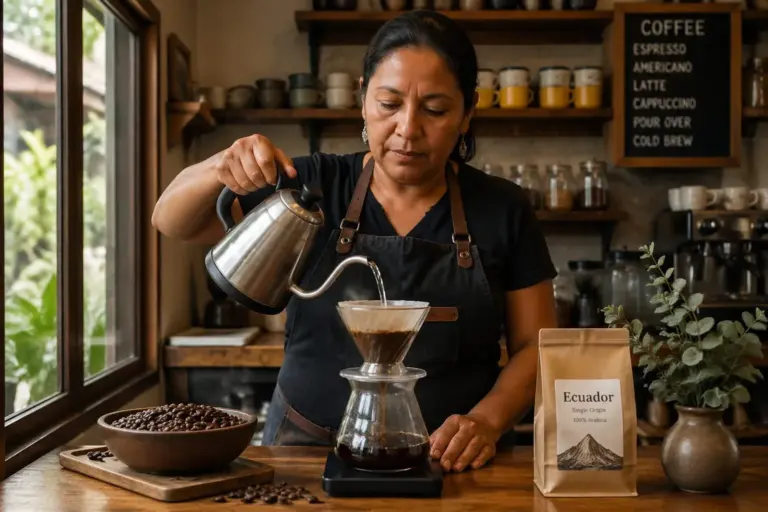
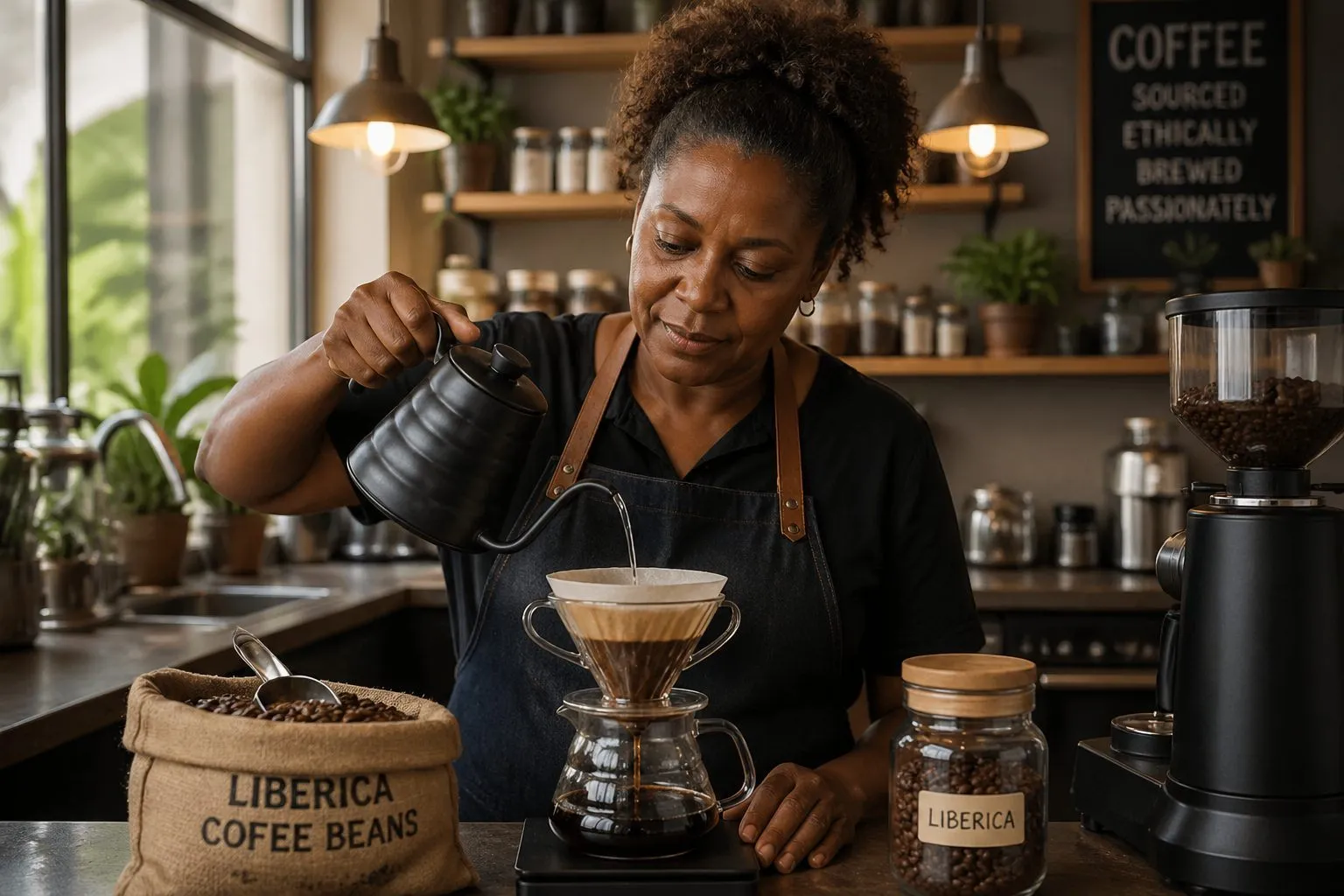
For pour over, I like a medium coarse grind, a 1:16 ratio, and water around 200°F, then I adjust by taste. If the cup tastes like dry wood, I lower temperature a couple degrees and shorten the brew by tightening the pour schedule.
French press can work if you keep the steep time reasonable and pour right after pressing, because long contact time can turn smoke into ash. A metal filter also lets more oils through, which can make the floral notes feel perfumey in a good way.
Espresso is tricky but fun, and I treat it like a new coffee rather than forcing a standard 1:2 shot. Try a slightly longer ratio like 1:2.5 with a modest temperature, then taste for fruit and spice before you chase heavier body.
If you are using a drip machine, aim for a slightly lower dose than you think you need and let aroma do the work. Overdosing can make the cup taste aggressively woody without adding sweetness.
Water quality matters because Liberica’s aromatics can get muted by very hard water. If your coffee always tastes dull at home, filtered water can make a bigger difference than changing grinders.
Bloom time is worth watching on pour over, because some Libericas release gas differently than the Arabicas you are used to. A slightly longer bloom can help even out extraction and calm down harsh edges.
For iced coffee, I like Liberica as a flash brew because the florals can stay vivid when chilled. Cold brew can work too, but it can emphasize wood and mute fruit unless you keep the steep time controlled.
If your first brew tastes like smoke and bitterness, do not assume the coffee is bad right away. Try a coarser grind, a lower temperature, and a slightly shorter brew, then see if the florals show up.
If your brew tastes thin and oddly sour, you may be underextracting or using water that is too cool. A small grind adjustment finer and a slight temperature bump can bring back sweetness and make the funk feel intentional.
Let it cool in the cup and taste it in stages, because Liberica often changes more dramatically than your daily coffee. The best cups tend to go from smoky to floral to fruity as the temperature drops.
Liberica in everyday coffee culture, from kapeng barako to modern cafes
Liberica survives because people built habits around it, especially in the Philippines where kapeng barako became part of home brewing and social life. That matters, because a coffee can be technically interesting and still disappear if nobody drinks it daily.
In some Malaysian kopitiams, Liberica has been roasted with sugar and margarine in the old style, then brewed strong with condensed milk. That approach can taste great in its own lane, even if it hides the delicate floral side that modern roasters chase.
Specialty cafes are starting to feature Liberica as a limited single origin, and the best ones warn customers that it will not taste like a washed Ethiopian. I respect that honesty, because it gives the bean a fair shot instead of forcing it into Arabica expectations.
If you want to understand Liberica vs Arabica in a real way, drink them side by side with the same brew method. The contrast makes the Liberica coffee taste profile clearer, especially the woody finish and the perfume that hangs around after the sip.
There is also a quiet pride in regions where Liberica never fully disappeared. When a coffee becomes part of identity, it gets protected in a way that market logic does not always explain.
At the same time, local traditions can accidentally lock Liberica into one roast style. When everyone expects it dark and strong, it takes a brave roaster to offer it lighter and ask people to taste it differently.
Modern cafes tend to present Liberica like a tasting flight coffee, which can be good for education. The risk is that it becomes a novelty item rather than a coffee people actually buy again.
I have had the best results introducing Liberica to friends by framing it like a new fruit, not like a better version of their usual coffee. If you expect it to behave like Arabica, you will judge it by the wrong rules.
It also helps to serve it with food, because the woody and spicy notes can pair well with breakfast and pastries. A buttery pastry can soften the edges and make the floral aroma pop.
In milk drinks, Liberica can be surprisingly good when the espresso is dialed in with a longer ratio. The cup can taste like toasted spice and dried fruit instead of the usual chocolate-forward latte profile.
As more people ask where Liberica coffee is grown and why it tastes so different, cafes have a reason to keep it in rotation. The more it is brewed well in public, the less it will be defined by stale supermarket experiences.
Common tasting notes, defects, and how to tell the difference
Liberica can taste smoky and woody when it is good, and it can taste smoky and woody when it is stale or poorly roasted, which is the annoying part. You have to separate pleasant cedar and tobacco notes from flat ashtray flavors that come from age or over roasting.
Pay attention to aroma, because good Liberica smells loud even before you sip, like flowers, fruit skin, or sweet resin. If the dry fragrance smells dull and papery, the cup will probably follow.
Processing defects show up as sharp medicinal notes, rubber, or a sour ferment that feels thin instead of fruity. Those flavors are not the same as the intentional funk you might get from a clean natural process lot with ripe fruit character.
If you can, cup it with a simple setup and take notes on sweetness, acidity, and finish. Liberica often has lower perceived acidity than many Arabicas, so sweetness and aroma carry the experience when the coffee is handled well.
Over-roasting is the most common issue I see, because it is an easy way to make a bold coffee taste familiar. The problem is that dark roast can erase the florals and leave you with a one-note smoky cup.
Staling shows up as a hollow center, where the coffee smells okay but tastes thin and flat. With Liberica, the first thing to fade is often the perfume, and what remains can taste like generic roast.
Underdevelopment in roasting can show up as peanut shell, raw wood, or a drying astringency that feels unfinished. That is different from the pleasant cedar note, which should feel sweet and aromatic rather than sharp.
Uneven drying at origin can create a musty or moldy note that sits on top of everything else. If you taste that kind of damp basement character, it is not “Liberica being weird,” it is a quality problem.
When Liberica is clean, the funk feels integrated with sweetness, like ripe fruit and spice. When it is dirty, the funk feels separate and unpleasant, like something you cannot swallow comfortably.
Extraction mistakes can mimic defects, which is why a second brew is worth doing before you judge the bag. Too fine a grind can turn wood into bitterness, and too hot water can turn smoke into ash.
If you want a quick reality check, smell the grounds, then smell the brewed coffee, then smell the empty cup. A good Liberica often leaves a fragrant empty cup, while a stale one leaves almost nothing behind.
Conclusion
Liberica is the coffee I recommend to anyone who says all beans taste the same, because it proves the opposite in one cup. This species, Coffea liberica, brings a perfume, a woody depth, and a weird fruit edge that can feel totally new.
If you remember one thing from this Liberica coffee beans guide, make it this, buy it fresh and brew it with intention. Once you know where Liberica coffee is grown and what the Liberica coffee taste profile can be, you can decide whether it belongs in your regular rotation or stays a once in a while treat.
Liberica will not replace your favorite Arabica, and it does not need to. It earns its place by being unmistakable, even when it is a little challenging.
If your first cup is not a hit, try a different roaster or a different processing style before you write it off. The best Libericas are memorable in a way that makes you think about them later, which is more than most coffees can claim.
Ecuador Specialty Coffee: The Hidden Origin Worth Trying
» Discover special tips and stories about coffee