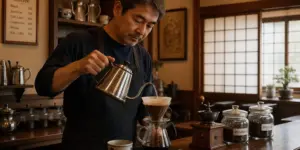
Why Melbourne Became One of the World’s Great Coffee Cities
Melbourne did not become a coffee city by accident, and it definitely did not happen because a few chains decided to expand. It happened because locals got picky early, then stayed that way.
If you want a shorthand for the place, start with the Australian flat white Melbourne coffee culture that turned a simple espresso and milk drink into a daily standard. The city built expectations around texture, temperature, and balance, and it made “good enough” a hard sell.
Walk through the CBD lanes or Brunswick backstreets and you see how deep the habit runs, with tiny bars pulling shots like it is a craft job, because it is. The Melbourne cafe scene rewards people who care, from baristas dialing in grinders to roasters arguing about harvest dates.
Australia did not invent coffee, but Australian coffee culture took European technique and filtered it through a stubborn local palate. That mix, plus immigration and a competitive small business mindset, is why Melbourne ended up on the same list as places with much older cafe histories.
How Melbourne built a coffee culture from scratch
Melbourne’s early coffee scene grew in pockets, not from one dominant brand setting the rules. Small operators could open in a narrow shopfront, buy a decent machine, and win customers by doing the basics better than the place next door.
That small scale mattered because it made experimentation cheap and failure quick, which is how standards rise. When a cafe is owner operated, the person tasting the espresso is often the same person paying for the beans.
What Would You Like to Learn Next?
Choose an option below:
Melbourne also had the right kind of density, with enough people in walking distance to support niche spots. A cafe could survive by being excellent at one thing, like milk drinks, rather than trying to be everything to everyone.
The city’s layout helped, because laneways and arcades make foot traffic slow down and notice smells, menus, and queues. When people line up in public for coffee, it turns into social proof fast, and other cafes respond by raising their game.
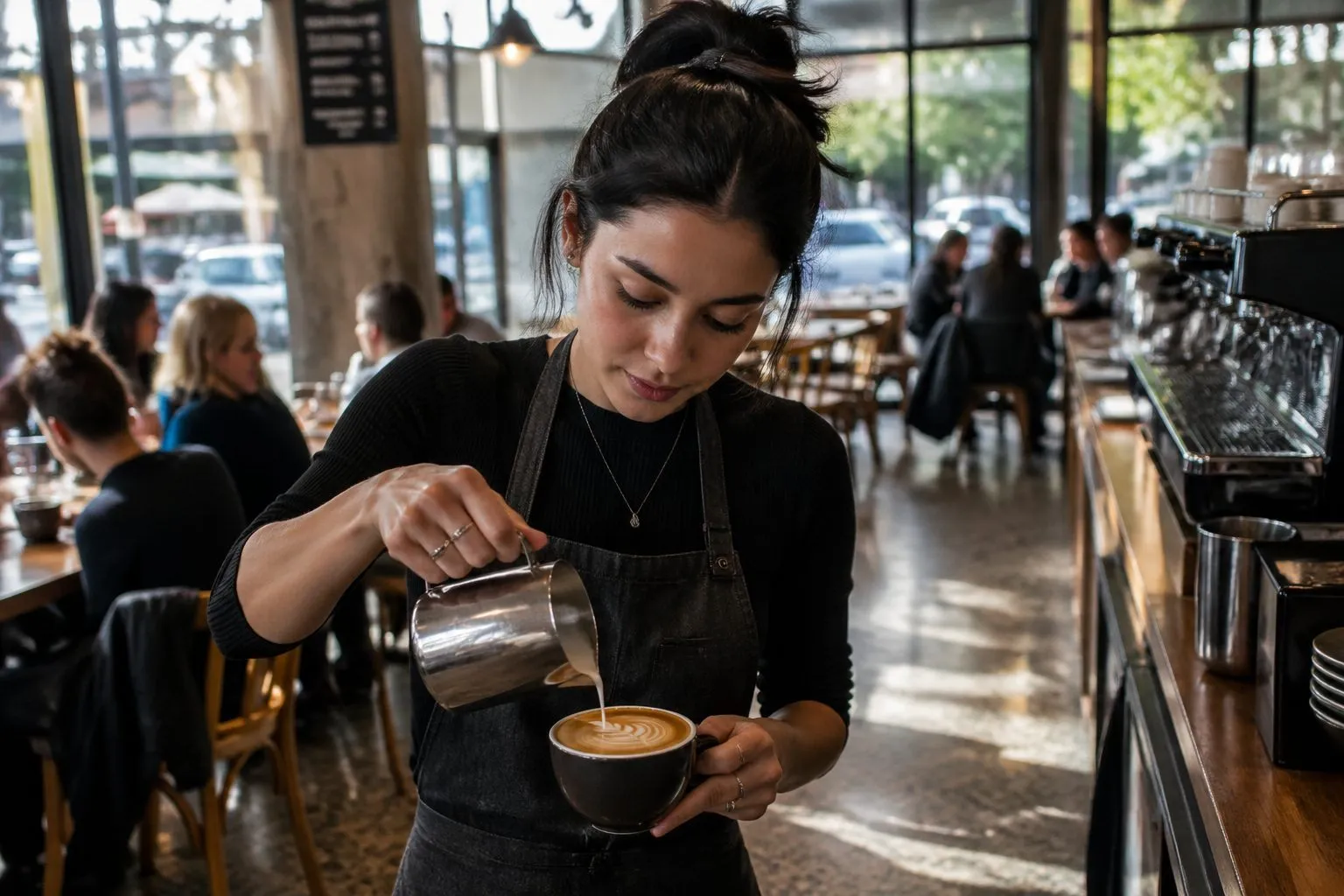
Those lanes are basically a natural marketing system, because you can see the bar, hear the grinder, and watch the workflow. If the place looks calm and the cups look consistent, people assume the coffee will be too.
Melbourne’s weather plays a role as well, because cool mornings and changeable afternoons make hot drinks a reliable habit. A city that drinks coffee in all seasons ends up caring about repeatability, not just novelty.
Local competition pushed specialization, so you got espresso bars that focused on speed and consistency, and others that trained staff like apprentices. That pressure created a customer base that could taste the difference between under extracted sourness and a clean, sweet shot.
Once customers can name what they do not like, cafes have to respond with something more specific than “strong.” The language of coffee got more precise, and so did the recipes behind the counter.
Melbourne also normalized the idea that coffee is a daily ritual worth paying for, but not a luxury item you buy once a week. When a city buys coffee every day, quality problems show up immediately, and bad cafes do not last long.
Daily buying also changes what people expect from staff, because you see the same baristas over and over. Regulars notice if the cup tastes different on Tuesday, and they ask about it without feeling awkward.
That regular rhythm encourages cafes to keep their grinders clean, their water filtered, and their milk rotation tight. Tiny operational details become public, because the customer base is essentially doing ongoing quality control.
Roasters played a big role because they were close to the cafes and could respond quickly to feedback. If a blend tasted flat after a roast change, the cafe owner could call the roaster that afternoon and sort it out before the weekend rush.
Being local also meant roasters could train cafe staff in person, not just send a bag and hope for the best. That relationship made it normal to talk about dose, yield, and water temperature like they were part of the job.
Over time, the city built a kind of informal network where baristas moved between venues and carried habits with them. Good technique spreads fast when the industry is small enough that everyone knows someone at the next place.
Melbourne’s coffee culture also benefited from the fact that cafes became community spaces, not just retail points. When people meet friends over coffee, they care more about the experience, and the cafe has to deliver beyond caffeine.
Even the way people talk about coffee in Melbourne shows how the culture formed, because it is not treated like a secret hobby. You can ask what beans are on and get a real answer, not a vague brand story.
That openness made it easier for customers to learn, and learning makes people more demanding. Once you understand why a shot tastes thin, you stop accepting thin shots as normal.
The flat white: what it is and where it came from
A flat white is espresso topped with steamed milk that has fine microfoam, poured so the drink stays glossy and integrated. It is usually smaller than a latte, and it tastes more like coffee because the milk ratio stays tighter.
That size difference is not just tradition, because it changes how the espresso reads on your palate. When the cup is smaller, the sweetness and bitterness show up faster, so the cafe has to get the shot right.
Most Melbourne cafes treat the flat white as a standard build, not a custom drink that depends on who is on shift. The goal is a consistent mouthfeel and a coffee forward flavor, even when the espresso blend rotates.
The flat white origin argument gets loud because Australia and New Zealand both claim it, and the truth is messy. The name showed up in the region in the 1980s, and it spread because it described a real preference, less froth and more espresso flavor.
What matters more than the passport is that the drink solved a problem people actually had. If you wanted milk with your espresso but did not want a foam cap and a giant cup, the flat white gave you a clear order.
In Melbourne, the flat white became a default order because it fits the local style of espresso, medium body, sweetness, and a clean finish. You can order it in almost any neighborhood and expect a similar balance, even if the beans change.
That consistency is part of why visitors notice the difference, because the drink behaves the same across many venues. You might prefer one cafe over another, but you rarely get a completely different interpretation.
Microfoam is the detail that separates a serious flat white from a warm milk drink with bubbles on top. Baristas stretch the milk only a little, then texture it until it looks like wet paint, because that is what pours well and tastes smooth.
Milk quality matters too, because microfoam is easier with fresh milk and proper handling. When the milk is old or the jug is not cold, the texture gets airy and the drink loses that tight, creamy feel.
Temperature is another quiet rule, because Melbourne customers tend to want coffee that is hot but not scalding. A flat white should be drinkable quickly, not something you have to wait ten minutes to touch.
What people miss is that the flat white is also a workflow choice, because it rewards consistent espresso and decent milk handling. If the cafe runs sloppy shots or scorches milk, the drink has nowhere to hide, and customers notice.
That lack of hiding places is why the flat white became a kind of benchmark order. If a cafe nails it, you can trust the rest of the menu, and if it is off, you probably do not need to keep experimenting.
The drink also fits Melbourne’s habit of drinking coffee alongside food, because it sits comfortably next to a pastry or breakfast without overpowering everything. It is rich enough to feel satisfying, but not so large that it becomes the whole meal.
Even the way people say the order tells you something about the culture, because it is usually quick and unpretentious. A flat white is not a performance, it is just the normal thing people want done well.
Third wave before third wave: why Australia got there early
Specialty coffee Australia did not wait for a global trend label to start caring about origin, roast style, and extraction. Australian cafes treated espresso like food, meaning they talked about ingredients, freshness, and technique in plain language.
That food comparison is important because it makes quality feel normal rather than niche. If you would not accept stale bread, you start to question why you should accept stale beans.
Australian cafes also tended to be independent, which made them more flexible than big systems. They could change a blend, drop a supplier, or retrain staff without waiting for a corporate rollout.
Part of the early shift came from the fact that cafes and roasters were often run by the same people, so feedback loops were short and brutally honest. When customers complained, owners changed the roast, the recipe, or the milk, then watched sales the next day.
That direct feedback created a culture where data and taste both mattered, even if people did not call it that. If the shot time drifted or the grinder clumped, the fix was immediate because money depended on it.
Melbourne also benefited from a barista community that treated skill as something you could practice and improve, not just a casual job. Training sessions, throwdowns, and internal standards made technique visible and competitive.
Roast profiles in Australia often moved toward sweetness earlier because milk drinks were so dominant. If your espresso is going to be paired with milk all day, harsh bitterness becomes a business problem, not just a taste preference.
Water quality and filtration became part of the conversation sooner than in many places, because espresso is sensitive and Melbourne cafes were chasing consistency. Once cafes start controlling water, they can control extraction, and that pushes quality forward fast.
Another factor was that customers learned to trust cafes that rotated coffees, because it signaled freshness rather than instability. A new single origin on batch or a seasonal blend felt like normal maintenance, not a confusing change.
Australia also developed a habit of naming drinks and sizes in a way that kept espresso central, which shaped expectations. When your default drinks are built around espresso, you end up caring about espresso quality even if you never drink it straight.
The industry also had to get good at speed, because busy brunch service is unforgiving. If you cannot pull clean shots quickly, you lose the line, and in Melbourne the line is part of the reputation.
| Early Australian habit | What it looked like in cafes | Why it mattered |
|---|---|---|
| Fresh roasting cycles | Smaller batches, frequent deliveries | More sweetness, less stale bitterness |
| Recipe driven espresso | Set dose, yield, and time targets | Consistency across busy service |
| Milk texture standards | Microfoam for flat whites and lattes | Better mouthfeel and latte art control |
| Direct relationships with importers | Named origins on menus and bags | Customers learned to ask about beans |
The table makes it look tidy, but the real story is that these habits reinforced each other. Fresh coffee makes recipes easier, recipes make training easier, and training makes customers more confident about what they are buying.
Once customers start asking about origins, cafes have an incentive to learn and explain, which pushes the whole market up. That is how you get a city where a casual drinker still knows what “single origin” means.
It also meant that when global specialty coffee language arrived, Australia already had its own working version of it. The labels caught up to the behavior, not the other way around.
That early maturity is why Melbourne cafes can feel confident without being loud about it. They do not need to sell you on the idea of good coffee, because the city already assumes it.
What makes Melbourne cafes different from U.S. coffee shops
In Melbourne, espresso is the center of the menu, and filter coffee is often a side option rather than the whole point. In many U.S. coffee shops, drip and batch brew still anchor the day, with espresso drinks built around that system.
That menu structure changes what cafes optimize for, because Melbourne builds its workflow around the espresso machine. In the U.S., many shops build around batch coffee speed, then treat espresso as a separate station with different priorities.
Milk handling is another sharp difference, because Australian customers expect silky texture and a drinkable temperature. A too hot latte that tastes like cooked milk gets sent back more often in Melbourne than in most American cities.
That expectation forces cafes to train for consistency, because milk texture is not something you can fake with syrup. If the foam is bubbly or the milk is thin, the drink tastes unfinished.
Service style also changes the mood, because Melbourne cafes tend to feel like small restaurants, with table numbers, water on the table, and a short food menu that people take seriously. Many U.S. shops lean toward grab and go, with a longer line and a faster turnover mindset.
When people sit down, they also spend more time with the cup, which makes flaws easier to notice. A drink that is fine for a quick walk becomes less impressive when you are halfway through and the balance is off.
Food culture is tightly linked to coffee in Melbourne, and the kitchen is often part of the cafe identity. That makes coffee feel like part of hospitality rather than a separate product category.
Even the cup sizes tell the story, because the default Australian flat white Melbourne coffee culture favors smaller drinks that keep espresso flavor intact. American sizing often pushes people toward 16 ounce and 20 ounce milk drinks, which can bury a shot that was pulled well.
When the cup gets bigger, cafes often compensate with extra shots, extra syrup, or darker roasts, which shifts the flavor profile. Melbourne tends to keep the drink smaller instead, and that keeps the recipe simpler.
Another difference is how cafes talk about customization, because Melbourne menus often assume a standard build. In the U.S., customization can be the default, which is great for preference but harder for consistency.
Melbourne’s best cafes also treat training like a real investment, because staff turnover hurts consistency and reputation. You see baristas who can explain why a Kenyan tastes like blackcurrant, then pull the shot fast enough to keep a line moving.
That combination of knowledge and speed is the real flex, because it is hard to do under pressure. A cafe can have great beans, but if service falls apart at 9 a.m., customers remember the chaos more than the tasting notes.
There is also a subtle difference in how regulars behave, because Melbourne customers often have a “usual” and expect it to taste the same. In many U.S. cities, people rotate drinks more, which can make consistency less visible.
None of this means one country is doing it right and the other is wrong, because the markets evolved around different habits. It just explains why an American visitor can be surprised when a flat white arrives smaller, hotter in flavor, and smoother in texture than expected.
The role of Italian immigration in Australian coffee history
Italian immigration after World War II changed how Australians ate, drank, and socialized, especially in cities like Melbourne. Espresso bars and milk bars became gathering places, and they introduced equipment and habits that stuck.
Those early espresso bars were not just selling a drink, they were modeling a way of being in public. Sitting at a counter, talking, and returning daily made coffee part of routine rather than an occasional treat.
Melbourne also absorbed the idea that coffee can be a quick stop or a long pause, depending on what you want. That flexibility still shows up in the city, where you can grab a takeaway or settle in with breakfast.
Lygon Street in Carlton gets mentioned for a reason, because it became a public stage for espresso culture. People sat outside, ordered short blacks and cappuccinos, and treated coffee as a reason to hang around instead of a fuel stop.
That visibility mattered because it made espresso culture aspirational but accessible. You did not need to join a club, you just needed to walk down the street and order what everyone else was ordering.
Italian style also brought a respect for machinery, because espresso quality depends on grinders, boilers, and maintenance. That mindset helped Melbourne cafes justify investing in better equipment long before it was normal elsewhere.
It also normalized the idea that a grinder setting is not a set and forget choice. If humidity shifts or the beans age, you adjust, and that daily attention is basically the foundation of good espresso.
Beyond equipment, Italian influence shaped how Australians thought about bitterness and strength. Espresso was intense but not meant to taste burnt, and the best cups had a kind of clean punch rather than harshness.
The influence was not frozen in time, because later generations blended Italian espresso tradition with newer roasting and sourcing ideas. That mix is why Australian coffee culture can feel both classic and picky at the same time.
You can see that blend in the way Melbourne cafes respect milk drinks while also offering single origin espresso. The menu can feel traditional, but the beans and the extraction targets are often modern.
Italian migration also helped create a market for cafes as small businesses that families could run. That family model kept cafes rooted in neighborhoods, which is part of why loyalty and word of mouth became so powerful.
There is also a sustainability angle here, because small neighborhood cafes tend to buy locally roasted coffee and cycle through beans quickly. Short supply chains do not solve every problem in coffee production, but they make freshness easier and waste harder to ignore.
Local roasting also means cafes can choose suppliers based on values as well as flavor, because the roaster is close enough to be accountable. When your supplier is in the same city, it is easier to ask uncomfortable questions about sourcing and pricing.
Melbourne’s coffee identity is not purely Italian, but the Italian foundation gave the city a head start on espresso literacy. Once espresso is normal, the next leap into specialty is smaller than it looks.
Other Australian coffee drinks worth knowing
If the flat white is the headline, Australian menus still have a bunch of local habits that visitors miss. Some of them look like small tweaks, but they change how the drink tastes and how much caffeine you get.
Knowing the names helps because Australian cafes often assume you already understand the basics. The menu is usually short, and the differences are more about ratios and technique than about flavor add ons.
The long black is the quiet workhorse, with hot water first and espresso poured on top so the crema stays intact. The piccolo is another favorite, basically a small latte built to keep espresso flavor strong while adding just enough milk to soften the edges.
A long black also tends to taste cleaner than an Americano made the other way around, because the crema stays on top and the aromatics stick around. It is the kind of drink people order when they want something longer without turning it into a milk drink.
The piccolo is popular because it is practical, especially if you want milk but do not want a full sized latte. It is also a good way to taste what the espresso is doing without committing to drinking it black.
The “magic” is the one that confuses visitors, because it is not standardized everywhere but it is common enough to be real. In many Melbourne cafes it means a double ristretto topped with textured milk in a smaller cup, which makes it intense and sweet.
Short black is just espresso, but in Australia it is often ordered casually rather than as a specialist move. If the cafe is good, a short black can taste balanced and syrupy, not sharp and aggressive.
Mocha exists everywhere, but Australian versions often lean less sugary than the dessert style drinks you see in some markets. A good mocha still tastes like coffee, with chocolate acting like a supporting ingredient rather than a cover.
Cold brew has become normal in Australia too, but it is usually treated as a seasonal option rather than a replacement for espresso. When it is done well, it is smooth and sweet, and when it is done badly it tastes flat and muddy.
- Long black, hot water first, espresso on top
- Short black, straight espresso
- Piccolo, small latte in a glass
- Magic, double ristretto with textured milk
- Mocha, espresso with chocolate and steamed milk
- Cold brew, long steeped and served chilled
These drinks also show how Australian coffee culture values clarity in ordering. The names are simple, and most of them describe the build rather than selling a vibe.
They also reinforce how central espresso is, because even the longer drinks are usually espresso based. If you are coming from a drip heavy culture, that shift can feel like the whole menu is built around a different engine.
Once you know the basics, you can walk into almost any Melbourne cafe and order without over explaining yourself. That ease is part of what makes the culture feel mature, because it runs on shared assumptions.
What the rest of the world borrowed from Melbourne
Melbourne exported expectations more than it exported brands, and that is the interesting part. When baristas travel, they carry recipes, milk texture standards, and a general intolerance for burnt espresso.
That export happens quietly through people, not billboards, because hospitality workers move between cities all the time. A barista who learned to texture milk properly in Melbourne will keep doing it in London or Toronto, and customers will start to expect it.
The flat white is the obvious example, because it moved into London, New York, and Singapore and became a menu staple. Many places sell it now, but the Melbourne version usually stays tighter and less milky than what you get in a generic chain.
As the flat white traveled, it also forced other markets to define their own milk drinks more clearly. Once customers can compare a latte and a flat white, cafes have to explain the difference and deliver it consistently.
Latte art also spread through the same channels, because Melbourne cafes treated it as a quality check, not decoration. If you can pour a clean rosetta, your milk texture is probably right, and your drink will taste better.
That attitude changed how people judge drinks, because the surface of the cup became a quick signal of competence. It is not perfect, but it nudges cafes toward better milk technique because customers notice the difference immediately.
Another export is the idea that cafes should roast with restraint, aiming for sweetness and clarity instead of smoky bitterness. That preference helped normalize lighter roasts in espresso, which used to be treated as risky or sour in many markets.
Melbourne did not invent light roasting, but it helped prove that lighter espresso can still work in milk if the coffee is chosen and roasted well. That pushed roasters to think harder about solubility and balance, not just roast color.
Melbourne also pushed the idea that food matters in a coffee shop, because a good cafe breakfast keeps people around and keeps standards high. Think of the way places now pair espresso with proper eggs, pastries, or seasonal bowls, rather than a sad muffin under plastic.
That food focus also changes the economics, because cafes can afford better coffee when they have a strong kitchen. When coffee is part of a wider hospitality offer, quality becomes a brand pillar rather than a cost center.
Another thing the world borrowed is the idea that a cafe can be small and still be serious. Melbourne proved you do not need a huge space to deliver high standards, you need discipline and repeatable systems.
Melbourne also influenced how cafes think about customer education, because it made information normal rather than exclusive. When menus list origins and staff can answer questions, customers learn quickly and start asking for better coffee everywhere.
Even the way some international cafes design their spaces, with visible machines and a focus on the bar, owes something to Melbourne’s lane culture. When the coffee making is on display, it encourages pride and accountability.
Conclusion
Melbourne became a great coffee city because it built a culture that rewards care and punishes laziness, one cup at a time. The Australian flat white Melbourne coffee culture is the clearest proof, because it turns a simple drink into a daily quality test.
That test is not about being fancy, it is about being consistent when the cafe is busy and the customer is a regular. If you can deliver the same smooth, balanced cup every day, you earn trust, and trust is what keeps a cafe alive.
If you care about brewing methods, coffee production, or sustainability, Melbourne is interesting because it links those topics to ordinary habits, like where you buy your beans and how fresh they are. Specialty coffee Australia grew by training customers to notice details, and once people learn that skill, they rarely go back.
That customer skill is the real engine, because it forces the industry to keep improving instead of settling. When people can taste the difference between a flat shot and a sweet one, the market stops rewarding shortcuts.
The Melbourne cafe scene keeps changing, but the core expectation stays steady, balanced espresso, well textured milk, and staff who know what they are doing. That is why the city’s influence travels so well, because it is built on standards you can taste anywhere.
Trends will come and go, but the baseline remains high because the city treats coffee like part of daily life, not a special event. Once a place builds that kind of everyday standard, it becomes hard to unlearn, and Melbourne has no reason to try.
Turkish Coffee: How a Cup Became a Cultural Institution
» Discover special tips and stories about coffee