Inside the Japanese Kissaten: The Coffee Shop That Time Forgot
Walk into the right basement doorway in Tokyo or Osaka and you can still find a Japanese kissaten coffee shop culture that refuses to hurry. The door shuts, the street noise drops out, and the room asks you to slow down.
Kissaten Japan is not a theme, and it is not nostalgia packaged for tourists, even if some places now get photographed like museums. It is a working habit, built around regulars, ashtrays in the past, and coffee made with the kind of care that borders on stubbornness.
If modern cafes chase brightness, speed, and a rotating menu of seasonal drinks, a kissaten often does the opposite. It keeps doing what it does, and it expects you to meet it on its own terms.
This is where Japanese coffee culture gets interesting, because the country is famous for both precision and convenience. Kissaten sits in the precision camp, with a side of silence and a long memory.
There is a particular pleasure in realizing that nothing in the room is trying to optimize your day. The shop is not selling productivity, it is selling a pause that feels earned.
Even the smallest kissaten can feel like a private compartment, as if the city agreed to keep its distance. You do not have to perform being a customer, you just have to be present.
What Would You Like to Learn Next?
Choose an option below:
What is a kissaten and how is it different from a cafe
A kissaten is a traditional Japanese coffee shop that grew up before the modern cafe boom, and it usually feels more like a listening room than a coworking space. Many kissaten owners run a tight ship, with house rules that are spoken softly but understood fast.
In a typical cafe, you order at the counter, grab a buzzer, and sit wherever you can find an outlet. In a kissaten, you often sit down first, a server brings a menu, and the pace stays steady even when the place is full.
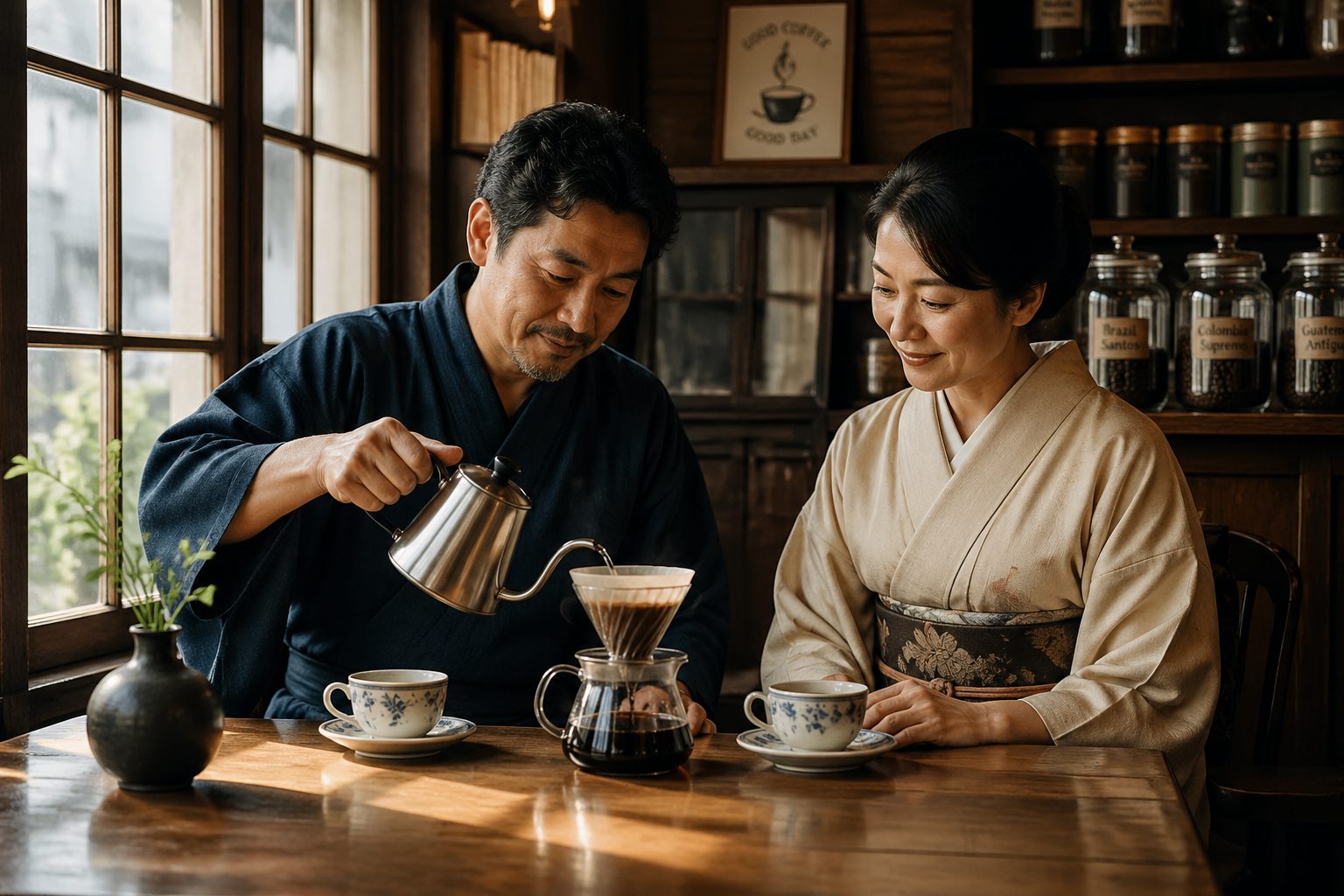
The menu tells you a lot about the difference between the two. Cafes chase variety, while kissaten tends to stick to coffee, tea, toast, curry, and a short list of desserts like chiffon cake or pudding.
Smoking used to be part of the standard kissaten package, and some shops still allow it, which changes the whole sensory experience. Even in non smoking rooms, the furniture and curtains can hold decades of coffee, tobacco, and time.
A modern cafe often wants you to post, share, and move along, even if it never says so. The Japanese kissaten coffee shop culture is more private, and you can read a paperback for two hours without anyone hinting at turnover.
The word kissaten itself points to a place for drinking tea, even though coffee became the star for many shops. That origin matters because it explains why service can feel formal, with trays, saucers, and a sense of order.
Many kissaten seat you at a table that seems chosen for you, not just assigned by chance. When the cup arrives, it often comes with a small spoon, a sugar pot, and a quiet confidence that the basics are enough.
In chain cafes, background music is designed to be ignored, and the room is designed to keep you moving. In a kissaten, the room is the product, and the coffee is the proof that the room is serious.
There can be a gentle friction at first, especially if you are used to customizing everything. A kissaten will sometimes offer one blend, one style, and one answer to the question of what is best today.
That friction is not hostility, it is consistency, and it is part of the craft. You are not being asked to design your own drink, you are being asked to trust the shop’s taste.
Even the way you pay can feel different, with bills brought to the table and a small exchange at the register on the way out. The rhythm is closer to a small restaurant than a grab and go counter.
Some kissaten still keep magazines, newspapers, and local flyers near the entrance, which makes the shop feel tied to its neighborhood. A cafe can feel like it could be anywhere, but a kissaten usually feels like it could only be here.
The history of coffee in Japan from the Meiji era onward
Coffee in Japan has roots that reach back earlier, but the Meiji era is where the story starts to look familiar, with Western influence and new urban habits. As cities modernized, coffee became a marker of cosmopolitan taste, even when it was expensive and unfamiliar.
Early coffeehouses in Japan borrowed ideas from Europe while adapting to local expectations about manners and space. Some became meeting spots for writers and students, while others leaned into quiet service and a controlled atmosphere.
After the war, coffee moved from luxury to routine, and the kissaten model spread with it. This period matters for Japanese coffee shop history because it set the pattern of owner run shops with consistent recipes and loyal customers.
By the time canned coffee arrived and convenience stores took over daily caffeine, kissaten already had an identity that did not depend on speed. That stubborn identity is why many shops survived waves of trends that wiped out other small food businesses.
The 1970s and 1980s brought new competition, including family restaurants and later big chains, but kissaten kept a niche. It became a place for people who wanted a seat, a newspaper, and a familiar cup that did not change with marketing seasons.
In the Meiji and Taisho periods, coffee carried the aura of the modern, and that aura attracted people who wanted to feel connected to the wider world. The drink itself was only part of it, because the act of ordering coffee signaled curiosity and a certain urban confidence.
As Japan’s cities grew denser, small shops learned how to create privacy inside tight floor plans. That skill later became a kissaten signature, with partitions, curtains, and seating layouts that protect solitude without making the room cold.
During periods of scarcity, coffee was sometimes stretched, substituted, or treated as a special treat rather than a daily habit. Those constraints shaped tastes, and they also shaped the respect given to anyone who could still produce a satisfying cup.
Postwar recovery brought a hunger for routines that felt stable, and coffee fit that need in an almost symbolic way. A dependable cup in a dependable room can feel like a small promise that tomorrow will be manageable.
As imports stabilized and equipment became more accessible, owners began to define themselves by technique and by blend. The idea of a house coffee became a kind of signature, like a tailor’s cut that regulars could recognize instantly.
When espresso culture later arrived through Italian influence and global travel, it did not erase kissaten habits. Instead it created a split personality in Japanese coffee culture, where fast shots and slow drips could both be taken seriously.
Even the rise of vending machines and canned coffee did not kill the desire for a handmade cup. It simply made kissaten feel more deliberate, like choosing a sit down meal over a convenience store snack.
Japanese coffee shop history is also a history of small businesses that learned to endure rent increases and shifting neighborhoods. Many kissaten stayed open by becoming essential to a few hundred people rather than trendy to thousands.
In some areas, redevelopment pushed older shops into side streets and upper floors, which only made them feel more hidden. Finding one can feel like finding a pocket of older Tokyo or Osaka that somehow escaped renovation.
The kissaten interior: design, atmosphere, and slowness
Most kissaten interiors look like they were arranged by someone who cares more about comfort than minimalism. You see dark wood, heavy chairs, stained glass lamps, and a counter that puts the barista close enough to watch your cup being built.
The slowness is not accidental, it is designed into the room through lighting, spacing, and the way sound carries. Even a small shop can feel insulated, like the outside world agreed to wait in the hallway.
There is often a faint scent of warmed milk, old books, and roasted beans that has nowhere to go, and that is part of the comfort. The air feels lived in, not filtered into neutrality.
Tables are usually set for staying, with enough space for a cup, a plate, and something to read. You do not feel like you are borrowing a seat from the next person in line.
Some shops keep a small display of porcelain cups behind the counter, and the choice of cup can be a quiet point of pride. A regular may even have a favorite cup that appears without being requested.
Sound is treated carefully, whether it is jazz, classical, or just the soft clink of spoons. The room often avoids the bright, echoing acoustics that make conversation feel like work.
Even when the decor is ornate, it rarely feels like decoration for its own sake. The lamps, posters, and clocks are there because they have always been there, and removing them would feel like removing memory.
Some kissaten have windows that look onto nothing in particular, like an alley wall or a stairwell. That view can be strangely calming, because it does not demand attention or invite comparison.
The counter seats can be the best place to understand the atmosphere, because you can watch the work without interrupting it. There is a quiet intimacy in seeing the same motions repeated with care all day.
Slowness also comes from what the room does not have, like loud playlists, blinking screens, and aggressive signage. The absence of those things makes the mind settle, even before the coffee arrives.
In some older shops, the floor may creak and the upholstery may show wear, but the wear reads as honest rather than neglected. The room feels like it has hosted thousands of small, private moments and kept them to itself.
| Interior detail | What you notice | What it does to the pace |
|---|---|---|
| Low, warm lighting | Faces soften, corners disappear | Makes you linger and talk quietly |
| Heavy chairs and deep sofas | You sink in, posture changes | Discourages quick sips and exits |
| Wood paneling and curtains | Sound gets absorbed | Keeps the room calm even when busy |
| Counter seat facing the bar | Brewing becomes part of the view | Turns waiting into a small ritual |
| Clock, calendar, and old posters | Time looks physical | Reminds you that nothing needs to rush |
Lighting in particular shapes how long you think you can stay, and kissaten lighting tells you that staying is normal. It is the opposite of the bright, clinical light that makes you check your watch.
When the room is full, the atmosphere often gets quieter rather than louder, because everyone adjusts to the same baseline. You can feel the social contract in the way cups are set down gently.
The bathroom signs, the coat hooks, and the small baskets for bags are often old fashioned, but they are practical. The shop is designed for bodies, not just for photos.
Even the entrance can contribute to the mood, with a narrow staircase or a heavy door that makes you commit to going in. That small threshold creates a clean break from the street.
Brewing methods favored in traditional Japanese coffee shops
Traditional shops often treat brewing like craft work, and the method is part of the shop’s identity. You can taste the difference between a place that lives on paper filters and one that swears by cloth orネルドリップ, the classic Japanese flannel drip.
Siphon coffee Japan is the method that most outsiders remember because it looks like lab glass and flame. In a kissaten, the show is secondary, and the point is a clean cup with clarity and a gentle texture.
Pour over is common too, but it can look different from the fast spiral style you see in specialty shops. Some masters pour slowly, pause often, and aim for sweetness and body rather than bright acidity.
Roast levels tend to run darker than third wave norms, and that choice pairs well with milk and sugar without tasting thin. When a shop uses a dark roast well, it tastes like cocoa, toasted nuts, and a little bitterness that keeps the cup honest.
Equipment is often older, maintained like a prized instrument, and repaired instead of replaced. That habit links to sustainability in a practical way, because keeping a grinder running for decades beats buying a new one every few years.
ネルドリップ tends to produce a heavier mouthfeel, and some shops lean into that richness on purpose. The cloth filter requires care, and the care becomes part of the flavor story regulars come back for.
In some kissaten, the master will rinse and warm the cup before brewing, as if temperature management is a form of respect. That small step changes how the coffee opens up as you drink it slowly.
Grinding is often done to match the method, and you can hear the grinder as a kind of announcement that your order has entered the workflow. The sound is not noise, it is part of the room’s rhythm.
Siphon brewing also creates a predictable pace, because it cannot be rushed without ruining the result. Watching it can make you stop checking your phone, because the process has a beginning, middle, and end.
Some shops keep their water hotter than modern pour over trends, while others lower it slightly to smooth bitterness in darker roasts. Either way, the point is repeatability, not experimentation for its own sake.
Milk drinks exist, but they often feel like extensions of the house coffee rather than a separate menu universe. A cafe au lait in a kissaten can be simple and strong, with the coffee still clearly in charge.
Ice coffee is also a serious category, especially in summer, and it is often brewed strong to survive dilution. Some shops chill it carefully so it tastes clean rather than watery.
Sweetness is handled in an old school way, with sugar syrup, cubes, or condensed milk depending on the house style. The shop does not apologize for sweetness, it just expects you to know what you like.
Because many kissaten aim for balance over brightness, the coffee can pair naturally with toast, jam, or a simple sandwich. The cup is built to sit beside food without dominating it.
Even when a shop buys beans from a roaster, the owner may still adjust grind and dose daily based on humidity and temperature. That attention is invisible to most customers, but it is part of why the cup stays consistent.
There is also a quiet pride in not overexplaining the coffee, because the proof is in the drinking. A kissaten can be deeply technical without turning the menu into a lecture.
The kissaten regular: who goes and why
The regular is the backbone of kissaten Japan, and you can spot them by how little they look at the menu. They have a seat, a preferred cup, and a relationship with the owner that runs on small talk and routine.
Office workers stop in for a quiet break that does not feel like a food court. Retirees come for conversation that stays polite, with enough distance to keep the room comfortable for everyone.
Students use kissaten as a study room when libraries fill up, and the staff often tolerates that as long as the orders keep coming. Writers like them because the atmosphere has edges, and the silence is real rather than branded.
Some regulars chase a specific brew, like a house blend that never changes, or a particular siphon routine that the master has refined for years. Others come for the predictability, because the outside world is loud and the kissaten is not.
This loyalty also shapes coffee sourcing in small ways, since a shop that depends on repeat customers cannot afford inconsistency. Many owners keep stable relationships with roasters, and some roast in house to control flavor and cost.
Regulars often treat the shop like an extension of their daily route, the way someone else might treat a train station kiosk. The difference is that the kissaten remembers them, and that memory becomes part of the comfort.
Some people come because their apartment is small and the kissaten offers a second living room without the obligations of hosting. You can be alone in public, which is a specific kind of relief.
There are also regulars who come to be seen in a low key way, not for status but for belonging. A nod from the owner can feel like proof that you still have a place in the neighborhood.
For older customers, kissaten can be one of the few places where the pace matches their bodies and their preferences. They do not have to compete with loud music, fast lines, or tiny stools.
For younger customers, the appeal can be the opposite, a deliberate escape from algorithmic life. The room does not ask them to optimize, it asks them to sit still.
Many regulars develop a relationship with the menu that is more seasonal than it looks, even if the printed list never changes. They know when the toast tastes best, when the iced coffee returns, and when the curry feels right.
Some customers come because the shop is one of the last places where they can smoke with coffee, and that ritual is hard to replace. Others choose non smoking kissaten precisely because the atmosphere feels cleaner but still traditional.
The social rules are subtle, and regulars tend to follow them without announcing them. You do not take long calls, you do not spread out like you own the table, and you do not turn the room into your office.
When a kissaten closes, regulars feel it like a missing step on a staircase. It is not just about coffee, it is about losing a reliable pocket of calm in the middle of the city.
That is why some customers go out of their way to support a shop, even when a cheaper option is nearby. Paying a little more can feel like paying rent on a shared atmosphere.
Jazz kissaten and the coffee shop as cultural space
Jazz kissaten is a specific branch of Japanese coffee culture where the stereo matters as much as the cup. These shops grew around serious listening, with big speakers, careful placement, and records chosen by someone with strong opinions.
The etiquette can be strict, and that is part of the charm if you are in the mood for it. People come to hear a full album side without chatter, which is rare in any city now.
In a good jazz kissaten, the music is not wallpaper, it is the reason the room exists. The coffee supports the listening, and the listening makes the coffee taste slower.
The owner’s taste can feel like a curatorial voice, and you are stepping into it for an hour. You may not love every track, but you can respect the commitment to playing it properly.
Some shops keep the volume high enough that conversation becomes impractical, which changes how you sit and how you look around. You end up listening with your whole body, not just your ears.
There is also a kind of education happening, because you hear records you would never choose on your own. Jazz kissaten can quietly expand your taste without asking you to sign up for anything.
These spaces show how a coffee shop can function as a cultural room, not just a business. The cup is a ticket, and the room is the performance.
Even non jazz kissaten can operate in a similar way, with classical music, enka, or silence as the defining feature. The point is that the shop chooses the atmosphere and protects it.
- Look for speaker brands like JBL, Altec, or Tannoy
- Order the house coffee first, then decide on food
- Keep phone volume off and conversations low
- Ask before taking photos of the room or the records
- Check the shop’s smoking policy before you sit
- Go at off peak hours for a longer listen
If you are new to the format, it helps to treat the first visit like you are entering a small gallery. You can relax, but you should also notice how other customers behave and follow that lead.
Ordering the house coffee first is not just politeness, it is a way of letting the shop introduce itself. Once you understand the baseline, you can explore the rest of the menu with more confidence.
Photography is a sensitive topic because some rooms feel personal to the owner and to the regulars. Asking first keeps the atmosphere intact and signals that you are here to listen, not to collect content.
Off peak hours can reveal the best side of a jazz kissaten, because the owner may play longer sides and take more care with the sound. In quieter moments, you can hear how the room itself shapes the music.
When the record ends and the needle lifts, the silence can feel as important as the song. That pause is part of why these shops still matter, because they make space for attention.
How the kissaten influenced Japan’s specialty coffee scene
Japan’s specialty coffee boom did not appear out of nowhere, and plenty of its discipline comes straight from the kissaten counter. The obsession with water temperature, grind size, and repeatable technique fits naturally into a culture that already respected the coffee master.
Many modern shops look lighter and brighter, but they still borrow the kissaten idea that the barista’s hands matter. You see it in careful pouring, in quiet service, and in the refusal to treat coffee as a disposable product.
Some specialty cafes openly reference Japanese coffee shop history by offering siphon orネルドリップ alongside modern espresso. Others keep the kissaten spirit by limiting seats, playing jazz, and training staff to move calmly even when the line is long.
The influence shows up in roasting too, because Japan has room for both light Scandinavian styles and deeper, classic profiles. A lot of Japanese roasters learned to balance sweetness and bitterness from kissaten blends made for daily drinking.
There is also a sustainability angle that does not get enough credit, because many kissaten practices are low waste by habit. Ceramic cups replace paper, equipment gets repaired, and shops often buy coffee in steady volumes that reduce supply chain chaos.
Specialty coffee in Japan also inherited the idea that a shop should have a point of view, not just a product list. A kissaten’s point of view might be dark roast and quiet, while a modern shop’s point of view might be light roast and openness.
Training culture is another bridge, because kissaten masters often learned through repetition and observation rather than quick certification. That apprenticeship feeling still shows up in how some specialty shops talk about craft and consistency.
The Japanese pour over reputation did not come only from competitions and influencers, it came from decades of slow, careful brewing in ordinary neighborhoods. Specialty coffee simply gave that care a new vocabulary.
Even the modern focus on customer experience has a kissaten ancestor, because kissaten perfected the art of making people feel left alone in a good way. Specialty shops that feel calm and intentional are often borrowing that same emotional design.
At the same time, specialty coffee sometimes reacts against kissaten, especially around roast level and fruit forward flavors. That tension is healthy, because it proves the tradition is alive enough to argue with.
Some of the best newer shops manage to hold both worlds at once, serving a bright single origin next to a deeper house blend. That coexistence is very Japanese, because it respects the past without freezing it.
Kissaten also influenced how Japanese customers judge quality, because they learned to notice consistency and cleanliness of flavor. If you grew up with careful coffee, you can tell when a cup is sloppy.
Even the way cups and saucers are chosen in specialty shops can echo kissaten habits, with attention to weight, lip feel, and heat retention. Those details seem minor until you realize they change how long you want to sit.
The result is a specialty scene that can feel both modern and unusually grounded. It is innovative, but it is rarely careless, because the kissaten legacy makes care feel normal.
Conclusion
The Japanese kissaten coffee shop culture survives because it offers something that modern caffeine systems rarely do, a place where time is part of the menu. When you sit down, you agree to the pace, and the shop rewards you with calm and a carefully built cup.
If you care about Japanese coffee culture, it helps to see kissaten not as an old fashioned cousin of the cafe, but as a separate tradition with its own rules. Kissaten Japan keeps history alive in small, daily ways, through siphon coffee Japan rituals, steady roasting choices, and rooms designed for people who still want to sit and stay.
It is easy to romanticize kissaten, but the real story is more practical, because these shops are still doing business one cup at a time. Their survival depends on ordinary days, not on viral attention.
When you find a good one, the best approach is simple: order, sit, and let the room do its work. The longer you stay, the more you understand that the slowness is not a gimmick, it is a craft.
Why Melbourne Became One of the World’s Great Coffee Cities
» Discover special tips and stories about coffee