Common Coffee Bean Defects and How They Affect Flavor
Improve your coffee's flavor by understanding coffee defects. Our guide explains how to detect and mitigate common defects.
Understanding what goes wrong with your beans helps both home brewers and professionals get cleaner cups. Defects are visible faults like discoloration, holes, or chips. They can also be sensory, such as a flat, baked taste that hides origin notes.
Expect that no bag is perfectly free of problems. The goal is to minimize issues, not chase an impossible perfect batch. Even a few flawed beans can dull sweetness and muddle clarity in the cup.
This guide splits problems into three clear buckets: green-bean issues, faults that appear after roasting, and mistakes during the roast. You’ll learn what to look for, how each type changes aroma and taste, and simple actions like sorting obvious faults before grinding.
Practical payoff: better at-home quality control, fewer bad brews, and clearer language when describing what went wrong to a roaster.
Key Takeaways
- Defects affect aroma, sweetness, and cup clarity even at low rates.
- No bag is perfect; focus on reducing, not eliminating, flaws.
- Three main types to check: green, roasted, and roasting issues.
- Visual sorting before grinding improves daily results.
- Knowing faults helps you describe problems to roasters and improve quality.
What coffee defects are and why they matter for the final cup
A handful of tainted beans can shift an entire brew away from its intended profile. Small flaws often add earthy, sour, phenolic, or moldy notes that mask sweetness and origin clarity in the final cup.
How these faults show up:
What Would You Like to Learn Next?
Choose an option below:
- Inconsistent aroma and muddled flavor separation.
- Unexpected harshness or a “dirty” aftertaste despite correct brewing.
- Uneven extraction caused by broken or low-density beans.
Where problems occur: Issues can start at selective picking of ripe cherries, during fermentation and drying, in storage and transport, or during roast execution. Each step affects bean chemistry and sensory outcome.
Intrinsic vs extrinsic: Intrinsic issues are with the bean itself (black, sour, insect-damaged, immature, broken). Extrinsic problems are foreign material (sticks, stones, parchment). Both matter for quality control and grading.
| Grading Factor | Common Fault | Impact on Cup |
|---|---|---|
| Primary count | Full black / full sour | Severe off-flavors, can ruin lot |
| Secondary count | Broken, chipped, shell | Uneven roast, muddy sweetness |
| Extrinsic | Stones, sticks, husk | Physical contamination, inconsistent grind |
Practical note: Finding a couple of faulty beans doesn’t prove roastery negligence. Graders count faults to set pricing and thresholds; specialty lots must meet tighter standards. Learn which items to remove before brewing and which to monitor, so you get a cleaner cup without alarm.
Green coffee defects: primary vs secondary defects and what to look for
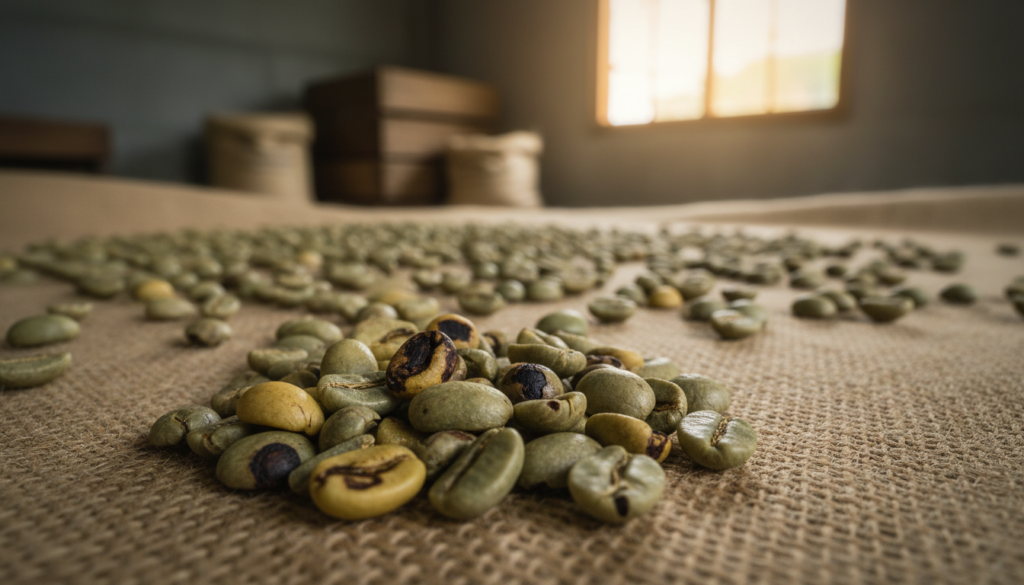
Primary faults can disqualify a lot. Graders treat a few severe flaws in green coffee as lot‑ruining because those beans produce strong phenolic, medicinal, or vinegary notes that survive roast.
Primary problems that dominate a lot
Full black or full sour beans are classic primary defects. Full black beans often come from severe fermentation or dead seeds and taste dirty or medicinal. Full sour beans come from poor fermentation control and show sharp, vinegary acidity.
Processing and microbial risks
Wet or uneven drying, poor water use, and unchecked fermentation raise mold and musty risks. Moisture control during processing and storage is key to avoid sour or moldy notes.
Insect damage and entry holes
Holes from the coffee berry borer signal insect damage. Multiple entry points let microbes in and can cause earthy, sour taints. Severity matters for grading and rejection.
Secondary faults and foreign material
Broken, chipped, and shell beans create uneven roast and faster staling. Immature beans taste thin and papery; they often become noticeable as quakers after roast. Sticks, stones, husk, and parchment are extrinsic issues that harm grinders and cup cleanliness.
Practical tip: Sorting green beans at intake protects cup quality and aligns with specialty coffee grading standards.
Roasted coffee defects you can identify at home before grinding
A fast spread-and-scan routine reveals color, holes, and char that change how a brew tastes.
Before grinding, spread a thin layer on a tray and scan for outliers: much lighter beans, drill-like holes, fragments, or very dark pieces.
Quakers: light-looking beans that taste papery
Quakers roast a noticeably lighter brown because unripe cherries or low sugars lack Maillard browning.
They often taste like paper, peanut husk, or flat cardboard and can mute sweetness in the cup.
“A single strong quaker with microbial or insect link can spoil a small brew.”
Shells, chips, and size/density differences
Broken or cut beans and loose shells heat unevenly. Differences in density and size make some pieces overdevelop while others stay underdone.
That imbalance raises perceived roastiness and bitterness in a dose.
Insect holes: minor vs major
Minor insect damage is a single tiny hole and may be left. Major damage (three or more holes or crumbling beans) deserves removal to protect cup clarity.
Chaff and over-roast
Silverskin or chaff is normal and usually neutral in taste. Excess chaff is common with certain processes and light roasts.
Double-roasted or charred beans look much darker than neighbors and deliver a burnt, charcoal note. Pull them out to avoid a ruined brew.
- Spread beans.
- Remove obvious quakers and charred pieces.
- Pick major insect-damaged or crumbling beans.
Quick checks like this improve daily results without special tools.
Roasting defects that create off-flavors even with good green coffee
Even premium beans turn flat or bitter when roast profiles are mishandled during the heating cycle. Troubleshooting must include roast execution, not only green quality.
Scorching and tipping: burnt patches and blackened tips
Scorching shows as dark, burnt patches where beans contact hot surfaces. Tipping appears as small black ends on the beans.
Both create acrid, smoky notes and harsh bitterness. These faults often cut sweetness and leave a charcoal aftertaste.
Why they happen: too much heat too early, hot drum contact, or poor airflow at charge. Roasters control these by adjusting charge temps, drum speed, and airflow.
Baked flavor from slow, uneven development
“Baked” describes a roast profile issue rather than a visible flaw. A slow, drawn-out roast can mute aromatics and produce bready or cardboard-like taste.
It flattens acidity and leaves the cup dull. Sample roasting and timed development checks help roasters avoid this outcome.
Uneven color: mixed development that muddies clarity
When a batch shows varied color, underdeveloped and overdeveloped beans coexist. That mixed development muddles acidity and makes sweetness hard to perceive.
Consumer clues: inconsistent color in whole beans and a cup with both sourness and burnt bitterness. Quality controls like color tracking, probe sampling, and cupping feedback are standard tools roasters use to fix these issues.
How defects translate into flavor problems in coffee
Off-notes in the cup usually map to a handful of predictable causes in the supply chain or roast. A simple sensory map helps you link what you taste to likely root causes and next steps.
Common off-flavor map
- Phenolic: medicinal or plastic-like — often from severely tainted or black beans and heavy contamination.
- Earthy / musty: moldy or soil-like — usually moisture or storage problems that let microbes grow.
- Sour / vinegary: sharp acidity — points to over-fermentation or poor microbial control during processing.
- Fermented / alcoholic: heavy, funky notes — uncontrolled fermentation or extended wet processing.
- Grassy / hay-like: dull, green taste — linked to unripe beans and low sugars (quakers behave similarly).
- Rubbery / burnt: smoky, charred notes — from scorching, tipping, or extreme tainting.
Why sugars and Maillard reactions matter
Sugars are the raw material for Maillard chemistry. Low sugar content in underdeveloped beans means less browning and fewer sweet aromatics.
That makes the cup taste thin, papery, or cardboard-like even if roast color looks acceptable.
Moisture, microbes, and oxidation
Moisture enables microbes that produce acids and volatile compounds. Oxidation and poor storage wipe out fragile aromatics and amplify musty or stale notes.
Diagnosis tip: If off-flavors persist after sorting and a clean roast, test brewing method; if they remain, the problem is likely with the beans or processing chain.
Conclusion
, Understanding the origin of faults turns mystery off-flavors into solvable problems. Recognize that coffee defects can arise at three stages: green beans, roasted beans, or during roast execution. That three-part framework points you to the right fix quickly.
Adopt a simple habit: spread a small dose, pick out quakers, heavily hole-damaged pieces, and any charred outliers before grinding. Removing obvious bad beans often restores sweetness and clarity.
Remember, occasional faults reflect farming and logistics, not automatic failure of a roaster. In specialty markets, grading and sorting drive cleaner lots and higher quality prices.
Result: fewer unpleasant cups, clearer language to describe issues, and more confidence when discussing purchases with roasters or retailers.
FAQ
What are common bean faults and why do they matter for the final cup?
How do these issues show up in aroma, taste, and overall cup quality?
Where along the supply chain do faults occur, from cherry to roast?
What’s the difference between intrinsic and extrinsic issues, and why both matter?
What distinguishes primary versus secondary faults in green beans?
Which primary green bean problems should roasters watch for?
How do processing problems like mold and runaway fermentation affect green lots?
How is insect damage identified in green beans and how severe can it be?
What secondary green-bean issues lead to uneven roasting?
How do immature or underdeveloped green beans affect taste?
What extrinsic materials are commonly found in green lots and why are they a problem?
What roasted-bean faults can consumers spot at home before grinding?
Why do quakers roast lighter and what do they taste like?
How do shell, broken, chipped, and cut beans change roast perception?
When should minor insect-damaged beans be removed versus when is a lot unsalvageable?
What is chaff and silverskin and do they harm the brew?
How do over-roasted or charred beans affect flavor?
What roasting faults create acrid or smoky off-notes?
What causes a baked profile and how does it taste?
Why does uneven roast color matter for cup quality?
What common off-flavor profiles should tasters map to faults?
How do sugar levels and Maillard reactions make unripe beans taste dull?
How do moisture, microbes, and oxidation create sour, moldy, or musty problems?
Why Cheap Coffee Often Tastes Burnt
» Discover special tips and stories about coffee