Why Single-Origin Coffee Tastes Different Every Year
Discover the unique characteristics of single origin coffee flavor and why it tastes different every year. Learn more about the factors that influence its distinct taste profile.
New harvests change what you taste. The label “single-origin coffee” covers different scales — country, region, or farm — and many roasters rotate lots so beans are fresh. Beginners often notice the same offering tastes different year to year. That shift is normal and not a defect.
This guide focuses on why tastes shift across harvests and how to read labels and tasting notes in the United States. You’ll learn how climate, variety, processing, and roast choices shape aroma, acidity, sweetness, and body. That helps you name what you sense instead of feeling unsure.
The article previews key categories: region and traceability, harvest seasonality, soil and altitude, plant genetics, processing methods, and roast/brew decisions. Put simply, agricultural reality plus post-harvest choices explain yearly change. Over time, that knowledge makes buying and brewing less confusing.
Key Takeaways
- The same labeled lot can taste different each year and that’s normal.
- Fresh harvests often sound best; many roasters rotate offerings for that reason.
- Regional climate, soil, and variety influence aroma, acidity, sweetness, and body.
- Processing and roast choices after harvest play a big role in taste.
- Reading labels and notes helps you make better buys over time.
What “Single-Origin” Coffee Means on a Label
When a bag claims it comes from one place, that place can mean different scales. A label might list a whole country or point to a named region, cooperative, or an individual farm. That range explains why two bags labeled the same can tell very different stories.
Traceability helps you set expectations about consistency and tasting notes. More specific labels — region + farm + producer — make it easier to link what you taste to where the coffee comes from and how it was grown.
Common label elements and what they imply
- Country — broad sourcing; easier to vary year to year.
- Region or cooperative — tighter geography; more predictable profiles.
- Farm / producer — highest traceability; best for tracking consistency.
- Processing and notes — key clues for how the coffee beans were handled.
Examples help: Finca El Puente (Marcala, Honduras) lists the farm and owners. La Golondrina (Timbio, Colombia) names a producing group within Organica Cooperative. Those details make comparison across harvests easier.
What Would You Like to Learn Next?
Choose an option below:
Quick in-store checklist: if the bag lists region + producer + processing method, it’s easier to predict taste and compare year to year. Remember: sourcing describes where beans come from; it does not guarantee higher quality by itself.
Why Single-Origin Coffees Change From Harvest to Harvest
Because coffee is farmed, what arrives in your cup follows a seasonal rhythm. Harvest windows, export timing, and shipping all shape when a lot reaches a roaster in the United States.
Seasonality and freshness
Seasonal cycles matter. Roasters often move a lot quickly when they believe it is at peak taste. That choice means a favorite offering can disappear once it sells through.
Small lots and limited releases
Many lots are small by design. Limited releases can sell out in days, while other batches last months depending on size and demand.
Consistency isn’t the goal
Blends aim for steady results; single-origin coffees highlight moments. Fewer variables are averaged out, so minor weather or processing shifts show up clearly in the cup.
Practical tip: Note the harvest date, region, and processing on the bag. That makes it easier to look for the same lot when it returns the next season.
| Factor | How it affects availability | What it changes in the cup |
|---|---|---|
| Harvest timing | Determines when new lots arrive | Freshness, brightness, aromatic notes |
| Lot size | Limits how long a release lasts | Consistency and variety expression |
| Roaster selling window | Roasters sell at perceived peak | Peak sweetness and clarity |
| Producer processing | Creates unique, time-sensitive profiles | Fruit, body, and fermentation-driven notes |
single origin coffee flavor: The Biggest Factors Behind Year-to-Year Differences
Climate, soil, altitude, and farm choices work together to change what shows up in your cup each season. These drivers help explain why a familiar bag can taste brighter, softer, or more complex the next year.
Weather and climate shifts
Temperature swings, humidity changes, and altered rainfall timing affect flowering and cherry development. Those shifts change sweetness, acidity, and balance when the beans are harvested.
Soil and growing conditions
Moisture levels and soil pH shape nutrient uptake and plant health. Too much water can harm trees; too little causes stress. Both alter the characteristics of the harvested beans.
Altitude and ripening speed
Higher elevation slows ripening. That slower pace often brings brighter acidity and more layered profiles. Lower sites typically yield fuller body and rounder notes.
Farm inputs and cultivation decisions
Pruning, shade management, harvesting selectivity, and fertilization all change cup quality. Producer choices tune sweetness, clarity, and the unique flavor you notice.
| Driver | What changes | How it maps to taste |
|---|---|---|
| Climate | Flowering, harvest timing | Acidity, intensity, aromatic notes |
| Soil | Moisture, pH, nutrients | Body, clarity, consistency |
| Altitude | Ripening speed | Brightness, complexity |
| Farm practices | Picking and processing choices | Sweetness, cleanliness, off-notes |
Variety Matters: The Coffee Plant Genetics Behind Flavor Notes
Plant genetics set a second, powerful track for what you taste, separate from where beans are grown. Varietals change aroma, sweetness, and how tasting notes show up, even within the same field.
Arabica vs Robusta (and rarer species): what beginners should taste for
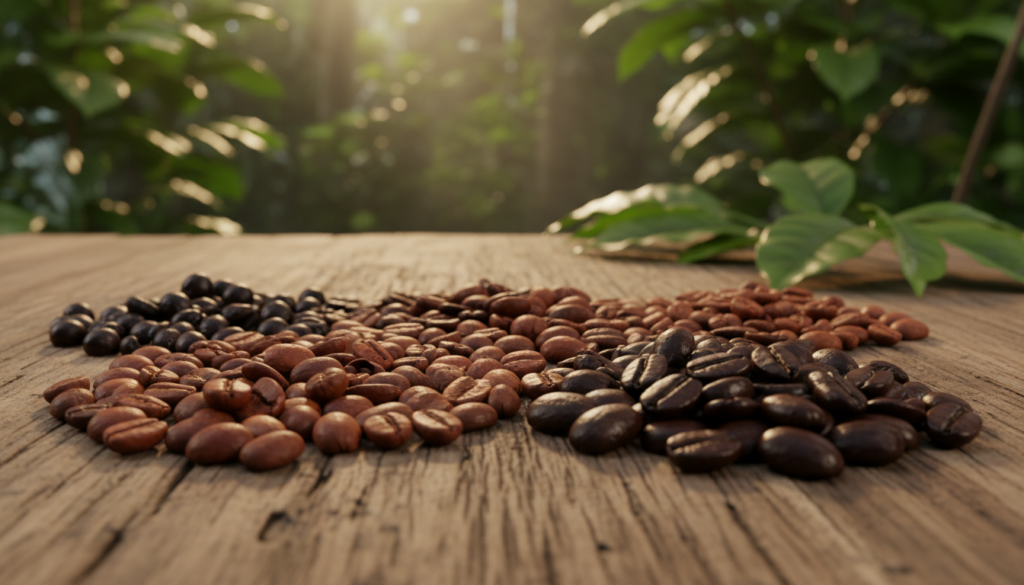
Arabica varieties tend to be sweeter and more aromatic, often showing fruit or chocolate flavor notes. Robusta reads heavier and more bitter; it adds body and crema in blends.
Rarer species like Liberica appear occasionally and can show smoky or floral characteristics. These unique flavors are less common in U.S. retail but worth knowing about.
Within Arabica: how different varietals can express different profiles
Think of varietal like grape variety. Bourbon often tastes richer and rounder, while Catuai can lean fruitier and brighter. Those traits shape the bean’s flavor profile before roast or processing do their work.
Practical tip: Look for varietal names on the bag to predict whether a bean will be delicate and high-toned or more intense. Varietals interact with climate and different regions, so the same name can still show variation year to year.
Processing Methods That Create Different Flavors (Even at the Same Origin)
Processing is a major reason the same beans can taste like two different products. It changes how much fruit material and fermentation influence the green bean. Producers or mills in the same region often choose different methods, so what the bag says about handling predicts many of the cup characteristics you’ll taste.
Washed (wet) processing
Washed lots remove the fruit pulp and then ferment and wash away mucilage. That yields cleaner, lighter, and crisper profiles that let the region and varietal show through.
Natural / dry processing
For natural lots, whole cherries dry in the sun for weeks. Fruit stays on the bean and drives rich, fruit-forward notes and stronger fermentation characteristics.
Honey processing
Honey is a middle path: cherries are depulped but the sticky mucilage remains while drying. Expect balanced sweetness with bright highlights and layered, tactile notes.
Wet-hulled processing
Used in very humid regions where fast drying is needed, wet-hulled beans are hulled while damp. The result is savory, nutty characteristics that feel earthy and comforting in the cup.
Practical tip: Scan your bag for the listed method. Processing is one of the best predictors of profiles and notes before you brew, and the same place can produce very different outcomes depending on how the cherries were handled.
Roast and Brewing: Why the Same Bean Can Taste Like a Different Product
Roast level and extraction method together decide if a bag reads as delicate or robust in the cup. These choices shape whether origin characteristics or roast-driven notes dominate what you taste.
Light vs dark: how roast shifts body and perceived notes
Light roasts tend to highlight acidity and bright aromatics. You will notice floral, fruity, or tea-like qualities more clearly.
Dark roasts push roast character forward. Expect bittersweet, smoky, and richer body that can override subtle regional cues.
Using roaster flavor notes to set expectations
Flavor notes are a forecast, not a promise. Trained tasters describe what they found using a specific roast and brew.
Your equipment, grind, and water will change the way those notes show up in the cup. Use the listed notes as a starting point.
How brewing changes perceived taste
- Grind size affects extraction — too fine can taste bitter, too coarse can taste weak.
- Water temperature and ratio change clarity and sweetness in the cup.
- Different methods (pour-over, immersion, espresso) emphasize different aspects of the product.
| Roast level | Typical result | What to expect |
|---|---|---|
| Light | Bright, aromatic | Delicate acidity and origin notes |
| Medium | Balanced | Sweetness with moderate body |
| Dark | Roast-forward | Heavier body, smoky or bittersweet |
Quick bag reading: check origin + processing + roast level + flavor notes. Together they give the best idea of what the cup will deliver.
Blends are often roasted to produce a stable product over time, while single-region lots may be roasted to highlight each season. Remember: freshness and good roast development matter as much as origin for final quality.
Conclusion
Small farm decisions and seasonal weather make repeat buys feel like new experiences.
Agriculture, small lot sizing, and a supply chain that values freshness explain why a bag can change each year. Treat that change as normal, not a defect.
Label literacy helps: note country, region, farm or producer, plus processing and roast. Those details improve your ability to predict tasting profiles and quality.
Try a simple tracking habit — write the origin, roast level, and roaster notes on the bag. Compare the same coffee beans across two harvests or two methods to learn how different locations shape the product.
If you want steady results, choose blends. If you want discovery, use single-origin coffee as a tool to taste the world.
FAQ
Why does single-origin coffee taste different every year?
What does “single-origin” mean on a label?
How does “country” differ from “region” or “farm” on a bag?
What is traceability and why does it matter?
Why do these coffees rotate throughout the year?
Why are availability windows for small lots short?
Should roasters try to make origin coffees taste identical each year?
What are the biggest environmental factors that change flavor year to year?
How does soil affect the cup?
Why does altitude alter acidity and complexity?
How do farm inputs and cultivation choices change taste?
Do different coffee species taste noticeably different?
Within Arabica, how do varietals influence notes?
How does processing method change the taste even at the same farm?
What should I expect from washed coffees?
What do natural or dry-processed beans taste like?
What is honey processing and its effect?
What is wet-hulled processing and where is it common?
How does roast level change the perceived profile?
How should I read roaster tasting notes?
Can brewing method make the same beans taste like different products?
Why Cheap Coffee Often Tastes Burnt
» Discover special tips and stories about coffee