Espresso Water Temperature Explained
Learn the ideal coffee water temperature espresso for perfect brewing. Discover how to adjust the temperature for a rich and full-bodied espresso shot.
Understanding brew heat is a top priority for anyone who wants reliable shots at home. The number on your machine shows the target heating element that drives extraction, not the final cup heat.
How hot should you aim? A practical window is 90–96°C (194–205°F). Many home baristas start near 93°C (200°F) as a default.
Heat directly affects extraction yield — how much soluble material ends up in the shot. Small shifts in heat can change sweetness, acidity, and body.
First, lock in the basics: recipe, grind, and shot time. Then use heat as a controlled lever rather than a guess. Machines differ: PID, thermostat, and pressurestat systems behave uniquely, so the same setting can act differently across brands.
By the end of this guide you will pick a starting heat, spot signs of too-hot or too-cool extraction, tweak your machine, and confirm results with simple checks at home.
Key Takeaways
- Target range: 90–96°C (194–205°F), start near 93°C (200°F).
- Machine readouts are target heat, not cup heat.
- Heat controls extraction yield and cup balance.
- Set recipe fundamentals first, then fine-tune heat.
- Know your machine type (PID, thermostat, pressurestat) to predict behavior.
- You will learn to choose, adjust, and verify a starting heat at home.
Why Water Temperature Matters in Espresso Extraction
Brew heat is a core control that alters extraction order and the balance of acids, sugars, and bitters.
What Would You Like to Learn Next?
Choose an option below:
The basic cause-and-effect is simple: hotter brew pulls more soluble solids from the grounds faster. This raises extraction yield and often brings fuller body and more perceived sweetness.
By contrast, cooler settings slow dissolution. Low extraction leaves shots tasting sharp, thin, and sour with a hollow finish even when crema looks fine.
How extraction order shapes taste
Early in the process acids and volatile aromatics dissolve first. Sugars come next, then heavier bitter compounds.
Higher temperatures speed the later stage, which can round a shot or push it toward bitterness if overdone.
Sensory signs and quick fixes
- Too cool: sour, weak, thin body — try raising heat after checking grind and time.
- Too hot: harsh bitterness, drying or burnt notes — lower heat before changing dose.
Note: A concentrated shot can be balanced; strength is not the same as over-extracted bitterness. Aim for the narrow band where acids, sugars, and bitters sit in proportion to keep the shot balanced.
Ideal coffee water temperature espresso Range for Consistent Results
Start with a workable brewing band to get consistent, repeatable shots.
The recommended window for brewing: 90–96°C (194–205°F)
The workable range is 90–96°C (194–205°F). This isn’t a single magic number; different beans and machines respond well at different points inside that band.
Move upward in the range to increase extraction and bring out sweetness. Move downward if the cup tastes harsh or burned at an otherwise correct recipe.
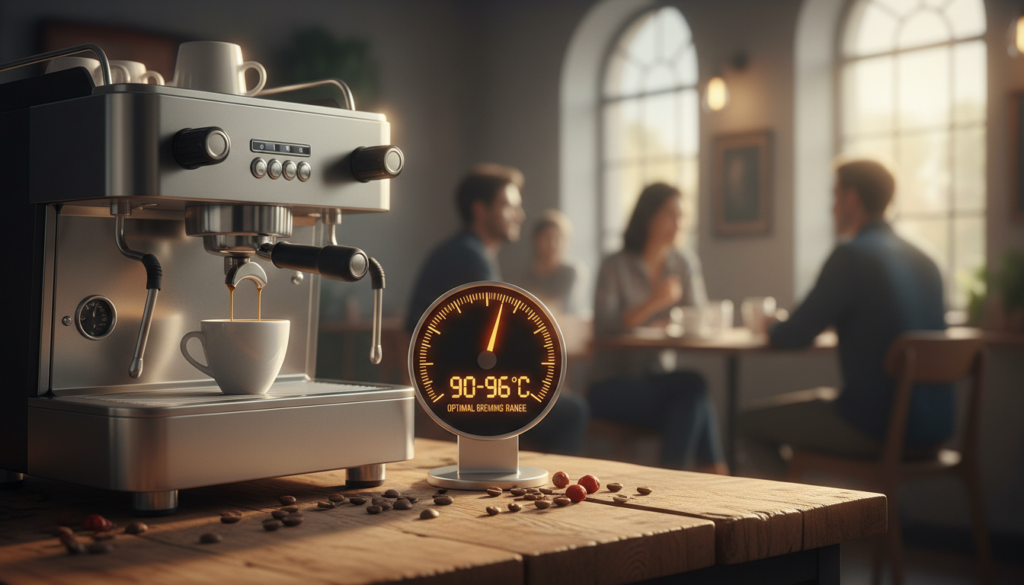
A practical default: about 93°C (200°F)
Set your brew temperature near 93°C (200°F) as a reliable baseline. It gives a syrupy body and a balanced flavor profile for most roasts and gear.
For consistent results, keep settings steady shot-to-shot. Make changes in small steps — about 1–2°C at a time — and use the same recipe for side-by-side tasting.
- Pick a baseline (≈93°C / 200°F).
- Adjust 1–2°C, pull the same shot, and compare.
- Prioritize stability: the effective puck range matters more than the displayed readout.
Note: Home machines may overshoot or fluctuate, so confirm the puck and cup outcome. The right placement in this range will produce clear sweetness, balanced acids, and a full body without sourness or burn.
How to Adjust Brew Temperature on Popular Espresso Machines
Different control systems change how steady your shot heat stays from pull to pull.
PID temperature control
PID (Proportional-Integral-Derivative) targets a setpoint and makes frequent, small corrections. That keeps brew heat stable and makes dialing in grind, dose, and time more reliable on an espresso machine.
Mechanical thermostats
Mechanical thermostats cycle the heater on and off. They often overshoot toward a high cutoff then sit idle until the boiler cools. That on/off pattern creates noticeable swings across shots.
Pressurestats and boilers
Pressurestats tie boiler pressure to setpoint. Raising pressure raises the internal setpoint and vice versa. Many users find pressurestats more stable than basic thermostats for home machines.
Temperature surfing
Flushing the group head can cool a hot group. Running extra warm-up cycles can raise it. This method is model-specific and inconsistent, so log what works for your machine.
Verify at home
Before changing settings: fully warm the machine, lock in the portafilter to heat-soak, and pre-warm cups. Use a coffee thermometer to check repeatability across several pulls.
| Control Type | Stability | Ease to Dial | Home Fit |
|---|---|---|---|
| PID | High | Easy | Great for dual-boiler units |
| Mechanical thermostat | Low–Medium | Harder | Common on budget machines |
| Pressurestat | Medium–High | Moderate | Good balance for single-boiler homes |
How to Dial In Temperature for Your Coffee, Roast Level, and Shot Recipe
Start dialing in by locking a brew ratio, then use heat only after grind and time are stable.
Step-by-step workflow
- Choose a target brew ratio (start at 1:2 — e.g., 18g in → 36g out).
- Adjust grind to hit a brew time of about 25–35 seconds.
- When ratio and time are repeatable, change temperature in 1–2°C steps to refine flavor.
Match roast to heat
Raise heat slightly for light roasts or larger ratios to boost sweetness and body.
Lower heat for medium-to-dark roasts or tighter ratios to avoid harsh bitterness.
Roast age and degassing
Very fresh beans release more gas at higher settings and can disrupt flow. Take notes and avoid overreacting day-to-day.
Tasting rules & variable isolation
- If a shot tastes sour while ratio and time are correct, increase heat a bit.
- If it tastes bitter or burned, reduce heat slightly.
- Change only one variable at a time and keep puck prep identical.
| Variable | Primary Tool | Target |
|---|---|---|
| Brew ratio | Dose/output | Start 1:2 (18g→36g) |
| Brew time | Grind size | 25–35 seconds |
| Heat | Machine setting | Fine-tuner after ratio/time stable |
Conclusion
A controlled brew range shapes how your shot balances sweetness, acidity, and body.
Keep practical defaults in mind: aim for 90–96°C (194–205°F) and start near 93°C (200°F). Use heat only after your ratio and shot time are consistent.
If the cup tastes thin or sour, the puck is likely too cool—raise the setting a degree or two. If it tastes harsh or burnt, lower the setting and check dose and time.
For home consistency, warm the espresso machine fully, maintain a steady workflow, and log results. Try one coffee, pull several identical shots, change heat by 1–2°C, and compare to learn how your equipment behaves.
FAQ
What is the ideal brewing range for pulling a consistent shot?
How does brew heat affect extraction yield and cup body?
What are signs of too-cool brewing?
What happens when the machine runs too hot?
How does roast level influence which setting I should use?
When should I tweak grind or ratio instead of changing temperature?
How does roast age affect temperature choices?
What is PID control and why is it preferred?
Why do mechanical thermostats and pressurestats cause instability?
Can I “temperature surf” on a machine without PID?
How do I measure and verify actual brew heat at home?
How much should I change temperature when dialing flavor?
How do grind size and shot time interact with temperature?
Which machines let me change brew heat most easily?
Is there a simple default temperature to try for most beans?
Why Cheap Coffee Often Tastes Burnt
» Discover special tips and stories about coffee