What Makes Coffee Taste Sweet Naturally
Discover how to enhance coffee sweetness naturally. Learn tips to make your coffee sweeter without sugar. Get started with our expert guide.
Sweetness in black coffee often means a perceived sugar-like note rather than added sweetener.
That perception comes from aroma, a balanced mix of bitterness and acidity, and certain non-sugar compounds that signal the brain. These clues shape the overall flavor and the way a cup feels on the palate.
In this article you will get a clear science-based view of why sweetness appears and practical steps to boost it without turning the drink into a dessert. Expect guidance on bean selection, roast style, and brewing choices that help emphasize natural sugars and aromatic notes.
Understanding this matters for home brewers and café pros alike. Small changes can make a drink more comfortable and easier to enjoy. Coffee is chemically complex, so sweetness is a multi-signal experience rather than a single ingredient effect.
Key Takeaways
- Perceived sweetness is often aroma and balance, not added sugar.
- Bean origin and roast affect how the cup presents sweet notes.
- Brewing decisions can highlight natural sugars and aroma compounds.
- Learnable steps will increase perceived sweetness without dessert additions.
- Sweet perception improves drinkability for home and café settings.
Why Coffee Sweetness Matters for a Better Cup
Perceived sweetness plays an outsized role in how people judge a cup and decide what to buy. It links directly to perceived quality and price, which is why specialty roasters highlight sweet notes on origin cards.
How it guides liking: Consumer studies show sweetness often drives preference in plain filter brews. The 2021 Specialty Coffee Association review found most professionals want an intensity scale rather than a presence/absence tick. That change would improve scoring confidence for brewers and buyers.
What Would You Like to Learn Next?
Choose an option below:
Black versus sweetened drinks: In black cups, “sweet” is a sensory perception produced by aroma and balance, not added sugar. Chasing granulated sugar misses the point and can mask desirable acidity and aroma.
Perceived sweet notes make a brew feel smoother, fuller, and more balanced, even when brightness is present. Different drinkers prefer fruit-like or caramel-like profiles, so what’s “better” depends on personal experience.
This guide shows practical ways to target that trait: choose beans and adjust your brew to emphasize natural, pleasant sugar-like signals rather than relying on additions.
| Attribute | Why It Matters | What To Do |
|---|---|---|
| Perceived Sweetness | Drives liking and willingness to pay | Choose fruit-forward origins; control roast level |
| Scoring Intensity | Increases scorer confidence | Use an intensity scale in cupping |
| Sensory vs Added Sugar | Black cup sweetness is not table sugar | Focus on aroma and balanced extraction |
Coffee Sweetness Is Real, Even Without Sugar
A controlled tasting with trained tasters shows that perceived sweet notes are measurable and consistent.
What a 125-taster sensory test revealed about intensity differences
Researchers and Intelligentsia Coffee selected a range of distinct coffees and asked 125 professional tasters to rank perceived sweetness on a 15-point intensity scale.
The results showed a statistically significant spread of about six points (roughly 3.6 to 9.6). That gap proves sweetness varies by sample and that panels reach repeatable agreement.
Why intensity is not just the midpoint between sour and bitter
Sensory intensity measures how strongly a trait appears, not whether it exists between two opposites. Tasters can detect higher or lower levels independent of under- or over-extraction.
Extraction balance matters, but other factors—aroma signals and which flavor notes dominate—also change perceived sweetness.
If sweetness isn’t plain sugar, what creates that sweet impression in the cup?
Why Adding Sugar Isn’t the Point: Roasted Coffee Has Very Little Sugar
Roasted beans hold far less actual sugar than many drinkers expect, so “sweet” rarely means table sugar.
Chemical tests measure sucrose, glucose, and fructose in brewed drinks. Clarke and Macrae found medium roasts keep about 0.9% of green-bean sucrose (light roast ~2.9%). That ends up near 0.014 g sucrose, 0.014 g glucose, and 0.009 g fructose per 100 mL under typical extraction assumptions.
What the numbers mean for your palate
Liquid chromatography–mass spectrometry work by the Coffee Science Foundation detected several sugars but at concentrations far under taste thresholds.
Humans detect sucrose around 2,000 mg/L. Tested brews peaked near 100 mg/L. In plain terms, measured sugars are usually below the level needed to register as sweet on the tongue.
- Sweet cup ≠ sugar content: A “sweet” descriptor points to sensory cues, not grams of sugar.
- Roasting changes sugars: Heat breaks down and Maillard-transforms sugars into aroma and color compounds.
- Practical shift: Instead of seeking more sugars, aim to boost aroma and balance—the real levers for perceived sweetness.
| Measure | Typical Brew Value (per 100 mL) | Human Detection Threshold |
|---|---|---|
| Sucrose | ~0.014 g (14 mg) | ~2,000 mg/L (2,000 mg per L) |
| Glucose | ~0.014 g (14 mg) | Varies; generally high compared to brew levels |
| Fructose | ~0.009 g (9 mg) | Varies; still far above brewed levels |
| Measured peak (all sugars) | ~100 mg/L | ~2,000 mg/L for clear sweet detection |
Next: aroma and flavor interactions become the key tools to make a cup read as sweeter without adding sugar.
Aroma’s Role in Making Coffee Taste Sweeter
Smell shapes how we interpret a brew, and that framing can make a cup read as sweet.
Orthonasal aroma is what you notice when you sniff the mug. Retronasal aroma is released while sipping and reaches the brain from the back of the throat.
What happened when tasters used a nose clip
With a nose clip, overall sweetness intensity dropped and the range narrowed from about six points to roughly 3.6 points. rankings stayed similar.
That pattern shows aroma is a major component of the sweet flavor image, while nonvolatile compounds still matter.
Which aromatics boost perceived sweetness
Multivariate analysis linked higher sweetness with fruity, fermented, floral, and vanilla-like notes.
Think ripe stone fruit, jammy berry, honeyed florals, or a soft vanilla pod—these cues register as sugary even when tongue sugars are minimal.
“Aroma can amplify or create a sweetness-like impression absent measurable sugars.”
Practical tip: Protect aroma by grinding just before brewing, keeping water near correct temperature, and avoiding long holds. These steps preserve volatile aromatics that drive perceived sweetness.
- Orthonasal vs retronasal: both shape the sweet flavor.
- Nose-clip test: aroma weakens but does not erase perceived sweetness.
- Protecting aroma improves the final taste experience.
Next: other flavors can amplify or suppress these aromatic cues and change how sweet a cup feels.
How Other Flavors Modulate Sweetness Coffee Perception
Other taste signals often act like filters, changing how sweet a brew will feel.
Masking vs missing: sweetness is a perception and can be hidden when harsher notes dominate. High bitterness, heavy roast character, or papery off-notes push sweet cues to the background.
On the opposite side, sourness, astringency, and green vegetal impressions reduce a cup’s sugary image. Ted Lingle and our sensory analysis both found the least-sweet samples aligned with bitter, roasted, and papery flavors.
For home brewers: if a mug tastes harsh, dry, or overly bitter, those suppressors likely mask potential sweetness. Adjust extraction, lower brew temperature, or choose a lighter roast to recover juicy, rounded notes.
Sensory targets: aim for a clean, juicy, and rounded profile. These traits let fruity, floral, and vanilla-like aromatics come forward and increase perceived sweetness without adding sugar.
| Suppressing Factor | Typical Cause | What to Change |
|---|---|---|
| Bitterness | Over-extraction or dark roast | Shorten contact time; coarser grind; lighter roast |
| Sourness / Astringency | Under-extraction; low water temp | Increase extraction; raise temperature slightly |
| Papery / Green | Poor processing or overly fresh, undeveloped roast | Try different origin or allow brief rest after roasting |
“Some sweetness may be driven by non-sugar taste-active compounds, not only aroma interactions.”
Non-Sugar Compounds That May Create Sweet Taste
Researchers now suspect that some non-sugar molecules in the brew can trigger sweet receptors on the tongue. This helps explain why a cup may taste sweet even when measured sugars are far below detection thresholds.
How taste receptors respond: Human sweet receptors bind to diverse structures, not only sucrose. Some plant-derived and roasting-derived compounds mimic that activation. In that case, the tongue reports a sugar-like signal despite minimal actual sugars in the liquid.
What the research team is doing
The Flavor Research and Education Center at Ohio State uses flavoromics: statistical methods that link chemical profiles to panel scores. Their team mines large datasets to find components that consistently correlate with perceived sweetness.
“Sweet perception can persist after aroma is reduced and sugars are undetectable, pointing to nonvolatile chemistry as a likely driver.”
| Evidence | Implication | What to do now |
|---|---|---|
| Low measured sugars | Sugar alone can’t explain taste | Focus on aroma and balance |
| Sweetness with nose-clip | Non-aromatic compounds involved | Choose beans with known juicy profiles |
| Flavoromics correlations | Candidate components emerge | Follow sourcing and roast notes from roaster |
Bottom line: the science is active and promising, but not yet definitive. For now, maximize perceived sweetness by sourcing fruit-forward beans and using brewing approaches that protect aroma and balance.
Start With Coffee That Can Taste Sweet: Bean Quality, Origin, and Processing Factors
Begin your search by prioritizing bean potential: origin, varietal, and processing shape sweet-forward flavor outcomes.
What buyers mean by “sweet coffee” is usually fruit-forward aromatics, balanced structure, and low harshness. These traits let jammy or vanilla-like notes register clearly in the cup.
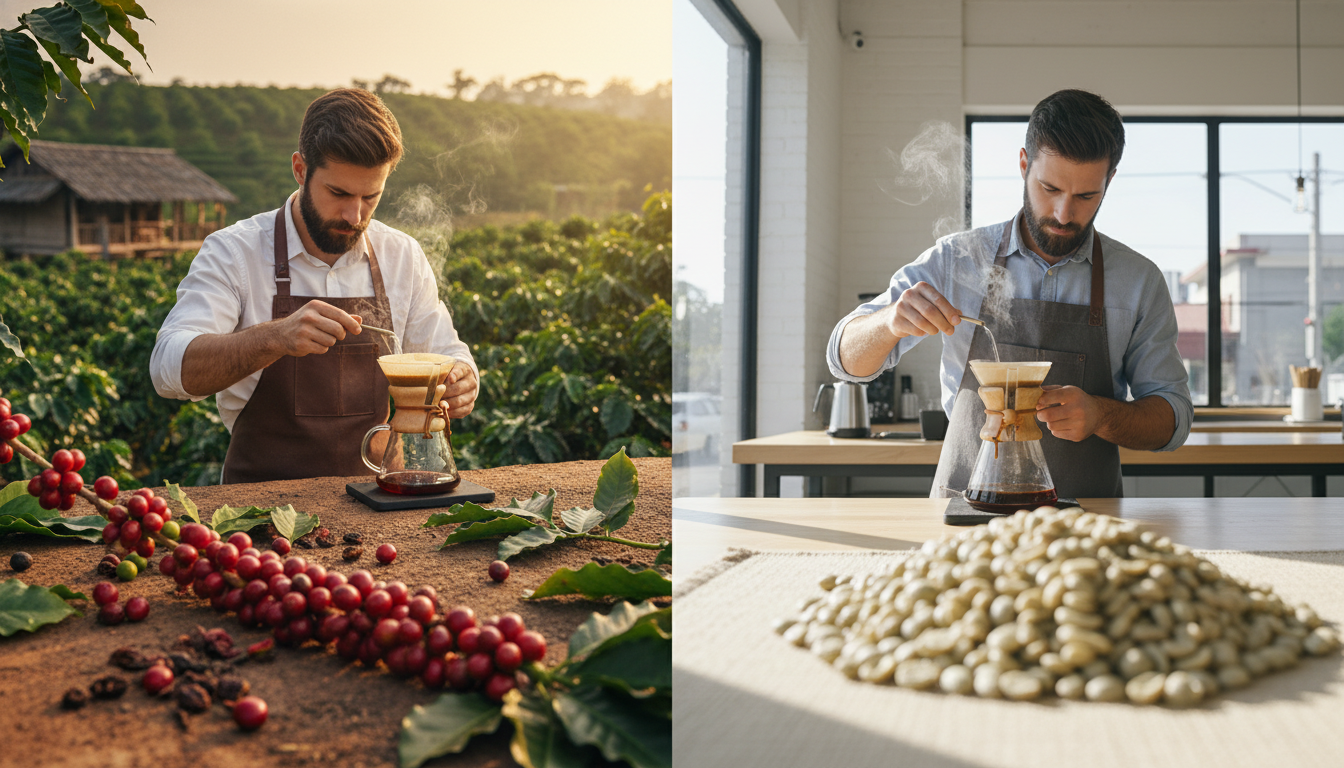
Processing matters: washed lots tend to highlight clarity and bright fruit. Natural and anaerobic methods often boost jammy, tropical, or fermented fruit impressions. Each way shifts perceived sweetness and overall balance.
Concrete examples: look for tasting notes that call out “berry jam” or “tropical fruit” if you want lively fruit-driven profiles. Seek “caramel,” “cocoa,” or “maple” descriptors for a richer, dessert-like style.
Green quality signals include even bean size, lack of defects, and clear roast development potential. High-quality greens yield clean cups that read sweeter rather than papery or astringent.
Shopping checklist: check origin and processing on the label, read roaster notes, and prefer single-origin or named lots. Remember: even sweet-potential lots can lose their edge if roast choices add excess bitterness or roastiness.
Roast and Roasting Choices That Support Natural Sweetness
How a batch is roasted often determines whether a brew reads as bright or rounded.
Light roasts preserve more origin character and bright fruit notes. These cups can feel lively and lively fruit-forward, which helps perceived sweetness without added sugars.
Medium roasts allow Maillard reactions to progress and often produce caramel-like or chocolatey notes. When development is clean, that roundness boosts perceived sugar-like appeal.
Trade-offs you will taste
Too little development leaves green or sour impressions. That undercuts the final cup and masks any delicate fruit character.
Too much roast brings roastiness and bitterness. Those harsher notes suppress fruity and floral cues and reduce perceived sweetness.
Roast development as a time decision
Extending post-first-crack development shifts compounds toward caramel and cocoa. But extending time past a point creates burnt or astringent results.
Think of development as a dial: small increases add body and caramel notes; large increases push toward roast-driven bitterness.
| Level | Typical Outcome | What to seek |
|---|---|---|
| Light | Bright, fruity | Preserve origin clarity |
| Medium | Caramel-like, rounded | Clean development, avoid baked notes |
| City+ | Noticeable roast character | Use for milk drinks or dark-preferred brews |
Practical buying note: “light,” “medium,” and “City+” labels vary by roaster. Check roast dates and tasting notes to pick lots that match your extraction methods and target profile.
Finally, match roast to brewing: lighter profiles often shine in gentle pour-over extraction, while medium roasts can tolerate higher temperatures or press methods to highlight rounded, sugar-like aromatics.
Brewing Methods That Make Coffee Sweeter Without Sugar
Stable routines and precise adjustments are the real levers for a sweeter cup at home. Start by treating extraction as the foundation: under-extraction brings sour, green notes; over-extraction brings harsh, drying finish that hides desirable fruit and caramel signals.
Dial in extraction
One-variable method: change only grind size first, then ratio, then temperature, then agitation. Taste after each change and record times. This isolates what helps the final result.
Grind size and consistency
Why it matters: inconsistent particle size creates mixed under- and over-extraction. That muddles clarity and lowers perceived sweetness. Use a burr grinder and small incremental adjustments.
Water temperature & contact time
Keep water 195–205°F for most methods. Shorter contact for pour-over reduces bitter over-extraction; longer contact for immersion increases body but can dry the finish. Balance to favor rounded flavors.
Pour-over technique & preheating
Use a 30–45 second bloom with twice the dose in grams for bloom water. Pulse pour to maintain even saturation and avoid channeling. Preheat brewer and server to protect slurry temperature for repeatable results.
“Consistency—grind, temp, and timing—turns a hit-or-miss cup into repeatable, sweeter results.”
| Problem | Likely Cause | Fix |
|---|---|---|
| Sweet sometimes, not other times | Variable grind or cold server | Stabilize grind; preheat carafe |
| Hollow cup | Under-extraction | Finer grind or longer contact time |
| Harsh finish | Over-extraction | Coarser grind; lower temp; gentler agitation |
Espresso and Milk Drinks: Getting Sweetness Without Added Sugars
A well-made short espresso shot can read as “sweet” when body, clarity, and bitterness are in balance.
Espresso balance: yield, time, and bitterness
Aim for a yield and time that avoid harsh extraction while preserving body. A common starting point is a 1:2 ratio (dose:yield) with a 25–35 second shot time, depending on your method and grinder.
If the cup tastes sharp or thin: shorten grind, lower yield slightly, or increase dose to add body. If it’s overly bitter: coarsen grind, shorten time, or cut yield to stop extracting harsh compounds.
How milk amplifies perceived sweetness
Milk adds lactose and a creamy texture that increases perceived sugar-like notes and rounds acidity. Steamed milk at 60–65°C (140–149°F) keeps sweetness and texture without scalding or muting aromatics.
For lattes and cappuccinos, match milk microfoam to the espresso: silkier microfoam integrates and highlights caramel, chocolate, or ripe-fruit impressions. Cooler milk (below 60°C) preserves more delicate flavor; hotter milk can dull nuance.
| Problem | Likely Fix | Target |
|---|---|---|
| Thin, acidic shot | Finer grind or slightly longer time | 25–35 sec, fuller body |
| Harsh, bitter shot | Coarser grind or shorter time | Lower yield; cleaner finish |
| Milk mutes aromatics | Lower milk temp; better microfoam | 60–65°C; silky texture |
“Sweet” in espresso is often a flavor impression—caramel, chocolate, or jammy fruit—rather than literal sugar on the tongue.
Practical tip: choose beans noted for caramel, chocolate, or ripe-fruit flavor if your goal is naturally sweet cappuccinos and lattes. The right bean plus tuned shot and milk handling gives a naturally sweeter cup without added sugar.
Conclusion
The feeling of a sweeter cup grows from preserved aromatics, proper brewing technique, and specific non-sugar components that influence taste.
In short: perceived sweetness is real and rarely comes from table sugar. Aroma, balanced extraction, and taste-active molecules together create that impression more than measured sugars do.
Start with lots that show fruity or caramel notes, choose a roast that protects those cues, then use consistent brewing to keep them intact. Keep roast development clean to avoid harsh roastiness.
Focus on even extraction, a reliable grinder, stable temperature, and repeatable pour-over or espresso routines. These priorities let desirable aromatics and mouthfeel show through.
Next cup plan: change one variable, record the result, and keep what increases perceived sweetness while removing bitter or papery suppressors.
FAQ
What makes brewed coffee taste naturally sweet without adding sugar?
Why does perceived sweetness matter when evaluating a cup?
How is "sweet" different in black brew versus sweetened drinks?
Can trained tasters reliably detect sweetness on a large scale?
Is sweetness just the midpoint between sour and bitter?
If roasted beans contain little sugar, how do they ever taste sweet?
Do measured sugar levels exceed human detection thresholds?
How important is aroma to sweetness perception?
Which aromatic classes most boost perceived sweetness?
How does retronasal aroma change the brain’s perception of sweetness?
What flavors suppress sweet perception?
Which attributes act as the opposite of sweet in a cup?
How can a drink trigger sweet taste without detectable sugars?
What is "flavoromics" and how does it relate to sweet perception?
Which bean qualities and processing methods favor natural sweet notes?
What does "sweet coffee" signal when sourcing green beans?
How do I match bean choice to my preferred sweetness style?
How do roast levels affect intrinsic sweet flavors?
How can roast development steer flavors toward caramel versus harsh roast notes?
Which brewing adjustments enhance natural sweet impression without adding sugar?
Why does grind size and consistency change perceived sweetness?
How do water temperature and contact time affect sweetness?
What pour-over techniques specifically support sweetness?
Do preheating brewers and maintaining brew temperature help repeatable results?
How can espresso shots be dialed to maximize natural sweet notes?
Why does milk often make drinks taste sweeter?
Why Cheap Coffee Often Tastes Burnt
» Discover special tips and stories about coffee