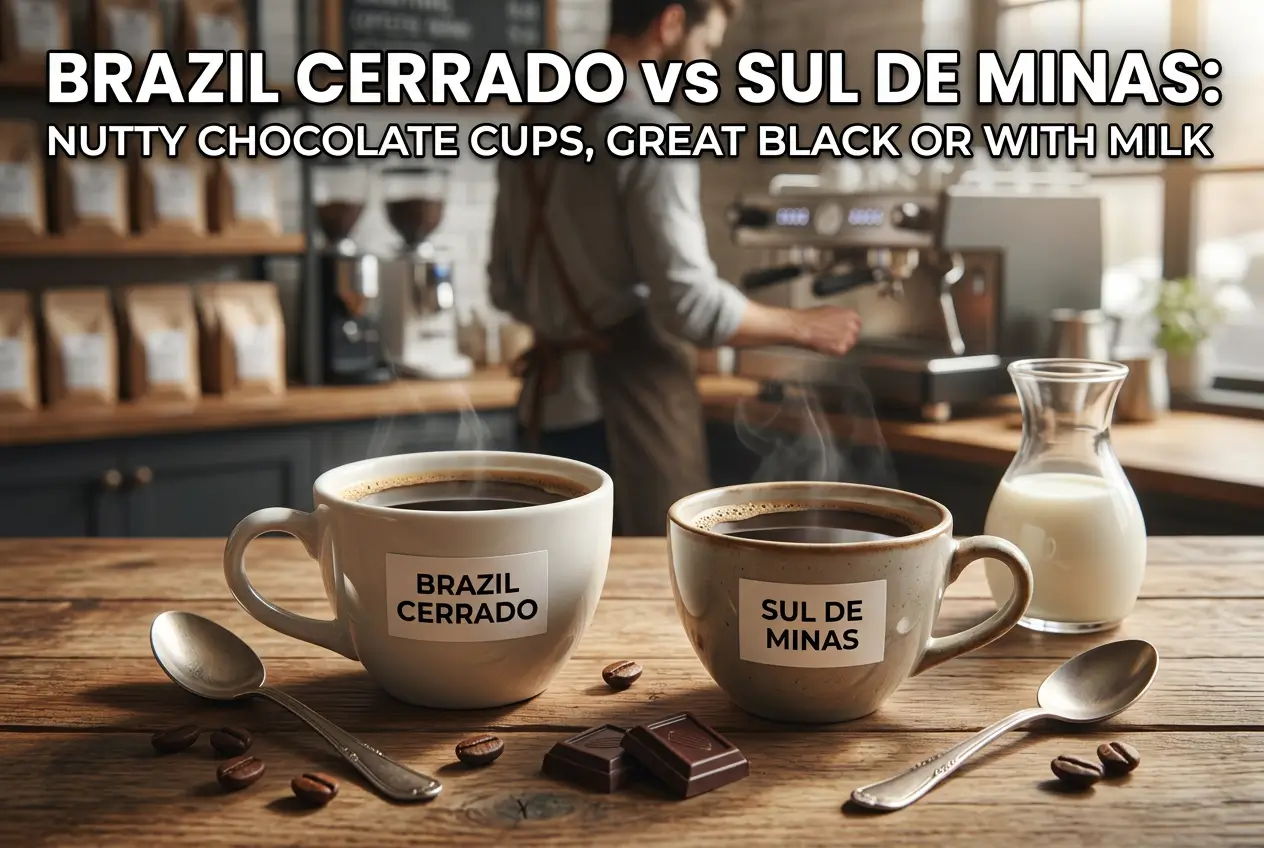
Brazil Cerrado vs Sul de Minas: Finding Nutty Chocolate Cups That Taste Great Black or With Milk
Trying to find the perfect Brazilian coffee? The choice between Brazil Cerrado vs Sul de Minas can feel complex, but it all comes down to one thing.
Are you looking for a rich, nutty, chocolatey cup that’s comforting and bold? Or do you prefer something with a brighter, more elegant touch?
This guide will help you find the ideal Brazilian bean that tastes amazing, whether you drink it black or add a splash of milk. Let’s get brewing.
Cerrado Mineiro: The Home of Balance and Body
The Cerrado Mineiro region is a world-renowned hub for specialty coffee. It was the first area in Brazil to receive a Denomination of Origin seal for coffee.
Located in Minas Gerais, its farms sit between 800 and 1,300 meters. This altitude, plus well-defined rainy summers and dry winters, creates consistency.
This predictable climate is key. It helps farmers produce high-quality beans with a reliable flavor profile year after year.
What Would You Like to Learn Next?
Choose an option below:
What Does Cerrado Coffee Taste Like?
Think of Cerrado coffee as your go-to for comfort in a cup. It’s known for its balance, full body, and incredible sweetness.
You’ll immediately notice clear notes of chocolate, caramel, and nuts. The aroma often smells just like these sweet treats.
The acidity is typically medium to low, making it very approachable. It’s a great “gateway coffee” for those new to the specialty world.
Expect a velvety, smooth feeling in your mouth. The finish is long and pleasant, with a lingering sweet, chocolatey aftertaste.
Perfect For You If: You love a robust, creamy espresso or a strong, familiar drip coffee without any sharp acidity.
A medium roast really brings out its best qualities. French press is also a fantastic method to highlight its intense, full-bodied character.
Sul de Minas: Elegance, Acidity, and Floral Notes
Sul de Minas is another powerhouse region in Minas Gerais. It has been producing top-tier coffee since the 19th century.
The key here is elevation. Farms in these mountains range from 700 to 1,500 meters, creating a unique environment for the coffee cherries.
Cooler temperatures at higher altitudes slow down the fruit’s maturation. This allows the beans to develop more sugars and superior complexity.
What Can You Expect from a Sul de Minas Cup?
Where Cerrado is bold, Sul de Minas is elegant. It wins you over with its refined qualities rather than a heavy body.
It’s known for a balanced, bright acidity and a medium body. You’ll often find delicate floral and citrus notes in the flavor profile.
Coffees from the highest mountain areas can have a velvety body. They pair this with a high, brilliant acidity and a distinct sweetness.
While you can still find chocolate and nut flavors, they are often accompanied by fresh, fruity, and sophisticated notes. Acidity is always a star player here.
Perfect For You If: You enjoy pour-over methods like Hario V60 or Chemex that let you explore a coffee’s subtle nuances.
Brewing with filtered or mineral water is crucial for these coffees. It helps their delicate and complex flavors shine through without interference.
Finding Your Perfect Nutty Chocolate Cup
So, how do you choose? Both regions deliver fantastic chocolate and nut notes, but the experience around them is different.
Your decision really comes down to your personal preference for acidity and body. Here’s a simple way to decide.
- Choose Cerrado Mineiro if: You want a bold body, low-to-medium acidity, and a consistent, comforting flavor profile. It’s a reliable classic.
- Choose Sul de Minas if: You prefer a medium, velvety body with a vibrant, bright acidity that adds complexity and elegance.
Think of it like this: Cerrado is like a rich chocolate fudge brownie, while Sul de Minas is like a fine chocolate bar with hints of fruit and flowers.
Should You Drink It Black or With Milk?
This is a personal choice, but understanding the trade-offs helps. Each option changes the experience and even the nutritional impact.
Drinking it black preserves the coffee’s true character. You’ll taste the aromas, acidity, and unique sensory notes with total clarity.
A 2025 University of São Paulo study highlighted that black coffee offers the highest levels of antioxidant compounds.
Adding milk softens the acidity and bitterness. This creates a creamier, more mellow drink for those who prefer less intensity.
Interestingly, combining coffee’s polyphenols with milk’s cysteine may boost anti-inflammatory effects. A 2:1 ratio of milk to coffee is a good starting point.
However, be aware that milk adds calories. It can also mask the delicate tasting notes of a high-quality specialty coffee.
How to Buy Quality Brazilian Coffee in the US
Finding great beans from Cerrado Mineiro and Sul de Minas in the States is easy if you know what to look for on the bag.
- Look for Origin Seals: Cerrado Mineiro has a Denomination of Origin (2013) seal. This guarantees its authenticity and quality.
- Check the SCA Score: True specialty coffee must score at least 80 out of 100 points from the Specialty Coffee Association (SCA).
- Confirm 100% Arabica: Arabica beans provide the complex flavors and aromas that define gourmet and specialty coffee.
- Find the Roast Date: Freshness is critical. Always choose bags that clearly display the date of roasting. Oxidized beans lose flavor.
- Demand Traceability: Good roasters will tell you the region, producer, and bean variety. “100% Arabica” alone isn’t enough information.
- Favor Micro-Roasters: Smaller roasters often work in small batches, which usually means fresher coffee and higher quality control.
Keeping Your Coffee Fresh at Home
Once you’ve bought great beans, proper storage is essential to protect your investment. Coffee’s enemies are air, moisture, heat, and strong odors.
Store your coffee in a well-sealed, airtight container. Keep it in a cool, dry place like a pantry.
For longer-term storage, the refrigerator can work well, but only if the container is truly airtight to prevent moisture and odor absorption.
Finally, try to consume your coffee within the first hour after brewing. After that, oxidation begins to degrade the flavor, making it taste stale.
Now you have the knowledge to explore these amazing Brazilian coffees. Start by picking a region that matches your taste and look for a fresh bag to brew.
Colombia Huila vs Nariño: A Home Taster’s Guide to Bright Fruit vs Caramel Comfort
» Discover special tips and stories about coffee