Colombia Huila vs Nariño: A Home Taster’s Guide to Bright Fruit vs Caramel Comfort
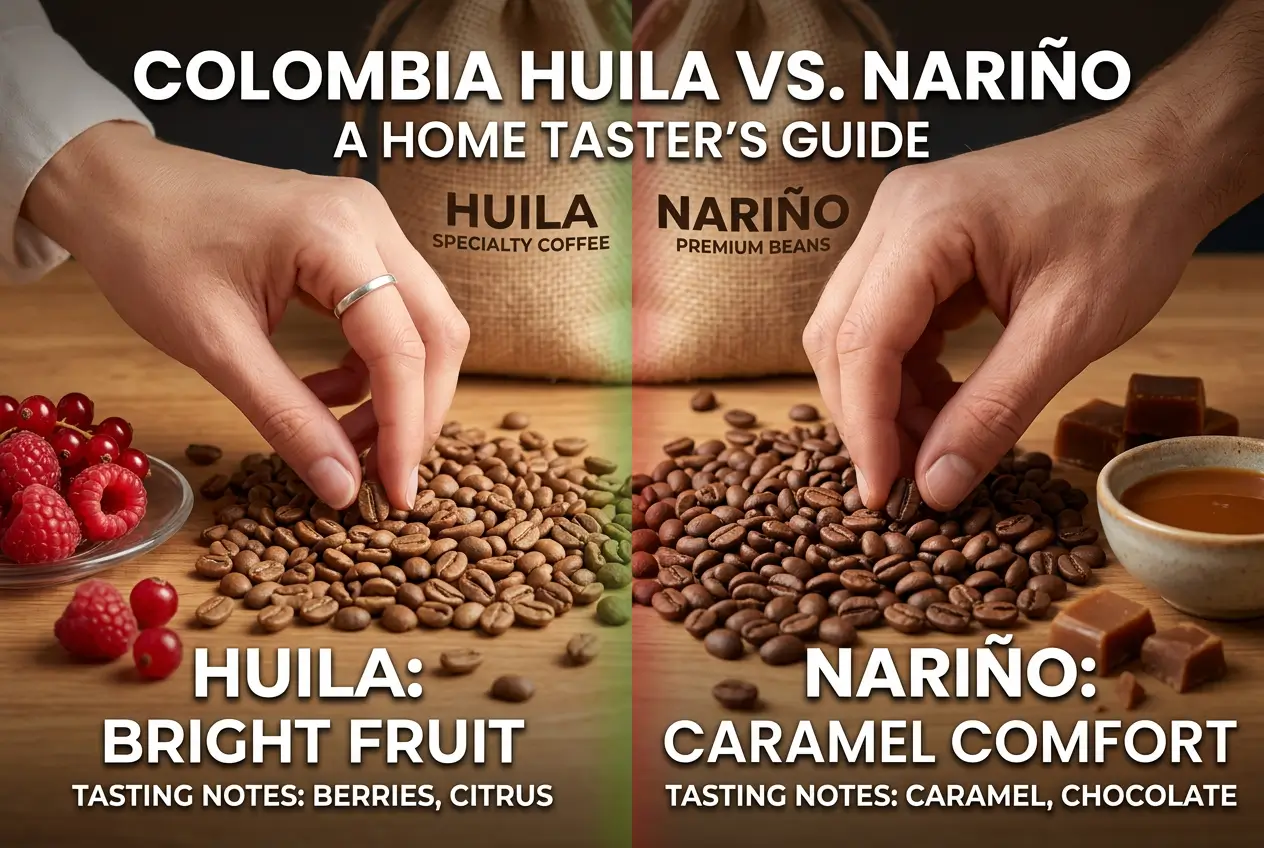
Choosing between Colombian coffees from Huila and Nariño? It’s a classic flavor dilemma: bright, fruity notes versus rich, caramel comfort.
One offers a vibrant, citrusy kick. The other delivers a smooth, sweet, and comforting cup. Understanding the difference is key to buying better beans.
This guide breaks down exactly what to expect from each region, how to choose the right beans, and the best ways to brew them at home.
Huila: The Home of Bright, Fruity Coffee
Huila is Colombia’s largest specialty coffee region, famous for producing award-winning lots. Think of it as the source of vibrant, lively flavors.
The taste profile is defined by a bright, sparkling acidity. Many coffee lovers compare it to the crispness of a fresh orange or a hint of lemon.
This isn’t just sourness. It’s a complex fruitiness balanced by a natural sweetness, often like honey or brown sugar. Here’s what you can expect in a cup.
What Would You Like to Learn Next?
Choose an option below:
- Fruit Flavors: Look for notes of red fruits like cherry and raspberry. You might also taste stone fruits or even passion fruit.
- Sweetness: A distinct honey and caramel sweetness complements the fruit. Hints of milk chocolate are common.
- Body and Acidity: The body is typically smooth and creamy, with that signature bright acidity making the coffee feel alive.
- Aftertaste: It finishes clean, often with a pleasant nutty or brown sugar note that lingers.
What makes Huila special? High altitudes, rich volcanic soil, and careful hand-picking create its unique, award-winning flavor profile.
Nariño: Your Go-To for Caramel Comfort
Nariño sits in the extreme southwest of Colombia, right near the equator. Its coffees are grown at some of the highest altitudes in the world.
This extreme altitude slows down the coffee cherry’s growth. The result is a denser, sweeter bean packed with complex sugars.
If Huila is bright and zesty, Nariño is smooth, rich, and deeply sweet. It’s the coffee equivalent of a comforting dessert. Let’s break down its profile.
- Sweetness and Body: Expect a silky, smooth body. The dominant flavor is a deep sweetness like sugar cane or rich caramel.
- Fruit and Florals: The fruit notes are more layered here. Think cherry, plum, or nectarine, often with a delicate floral or tea-like clarity.
- Acidity: It’s still bright, but it’s more controlled and refined than Huila’s. It lifts the flavors without being sharp.
- Finish: Nariño coffees are known for their exceptionally clean finish, leaving no muddy or bitter aftertaste.
What makes Nariño special? Extreme altitudes and dramatic temperature swings create a sweeter, denser, and incredibly smooth coffee bean.
How to Spot Quality Colombian Beans
Finding great single-origin coffee starts with reading the bag. Generic “Colombian” blends often hide lower-quality beans.
You need to be a label detective. Specificity is a sign of quality. Here are the key things to look for when you’re shopping.
- Look for the Region: The bag must say “Huila” or “Nariño.” This guarantees traceability and a specific flavor profile you can trust.
- Check the Roast Date: Freshness is everything. Coffee tastes best within two to four weeks of its roast date. Avoid bags without one.
- Confirm 100% Arabica: Colombia exclusively grows Arabica beans, known for their complex flavors. The label should confirm this.
- Inspect the Beans: If you can see them, they should be uniform in size and color. Oily, shiny beans often mean they’ve been over-roasted.
Where to Buy Authentic Huila and Nariño Coffee
Your local grocery store aisle probably isn’t the best place. For true single-origin beans, you need to go to specialty sellers.
These retailers focus on quality and transparency, ensuring you get fresh beans with a clear origin story. Here are your best options.
Online Specialty Roasters: Companies that roast to order are your best bet for freshness. They often ship beans just days after roasting.
Look for roasters like Press Coffee Roasters or Roast To Order Coffee, which highlight single-origin offerings from Colombia.
Local Coffee Shops: A great local café is more than a place for a latte. Their baristas are a fantastic resource.
Ask them about their current single-origin offerings. They can often tell you about the specific farm and even brew you a cup to try first.
Ethical Sourcing: Some brands, like Angelino’s Coffee or Colombian Coffee US, focus on direct relationships with farmers.
This often means higher quality beans and better pay for the producers who grow them, a win-win for everyone.
Best Brewing Methods to Unlock Flavor
Your brewing method can make or break your coffee experience. Different methods highlight different characteristics in the bean.
You can use the same beans to make two very different cups of coffee just by changing how you brew them.
For Huila’s Bright Acidity: Pour-Over (V60, Chemex)
The pour-over method is perfect for highlighting the delicate, fruity, and floral notes of a Huila coffee. The paper filter creates a very clean cup.
- Grind: Medium-fine, like table salt.
- Ratio: 1 part coffee to 16 parts water (1:16).
- Tip: Don’t skip the “bloom.” Pouring a little hot water over the grounds for 30 seconds first releases gases and deepens the flavor.
For Nariño’s Caramel Sweetness: French Press
A French press allows the coffee’s natural oils to remain in the final cup, creating a richer, fuller body that enhances Nariño’s caramel notes.
- Grind: Coarse, like rough sea salt.
- Ratio: 1 part coffee to 15 parts water (1:15).
- Tip: Press the plunger down slowly and evenly to avoid stirring up sediment from the bottom.
For a Smooth, Low-Acid Treat: Cold Brew
Cold brewing works wonderfully for both Huila and Nariño. It dials down the acidity and brings out the inherent sweetness and fruitiness of the beans.
- Grind: Extra coarse.
- Ratio: 1 part coffee to 8 parts water (1:8).
- Tip: Let it steep for 12 to 24 hours. The longer it steeps, the stronger the concentrate will be.
A Quick Guide to Better Brewing Water and Grind
Two simple things can drastically improve your coffee: the water you use and the freshness of your grind.
Use Filtered Water: Your tap water can contain minerals that interfere with flavor. Simple filtered water from a pitcher is a huge upgrade.
The ideal water temperature is between 195°F and 205°F. Too hot, and you’ll burn the coffee; too cold, and it will be weak.
Grind Right Before Brewing: Coffee begins to lose its flavor as soon as it’s ground. Grinding just before you brew makes a massive difference.
Store your whole beans in an airtight container away from light and heat to preserve their freshness for as long as possible.
Final Checks: Watch Out for These Red Flags
Even with beans from a great region, a couple of things can go wrong. Here are two critical warnings for any home coffee taster.
Warning 1: Not All Farms Are Equal
Just because a coffee is from Huila doesn’t automatically make it a 10/10. Quality varies from farm to farm.
This is why buying from reputable roasters who provide information about the specific producer or cooperative is so important.
Warning 2: Avoid Over-Roasted Beans
Some roasters burn their beans to hide defects. If the beans are black, oily, and shiny, they are likely over-roasted.
This process destroys the delicate fruit and caramel notes of Huila and Nariño, leaving you with a bitter, one-dimensional cup.
Whether you choose the bright fruit of Huila or the caramel comfort of Nariño, your next great cup of coffee is waiting. Start exploring.
Ecuador Specialty Coffee: The Hidden Origin Worth Trying
» Discover special tips and stories about coffee