Light Roast Imported Coffee: How to Brew It for Sweetness Instead of Sourness
Ever brewed an expensive light roast coffee only to get a sour, disappointing cup? You’re not alone. The problem isn’t the bean; it’s the brew.
That sharp, sour taste is almost always a sign of under-extraction. Light roast beans are dense and need a specific approach to unlock their sweetness.
This guide gives you the exact steps to fix it. We’ll show you how to brew light roast imported coffee for incredible sweetness, not sourness.
Why Your Light Roast Tastes Sour (It’s Not What You Think)
Light roast beans are roasted for a shorter time at lower temperatures. This process preserves the unique, delicate flavors of their origin.
Think bright, fruity, and floral notes. But it also means the beans are harder and less porous than their dark roast cousins, making them tricky to brew.
Sourness happens when water doesn’t pull enough flavor compounds from the coffee grounds. This is called under-extraction. The result is a thin, acidic, and unsatisfying cup.
What Would You Like to Learn Next?
Choose an option below:
Key takeaway: Sour coffee isn’t bad coffee. It’s almost always under-extracted coffee. You have the power to fix this by adjusting your technique.
The Three Tools You Need for Sweet Coffee
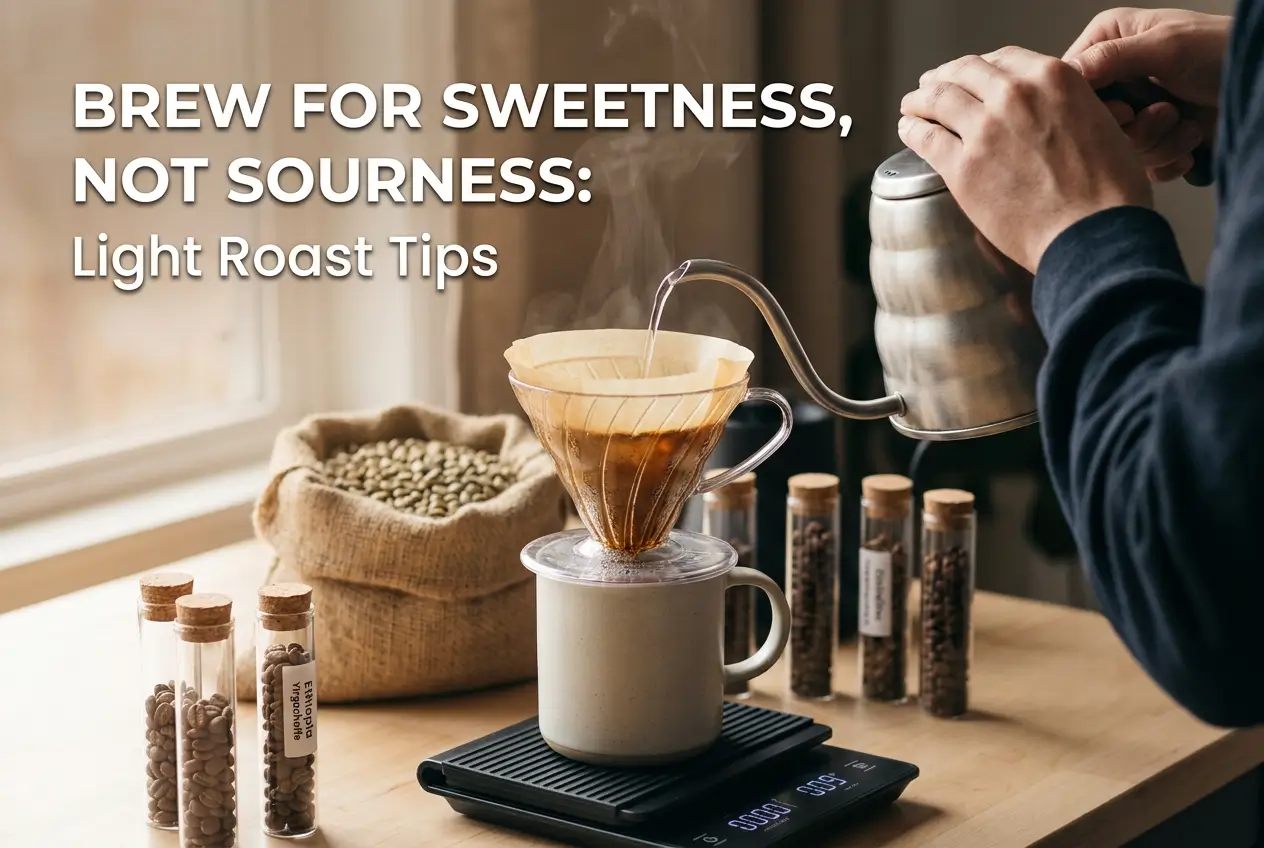
Precision is everything with light roasts. Guesswork leads to sourness. Investing in a few key tools makes a massive difference and ensures consistency.
- Burr Grinder: This is non-negotiable. Blade grinders create inconsistent particle sizes, leading to uneven extraction. A burr grinder provides a uniform grind.
- Digital Scale: Measuring coffee by scoops is a recipe for disaster. A scale lets you nail the perfect coffee-to-water ratio every single time.
- Gooseneck Kettle: Many models have temperature control. This allows you to heat water to the precise degree needed to properly extract light roasts.
Step 1: Grind Finer Than You’re Used To
Because light roast beans are so dense, water has a tough time getting inside to extract flavor. The solution is simple: make the coffee grounds smaller.
Grind your light roast coffee slightly finer than you would for a medium or dark roast using the same brew method. This increases the surface area.
More surface area allows the hot water to dissolve more of the sweet-tasting compounds, balancing out the bright acids.
Quick Warning: Don’t go too fine. If your brew clogs or tastes bitter and dry, you’ve gone too far. That’s over-extraction. Dial it back a notch.
Step 2: Turn Up the Heat (Seriously)
Forget the old myth about “burning” coffee. For dense, light roast beans, hotter water is your best friend. It provides the energy needed for proper extraction.
Aim for a water temperature between 195°F and 205°F (90°C to 96°C). Many baristas even push it closer to the higher end of that range for tricky beans.
If your coffee is sour, the first thing to check is water temperature. Water below 195°F simply lacks the power to extract sweetness from light roasts.
Using a temperature-controlled kettle removes all the guesswork. If you don’t have one, bring water to a boil and let it sit for about 30 seconds before brewing.
Step 3: Master Your Coffee-to-Water Ratio
The right balance between coffee and water ensures you’re not diluting the flavor or making it too strong. A digital scale is essential for this.
A great starting point for most brewing methods is a ratio of 1:16 or 1:17. This means for every 1 gram of coffee, you use 16 or 17 grams of water.
- Example: For a standard 12-ounce mug (about 350g of water), you would use approximately 21 grams of coffee (350 divided by 16.5).
If the result is too weak, try a slightly tighter ratio like 1:15. If it’s too strong, try 1:17. Small adjustments can have a big impact on the final taste.
Step 4: Extend Your Brewing Time
Since light roasts are harder to extract, they often need a little more contact time with the water. Don’t rush the process.
If your cup is sour, it’s a clear sign the brew was too fast. Extending the time allows the water to dissolve more of the sugars that balance the acidity.
Here are some general time targets to aim for:
- Pour-Over (V60, etc.): Aim for a total brew time of 3:00 to 3:30 minutes.
- French Press: Extend the steep time to 5 minutes before plunging.
- AeroPress: Try a longer infusion time before you press, perhaps 2 minutes or more.
Step 5: Don’t Skip the Bloom
The “bloom” is the first pour of water on your coffee grounds. It’s a critical step that allows trapped CO2 gas to escape before you start the main brew.
If you skip it, those gas bubbles can repel water during brewing, causing uneven and weak extraction. This leads directly to sourness.
For light roasts, a longer bloom is often better. Pour just enough hot water to saturate the grounds (about twice the weight of the coffee) and let it sit.
Give it a good 30 to 45 seconds. You’ll see the coffee bed bubble and expand. This ensures the water can extract flavor evenly during the rest of the brew.
Troubleshooting Common Light Roast Problems
Even with the right steps, you might need to fine-tune your process. Use this table to diagnose your cup and find the right solution.
| If Your Coffee Tastes… | It Means… | Try This Solution |
|---|---|---|
| Sour, Grassy, Weak | Under-extracted | Grind finer, use hotter water, OR brew for longer. (Change one thing at a time!) |
| Bitter, Harsh, Dry | Over-extracted | Grind coarser, use slightly cooler water, OR brew for a shorter time. |
| Both Sour and Bitter | Uneven Extraction | Improve your pouring technique (for pour-over) or ensure your burr grinder is clean. |
Where to Find Reliable Brewing Information
The coffee world is full of advice, but not all of it is reliable. For quality information, turn to the experts who set the standards.
- Specialty Coffee Association (SCA): The SCA provides the official standards for things like water quality. Their research influences most professional baristas.
- Your Coffee Roaster: Most specialty roasters provide specific brewing guides for the beans they sell. Check their website for a “Brew Guides” section.
- Online Communities: Forums like Reddit’s r/pourover can be a great place to ask questions and see what techniques others are using for a specific coffee.
Remember to treat brewing guides as starting points. Every coffee is different, so use the recipes as a baseline and adjust based on how your coffee tastes.
Brewing delicious light roast coffee is a skill you can learn. Start with these tips, trust your taste buds, and don’t be afraid to experiment.
Cold Brew with Single Origin Beans: Bright vs Chocolatey Results by Region
» Discover special tips and stories about coffee