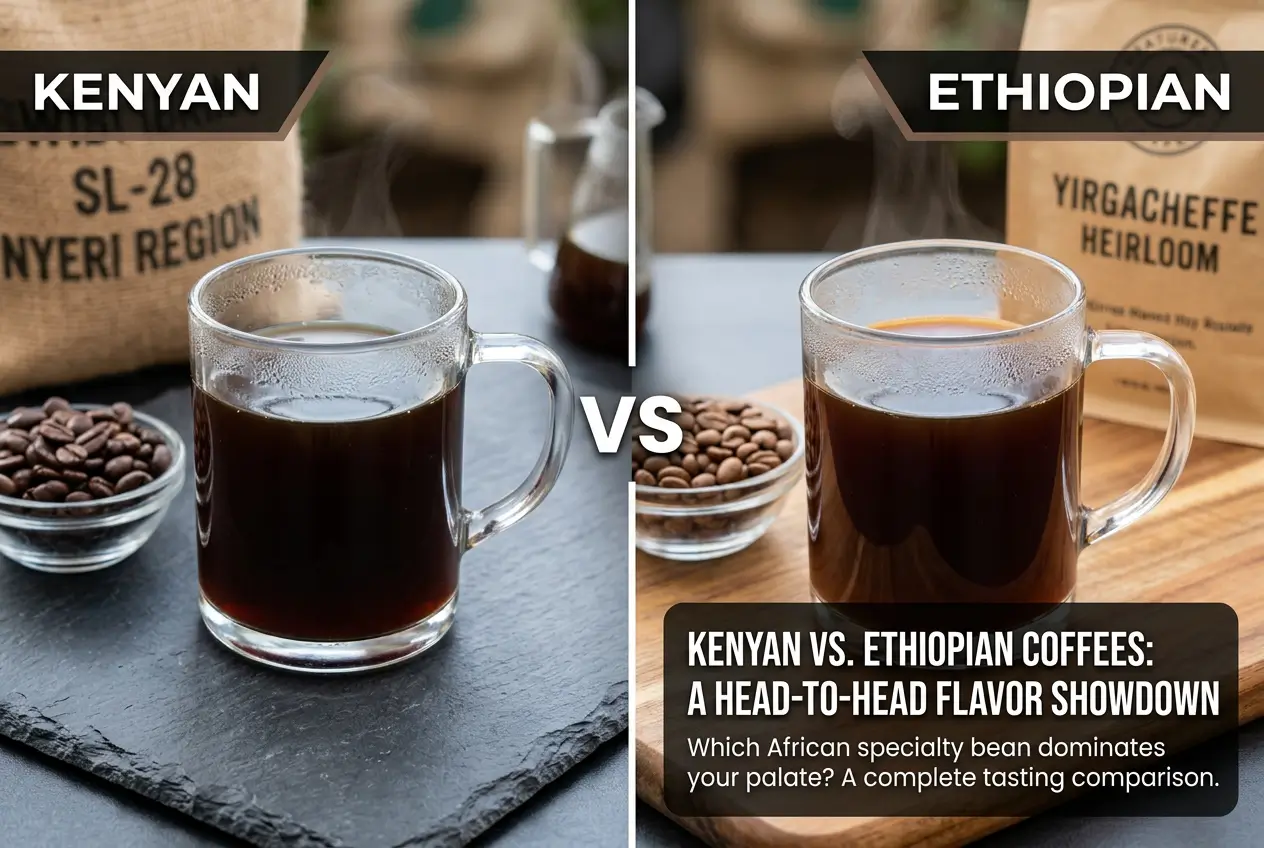
Kenyan vs. Ethiopian Coffees: A Head-to-Head Flavor Showdown
Choosing between Kenyan and Ethiopian coffees can feel like a tough decision. Both are world-class, but they offer wildly different experiences in the cup.
Think of Ethiopian coffee as floral, delicate, and tea-like. Kenyan coffee is its bold cousin: juicy, bright, and full-bodied.
This guide breaks down the key differences in flavor, aroma, and feel. You’ll learn exactly how to pick the perfect bag for your taste.
Why Origin Is Everything in Coffee
When we talk about specialty coffee, we’re talking about place. Soil, altitude, and climate shape a coffee bean’s flavor just like they do for wine grapes.
Ethiopia and Kenya are neighbors in East Africa, but their coffees are worlds apart. This is thanks to unique coffee varieties and processing traditions.
Understanding these origins helps you move past generic “gourmet” labels. It empowers you to find coffees you will truly love.
What Would You Like to Learn Next?
Choose an option below:
Ethiopian Coffee: The Birthplace of Floral Complexity
Ethiopia is where it all began. It’s the literal birthplace of Arabica coffee, and its beans are known for their incredible diversity and aromatic range.
The flavor profile is often vibrant and complex. Expect a bright acidity, a lighter, tea-like body, and a clean finish.
Thousands of undiscovered native coffee varieties exist there. This genetic diversity is why Ethiopian coffees can taste so unique.
- Key Regions: Yirgacheffe, Sidamo, and Guji are the most famous. Harrar is another classic region, known for different flavors.
- Common Flavors: You’ll often find notes of bergamot, lemongrass, jasmine, and stone fruits like peach or apricot.
- Processing Matters: The way the coffee cherry is removed from the bean changes the taste dramatically.
Washed processing, common in Yirgacheffe, creates a cleaner, brighter cup. It highlights those delicate floral and citrus notes.
Natural processing, found in Harrar and parts of Guji, is different. The coffee cherry is dried whole, giving the bean intense fruity flavors like blueberry or strawberry.
Pro Tip: If you enjoy delicate, aromatic teas or light-bodied white wines, an Ethiopian Yirgacheffe is a great place to start.
Kenyan Coffee: Bright Acidity and a Powerful Body
Kenyan coffees are famous for one thing above all: a bold, sparkling acidity. It’s often described as bright, juicy, and even savory.
These coffees have a rich, full body and a complex flavor profile. Think of deep fruit notes like blackcurrant, blackberry, and grapefruit.
The experience is often described as “wine-like” due to this combination of bright acidity and a sweet, lingering finish.
- Key Regions: Look for coffees from Nyeri, Kirinyaga, and Embu. These areas are in the highlands surrounding Mount Kenya.
- Main Varieties: Most Kenyan coffee comes from two specific varieties, SL28 and SL34. They are known for their complexity.
- Grading System: Beans are often graded by size. “AA” is the largest and most common premium grade you’ll see on bags.
The “Kenya washed” or “double fermentation” process is key. This meticulous method is what creates the clean, crisp, and structured acidity Kenya is famous for.
Don’t get too hung up on the “AA” grade. While it indicates large beans that roast evenly, it doesn’t automatically guarantee superior flavor. Quality comes from the farm.
Flavor Showdown: Kenya vs. Ethiopia at a Glance
Sometimes you just need a straightforward comparison. Here’s how these two coffee giants stack up side-by-side.
| Characteristic | Ethiopian Coffee | Kenyan Coffee |
|---|---|---|
| Acidity | Bright, delicate, floral | Bold, sparkling, wine-like |
| Body | Light to medium, tea-like | Medium to full, syrupy |
| Common Flavors | Bergamot, jasmine, blueberry, lemon | Blackcurrant, grapefruit, tomato |
| Typical Process | Washed and Natural | Almost exclusively Washed |
This table is a starting point. The beauty of specialty coffee is that you can always find exceptions that surprise you.
How to Brew for the Best Flavor
Your brewing method can either highlight or hide a coffee’s best qualities. You don’t need fancy gear, just the right approach.
For Ethiopian Coffees: The goal is to showcase their delicate aromas and clarity. Light to medium roasts are almost always best.
- Pour-Over (V60, Chemex): This is the ideal method. It yields a clean cup that lets the floral and citrus notes shine through.
- AeroPress: A great choice for highlighting bright acidity with a slightly fuller body. Use a quick brew time.
- Avoid: French press can sometimes muddy the delicate flavors. Dark roasts will destroy the nuanced aromatics completely.
For Kenyan Coffees: You want to celebrate their rich body and intense fruitiness. Again, light roasts are perfect for this.
- French Press: This method enhances the coffee’s full body and rich, syrupy texture. It makes for a very satisfying cup.
- AeroPress: Excellent for a concentrated, juicy brew that highlights the bold berry notes.
- Cold Brew: Kenyan coffee makes amazing cold brew. Its high acidity and bold flavors stand up well to the long, slow extraction.
Your Smart Buying Guide: What to Look For on the Bag
The coffee aisle can be confusing. Ignore the fancy marketing and focus on the information that actually matters.
A good roaster will give you all the details you need to make an informed choice. Transparency is a sign of quality.
- Specific Origin: Look for the region, like “Yirgacheffe, Ethiopia” or “Nyeri, Kenya.” This is much better than a generic “African Blend.”
- Processing Method: Does it say “Washed” or “Natural”? This is a huge clue to the flavor profile inside.
- Roast Date: This is critical. Coffee is best within a few weeks of roasting. Look for a date, not a “best by” window.
- Tasting Notes: Good roasters list 2-3 flavor notes (e.g., “Blackcurrant, Brown Sugar, Grapefruit”). This is their guide to what you can expect.
Warning Signs: How to Avoid Bad Coffee Buys
Unfortunately, not all coffee is sold with honesty. Learning to spot the red flags will save you from disappointment and wasted money.
Remember: Specialty coffee is a premium agricultural product. If the price seems too good to be true, it probably is.
- Vague Labels: Be wary of bags that only say “Premium,” “Gourmet,” or “100% Arabica” without providing any origin details.
- No Roast Date: This is the biggest red flag. It often means the coffee is old and stale. Freshness is key to great flavor.
- Unrealistically Low Prices: Quality coffee costs money to grow, process, and import. Very cheap coffee often means low quality beans.
- Buy Whole Bean: Pre-ground coffee loses its aroma and flavor much faster. Grinding right before you brew makes a huge difference.
Stick to reputable specialty coffee roasters. They build relationships with farmers and are transparent about where their coffee comes from.
So, Which Coffee Should You Choose?
The best coffee is always the one you enjoy the most. Your personal preference is the only thing that matters.
Here’s a simple way to decide which to try first.
Choose Ethiopian coffee if: You love aromatic, floral flavors. You prefer a lighter, more delicate cup, similar to a fine tea.
Choose Kenyan coffee if: You crave a bold, juicy, and fruity experience. You enjoy a rich, full-bodied coffee with a bright, clean finish.
The best way to learn is to taste. Try a bag of each, brew them side-by-side, and see which one speaks to you.
Now you have the tools to explore these amazing origins. Happy brewing!
Ecuador Specialty Coffee: The Hidden Origin Worth Trying
» Discover special tips and stories about coffee