How Coffee Flavors Appear in Layers
Learn the art of coffee flavor layering with our step-by-step guide. Discover how to create complex flavors in your coffee
Think of a cup as a small tasting journey. The concept here is simple: build a drink so the first sip, the mid-palate, and the finish each reveal something distinct. This approach turns a routine brew into a clearer, more interesting taste experience for people who enjoy exploring notes and textures.
Start with a good base. A properly brewed cup already has baseline layers—aroma, initial sip, and aftertaste—before you add anything. Natural add-ins like spices, citrus peel, or chocolate often blend more subtly than artificial syrups.
In this guide you will pick a base, add taste in small steps, then tweak balance so nothing overpowers the cup. Two core strategies appear throughout: complement to reinforce existing notes, and contrast to balance bitterness or acidity with sweetness or cream. Work incrementally—add a little, taste, then adjust—so the final experience stays clean, not muddy.
Key Takeaways
- Layering means distinct aroma, sip, and finish rather than one dominant note.
- Natural additions usually offer more nuance than synthetic ones.
- Use complement and contrast strategies to craft balance.
- Add ingredients slowly and taste between steps.
- Simple home tools and common ingredients can create clear layers.
Start With Coffee Flavor Profiles: What You’re Actually Tasting</h2>
Before you tweak anything, learn the markers that make up a profile. Acidity, body, aroma, and sweetness interact to create what people call a tasting profile. Change one element and the whole perception shifts.
How acidity, body, aroma, and sweetness shape the cup
Acidity shows as brightness or tang on the front of the tongue. Body is the weight and mouthfeel. Aroma is what you smell before the sip. Sweetness smooths harsh edges and rounds the end.
Using a coffee flavor wheel to spot notes like chocolate, citrus, and floral
Use a wheel at home: smell dry grounds, then the brewed cup, then sip. Note the top two or three descriptors you detect—chocolate, citrus, or floral are common notes. Write them down to guide additions.
What Would You Like to Learn Next?
Choose an option below:
Complement vs. contrast: the two easiest ways to build complexity
Work with the coffee natural character first. If a bean shows chocolate notes, complement with cocoa. If bitterness dominates, contrast with a touch of sweetness and cream.
Complexity means clear stages and progression, not more ingredients. Next, roast level will show which notes are easiest to identify and layer in the cup.
Choose the Right Coffee Base for Your Flavor Goal</h2>
Choose a base that matches the end result you want—bright and juicy, cozy and sweet, or rich and dessert-like.
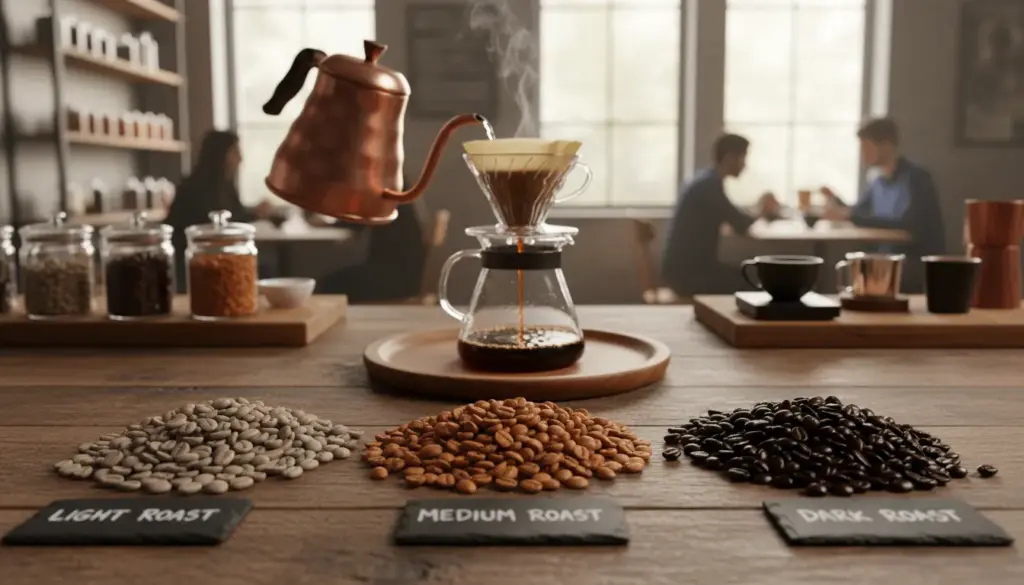
Light roasts for bright, fruity, and tangy layers
Light roasts show higher perceived acidity and clear citrus or floral notes. They pair well with zest or fruit additions without feeling heavy.
Medium roasts for caramel-like balance and everyday versatility
Medium roasts give smooth sweetness and a balanced body. Use them as a reliable base for caramel, vanilla, or nutty directions while keeping the bean character present.
Dark roasts for bold richness and chocolate-forward depth
Dark roasts offer smoky richness and stand up to heavier add-ins like caramel and dark chocolate. They keep presence even when sweetness is turned up.
- Quick rule: want zest and fruit → light; want caramel-vanilla comfort → medium; want mocha depth → dark roasts.
- Fresh beans and proper storage preserve clear notes—stale beans flatten the cup and reduce layering potential.
Coffee Flavor Layering Techniques You Can Do at Home</h2>
You can build distinct stages of taste with a few easy techniques at home. Start with a clean, well-extracted brew around 195–205°F for the best clarity. Work slowly: pick one main addition, then a supporting note, and finish with a texture or aroma touch.
Add sweetness and depth with syrups and extracts
Vanilla and caramel syrups are fast tools. Add small amounts, taste, then increase if needed. Try floral extracts like lavender sparingly so the cup still leads.
Build warmth with spices
Apply spices three ways: mix into grounds before you brew, infuse into warmed milk, or dust on top after pouring. Each method changes intensity and aroma.
Create richness with chocolate
Use cocoa powder for dry depth, syrup for glossy sweetness, or shavings for texture. For a mocha build, pair chocolate with espresso or a medium roast to keep balance.
“Start simple, record what you try, and repeat the combinations that worked.”
| Technique | When to Use | Effect | Best Match |
|---|---|---|---|
| Syrups/Extracts | After brewing | Sweetness and depth | Medium roast, morning cups |
| Spices in grounds | During brew | Integrated warmth | Dark or medium roasts |
| Citrus zest | Finish | Brightens taste | Light roast, lemon or orange |
Milk choices and brewing vs. after-brew
Whole milk smooths acidity. Oat highlights caramel notes. Almond adds nuttiness, soy reads slightly sweeter, and coconut gives a tropical edge.
Keep a short log of amounts and order so you can repeat favorite combinations on busy mornings.
How to Balance Layers So Nothing Tastes Overdone</h2>
A well-balanced cup reveals a clear front, middle, and finish without any single addition taking over. Balance means keeping the coffee natural profile recognizable while letting added notes appear in order. The goal is progression, not a single sweet hit that flattens the whole drink.
Quick tasting method to anchor your baseline
Take one sip black to set a baseline for taste. Wait a short time, then add small amounts and taste again. Pause between sips so aroma and sweetness register before you change anything.
Fixes for common problems
- Too sweet: cut syrup next time, add cocoa powder or a tiny pinch of sea salt to sharpen contrast.
- Too bitter: add a hint of vanilla or a splash of cream to soften edges. If the brew itself is harsh, ease extraction slightly.
- Too acidic: switch to a medium or darker roast next time, or add milk to round sharpness; a touch of sweetness also helps.
- Flat cup: introduce one aromatic treat — cinnamon dust or a citrus peel — or raise strength a bit to restore complexity.
“Limit additions to two or three per cup and adjust over repeated trials.”
Keeping changes small and giving each adjustment time to register is the best way to avoid overdoing it. This simple way preserves the base profile and keeps complexity clear rather than crowded.
Advanced Options: Infusions, Cold Brew, and Time-Based Layering</h2>
Explore infusion and steeping techniques to add subtle scent and structured intensity. This section shows practical ways to give beans built-in aromatics, why cold extraction frees you to be bolder, and how heat and time control clean extraction.
Infusing beans for subtle, built-in notes
Store whole beans in an airtight jar with a small dry pod of lavender, a split vanilla bean, or two cardamom pods. The dry aromatics transfer slowly so the cup gets gentle scent without tasting like syrup.
Test small batches first. Keep jars separate from foods and replace pods when scent fades to avoid contamination.
Why cold brew suits bold experiments
Cold brew has lower perceived acidity and a smoother mouthfeel. That makes it a forgiving base for richer additions like dark chocolate or caramel without sharp edges.
Time and heat: extracting cleanly
For hot methods, stay near 195–205°F to pull clear compounds. Too much heat or too long a steep can blur the cup and create muddiness.
Longer steep time increases intensity, but over-extraction kills nuance. Match steeping time to your goal: short for bright clarity, longer for weight and depth.
“Choose the method that fits your goal: subtle infusion for natural elegance, cold brew for bold experiments, or precise hot extraction for bright clarity.”
| Option | Best Use | Control Tips |
|---|---|---|
| Bean infusion | Subtle, built-in aromatics | Use dry pods, test small batches, store airtight |
| Cold brew | Bold, low-acid base for richer combos | Coarse grind, 12–20 hours steep, cold water |
| Hot extraction | Bright clarity and defined notes | 195–205°F, short controlled contact time |
Pairings and Presentation That Make Layers Pop</h2>
Good pairings lift each sip and reveal notes that might otherwise stay hidden. The right bite changes perceived sweetness, bitterness, and aroma so the cup’s stages become clearer without altering the recipe.
Sweet pairings by roast
Light roasts pair beautifully with fruit desserts like lemon tart or berry pastries. The bright acidity matches citrus and fresh berries.
Medium roasts work well with vanilla or nutty treats. Milk chocolate and caramel-style pastries amplify balance for a cozy morning treat.
Dark roasts suit chocolate-forward desserts, adding depth and richness to the finish.
Savory matches that enhance the cup
- Buttery croissants boost toasty notes.
- Egg dishes complement medium roast balance.
- Aged cheese amplifies smoky richness; smoked salmon pairs with brighter profiles.
- BBQ-style flavors match bolder cups for contrast.
Chocolate pairing rules & finishing touches
Milk chocolate pairs best with medium roasts; dark chocolate with darker profiles; white chocolate suits light roasts.
Finishes—whipped cream, cocoa or cinnamon dusting, and a citrus peel (try lemon)—add aroma and texture that make layers pop.
“Serve two small samples with different pairings so guests compare how a bite changes the experience.”
Start today by changing one pairing at a time to isolate what improves the sip-to-bite experience.
Conclusion</h2>
End with a clear rule, focus on one main addition and one counterpoint. Start with a coffee you like, identify its dominant note, then add a complementary touch plus a balancing element so the final taste stays clean.
Balance is the real differentiator. Small changes to sweetness, milk, or spice improve the overall flavor more than piling on extras.
Use a repeatable way: measure, change only one variable, and record what works. Try one technique today—vanilla-caramel, cinnamon, cocoa, or a citrus zest—and note the result.
Share samples with other people at home or work. Comparing notes builds confidence in describing taste and recognizing layers flavor in future brews.
FAQ
How do different tasting elements like acidity, body, aroma, and sweetness shape a cup?
What is a flavor wheel and how does it help identify notes such as chocolate, citrus, or floral?
Should I complement or contrast existing notes when building complexity?
Which roast level is best for bright, fruity, and tangy layers?
What makes medium roasts a good everyday choice?
How do dark roasts affect richness and chocolate-forward notes?
What simple home techniques add sweetness and depth without overpowering the cup?
How can spices like cinnamon, nutmeg, or cardamom be used effectively?
What are easy ways to add chocolate depth at home?
How do different milks change mouthfeel and perceived sweetness?
Can citrus zest be used, and which roasts suit it best?
What’s the difference between layering during brewing versus after brewing?
How do I fix a cup that’s too sweet, bitter, acidic, or flat?
What does infusing beans with vanilla, lavender, or cardamom do?
Why is cold brew a good base for bold experiments?
How do temperature and steep time affect extraction and clarity?
What sweet desserts pair best by roast level?
Which savory foods enhance the cup’s layers?
How do I match milk, dark, and white chocolate to different roasts?
What finishing touches make layers pop at presentation?
Ecuador Specialty Coffee: The Hidden Origin Worth Trying
» Discover special tips and stories about coffee