What Is Channeling in Coffee Brewing
Coffee channeling can ruin your brew. Learn the causes, effects, and prevention methods to achieve a perfect cup every time
Channeling happens when water finds paths of least resistance through the puck, causing uneven extraction in the same shot. This flow problem often makes an espresso taste off, with sour notes from under‑extracted zones and harsh bitterness where over‑extraction occurs.
Even with correct grind, dose, and tamp, small prep inconsistencies at home can create channels under pressure. That makes a single shot unpredictable and sometimes undrinkable.
This section will define the issue, show what it looks like during a pull, and describe the typical taste signs to watch for. You’ll learn a repeatable troubleshooting approach: observe flow, confirm by taste and visuals, then adjust grind, distribution, tamping, dose, and pressure.
Practical value: diagnosing this water‑flow issue stops you from chasing the wrong fix—like dialing finer when the better move is coarser or improving distribution.
Key Takeaways
- Channeling is uneven water flow through the puck that ruins extraction.
- It causes sour notes from under‑extraction and harsh bitterness from over‑extraction.
- Small home prep errors can create channels under pressure.
- Start troubleshooting by watching flow, then confirm with taste and visuals.
- Adjust grind, distribution, tamp, dose, or pressure to fix the problem.
- Clear diagnosis prevents unnecessary changes and improves consistency.
What coffee channeling is and why it happens in espresso
High-pressure brewing forces water to pick the easiest path through the puck instead of soaking every particle evenly. That happens because tiny density differences or voids make one route much lower in resistance than the surrounding bed.
Paths of least resistance and water flow under pressure
Path of least resistance means pressurized water favors shortcuts. In espresso, that concentrated water flow quickly exploits any low-resistance path in the puck, so uniform percolation fails.
What Would You Like to Learn Next?
Choose an option below:
“Pressurized water will follow weakness in the puck, not fairness across the grounds.”
How channels form from cracks, gaps, and weak spots
Channels start small: a crack from uneven distribution, a gap near the basket wall, a clump left by uneven grinding, or a tilted tamp. Once the stream finds a weak spot, it erodes the coffee bed and widens the route.
Why channels make over‑ and under‑extraction happen together
Grounds beside the fast path see excess water and over-extract. The rest of the puck gets too little water and under-extracts. The result is a single shot with conflicting sour and bitter notes.
| Area | Water Flow | Extraction Result |
|---|---|---|
| Near channel | Fast, concentrated | Over-extracted, bitter |
| Far from channel | Slow or dry | Under-extracted, sour |
| Puck surface (looks fine) | Can hide internal channels | Misleading visual, requires observation |
Control points: grind, dose, distribution, tamping, and machine pressure all change resistance and puck integrity. Even if the top looks fine, channels can form inside the portafilter basket, so watch flow and taste.
Next: learn how uneven extraction shows up in flavor and texture.
How coffee channeling changes extraction and flavor
An espresso may show slow timing yet still read acidic if water bypasses most of the grounds. That mismatch creates a confusing cup where different parts of the puck extract unequally.
What uneven extraction tastes like: sour sharpness plus harsh bitterness
The signature profile mixes bright, sharp sourness from under-extracted pockets with harsh bitterness from zones hit by concentrated flow. This contrast feels like the shot is both underdone and overdone at once.
Why a shot can run slow yet still taste sour
Slow pull time does not guarantee uniform extraction. If water finds and follows one narrow path, the overall time can stretch over ~30 seconds while most grounds stay under-extracted.
Practical benchmark: if a shot exceeds 30 seconds and tastes sour, suspect uneven flow rather than simply adjusting grind finer or coarser.
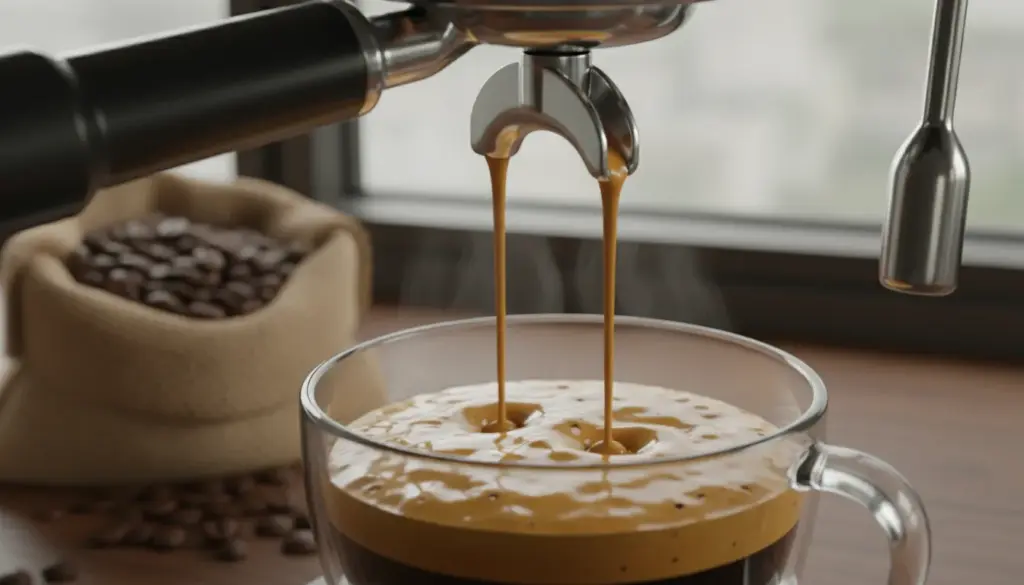
Crema and body clues: thin, pale crema and watery texture
Visually, affected shots often show a thin, pale crema and a more watery mouthfeel. The espresso lacks a full emulsified body and feels flat on the palate.
Note: crema and body are supporting indicators. Combine them with taste and flow observations — especially when using a naked portafilter — to confirm the problem.
| Clue | What to look for | What it likely means |
|---|---|---|
| Taste | Sharp sour + harsh bitter | Mix of under- and over-extracted zones |
| Timing | Slow (>30s) but sour | Narrow flow path; uneven extraction |
| Crema & body | Thin, pale crema; watery mouthfeel | Poor emulsification from uneven flow |
| Flow visuals | Uneven streams or spurts | Active internal bypasses in the puck |
How to spot channeling during an espresso shot
A shot that begins controlled but then surges usually signals a developing bypass in the basket. Watch for sudden speedups and uneven streams as they happen in real time.
Flow behavior: sudden speed‑ups and uneven streams
Look for a pull that starts steady, then quickly speeds up mid‑shot. That jump often means water opened a narrow path and is rushing through.
Also check stream shape: multiple thin lines, a wiggling stream, or flow favoring one side point to uneven puck resistance and failing grounds.
Visual signs with a naked portafilter
A bottomless portafilter makes spurting obvious—side sprays or jets that shoot outward instead of a single column confirm a problem.
Safety note: spurting is hot and messy. Keep the cup centered and hands clear while diagnosing.
Timing benchmarks and what they mean
Many espresso shots start dripping in ~3 seconds; a typical extraction runs near ~25 seconds, depending on recipe. Use these as reference points.
Remember: timing helps diagnose but doesn’t fix the cause. Both unusually fast and unusually slow pulls can still show internal water flow failures.
Taste‑based diagnosis without guessing
If the whole shot is quick and sour, suspect simple under‑extraction (too coarse). If the pull is slow yet sour or shows sour plus bitter together, uneven extraction in the basket is likely.
Next: once symptoms are confirmed, check the most common causes inside the basket for the fastest improvements.
Common causes of channeling in the portafilter basket
Several routine errors inside the portafilter basket explain why shots pull unevenly. Below are the main causes and the mechanics so you can target fixes quickly.
Grind size errors
Going too fine raises resistance in the puck and can choke flow. Water then seeks easier routes, often at the edge, creating edge channeling.
Note: a slow but sour espresso can come from a too-fine grind rather than needing finer settings.
Inconsistent grind and mixed grounds
Mixed particle sizes make uneven permeability. Coarser pockets act like shortcuts and let water bypass the rest of the bed.
After adjustments, purge the hopper so old and new ground coffee do not mix between shots.
Poor distribution and tamping errors
Clumps and voids in the distribution create weak spots that crack under pressure. An uneven tamp produces a tilted coffee bed and a thin side the water follows.
“A tilted puck hands water a clear way to shortcut extraction.”
Avoid striking the portafilter with the tamper edge; that can fracture the coffee puck or detach it from the basket wall.
Dose and machine variables
Overdosing reduces headroom and can press the puck into the brew head. Underdosing lowers structural support and invites uneven flow.
Aim for ~0.3 cm headroom. High brewing pressure can erode the puck and open channels; adjust pressure only after fixing prep.
| Cause | Mechanic | Tip |
|---|---|---|
| Too-fine grind | High resistance, edge flow | Coarsen one step and retest |
| Mixed grind sizes | Variable permeability | Purge hopper after changes |
| Poor distribution / tamp | Clumps, tilt, voids | Level bed, steady tamping |
| Dose / pressure | Headroom loss, puck erosion | Set ~0.3 cm headspace; check pressure last |
How to prevent and fix channeling with better puck prep
Consistent bed work and simple adjustments stop unstable flows before they start. Focus on prep first, then tweak the machine if problems persist.
Dialing grind for steady flow
Adjust one variable at a time. If an espresso pulls slowly but tastes sour, try a slightly coarser grind to lower puck resistance and reduce edge or weak-spot failures.
Aim for a steady, predictable flow—not a shot that starts fine then rushes as a path opens.
Improving distribution with the WDT tool
Use thin needles to break clumps and eliminate voids. A controlled distribution with a tool creates an even-density bed before tamping.
Even distribution reduces cracks when hot water hits the coffee puck, improving extraction consistency.
Tamping fundamentals
Tamp on a flat surface with the tamper level. Apply even pressure so the puck is uniform.
Don’t strike the portafilter edge with the tamper; that can fracture the puck and create instant leaks.
Dose, headroom, grinder consistency, and pressure
Keep ~0.3 cm headroom so the coffee puck won’t contact the brew head. After any grinder change, purge about an espresso dose to avoid mixed grounds.
Avoid overly high brewing pressure. Fix prep first; treat OPV or pressure changes as a last step.
| Step | Action | Why it helps |
|---|---|---|
| Grind | Change one notch coarser if slow+sour | Reduces resistance and edge flow |
| Distribution | Use WDT needles to level bed | Eliminates clumps and voids |
| Tamping | Level tamper, even pressure | Prevents tilted puck and weak sides |
| Dose & headroom | ~0.3 cm headspace | Stops puck contact with brew head |
| Consistency | Purge after adjustments | Avoids mixed grind permeability |
Quick checklist: grind → distribute with a tool → tamp level with even pressure → set dose/headroom → purge → adjust machine only if needed.
Conclusion
Conclusion: Preventing uneven extraction starts with careful prep and close observation. Uneven water movement (coffee channeling) breaks balance and makes shots taste both sour and bitter. Watch flow, crema, and texture as early warning signs.
Diagnose by watching for a mid‑shot speed jump or spurting with a naked portafilter. Confirm with taste and mouthfeel rather than guessing. These cues point to puck failure, not just grind settings.
Fixes in order: use WDT distribution, tamp level with even pressure, confirm dose and headroom, then make small grind changes. Avoid automatically dialing finer when a slow pull already tastes sour.
With consistent puck prep you get clearer extraction, fuller body, and more repeatable espresso results.
FAQ
What is channeling in espresso brewing?
How do paths of least resistance form in the puck and affect water flow?
What causes channels to form from cracks, gaps, and weak spots in the puck?
Why does channeling produce simultaneous over-extraction and under-extraction?
What does “uneven extraction” taste like?
Why can a shot run slow but still taste sour?
How do crema and body reveal channeling issues?
What flow behavior signals channeling during a shot?
What visual signs appear with a naked portafilter?
What timing benchmarks help spot channeling?
How can I diagnose channeling by taste without visual cues?
How does grind size contribute to channeling in the portafilter?
How does mixed or inconsistent grind size after adjustments cause problems?
How does poor distribution in the basket lead to clumps and voids?
Why does uneven tamping create a tilted bed and channels?
How do dosing errors like overdosing or underdosing affect channeling?
What machine settings can erode the puck and open channels?
How should I dial grind size to reduce cracks and rushing water?
How does a WDT tool improve distribution and remove clumps?
What are tamping fundamentals to avoid puck damage?
How much headroom should I leave to prevent brew head contact?
How does purging the grinder help with consistency?
What pressure and flow adjustments help avoid breaking the puck?
Why Melbourne Became One of the World’s Great Coffee Cities
» Discover special tips and stories about coffee