Light Roast vs Medium Roast: Which Preserves Flavor Better?
Uncover the truth about light roast vs medium roast coffee roasts. Which one retains more flavor and why? Get the facts
Which cup reflects the bean itself? Many shoppers see different labels and wonder what they actually mean. Naming for roast level is not standardized in the United States, so a grocery-store label can differ from a specialty shop’s label.
Specialty trends favor gentler profiles because higher-quality green beans no longer need heavy heating to hide defects. Lighter treatment often reveals fruit, floral, and terroir notes. Darker development brings caramel, toast, and chocolate notes that come from the cook, not the origin.
This article aims to explain what happens during heating, how the two styles usually taste, and a clear comparison for acidity, sweetness, bitterness, aroma, and body. It will also cover how brewing method and add-ins can shift perceived flavor, and clarify common caffeine myths using weight-versus-volume logic.
By the end, you’ll know which style fits your palate—black drinkers, milk-based fans, espresso lovers, or cold brew drinkers—and how to pick beans with confidence.
Key Takeaways
- Labels vary; judge by sensory markers, not just words on the bag.
- Gentler profiles often preserve origin traits; darker notes come from the cook.
- Brewing method and milk or sugar change perceived flavor a lot.
- Caffeine varies by weight vs. volume, not simply by label.
- The guide will match roast style to common drinking preferences.
What “preserving flavor” means in coffee roasts
When we talk about preserving flavor, we mean showing where the bean came from and how it was processed. That origin character includes farm, region, and the processing notes that tell the coffee’s story.
Origin character vs roast-driven flavors
Origin traits reveal fruit, floral, or terroir notes. Roast-driven flavors grow as heat increases and add toasted, caramelized, or uniform roasty profiles.
What Would You Like to Learn Next?
Choose an option below:
Why level naming is confusing in the United States
Labels are not standardized in the U.S., so one brand’s light can equal another’s medium. Many people call darker profiles “strong,” but strength often means bitterness, aroma, or brew ratio—not better flavor quality.
- Rule of thumb: trust tasting notes, roast date, and roaster reputation over the bag label.
- Two bags labeled the same can taste very different depending on bean quality and the roaster’s approach.
| Feature | Origin character | Roast-driven flavor |
|---|---|---|
| Primary cues | Fruit, floral, terroir | Toasted, caramel, smoky |
| Best seen in | Delicate, single-origin coffees | Blends and darker development |
| Buying tip | Check roast date and notes | Compare tasting panels or samples |
How roasting changes coffee beans, aromas, and taste
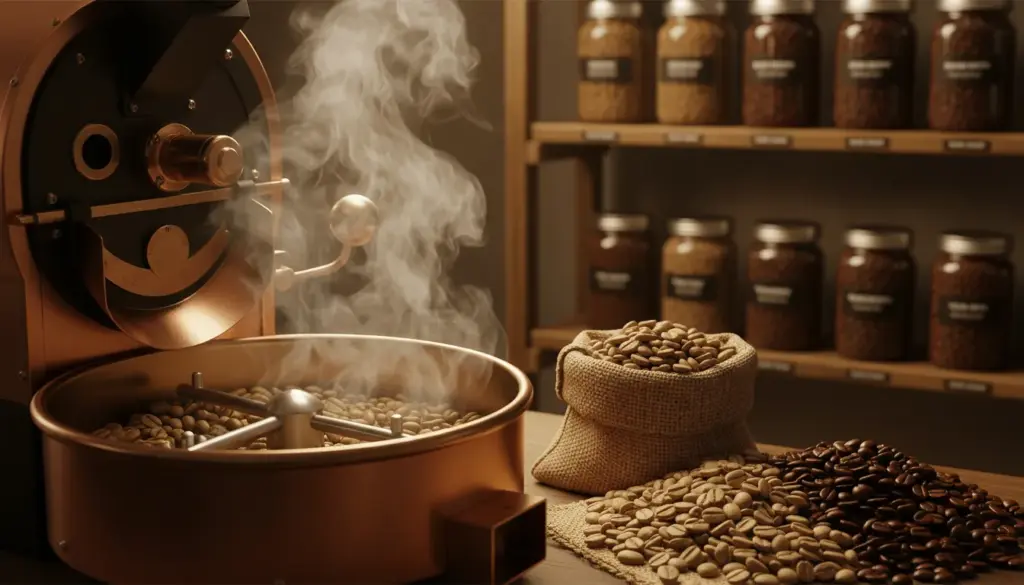
Unroasted beans smell grassy and flat; roasting transforms that raw profile into the coffee aromas we expect. The process creates volatile oils, browning compounds, and dissolved solids that shape cup taste and mouthfeel.
The green-bean starting point
Green coffee beans lack the fragrant compounds found in brewed coffee. That grassy note shows why roasting is essential: heat frees sugars and acids and builds the aroma content that defines a cup.
Key roasting stages
Drying: moisture leaves and the bean warms. This stage sets the base for even development.
Browning: the Maillard reaction creates hundreds of aroma and color compounds. This step drives much of the recognizable smell of roast coffee.
Development: final time and heat adjustments steer sweetness, acidity, and bitterness.
First crack and flavor steering
First crack is an audible pop as internal vapors break the bean structure. Roasters use that moment to decide whether to stop, hold, or push further. Beans roasted to just around first crack keep sharper acidity and origin notes.
How time and heat affect the cup
More development time raises caramelized sweetness and often increases body. Too much heat can flatten origin nuance and push bitterness higher.
Balance matters: underdevelopment tastes sour; overdevelopment blurs unique flavors. Typical levels: lighter profiles sit near first crack while more developed profiles go beyond it but stop before second crack.
| Stage | Chemical focus | Sensory result |
|---|---|---|
| Drying | Moisture reduction, even heat | Cleaner development, baseline stability |
| Browning | Maillard reactions | New aromas, increased color, starting sweetness |
| Development | Sugar caramelization, volatile release | Higher sweetness, fuller body, more bitterness if long |
Light roast coffee flavor profile and what it highlights
When a roaster stops near first crack, the beans keep more origin-driven compounds. This produces a cup that often reads as bright, crisp, and aromatic.
Color and surface oils
Beans appear light brown with a dry surface and little to no visible oil. That color helps shoppers identify the style even when labels vary.
Typical cup experience
The drinking profile favors sparkling acidity and a mellow body. Expect floral, citrus, berry, stone-fruit, or tea-like notes depending on origin and processing.
Why specialty roasters choose this approach
Specialty roasters use gentler development to showcase terroir. Preserving volatile aromatics lets origin character lead the cup instead of caramel or toast.
Practical note: these coffees can be less forgiving in extraction. Grind, water temperature, and brew method matter more to avoid sour or thin results.
- Bag cues: Cinnamon, Light City, Half City (naming varies).
- Internal temps: roughly 350–400°F and near first crack.
- Best brewed black for complexity; milk can mask subtle notes.
| Feature | What to expect | How to manage |
|---|---|---|
| Color | Light brown, dry surface | Look beyond labels; inspect beans |
| Cup | Bright acidity, mellow body | Use filter or pour-over for clarity |
| Tasting notes | Floral, citrus, berry, tea-like | Brew black to compare origins |
| Extraction | More sensitive | Adjust grind and temp carefully |
Medium roast coffee flavor profile and why it’s so popular
C most home drinkers reach for a cup that feels steady—neither sharp nor smoky—thanks to moderate roasting.
Appearance: Beans show a medium-brown color with a mostly dry surface. You’ll rarely see oil, which signals the roast stops before darker stages.
Balanced taste and body
Medium roast coffee delivers a rounded profile with gentle acidity and noticeable sweetness. The cup often leans into caramel-like sugars and a moderate body that feels smooth on the palate.
What it preserves and what it trades
This approach keeps origin cues—fruit, nut, or floral hints—while softening the brightest acidic edges. The trade-off is a subtler “sparkle” than less-developed beans, but a fuller, more forgiving taste overall.
Common bag labels
- American
- City
- Regular
- Breakfast
| Feature | What to expect | Why it matters |
|---|---|---|
| Color | Medium brown, dry surface | Shows balanced development |
| Taste | Caramel sweetness, mild acidity | Easy daily drinking |
| Body | Moderate, rounded | Works in black or milk-based drinks |
| Roast temp | About 400–430°F | Past first crack, before second crack |
Light roast vs medium roast: which preserves flavor better?
Choosing which development level keeps a bean’s origin clear depends on what you mean by “preserve”—bright acids and floral cues, or a balanced cup that still hints at origin. Below is a direct comparison across key sensory categories to help you decide.
Acidity
High and vivid — One style tends to show sharper, more distinct acidity that reveals fruit and citrus notes.
Mild and present — The other keeps acidity but softens its edge so the cup feels rounder.
Sweetness
Delicate brightness appears when sugars remain less caramelized, giving a lively, floral sweetness.
Deeper caramel development produces a fuller, syrupy sweetness that many find comforting in daily cups.
Bitterness
Lower bitterness favors clarity and clean finish.
Moderate bitterness adds the familiar “classic coffee” tone and can balance sweeter elements.
Body and mouthfeel
One style often feels lighter and less viscous on the palate.
The other offers a more rounded, fuller body that holds up well with milk and sugar.
Aroma and flavor complexity
Nuanced, layered notes come through most in beans that retain more origin-derived volatiles.
Broader balance means roast-driven aromas integrate with remaining origin character for an even profile.
The practical takeaway
Decision framework: If preserving origin-specific nuance—fruit, floral aromatics, and distinct acidity—is your goal, choose the style that favors brighter, high-definition notes. For most everyday drinkers who want both trace origin cues and an easy, forgiving cup, the balanced approach is the better compromise.
Usability note: Brewing control matters. The clearer style punishes under-extraction; the balanced style is more forgiving and consistent for routine brewing.
| Attribute | Preserves origin cues | Balanced, forgiving cup |
|---|---|---|
| Acidity | High, vivid | Mild, smooth |
| Sweetness | Delicate, bright | Deeper, caramel-like |
| Bitterness | Low | Moderate |
| Body | Light, tea-like | Rounder, fuller |
| Aromas & notes | Nuanced, variable by origin | Broader, roast-integrated |
| Measure | What changes | Practical note |
|---|---|---|
| Caffeine by weight | Very similar | Weigh in grams for consistency |
| Caffeine by volume | Varies with density | Scoops are unreliable |
| Chlorogenic acid | Higher in less-developed beans | Middle development retains useful amounts |
Best brewing methods for light and medium roasts
Choosing the right brew method changes what you taste more than the label on the bag. Extraction, water temperature, and contact time control whether origin aromatics or roast-driven sugars dominate the cup.
Filter brewing for clarity: pour over, V60, and Chemex
For clarity and delicate notes, use pour-over methods. A V60 or Chemex highlights floral and fruit characteristics in high-quality roast coffees. Aim for steady pouring and a medium-fine grind to keep the cup clean.
Immersion brewing: French press and why steep time matters
Immersion methods extract more oils and body. With a french press, steep about four minutes for a balanced extraction with medium roast coffee. Shorter or longer times shift acidity and bitterness quickly.
Espresso and Moka pot: where medium roasts tend to shine
High-pressure brewing favors beans with rounded sweetness. Espresso and Moka pot bring forward syrupy sugars and consistent crema, so medium roast coffees often perform best here.
Cold brew with lighter roasts for nuanced flavor notes
Cold brew smooths acidity and can reveal subtle fruit and floral tones from light roast coffee. Use coarse grind and 12–18 hours contact time for clean, nuanced results.
How milk and sugar can mask subtle flavors
Milk and sweeteners hide top-end aromatics. If you want to compare a light medium roast range, taste black or use filter methods first. Also, buy freshly roasted beans and check shipping to preserve aromatics.
Conclusion
Deciding which approach preserves the most origin character boils down to what you value: bright, fruit-forward flavor or a sweeter, more forgiving daily cup.
If you want origin nuance, choose beans that keep volatile aromatics and brew them black with a filter method. If you want a steady, everyday drink, pick a profile that leans toward balanced sweetness and body.
Check five quick sensory cues: bean color/oil, acidity level, sweetness type, bitterness, and body in the cup. Match your choice to your routine—deliberate morning brews or quick, reliable cups for the day.
Be cautious with very dark roast coffee: extreme development can mask origin and taste ashy. For practice, buy the same beans in two treatments and compare; it’s the fastest way to learn what better flavor means for you.
Buying & brewing checklist: choose fresh beans, match roast to how you drink, pick a brew method that highlights preferences, and tweak grind and contact time.
FAQ
What does “preserving flavor” mean when choosing a roast level?
How do origin character and roast-driven flavors differ?
Why are roast level names inconsistent in the United States?
What happens to a green bean during roasting?
What are the key roasting stages and why do they matter?
Why is first crack a turning point for flavor?
How do time and heat alter acidity, sweetness, bitterness, and body?
What visual cues indicate a lighter profile in beans?
What cup notes are typical for a lighter profile?
Why do specialty roasters prefer lighter approaches to showcase origin?
What bag labels suggest a medium development level?
How does a medium profile taste compared with a lighter one?
Which profile preserves acidity better?
How does sweetness change between shorter and moderate development?
What about bitterness and body differences?
Which profile offers more aroma and complexity?
For everyday drinkers, which approach is more practical for “preserving flavor”?
Does roast level change caffeine content significantly?
What brewing methods highlight delicate, origin-driven notes?
Which methods suit fuller, sweeter cups?
Can cold brew showcase nuanced flavors from less-developed beans?
How do milk and sugar affect subtle flavors?
How should I choose beans if I want to taste origin more clearly?
Cold Brew with Single Origin Beans: Bright vs Chocolatey Results by Region
» Discover special tips and stories about coffee