Why Coffee Tastes Hollow Instead of Rich
Discover why your coffee tastes hollow instead of rich. Learn the reasons behind hollow coffee taste and how to fix it.
Extraction is everything: hot water pulls soluble compounds from grounds, and what you perceive comes mostly from those dissolved bits. When extraction is off, the cup can feel empty even if it looks and smells fine.
People say a brew tastes “hollow” when sweetness and body are missing and the finish fades quickly. This can happen with under-extracted brews that read sharp or sour, or with over-extracted ones that feel bitter and drying.
Good, rich flavor isn’t just stronger. It blends sweetness, body, and a lasting finish on the tongue. That balance comes from the right grind, water contact time, and technique.
This article treats hollow cup issues as an extraction and balance problem, not ruined beans. Expect small, testable fixes to grind size, water, time, and pouring method. You won’t need lab gear—just sensory checks and repeatable adjustments.
Goal: give US home brewers and espresso users a clear, practical how-to to move from an empty cup to a balanced, lingering profile without guesswork.
Key Takeaways
- “Hollow” usually means wrong extraction, not bad beans.
- Under-extraction yields sharp or thin notes; over-extraction can be bitter and drying.
- Richness = sweetness + body + lasting finish, not just strength.
- Fixes are small, testable changes to grind, water, time, and technique.
- Sensory feedback guides adjustments—no special tools required.
What “Hollow” Means in the Cup and How to Recognize It
When a sip fades too fast and leaves little behind, your brew often reads as thin rather than full. Name that feeling so you can fix it: an empty cup is a sensory pattern, not a mystery.
What Would You Like to Learn Next?
Choose an option below:
The difference: body, sweetness, and finish
Body describes mouthfeel — mouthfilling versus thin. Sweetness gives balance; when it’s missing the cup feels flat. Finish is the aftertaste; a lingering finish signals good extraction, a quick finish does not.
Common sensory clues
- Muted flavors and an “empty” mouthfeel.
- The cup ends abruptly instead of leaving a pleasant aftertaste on the palate.
- Sensations that read salty, sharp, or simply thin.
Sourness versus pleasant acidity
Sourness hits the front of the tongue as a sharp, distracting bite. Acidity can be bright, juicy, and integrated with sweetness. Use sip-and-wait tasting: let the cup cool slightly and note whether clarity and sweetness appear before the finish fades.
Taste intentionally: sip, hold on the tongue, and track the finish.
Coffee Extraction Basics That Explain Hollow Flavor
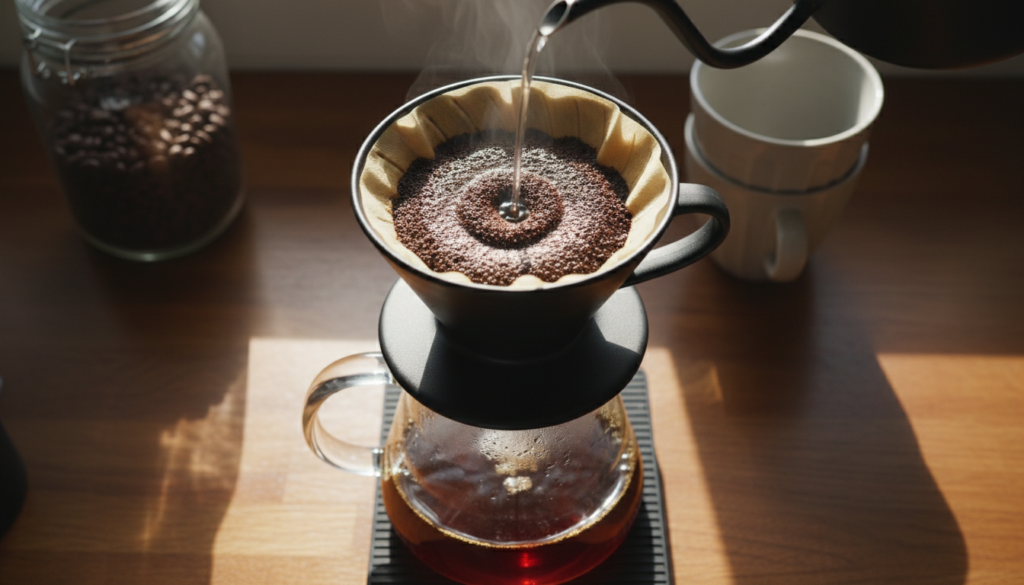
What water dissolves from ground beans is the main ingredient of any cup—so control what you pull. Extraction is simply hot water taking soluble compounds out of the grounds; those dissolved bits create most of the perceived flavor.
Extraction in plain terms
Only about 28–30% of roasted beans are water-soluble by weight. That means technique decides what portion of those solubles end up in the cup.
Why grind size matters
Grinding increases surface area so water can reach solubles faster. A finer grind speeds extraction and can pull late-stage bitter compounds. A coarser grind slows release and can leave sweetness behind.
Extraction happens in stages: acids come early, sugars and balanced sweetness come later, and deep bitter notes arrive last. That makes the extraction level a tunable dial: stop too soon and the cup reads thin or sharp; pull too far and it can dry out or go bitter.
Taste and change one variable at a time—grind, time, or temperature—to learn which dial needs adjusting.
Hollow Coffee Taste: Under-Extracted Coffee or Over-Extracted Coffee?
When flavor spikes quick and then evaporates from the mouth, you’re likely dealing with wrong extraction. Use this short framework to decide whether the problem comes from too little, too much, or uneven extraction.
Under-extracted markers
Under-extracted coffee often reads sour or oddly salty. Sweetness is missing and the end fades fast.
Common scenario: an espresso that runs very short (a rushed ristretto) or a pour-over that finished too quickly.
Over-extracted markers
Over-extracted coffee shows dominant bitterness and drying astringency. The mouth feels de-lubricated and the cup is empty of character.
Long espresso pulls—shots around 40–50 seconds—often create this dried, hollow end.
What ideal extraction tastes like
The target: ripe sweetness up front, clear distinct flavors, balanced acidity on the tongue, and a lingering finish. Tune grind, time, and water so the cup lands here.
Diagnose by flavor: sour/fast fade = too little; bitter/dry = too much; mixed notes = uneven extraction.
What Causes Hollow Coffee and the Levers That Fix It
Most cases of a flat cup trace back to a few adjustable variables you can change at home. Treat them as levers: tweak one, retaste, and note how balance shifts.
Grind level and uniformity
Grind size and consistency control how evenly extraction runs. A wide spread of particles lets some over-extract (bitterness and astringency) while others under-extract (sour, thin). Use a quality burr grinder and adjust in small steps.
Brew time and flow rate
Fast flow or too-short contact time leaves sugars and balancing compounds behind. Slow the pour or tighten the grind to give water enough time to pull the right compounds.
Temperature, ratio, saturation, and minerals
Keep brewing water between 195–205°F (90–96°C) for reliable extraction. Check your water-to-coffee ratio: too little coffee makes a weak cup even if extraction is fine.
Even saturation helps: bloom, pour evenly, and stir or swirl gently so all grounds extract at the same rate.
Finally, water chemistry matters. Minerals affect perceived sweetness and clarity, so the same beans or roast can taste different across locations.
Adjust one lever at a time: grind, time, temperature, or water chemistry, then taste for balance.
Step-by-Step Troubleshooting: Make One Change at a Time
A reliable way to improve a thin brew is to isolate a single variable and judge the effect on flavor. Record each change so you can repeat what works.
Espresso: dialing shot time for better balance
Protocol: adjust one thing—grind or time—then pull another shot and note results.
If a short shot reads sour or like an under-extracted coffee, try a finer grind or add a few seconds of contact time. If a long pull tastes bitter, drying, or like unsweetened black tea, go coarser or shorten the shot.
Tip: match adjustments to roast level: darker roasts extract faster; lighter roasts need more time or a finer grind.
Pour-over and drip: slow the flow and improve distribution
Slow the brew by tightening grind or using a gentler pour. Focus on even saturation—no dry pockets—so sugars and fruit notes extract evenly instead of spiking acidity.
Immersion brews: extend contact and mix early
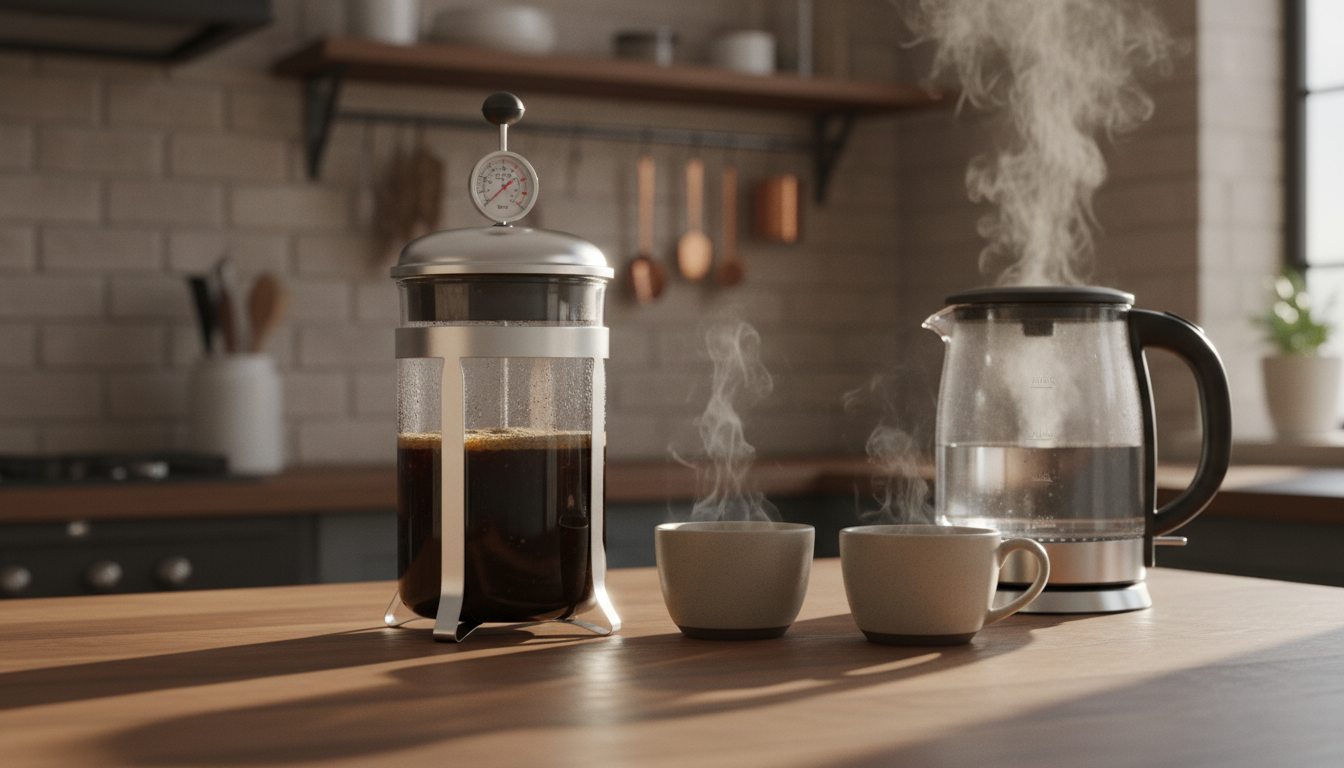
For French press or similar methods, add 30–60 seconds to contact time when the cup feels thin. Stir or swirl early to prevent uneven extraction.
Sweetness and a lasting finish mean you’re moving in the right direction; harsh bitterness and astringency mean you pushed past the ideal.
- Change one variable, keep the rest steady.
- Log grind, water temp, time, and tasting notes.
- Use sensory anchors—sweetness, acidity, bitterness, finish—to decide the next move.
Conclusion
A flat, empty cup usually signals a problem you can diagnose with a few controlled changes. Start by deciding if the issue leans sour and short or bitter and drying. That tells you whether to increase or reduce extraction.
Adjust grind, water temperature, and contact time one step at a time. Keep dose and routine steady, then re-taste for balanced acidity and a longer finish.
Remember: bitterness and dryness mean back off; sourness and emptiness mean pull more. Uneven extraction can show both, so focus on even saturation.
Keep a simple log of settings and notes. You don’t need lab gear — your palate and a repeatable process will get a richer cup of coffee.
FAQ
Why does my coffee taste hollow instead of rich?
What does “hollow” mean in the cup and how can I recognize it?
How do hollow and rich differ in terms of body, sweetness, and finish?
What sensory clues point to a hollow cup—quick finish, muted flavors, or “empty” mouthfeel?
How can I tell hollow from “bright” acidity or pleasant sourness?
What does extraction mean in plain terms?
Why does grind size matter for extraction?
Is hollow flavor a sign of under-extraction or over-extraction?
What markers indicate under-extraction?
What markers indicate over-extraction?
What does ideal extraction taste like?
How does grind uniformity affect hollow flavors?
How do brew time and flow rate create a hollow cup?
What role does water temperature play in causing hollow flavor?
How does water-to-coffee ratio affect fullness and balance?
Can brewing technique—saturation and agitation—fix hollow cups?
Does water chemistry influence hollow or flat cups?
How do I troubleshoot shot time on espresso to avoid hollow pulls?
What fixes help pour-over and drip brewing produce fuller cups?
How can I improve immersion brews to avoid thin, hollow results?
Why Cheap Coffee Often Tastes Burnt
» Discover special tips and stories about coffee