Ethiopia Sidamo vs Yirgacheffe: Which Imported Coffee Fits Your Taste for Floral and Citrus Notes?
Choosing between Ethiopia Sidamo and Yirgacheffe coffee? You’re deciding between two of the world’s best beans for floral and citrus notes.
This guide cuts through the confusion. We’ll show you exactly which coffee fits your taste, how to buy it, and the best way to brew it at home.
Get ready to find your perfect cup of imported Ethiopian coffee.
Sidamo vs. Yirgacheffe: A Tale of Two Flavors
Both coffees come from Ethiopia, the birthplace of Arabica coffee. But their taste profiles are distinct, shaped by the unique soil and altitude of each region.
Think of them as cousins, not twins. Understanding their key differences is the first step to choosing the right one for your palate.
Let’s break down what you can expect from each cup.
What Would You Like to Learn Next?
Choose an option below:
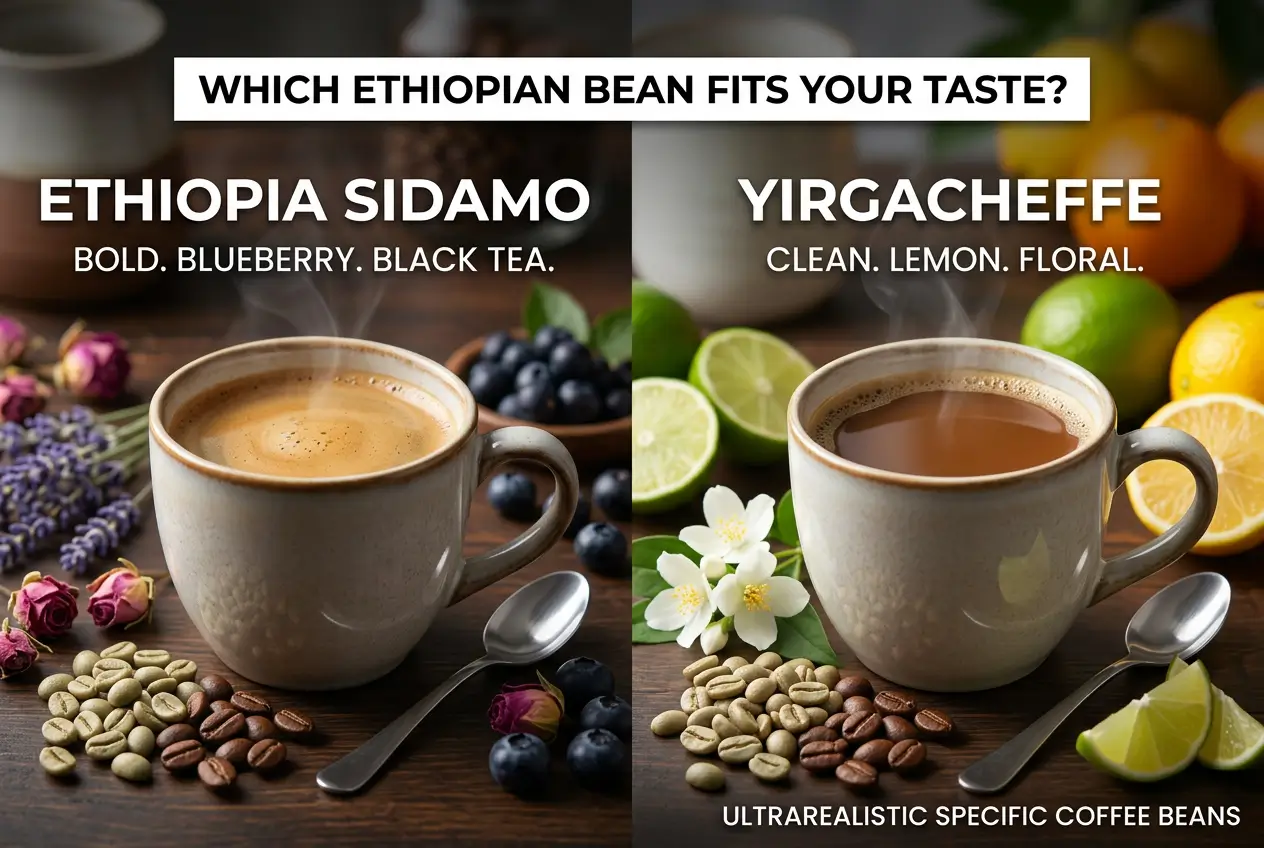
Yirgacheffe: The Profile of Elegance and Clarity
Yirgacheffe is famous for its bright, clean, and elegant flavor. It’s the go-to for lovers of delicate and precise notes.
It has a light-to-medium body, often described as “tea-like.” The acidity is bright and crisp, reminding you of fresh lemon or lime.
- Primary Aromas: Jasmine, bergamot, and lemon blossom.
- Key Flavors: Bright citrus (lemon, lime), delicate white flowers.
- Feeling: Crisp, clean, with a long, floral finish.
If you enjoy a coffee that feels ethereal and refined, with a sharp floral punch, Yirgacheffe is your ideal choice.
Sidamo: Rich, Fruity, and Complex
Sidamo (also called Sidama) covers a larger region. This results in a wider variety of flavor profiles, but they share a core richness.
These coffees typically have a fuller body than Yirgacheffe. The acidity is still present but often feels more rounded and juicy.
- Primary Aromas: Berries, stone fruit (peach, apricot), and spice.
- Key Flavors: Blueberry, strawberry, with hints of Earl Grey tea.
- Feeling: Creamy, velvety, and balanced with a fruity finish.
For those who prefer a cup with more body and a symphony of fruit flavors alongside the citrus notes, Sidamo is the perfect match.
How Processing Changes Your Coffee
The flavor in your cup isn’t just about the region. How the coffee cherry is processed after picking plays a massive role.
You’ll see terms like “washed” or “natural” on the bag. This single detail can completely change the coffee’s taste profile.
Pay close attention to the processing method. It’s your best clue to the final flavor, especially with Ethiopian coffees.
Here’s what you need to know:
- Washed (Wet Process): This method removes the fruit from the bean before drying. It creates a cleaner, brighter cup that lets the bean’s origin shine. It’s very common for Yirgacheffe, highlighting its delicate floral and citrus notes.
- Natural (Dry Process): The entire coffee cherry is dried with the bean inside. This process imparts deep, fruity, and often wine-like flavors. Many Sidamo coffees use this method, resulting in those intense berry and fruit notes.
- Honey Process: A middle ground. Some of the fruit is left on the bean during drying. It offers a balance of the clean acidity of washed coffee and the sweet fruitiness of natural coffee.
Smart Buying Tips for Ethiopian Coffee
Bringing home a great bag of Ethiopian coffee is easy if you know what to look for. Avoid the stale beans at the supermarket and follow these simple steps.
- Check the Roast Date: This is the most important factor. Coffee is best 5 to 14 days after roasting. Never buy a bag without a roast date.
- Buy Whole Beans: Flavor starts to fade the moment coffee is ground. Grinding right before you brew makes a huge difference. Invest in a simple burr grinder.
- Look for Transparency: Good roasters will tell you everything: the region (Sidamo or Yirgacheffe), the processing method, and sometimes even the specific farm.
- Avoid Very Dark Roasts: “Extra strong” or very dark roasts can burn away the delicate floral and citrus notes of Ethiopian coffee. Stick to light or medium roasts.
- Confirm 100% Arabica: While most specialty Ethiopian coffee is Arabica, this label ensures you aren’t getting a blend with lower-quality beans.
Brewing Methods to Unlock Floral and Citrus Notes
You’ve bought a great bag of beans. Now what? The right brewing method will make those amazing flavors pop.
For coffees as delicate as these, methods that offer control and clarity are your best bet. Here are our top recommendations.
- Pour-over (V60, Chemex): The number one choice for Yirgacheffe. It produces an incredibly clean cup, allowing every floral and citrus note to sing. Use a ratio of about 15g coffee to 250g water.
- AeroPress: A versatile brewer that can make a bright and punchy cup. Great for both Yirgacheffe and washed Sidamo. Try a two-minute brew time to highlight acidity.
- Kalita Wave: This brewer is a bit more forgiving than the V60 and works wonderfully for a natural Sidamo. It helps balance the fruitiness with a clean finish.
- French Press: If you love a coffee with more body, this is a good option for a natural Sidamo. It will emphasize the rich, fruity, and creamy aspects of the coffee.
Pro Tip: Use filtered water. Your tap water can have minerals that interfere with the delicate flavors. Aim for a water temperature between 195-205°F (92-94°C).
Market Alert: What to Expect in 2026
A heads-up for coffee lovers. Recent harvest delays and lower volumes in Ethiopia have caused coffee cherry prices to spike in late 2025 and early 2026.
What does this mean for you? You may see higher prices and less availability for specialty Ethiopian coffees in the U.S. market in the coming months.
If you find a Sidamo or Yirgacheffe you love from a trusted roaster, now is a good time to stock up.
Where to Buy and How to Spot Quality
In the U.S., your best source is a specialty coffee roaster that focuses on single-origin coffees. Many have online stores and ship nationwide.
Look for roasters who are transparent about their sourcing. Their websites and packaging should provide details on the region and processing.
Consumer Alert: Yirgacheffe is often more expensive than Sidamo due to high demand. A low price isn’t a bad sign, just a different profile. But be wary of deals that seem too good to be true.
True quality comes from fresh roasting and clear origin information, not just a brand name.
Now you have the knowledge to explore Ethiopian coffees with confidence. Trust your palate and enjoy the journey of discovering these incredible flavors.
Brazil Cerrado vs Sul de Minas: Finding Nutty Chocolate Cups That Taste Great Black or With Milk
» Discover special tips and stories about coffee