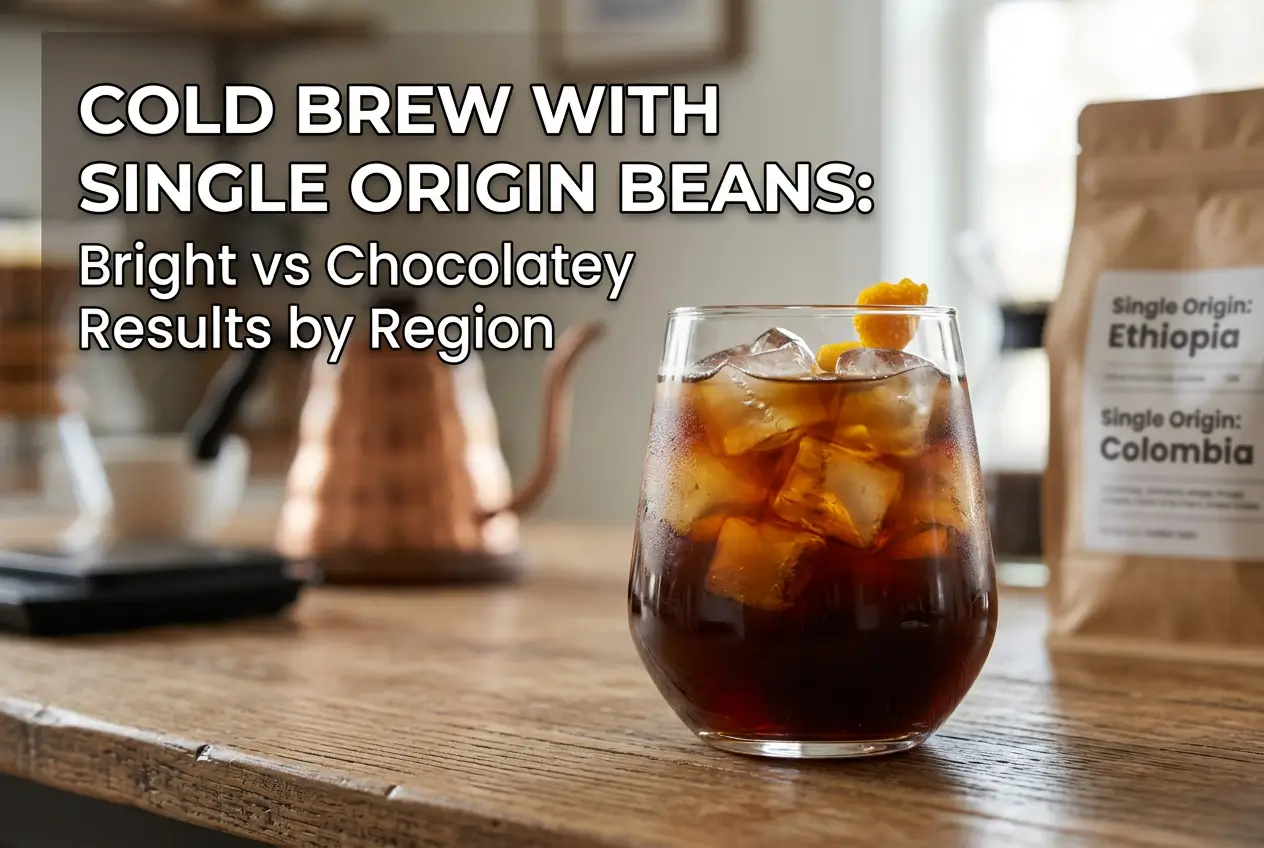
Cold Brew with Single Origin Beans: Bright vs Chocolatey Results by Region
Your perfect cold brew is waiting. It all comes down to the single origin coffee bean you choose.
Want a bright, fruity flavor? Or a deep, chocolatey one? The bean’s origin is the secret.
This guide gives you the map. You’ll learn exactly which beans to buy for the taste you love.
Why Single Origin Beans Define Your Cold Brew
Cold brewing is a slow, gentle process. It uses cold water over 12 to 24 hours.
This method doesn’t extract as much acidity or bitterness. This is a good thing.
It allows the bean’s true, subtle flavors to come forward. With single origin coffees, these flavors are unique and distinct.
What Would You Like to Learn Next?
Choose an option below:
Unlike a blend, a single origin bean comes from one specific place. This gives it a taste profile you can count on.
For Bright & Fruity Cold Brew: Think Africa
If you want a vibrant, crisp, and almost tea-like cold brew, look for beans from specific African regions.
These coffees have naturally high acidity. The cold brew process tames it perfectly, leaving pure fruit and floral notes.
For these beans, always choose a light to medium roast. A dark roast will burn away these delicate flavors.
Key Tip: On the bag, look for tasting notes like “citrus,” “berry,” “floral,” or “fruity.”
Here are the top regions for a bright and lively cold brew experience.
- Ethiopia: The star player. Expect bright, clean flavors of citrus, bergamot, and flowers like jasmine.
- Kenya: Delivers a bold, wine-like brightness. You’ll often taste blackcurrant, grapefruit, or tart berries.
- Rwanda/Burundi: These beans create an elegant and sweet cup with hints of orange, red apple, and caramel.
- Costa Rica: Known for a super clean taste. Look for notes of honey sweetness and clear citrus.
For Chocolatey & Rich Cold Brew: Go for the Americas
Craving a cold brew that’s smooth, rich, and deeply satisfying? The kind with big chocolate, nut, and caramel flavors?
Beans from Central and South America are your best bet. They are naturally lower in acidity and have a fuller body.
Cold brewing enhances their natural sweetness, creating a smooth and comforting drink.
For these beans, a medium to dark roast is ideal. It helps develop those deep, sweet, and robust flavors.
When shopping, search for bags with these tasting notes.
- Brazil: The classic choice for chocolate. Expect a smooth, low-acid cup with notes of nuts and caramel.
- Colombia: Famous for balance. It provides a smooth brew with notes of chocolate, nuts, and even red fruit.
- Sumatra: For a bolder, earthier cup. It has deep chocolate notes, often with hints of spice or herbs.
- Guatemala: Delivers a wonderful chocolatey profile, frequently paired with notes of cocoa and dried fruit.
- Honduras/Nicaragua: Great for an approachable, sweet cold brew with flavors of cocoa and nougat.
Your Cold Brew Action Plan: 5 Steps to Success
Choosing the right bean is the biggest step. But your technique seals the deal.
Follow these simple rules for a perfect batch of cold brew concentrate every time. No exceptions.
- Use a Coarse Grind: This is critical. Your coffee grounds should look like coarse sea salt. Too fine, and you get bitter sludge.
- Steep for 12 to 24 Hours: Let the coffee grounds sit in cold, filtered water for at least 12 hours. A longer steep time often means a smoother flavor.
- Use Filtered Water: Your coffee is mostly water. Tap water can have impurities that mess with the flavor. Filtered water lets the bean’s taste shine.
- Demand Fresh Beans: Always use freshly roasted beans. Look for a “roasted on” date on the bag. Anything within a few weeks is best.
- Store it Right: Keep your finished cold brew concentrate in an airtight container in the fridge. It’s best in the first week but can last up to two.
How to Buy Quality Beans and Avoid Traps
Your local grocery store might not have what you need. Finding great single origin beans is easy if you know where to look.
The best sources are reputable specialty coffee shops and online roasters. They provide details on origin, processing, and flavor.
Spotting Quality: A good roaster always puts a roast date on the bag. Transparency about the farm or region is another great sign.
Be careful with generic labels. A bag that just says “cold brew blend” is a red flag.
While some blends are fine, they don’t offer the specific, clean flavor profile you get from a single origin bean.
You lose the ability to target a specific “bright” or “chocolatey” experience.
Why Roast Level Matters (But Isn’t Everything)
We’ve talked about light roasts for bright beans and dark roasts for chocolatey ones. This is a great starting point.
But cold brewing is forgiving. Its gentle nature naturally reduces the sharp acidity found in some light roasts.
So, don’t be afraid to experiment. A light roast Ethiopian bean can make a surprisingly smooth and sweet cold brew.
The key is to start with the recommended roast level. Then, once you’re comfortable, feel free to try different things.
Your Journey to the Perfect Cup Starts Now
Coffee is a journey of discovery. There’s no single “best” bean for cold brew, only what’s best for you.
You now have the knowledge to walk into a coffee shop or browse online with confidence.
You can identify the regions, roast levels, and tasting notes that will lead you to your ideal cold brew experience.
Pick a region that sounds good to you, grab a bag of fresh beans, and start brewing. Your perfect cup is just a day away.
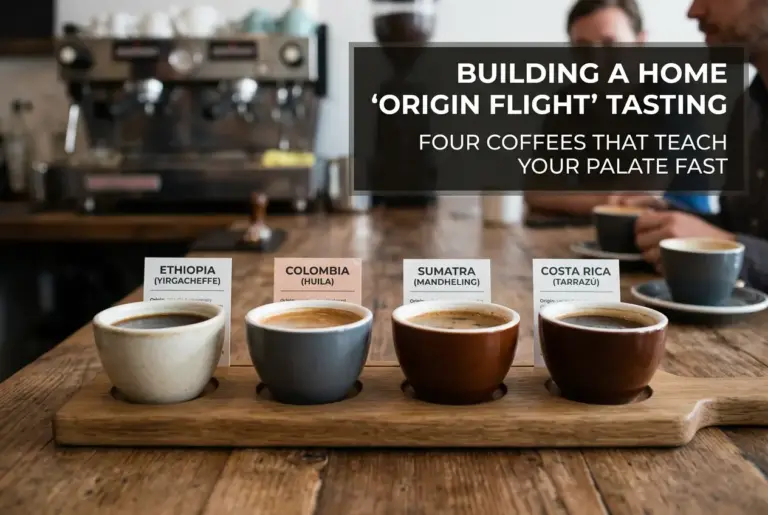
Building a Home “Origin Flight” Tasting: Four Coffees That Teach Your Palate Fast
» Discover special tips and stories about coffee