Why Grind Consistency Matters More Than Grind Size
Learn how to achieve perfect coffee grind consistency for optimal brewing results. Discover the importance of consistency in our step-by-step guide.
Extraction depends on even particle spread. Beans hold many flavor compounds that extract at different speeds. When particles vary, some bits over-extract and taste bitter while others under-extract and taste thin or sour.
Finer pieces expose more surface area and extract quickly. In pour-over or other vertical-flow brews, tiny particles also slow water flow by adding resistance, like sand versus rocks. That imbalance makes a cup uneven even if the size setting seems right.
This piece shows why a steady particle spread beats chasing a single perfect size. You will learn how particle uniformity changes flavor across home methods, what to look for in a grinder, and simple steps to get repeatable results. The aim is clear: steadier extraction, less guesswork, and fewer wasted beans so each brew tastes more predictable and balanced.
Key Takeaways
- Uniform particles give steadier extraction and balanced taste.
- Uneven grounds pull bitterness from fines and sour notes from coarse bits.
- Small particles speed extraction and can slow flow in vertical brews.
- Choosing the right grinder matters for repeatable results.
- Focus on particle spread first, then fine-tune size for flavor.
Coffee grind consistency explained and why it beats chasing the “perfect” grind size
A tight particle spread makes brewing results predictable, while mixed bits create random taste swings.
What “consistent grounds” actually means
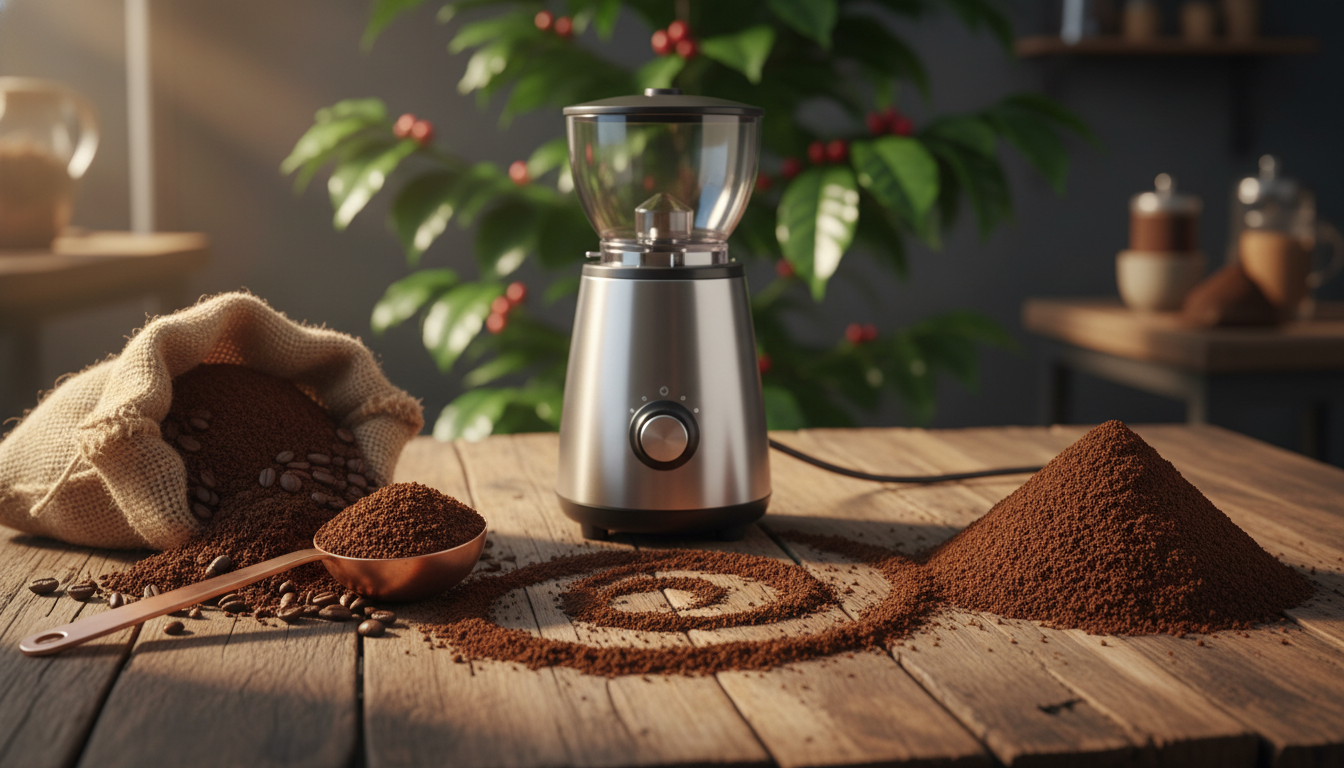
Consistent grounds means most pieces are about the same size — a narrow particle distribution. That contrasts with a mixed batch that has dust-like fines and large chunks together.
Consistency appears twice: inside the grinder as a small particle range, and inside the coffee bed as an even layer that lets water pass uniformly. Both matter for reliable extraction.
What Would You Like to Learn Next?
Choose an option below:
How mixed particles create mixed flavors
When fines and boulders sit together, fast-extracting bits turn sharp or bitter while coarse pieces stay under-extracted and taste sour. The result is an uneven cup with competing notes.
- Fines extract quickly and can dominate with harsh notes.
- Chunks lag and leave thin, acidic flavors.
- Mixed batches make dialing a single grind size ineffective.
When size still matters
Brewing methods with different contact times need different grind size neighborhoods. But uniform particles make those neighborhoods reliable, so small tweaks change taste in clear, repeatable ways.
| Attribute | Uniform | Mixed |
|---|---|---|
| Particle spread | Tight | Wide |
| Extraction | Even | Uneven |
| Result in cup | Balanced flavor | Harsh + sour notes |
| Dialing-in | Predictable | Random |
Quick home check: look for visible dust and large chunks side by side, and note whether the bed drains unevenly during brewing.
Next: the brewing science behind why extraction speed, surface area, and water flow make particle behavior so crucial.
The brewing science behind consistency: extraction, surface area, and water flow
Extraction behavior starts with particle surface and how water meets it. Cutting one piece into many pieces exposes more area, so smaller bits dissolve soluble solids faster. More surface area speeds extraction and shortens the time needed to pull flavor from the dose.
Surface area and extraction speed
Finer grind extracts faster because water can touch more surface at once. That means brew recipes for short contact times must use smaller size neighborhoods to reach balance.
Resistance and flow rate
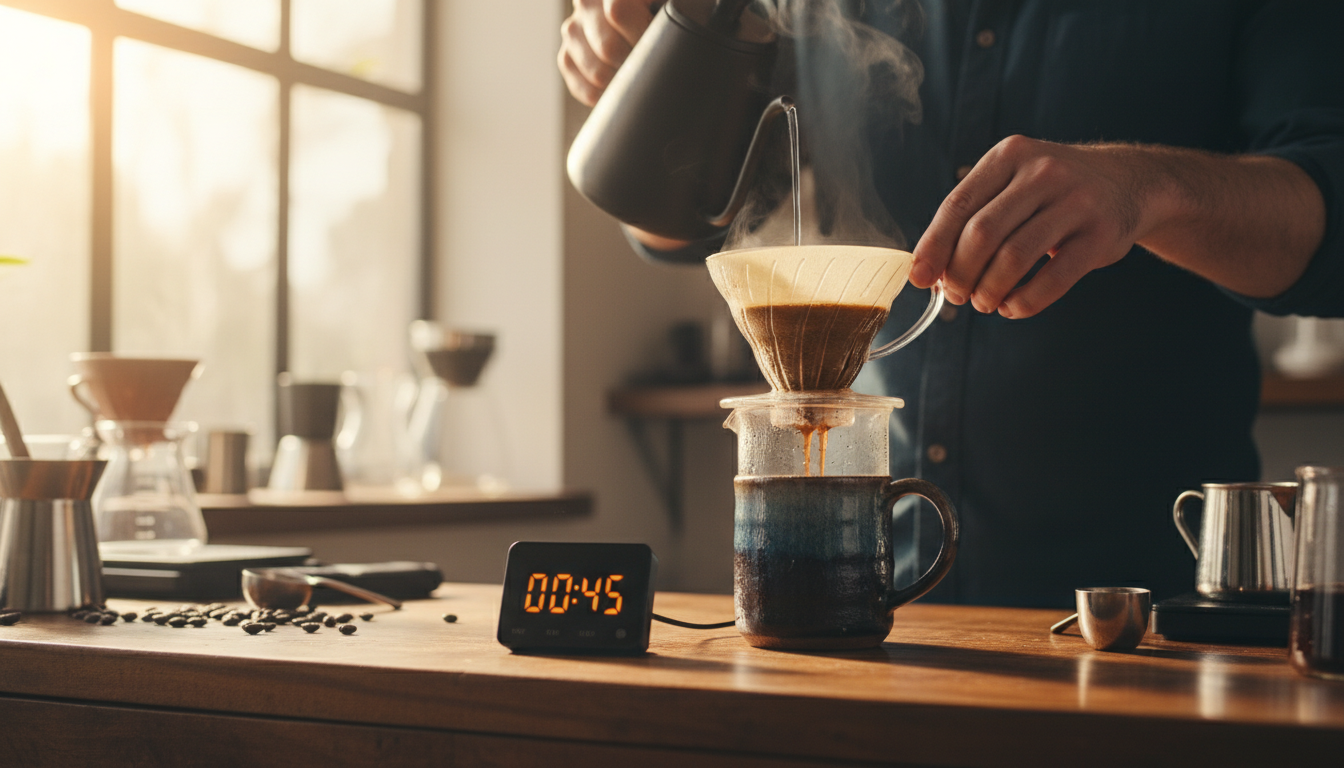
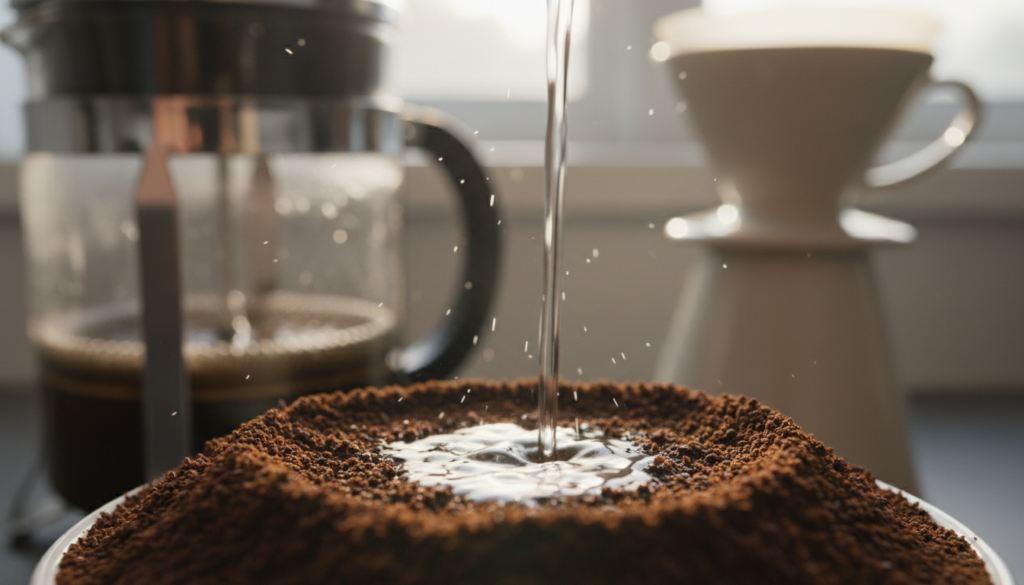
Picture rocks versus sand: water races through large particles but slows in packed fine beds. In drip and pour-over, tighter packing raises resistance and lengthens drawdown, changing extraction and total brew time.
Flavors across extraction stages
Under-extraction reads sour or thin. Over-extraction pulls bitter and harsh notes. Sweetness sits between those extremes. Uniform particle distribution reduces mixed extraction and clarifies the flavor profile.
“Even flow and stable contact make tasting the real origin easier.”
Note: particle distribution is set mostly by grinder design, not just the number on a dial, so equipment choice matters for repeatable brewing results.
Choose the right grinder for consistent results: burr grinders vs blade grinders
A grinder’s design dictates particle spread, which directly affects taste clarity and bitterness.
Why blade machines produce wide particle ranges
Blade grinders work like a tiny blender. They chop beans at random, so some bits become dust while others stay large.
Longer runs make more fines, but they also add big chunks. That mix creates uneven extraction in espresso and drip brews.
How burr machines control size
Burr grinders use two toothed discs. The burr gap sets the target particle size and yields a tighter distribution.
Flat and conical burr designs differ, but both improve uniform output and make dialing in easier day to day.
What fines and boulders do to the cup
Fines over-extract and add bitterness. Boulders under-extract and taste sour. Together they muddy flavor and lower clarity.
“No grinder makes perfectly identical particles, but better quality narrows the spread enough to improve results.”
Even without a top-tier grinder, repeatable technique and small habits can noticeably raise quality and stabilize extraction.
How to improve grind consistency at home for any brewing method
Match your grind size to how long water stays in contact with the coffee bed: long contact needs coarser particles, short contact needs finer ones.
Why this works: changing size alters surface area and resistance, so it controls extraction speed and flow in every brew method.
Start with contact-time examples
Cold brew and long steeps use coarse settings. French press sits on the coarse end to cut sediment and control steep time.
Drip coffee often falls in a medium range. Espresso and Turkish coffee need very fine size to build resistance and extract quickly.
Dial in one variable at a time
- Keep dose, water amount, and temperature constant.
- Adjust only the grind setting or time, then brew and note the result.
- Repeat until the cup matches your target profile.
Taste-guided micro-adjustments
If the cup tastes sour, weak, or thin, move slightly finer. If it tastes bitter, harsh, or drying, move slightly coarser.
Techniques by grinder type
Blade grinders: use a fixed dose, a repeatable timing routine, and consistent pulsing or shaking. Time becomes your setting.
Burr grinders: make small clicks between trials, avoid large jumps, and keep burrs clean so old oils don’t alter extraction.
Repeatability checklist
- Weigh beans and water every brew.
- Use filtered water — most of the cup is water.
- Grind right before brewing and store beans airtight.
- Document the working recipe: dose, setting or time, brew time, and water amount.
“Better habits reduce fines-driven bitterness and boulder-driven sourness, making your favorite profile easier to repeat.”
Conclusion
A narrow particle spread turns random results into repeatable cups you can tune.
Practical takeaway: even particles yield steadier extraction, which stabilizes flavor and cuts the “one great, one bad” problem.
Size still matters, but uniform output is the lever that makes any setting behave predictably across your favorite method.
In plain terms: more surface area and slower flow speed change how fast compounds dissolve. Mixed particles make mixed extraction and mixed taste.
Quick priority: upgrade your grinder if you can, lock in repeatable technique, then tweak the setting in small steps.
Big wins: steadier flow improves drip coffee and fewer fines reduce channeling in espresso. Pick one recipe, track it, and aim for repeatable grounds rather than chasing a number on a dial.
FAQ
Why does grind consistency matter more than grind size?
What does "consistent grounds" actually mean in the grinder and in the coffee bed?
How do inconsistent particles create mixed flavors in the same cup?
When does particle size still matter, and how does consistency support it?
How does surface area affect extraction and why do finer particles extract faster?
What role do resistance and flow rate play in drip and espresso brewing?
What flavor cues indicate under-extraction versus over-extraction?
Why do blade grinders produce wide particle ranges and more fines?
How do burr grinders control particle size and improve uniformity?
What are "fines" and "boulders," and how do they affect taste and clarity?
How should I match particle size to contact time for different brew methods?
What does "dial in one variable at a time" mean when adjusting a recipe?
How can taste guide micro-adjustments to size?
How can I reduce inconsistency when using a blade grinder?
How do I reduce inconsistency with a burr grinder?
What repeatability habits most improve cup-to-cup quality?
Why Cheap Coffee Often Tastes Burnt
» Discover special tips and stories about coffee