Why Coffee From the Same Brand Can Taste Different
Understand the causes of coffee flavor inconsistency and get tips on how to ensure a consistent taste. Follow our guide for a better coffee experience
Ever brewed the same bag and wondered why it tastes great one day and flat the next? That swing is common and rarely random.
Freshness matters: beans lose up to ~70% of aroma within 1–2 weeks. Water makes up over ~98% of your cup, so small changes in source or temperature can change the result.
Real-life shows the problem as a familiar scene: the same brand, same bag, but one brew is bright and the next is dull, sour, or bitter. Most causes are small—grind, unmeasured ratio, tap water, brewing temp (aim for ~195–205°F), brew time, or dirty gear.
This guide aims to give a clear baseline process and a one-variable troubleshooting method. We’ll start with beans, then grind, ratio (try 1:16 by weight), water, temperature/time, method differences, and equipment upkeep.
Focus first on the highest-impact variable so you won’t spend on upgrades that won’t fix the underlying issue. Cafés often win because they use fresher stock, better grinders, and treated water, but you can close the gap at home with a methodical approach.
Key Takeaways
- Fresh beans lose most aroma quickly; use them within weeks.
- Small changes in grind, ratio, water, or temp cause big swings.
- Start with a 1:16 weight ratio and ~195–205°F brewing temp.
- Fix the highest-impact variable first before buying new gear.
- Cafés often have advantages, but consistent home results are attainable.
What’s Really Behind Coffee Flavor Inconsistency in the Same Bag or Brand
A single bag can yield wildly different cups when tiny variables shift during brewing.
What Would You Like to Learn Next?
Choose an option below:
Strength vs. extraction: strength is concentration; extraction is which compounds the water pulled. A weak cup can be under-extracted or simply too dilute.
Why watery, bitter, and sour point to different problems
Watery or weak cups often mean the ratio is off, the grind is too coarse, or the temperature is low.
Sour usually signals under-extraction: too coarse, too cool, or too short a brew time.
Bitter notes come from over-extraction: too fine, too hot, or too long in contact with water.
Small changes that cause big swings
- Humidity and bean age shift how grounds absorb water.
- Grinder drift and pour patterns alter particle exposure.
- Tap water chemistry changes perceived acidity and bitterness.
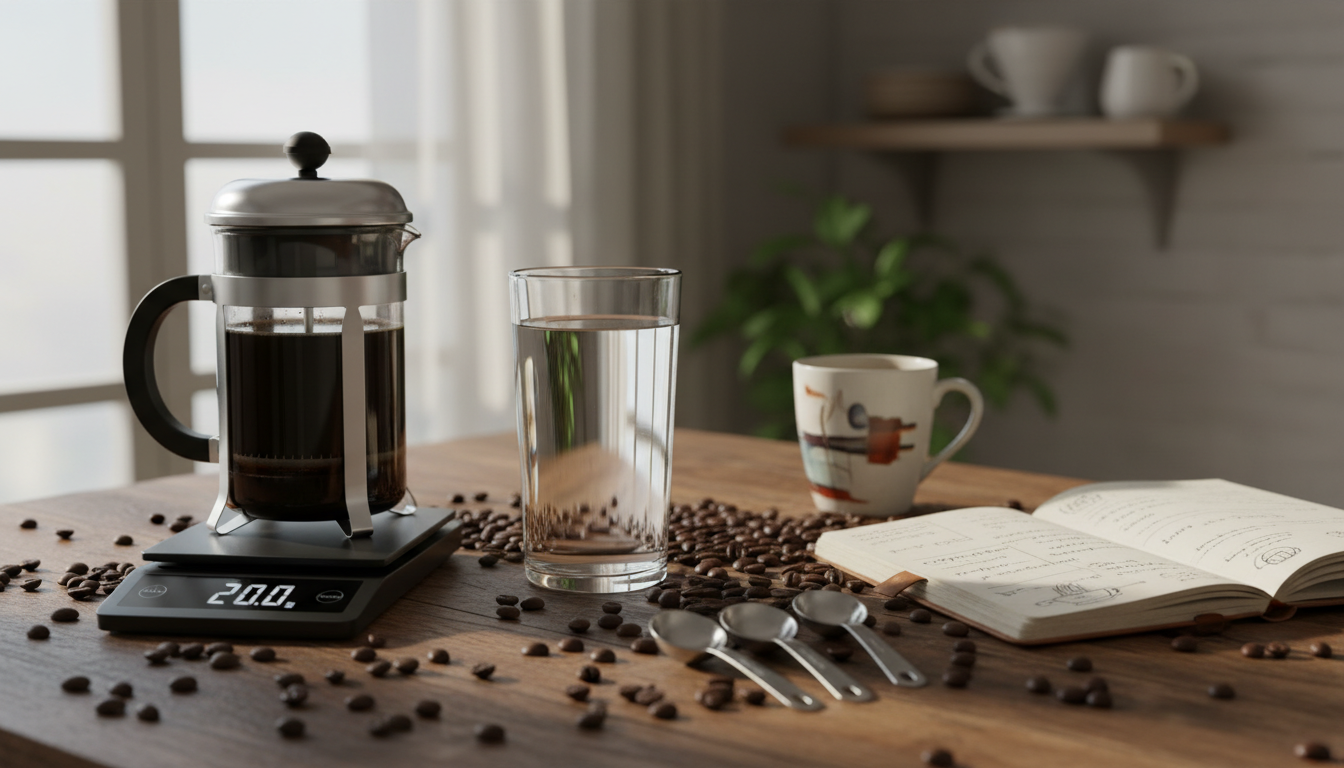
One change at a time: adjust grind, ratio, or time separately. Track each try in a simple brew log with grams, temperature, time, and tasting notes. That makes patterns obvious and fixes repeatable.
Start With the Beans: Freshness, Degassing, and Storage That Protect Flavor
Freshly roasted beans change fast. Aroma compounds and oils begin to oxidize within hours, and the bag’s gases shift how grounds extract. That makes bean age the highest-impact variable for better taste.
How freshness evolves
Day 1: lots of CO₂ and vibrant aromatics; extraction can be uneven.
Day 4: degassing eases; many roasters mark this as the start of the “sweet spot.”
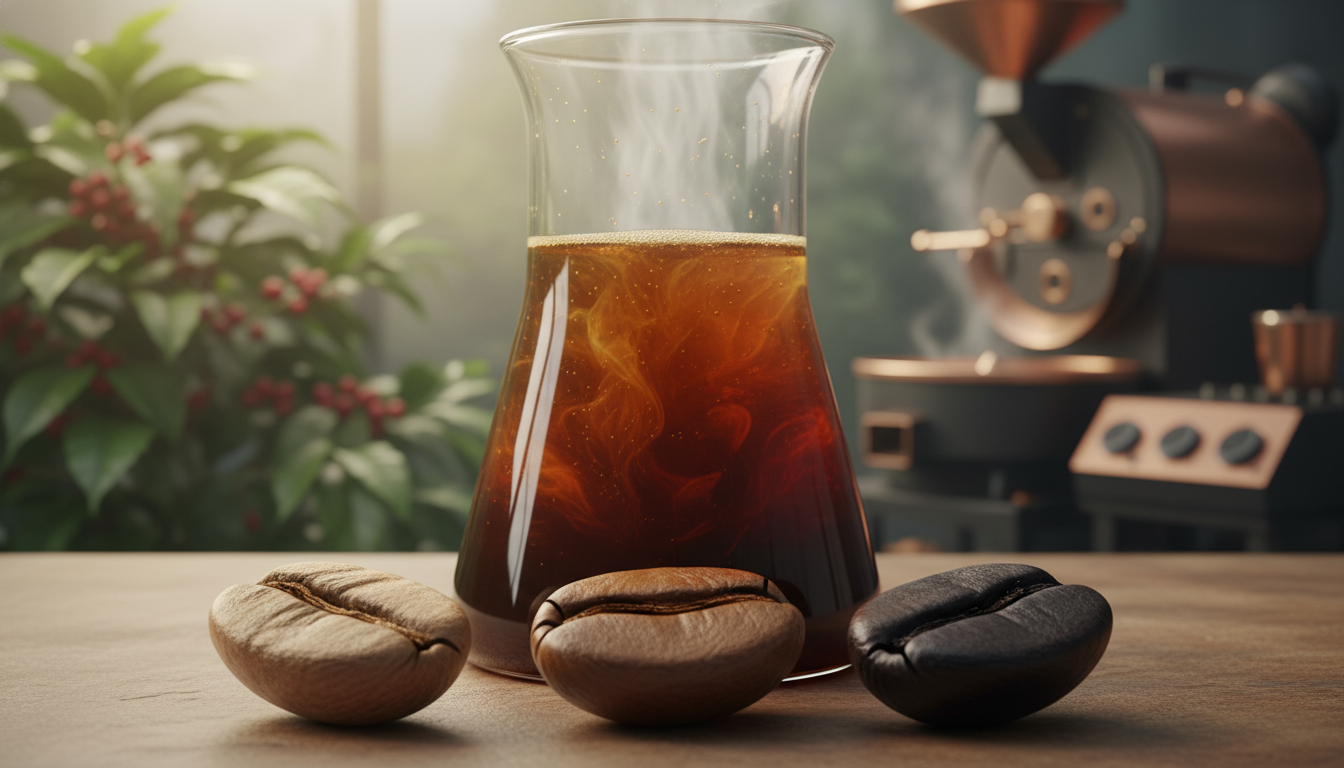
Week 2: most notes are vivid and balanced — a common peak window is 7–21 days after roasting.
Week 4: up to ~70% of aroma can be lost; oils oxidize and the cup flattens.
Label tips, buying, and storage
- Read the roast date — it signals peak quality better than an expiration date.
- Buy amounts you’ll finish in ~2–3 weeks for consistent results.
- Store airtight, cool, and dark; avoid daily fridge/freezer use because moisture and odors harm oils.
If the bag is open: split into sealed containers, minimize headspace, and use faster rather than try to ‘save’ stale bean stock.
Quick sensory check: vivid smell = fresh; muted aroma = time to buy new beans.
Same Brand, Different Roast: Batch Variation and Roast Level Mismatches
Even within a single brand, roast runs can shift enough to change what you taste in the cup. Industrial roasters work at scale, but green-bean lots, seasonal crops, and small changes in the roast curve create real batch variation.
How that happens: different green-bean sources mean slightly different sugars and moisture. A tweak in the profile or a faster drum rotation changes development. Those facts explain why two bags from the same label can read as different roasts.
Why roast level alters perceived strength and body
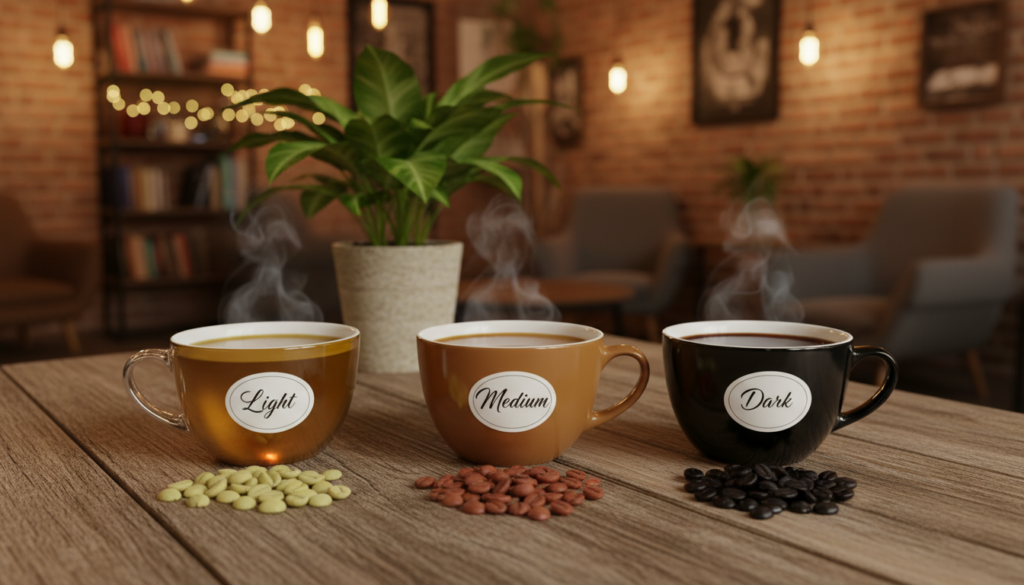
Light roasts often show fruit and floral notes and a brighter acidity. Medium and dark roasts push toward chocolate, caramel, and nutty profiles with fuller body.
Bold describes intensity of profile, not necessarily strength. The same coffee-to-water ratio can feel thinner with a light roast because its oils and sugars extract differently.
Use tasting notes as a practical filter
Match labels to what you like: choose medium/dark for chocolate and caramel, or light/medium for fruit and floral clarity.
- Compare roast dates and lot codes before blaming technique.
- Try one new roast level and keep your brew recipe unchanged.
- Use producer notes as a guide, not gospel—trust your palate.
Quick tip: If your favorite bag “tastes off,” try another bag from the same roast level before assuming your method failed.
Grind Size and Particle Consistency: The Hidden Cause of Uneven Extraction
How you grind beans controls how water meets the grounds and what ends up in your cup. Grind size sets extraction speed: smaller bits extract faster, larger bits take longer. Change this and you change balance.
Blade vs. burr: what matters most
A blade grinder chops randomly, producing a mix of fines and boulders. A burr grinder gives uniform particles and repeatable results. Uniform grounds reduce wild swings and make dialing in easier.
Why bitter and sour can appear together
Mixed particles cause over-extraction from fines (bitter) and under-extraction from coarse bits (sour). That split profile often signals uneven particles and channeling during brew.
Match grind to method
- Espresso: fine and consistent for even pressure extraction.
- Drip/pour-over: medium grind for steady flow and clarity.
- French press: coarse to avoid sludge and over-extraction.
- Cold brew: extra coarse for long steeping without harshness.
Practical tuning and habits
If the cup tastes sour or weak, go finer one small step. If it’s bitter or astringent, go coarser. Keep the ratio the same so you isolate the change.
Note your grinder setting each test and make only small moves. This simple habit will help you reliably make coffee that tastes the same from brew to brew.
Coffee-to-Water Ratio: Stop Eyeballing and Start Brewing Consistently
Before adjusting grind or time, lock in how much grounds meet water. Ratio sets the concentration of your cup and creates a repeatable baseline before extraction changes the profile.
Baseline recipe: try 1:16 by weight. For a 12 oz mug (about 350 g water), weigh 22 g of beans. A kitchen scale beats scoops because tablespoons vary widely and ruin repeatability.
A reliable starting point and method targets
Use method targets rather than one number for all brews. Typical guidelines: French press ~1:15, pour-over ~1:16, drip ~1:17, cold brew concentrate ~1:8. Immersion methods need more grounds; percolation methods extract differently.
Quick workflow to make the same cup
- Weigh beans, then weigh water.
- Keep the same mug size and grind setting.
- Record grams and the ratio so you can repeat it.
“If your cup is watery, increase the dose first — raising grind fineness or time can push bitterness.”
Troubleshoot by ratio: too strong → add water or reduce dose; too weak → increase dose. Change only the dose while keeping grind constant to isolate effects and make brewing consistent.
Water Quality: Minerals, Filters, and Why Your Tap Water Changes the Taste
Most of what you taste comes from water, so small changes at the tap can rewrite a familiar cup. Water makes up over 98% of your brew, so municipal shifts or plumbing swings often explain sudden differences more than the beans do.
How treatment and mineral levels alter the profile
Chlorine or chloramine in municipal supply can mute sweetness and make the cup seem harsher. Heavy mineral water can flatten acidity and dull bright notes.
Too few minerals (distilled or heavily softened) usually yield thin, under-extracted results. Too many minerals can over-buffer acids and mute nuance.
Simple, practical fixes
- Pitcher filters (Brita-style) reduce chlorine and are inexpensive.
- Faucet-mounted filters (PUR-style) give on-demand treated water.
- When troubleshooting, try one consistent bottled option until grind, ratio, and time are locked.
Quick diagnostic: brew the same recipe with filtered water and then with tap. If the difference is large, water is the main driver.
Consistency rule: once you find a water source that produces a cup you like, keep it constant while you dial grind, ratio, and time to lock results.
Temperature and Time: Dial In Extraction to Avoid Bitter or Sour Coffee
Small shifts in heat or contact time can flip a bright cup into a bitter one in minutes.
Aim for a target temperature of about 195–205°F. Staying in that band improves repeatability across beans and roast levels.
If you lack a thermometer, use the “30 seconds off the boil” rule: remove water from heat and wait ~30 seconds before you pour. That method roughly lands in the recommended temperature range and is fine for most home brewing.
Under-extraction tastes sour or weak. Over-extraction tastes bitter or harsh. Over-extraction also raises bitter compounds like chlorogenic acids and extra caffeine.
Timing checkpoints by common methods:
| Method | Typical Contact Time | What to watch for |
|---|---|---|
| Espresso | 25–30 seconds | Bitter = too long, sour = too short |
| Pour-over | 2:30–3:30 minutes | Fine time swings change clarity and body |
| French press | 4 minutes | Longer = harsher; shorter = thin |
| Cold brew | 12–24 hours | Very long steep = smooth, not bitter |
Hotter water shortens needed time; cooler water needs longer contact within reason. When dialing, keep ratio fixed, adjust grind, then tweak temperature or time only if needed.
Quick rule: lock ratio first, then grind, then time/temperature. Change one variable at a time to isolate effects on taste.
Brewing Method Differences That Make the Same Beans Taste Different
Different brew paths unlock different parts of the same beans.
French press: immersion and oils
The french press uses full immersion, so water contacts grounds for the whole steep. That keeps more oils in the cup and gives a fuller body.
This fuller extraction can feel rich or sometimes a bit muddy compared with filtered methods.
Drip and pour-over: clarity from paper filters
Paper filters trap fines and some oils. The result is a cleaner cup with brighter notes and reduced bitterness.
If you prefer clarity, drip or pour-over with a good filter highlights those qualities.
Espresso: pressure, precision, and repeatability
Espresso relies on grind uniformity, exact dose, steady pressure, and tight timing. Cafés hit these repeatedly, which is why home setup can struggle to match shots.
Cold brew: long, cool extraction
Cold brew steeps for many hours at low temps. That lowers perceived bitterness and often brings smooth sweetness forward.
| Method | Key Trait | Typical Result |
|---|---|---|
| French press | Immersion; retains oils | Full body; richer mouthfeel |
| Drip / Pour-over | Paper filter; flow control | Clear cup; less bitterness |
| Espresso | Pressure; short contact time | Concentrated; needs precision |
| Cold brew | Long, cool steep | Smoother; lower perceived bitterness |
Practical takeaway: always compare the same brewing method when troubleshooting. A café pour-over and a home drip will not taste the same even with identical beans.
Equipment Issues: Dirty Brewers, Limescale, and Worn-Out Machines
Residue and scale quietly change what your brewer delivers over weeks, not always days. Built-up oils and micro-grounds cling to metal, plastic, and filters. Over time they oxidize and coat surfaces, creating a dull, “mystery blandness” that masks the bean’s character.
Common trouble spots
Watch reservoirs, showerheads, carafes, French press screens, grinder burr chambers, and reusable filters. These hide micro-grounds and old oils that lower extraction and add off notes.
Cleaning routines that keep taste consistent
Daily: rinse removable parts, empty grounds, and air-dry.
Weekly: deep clean carafes, screens, and grinder hoppers with a soft brush.
Descaling and why it matters
In hard-water areas, run a vinegar descaling cycle monthly for drip machines: fill the reservoir with a 1:1 white vinegar and water mix, run one full cycle, then run two full cycles with fresh water to remove residual taste. This restores proper heating and prevents metallic mineral notes.
When to replace
If beans, grind, ratio, and water are controlled and the cup still tastes off, test brew temperature. Persistent low temps, strange sourness, or erratic brew times signal worn-out or low-heat equipment. Replace when repairs no longer restore consistent results.
Rule of thumb: clean first, test temp second, replace last.
A Practical How-To Checklist to Make Coffee Taste the Same Every Time
Start each brew with a short checklist that keeps variables steady from cup to cup.
Lock a repeatable baseline
Pick one bag of beans and note the roast date. Use the same grinder setting and weigh dose and water. Stick to one brewing method and the same water source.
Standard operating procedure: same grind setting, same water, same brew time target, consistent pour or agitation. Write the settings down and use them until you want to change a single variable.
Troubleshoot by taste — one change at a time
| Taste | Likely cause | Single fix to try |
|---|---|---|
| Weak / thin | Too dilute or coarse grind | Increase dose or go one grind step finer |
| Sour / sharp | Under-extracted (too coarse or short) | Make grind finer or lengthen brew time slightly |
| Bitter / harsh | Over-extracted (too fine or long) | Coarser grind or shorten contact time |
| Flat / dull | Old beans, dirty equipment, or poor water | Fresh beans, clean gear, or try filtered water |
Prioritize upgrades by impact
Best first: fresher beans. Next, a quality burr grinder. Then add a scale, filtered water, and finally temperature-control gear or new equipment.
Keep the ratio fixed while you dial grind. Only change temperature or time after grind is close. Lock good settings in a log so the next cup matches.
Conclusion
A steady cup comes from controlling a few repeatable basics, not luck.
Common causes include bean age and degassing, roast or batch variation, grinder drift, unmeasured ratios, changing water chemistry, shifts in time and temperature, and dirty gear.
Fix in this order: fresh beans first, then a reliable burr grinder and scale, then filtered water, and finally tune brewing time and technique.
Simple consistent-cup formula: fresh beans + burr grinder + scale + filtered water + one stable method and timing.
Master one method before you switch. Method changes alone will make the same beans taste different.
Track what works, change only one variable at a time, and your coffee can taste reliably good day after day.
FAQ
Why can the same brand taste different from one bag or batch to another?
How can a cup taste watery, bitter, and sour at different times from the same beans?
What small changes in beans, water, or equipment cause big swings in taste?
Why does changing multiple variables at once increase inconsistency?
How quickly do beans lose aroma and taste after roasting or opening the bag?
What should I look for on the label: roast date or expiration?
Can beans be “too fresh” to taste right?
How should I store roasted beans to keep flavor consistent?
How does roast inconsistency happen in large-scale production?
Why do light, medium, and dark roasts from the same brand sometimes taste weaker or bolder than expected?
How can tasting notes help me choose beans that match my preferences?
Why does grind consistency matter so much?
Is a blade grinder okay?
How do I match grind size to brewing method?
Does pre-ground coffee increase inconsistency?
What is a reliable starting coffee-to-water ratio?
What ratios work for common methods like French press, drip, pour-over, and cold brew?
How does water quality change taste?
Are simple water fixes effective?
What brewing temperature should I aim for?
How do I tell under-extracted versus over-extracted coffee by taste?
What brew times should I target for common methods?
Why does French press taste fuller than pour-over?
How do paper filters change bitterness?
Why are espresso shots from a café hard to reproduce at home?
Why does cold brew taste smoother with lower perceived bitterness?
How do dirty brewers and limescale affect taste?
What cleaning routine keeps a machine tasting its best?
When should I consider equipment replacement as the problem?
What baseline should I lock in for repeatable results?
How should I troubleshoot a weak, sour, bitter, or flat cup?
What upgrades give the biggest impact on consistent taste?
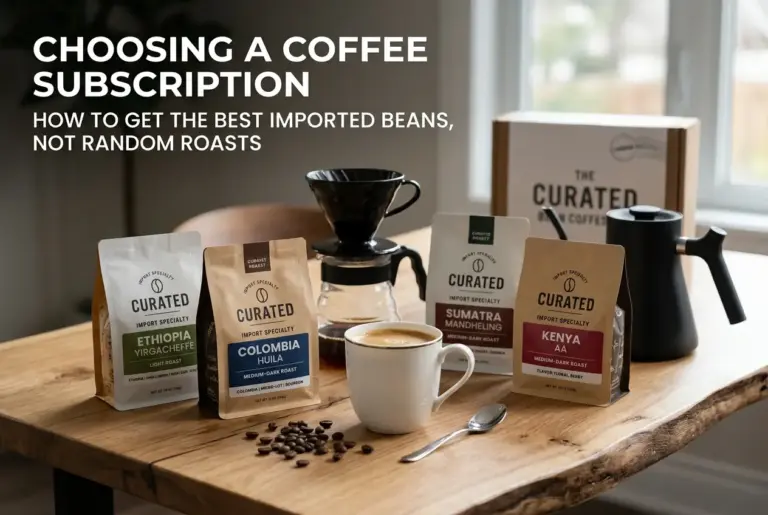
How to Choose a Coffee Subscription for Imported Beans Without Ending Up With Random Roasts
» Discover special tips and stories about coffee