Why Smell Changes How Coffee Tastes
Discover how to enhance your coffee experience by understanding coffee aroma perception. Learn the science behind why smell changes the taste of coffee.
Most of what we call flavor comes from smell. Roughly eighty percent of flavor recognition happens when aroma compounds travel from the mouth to the nose in a process called retronasal olfaction. This hidden path makes a brew seem sweeter, brighter, or more complex even if the recipe stays the same.
This short guide explains practical coffee aroma perception and why the “taste” people note is shaped by the brain as much as the tongue. It applies to filter and espresso, at home or in cafés, without special gear.
We’ll also link smell to memory and everyday situations. For example, when you have a stuffy nose, that same cup often feels flat. The next sections cover the science of smell, what shapes aroma in beans, and simple tasting techniques you can use right away.
Key Takeaways
- Retronsal olfaction drives most flavor recognition.
- Smell and memory shape the drinking experience.
- Small changes in aroma can alter perceived taste.
- This guide works for filter and espresso at home or cafes.
- Simple tasting steps help you evaluate more accurately.
How smell creates “flavor” in coffee, not just taste
Smell is the hidden driver behind most of what we call flavor in a cup. The tongue senses basic qualities like sweet, salty, bitter, sour, and umami. But many recognizable notes arrive through the nose when volatile compounds move during a sip.
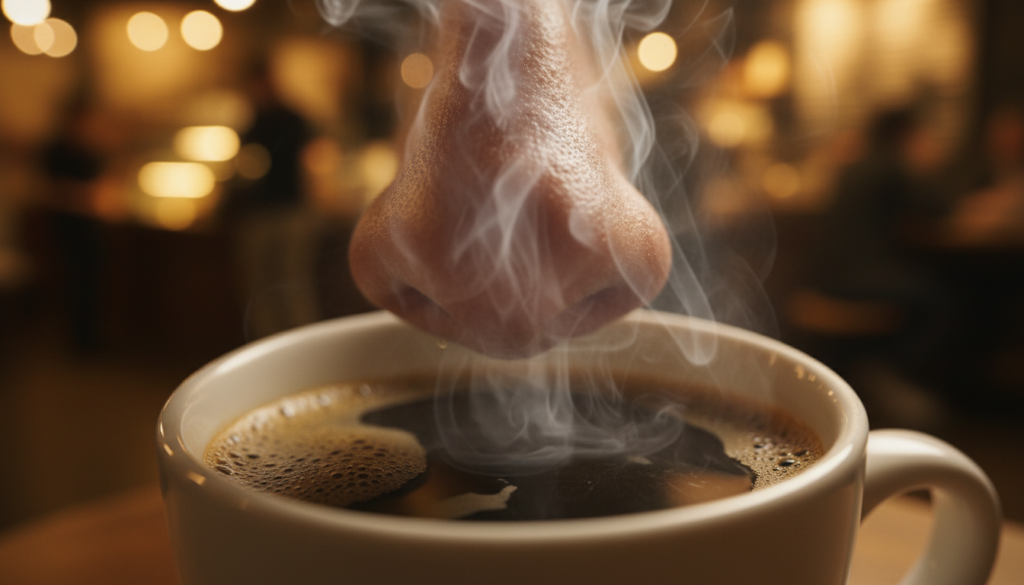
Retronasal olfaction: a step-by-step way it works
- Take a sip; liquid and air mix in the mouth.
- Aroma molecules travel from the mouth up to the nasal cavity.
- The brain merges signals from the nose and tongue into a single flavor image.
Tongue vs. nose — what each adds
The tongue gives basic taste anchors. The nose supplies fruit, floral, nut, spice, and roast notes. That link explains why some cups seem sweeter or more acidic without added sugar.
Try a quick test: pinch your nose, sip, then release. You’ll notice the same drink “returns” with far more depth. This is normal human perception, and it sharpens with simple, mindful tasting practice.
What Would You Like to Learn Next?
Choose an option below:
Coffee aroma perception and what shapes it in the real world
Scent in the cup comes from hundreds of tiny molecules released by heat and grinding. These volatile compounds evaporate as hot water meets grounds, which is why aroma intensity rises from freshly ground beans and hot brews.
Volatile compounds and complexity
Coffee contains over 800 known aromatic compounds, so a single brew can show many different notes. That chemical variety explains why different coffees present fruit, floral, nut, or smoky characteristics.
Freshness and time
Freshly roasted and whole beans hold most volatile compounds. As time passes after roasting or grinding, aromatics dissipate and the cup tastes flatter.
Stale cues often read musty or cardboard-like. Store beans in one-way valve bags and grind just before brewing to retain more flavor.
Roast level and the roasting process
Darker roast development typically strengthens the classic, coffee-forward smell by transforming more compounds. But heavy roasting can erase subtle origin-linked notes.
This tradeoff means roasting is a balancing act between bold aroma and preserved origin characteristics.
Fragrance vs. brewed aroma
Fragrance is the dry-ground scent right after grinding. Aroma is what rises from the brewed cup. Try this drill: smell whole beans, then fresh grounds, then the brewed cup to hear how the scent shifts across the process.
How to taste coffee so you capture aroma and flavor more accurately
A reliable tasting routine helps you notice subtle notes and keeps judgments consistent. Start with a quick sensory check, then move through targeted steps that reveal balance, body, and extraction quality.
Smell before you sip
Smell the dry grounds first (fragrance), then the brewed cup. Doing this primes your nose and brain so tasting is more accurate.
Grind fresh and clean your grinder
Grind just before brewing and clear old grounds from burrs and chutes. A clean grinder prevents stale residues from muddying aromas.
Use the Coffee Taster’s Flavor Wheel
Start with broad families—fruity, roasted, spicy—then pick specific notes like blueberry or dark chocolate. The wheel gives consistent labels for later comparison.
Slurp, taste, and evaluate body
Slurp to spread liquid across the mouth; this boosts retronasal transfer and helps judge sweetness, acidity, and bitterness. Compare body by trying an espresso and a paper-filter cup side by side.
Espresso and cupping tips
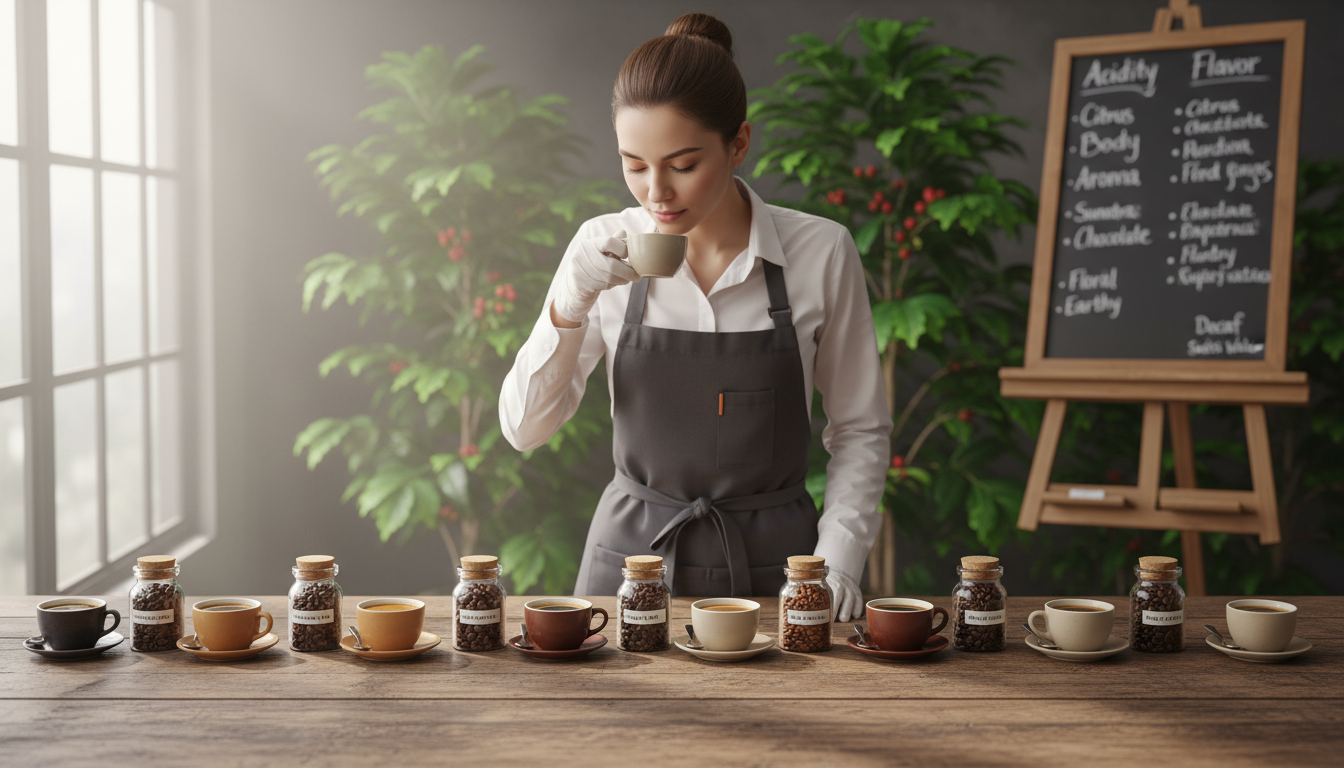
Stir an espresso before drinking to blend extraction layers. For a simple at‑home cupping, use the same dose, grind, and steep time for each cup, break the crust, then taste to note differences in aromas, balance, and aftertaste.
Small changes that can change how coffee tastes in your home setup
Sensory cues in your kitchen—sound, sight, and touch—change what you notice in a drink. These factors alter the overall sensory experience without changing the brew.
Sound: sonic seasoning
High, bright music tends to raise perceived sweetness. Low, bass-rich tracks can make the same espresso seem more bitter. Try this simple test: taste one cup while playing bright music, then the same cup with bass-heavy music and note the difference.
Visual cues and presentation
Cup color and lighting set expectations. For example, a white ceramic cup often reads as more intense or bitter than glass or a colored mug. Adjusting light and plateware can shift perceived intensity.
Touch and texture
Mug weight, rim thickness, and heat transfer matter. A heavy, thick-walled cup signals richness and depth. Thin glass suggests clarity and lightness. Hold the mug as part of tasting.
| Factor | How it shifts taste | Easy home change |
|---|---|---|
| Sound | Bright music → more sweetness; bass → more bitterness | Swap playlists during tasting |
| Visuals | White ceramic → more intense/bitter; glass → cleaner | Use different cups or adjust lighting |
| Touch | Heavier cup → richer; thin rim → delicate | Try heavier mugs or thinner glasses |
Standardize your setup when dialing in a recipe, then change one element at a time. These small moves will refine your home experience and reveal true drink characteristics.
Conclusion
The nose does the heavy lifting when a drink gains rich notes and complexity.
Volatile molecules and compounds released during brewing create the scents that shape recognizable flavor and taste. Freshness and roast choices change how strong those aromas remain, so aged beans often taste flatter.
Use simple steps: smell before you sip, grind fresh, keep equipment clean, slurp to boost retronasal transfer, and use a flavor wheel to name notes. Stir an espresso to blend extraction layers for a steadier sip.
Compare different coffees in a short home cupping to learn how origin and roasting shift aromas and flavors. Treat aroma as a measurable part of the process, and the cup becomes more consistent, descriptive, and enjoyable.
FAQ
Why does smell change how coffee tastes?
How does smell create “flavor” rather than just taste?
What is retronasal olfaction and why does it matter?
What can the tongue detect versus what smell adds to the experience?
Why is aroma linked to sweetness, bitterness, acidity, and aftertaste?
What shapes aroma in the real world?
Why are there hundreds of detectable aromatics in a single cup?
How does freshness and time affect smell and flavor?
How does roast level change what you smell and taste?
What’s the difference between smelling ground beans and brewed cup?
How should I taste to capture aroma and flavor accurately?
Why is it important to grind fresh and keep a clean grinder?
How can the Coffee Taster’s Flavor Wheel help describe what I smell?
What does slurping do for tasting?
How do brewing methods and filtration affect body and texture?
Why does stirring matter when tasting espresso?
How can I set up a simple cupping at home to compare samples?
Can sound or music change how a brew tastes?
Do visual cues like cup color or lighting affect flavor perception?
How do mug weight, heat, and rim shape influence perception?
Why Cheap Coffee Often Tastes Burnt
» Discover special tips and stories about coffee