Inside the Italian Espresso Bar: Culture, Rituals, and Coffee
Walk into an espresso bar in Italy at 8:15 a.m. and you will understand the country faster than any museum can manage. The room is loud, fast, and friendly, and the espresso is the excuse that makes it all happen.
Italian espresso bar culture is built on routine, but it never feels stiff or precious. People come in for a thirty second coffee and leave with news, jokes, and a quick scan of who is in town.
If you grew up elsewhere, the first shock is how normal it all is. Espresso in Italy is not a special occasion drink, it is a daily tool that keeps the day moving.
Tourists often chase the perfect shot, but locals chase the moment around it. Once you see how Italians drink espresso, you stop asking why the cups are so small and start noticing how the bar runs like a tiny neighborhood office.
The Italian Espresso Bar as a Social Institution
An espresso bar Italy style is where errands, gossip, and small favors get traded without anyone calling it networking. In many towns, the bar is where you learn who got married, who is hiring, and which road has construction today.
The regulars have patterns that look random until you watch for a week. One guy always arrives after dropping kids at school, another appears after the morning market, and the older men time their entrance to catch friends between bus arrivals.
What Would You Like to Learn Next?
Choose an option below:
The bar itself is usually compact, with a counter that forces conversation because you stand close enough to hear each other breathe. That closeness is the point, and it makes the place feel public in a way many cafes outside Italy do not.
Even in big cities like Milan or Rome, the neighborhood bar keeps a local rhythm that resists the rush outside. You can walk in as a stranger, but if you return three mornings in a row, someone will start recognizing your face.
Food is part of the social glue, but it stays simple and quick. Cornetti, tramezzini, and a small glass of water keep hands busy while people talk, then everyone disappears back into work.
The unwritten rules of ordering at the bar
The first rule is speed, because the line moves like a commuter train. If you hesitate, you will feel it immediately as the person behind you slides closer and the barista locks eyes to ask what you want.
In most places you pay first at the cassa, take the receipt, then hand it to the barista at the counter. Some bars reverse the order, which is why locals glance around for two seconds before committing to a routine.
Language matters, and the same word can change meaning by region. In much of Italy, asking for a caffe gets you an espresso, while cappuccino after late morning can get you a raised eyebrow even if nobody says a word.
If you want milk, you need to be direct and brief, because the menu is not a place for long custom orders. Caffe macchiato, latte macchiato, and caffe corretto are the classics, and they work because they are predictable for the barista and the customer.
Tip culture is light, and the bigger courtesy is not cash but competence. Know what you want, order it cleanly, and step aside when you finish, because the counter belongs to whoever is next.
Espresso al banco: standing at the counter
Espresso al banco is the default posture of Italian coffee culture, and it changes how coffee tastes because you drink it immediately. You also drink differently when your elbows are near the saucers and the barista is two feet away.
Sitting at a table often costs more, especially in tourist zones, but price is only part of the story. Standing keeps the coffee hot, keeps the crema intact for a few more seconds, and keeps the whole ritual short enough to repeat twice a day.
| Al banco habit | What you do | Why it matters |
|---|---|---|
| Ask for “un caffe” | Order a straight espresso with no modifiers | Fast, universally understood in most bars |
| Drink within a minute | Two or three quick sips, then the last swallow | Best temperature and texture, less bitterness |
| Use the water correctly | Small sip before coffee, not a chaser | Cleans palate so espresso tastes sharper |
| Move away after finishing | Place cup down, nod, and free the counter spot | Keeps the line flowing and the bar social |
| Keep conversation short | Say hello, trade one update, then step out | Maintains the quick rhythm of the bar |
Regional espresso styles across Italy
People talk about Italian espresso as if it is one thing, but the country argues with itself about coffee the way it argues about pasta shapes. Regional habits change roast level, dose, cup size, and even how long a shot runs.
In Naples, the espresso often lands darker, denser, and more intense, and many bars still lean on robusta for punch and crema. The cup can feel hotter, the sugar bowl is close, and nobody apologizes for a strong finish.
In Milan and much of the north, you often see a lighter approach, with blends that aim for a cleaner bitterness and more aroma. The shot can taste sharper, and the bar may look more modern, but the pace stays the same.
Rome sits in the middle, and you can find both styles within a few subway stops. One bar pulls short, syrupy shots, while another runs a slightly longer espresso that locals still call normal.
Sicily brings its own logic, especially in summer, when granita with brioche competes with hot espresso for attention. Ask locals about coffee and they might start with almond flavors, ice, and the way heat changes what you crave.
The barista’s role and craft in Italian coffee culture
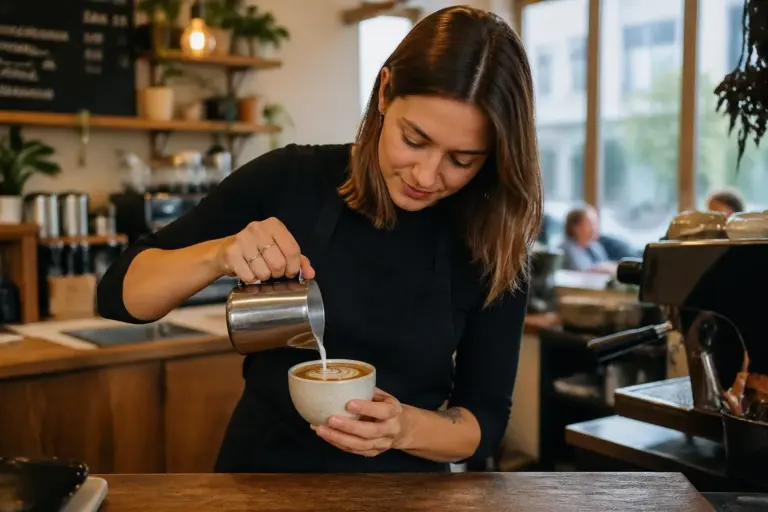
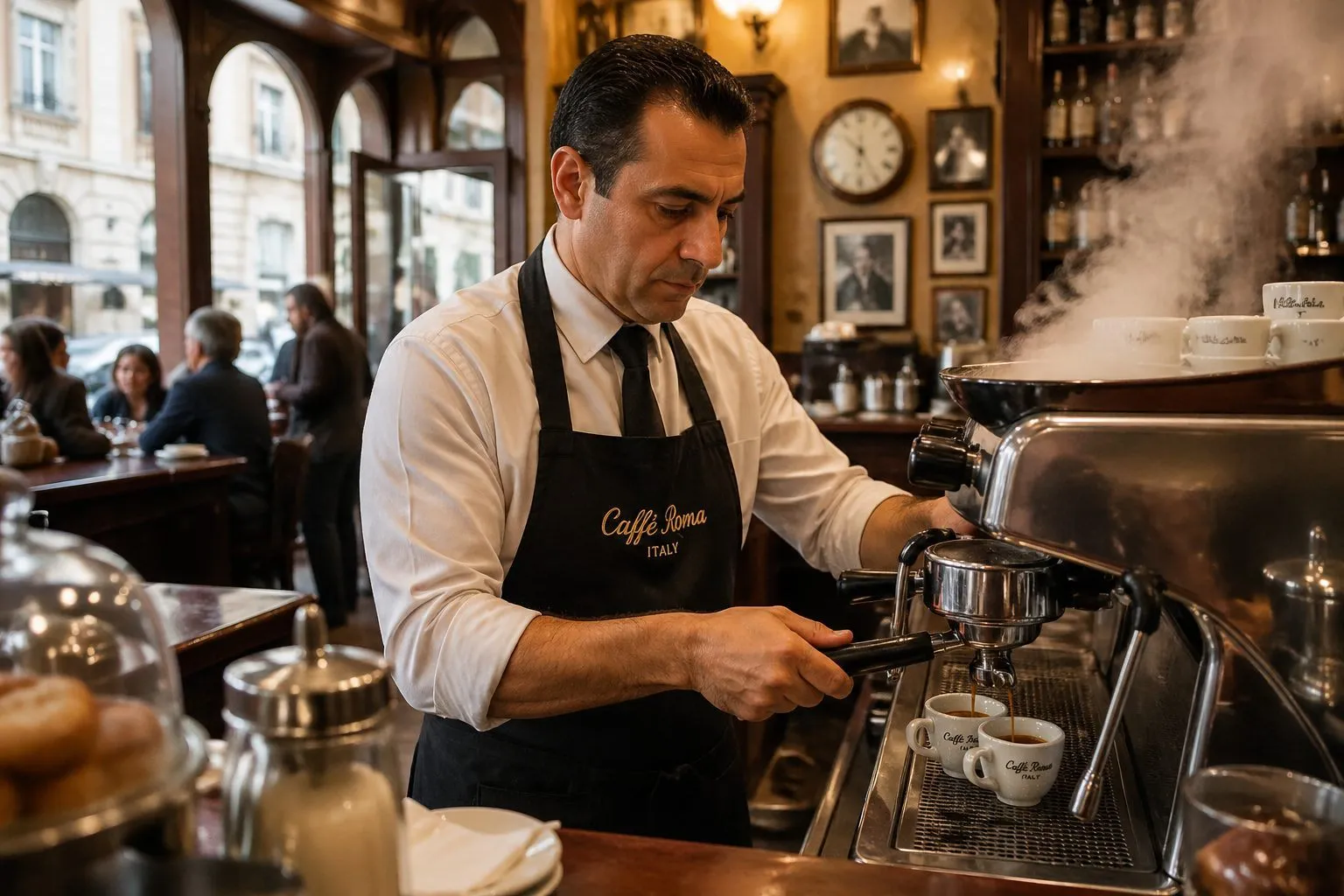
The barista is the engine of the room, and good ones control chaos without acting like a celebrity. They remember faces, keep cups moving, and fix small problems before customers notice them.
Skill shows up in the basics, like grind adjustments that match humidity and the morning rush. In a serious espresso bar Italy regulars trust, the barista changes the grinder setting quietly and keeps the shot time where it needs to be.
Milk work matters too, even if espresso is the main event, because cappuccino and macchiato are daily orders. A clean microfoam texture and a balanced temperature are the difference between comfort and a burnt cup that tastes like regret.
Equipment is rarely fancy for its own sake, but it is maintained with pride. You will see baristas wiping steam wands, purging groups, and stacking cups on top of the machine so everything stays warm and ready.
The best baristas also manage the social side without faking it. They greet regulars by name, tease them lightly, and still deliver a consistent espresso to the tourist who cannot pronounce macchiato.
How Italians drink espresso day to day
Once you learn how Italians drink espresso, you notice the timing more than the taste notes. The first coffee often comes with breakfast, the second follows lunch, and a late afternoon shot can act like a reset button before the evening passaggiata.
Sugar is common, and nobody treats it like a moral failing. Some people stir aggressively, others tap the spoon once and stop, and a few drink it amaro and look slightly smug about it.
Many Italians order the same thing every day, which makes the bar run faster and makes the barista’s life easier. The ritual is small, but repetition turns it into a personal anchor in a schedule that otherwise changes.
Water shows up in different ways, and you should pay attention to it. Some bars set out a glass automatically, while others wait until you ask, but the intention is the same: clear your mouth so the espresso hits clean.
People rarely carry espresso to go, and the few paper cups you see feel like exceptions for commuters. The bar is where the coffee belongs, because the counter creates a pause that a sidewalk cannot replace.
The unwritten etiquette that keeps the line moving
Italian espresso bar culture runs on small courtesies that look invisible until someone breaks them. Cutting the line is rare, but sliding into a gap at the counter happens constantly, and locals read the situation with quick eye contact.
People order with their voice, not with a phone held up like a shield. If you speak clearly and keep your order simple, the barista will usually reward you with speed and a nod that says you did fine.
- Pay at the cassa first when locals do
- Keep the order to one line, no custom syrup requests
- Hand the receipt to the barista without waving it
- Drink at the counter, then free your spot
- Ask for water if none appears
- Use “un caffe” for a standard espresso
- Save cappuccino for the morning
Coffee benefits Italians value, even if they do not talk about them
Italians rarely sell espresso as wellness, but they use it like a practical tool. The coffee benefits they care about are simple, a quick lift in alertness and a clean finish after a meal.
Espresso is also portion control disguised as pleasure. A small cup gives you caffeine and aroma without turning your morning into a giant milk drink that sits heavy in the stomach.
There is also a social benefit that is easy to miss if you only count milligrams of caffeine. The bar creates a daily check in with other humans, and that routine can steady your mood more than any supplement trend.
After lunch, espresso works as a punctuation mark that tells your brain the meal is done. You see it everywhere, from factory workers to lawyers, because it fits into a tight schedule without demanding a long break.
Of course, people vary, and some avoid late shots to protect sleep. The smart move is to copy the locals and treat espresso as a small dose you can time, not a bottomless cup you sip all afternoon.
Production, blends, and why sustainability is entering the conversation
Behind the counter, espresso looks local, but coffee production is global, and Italy depends on imports from Brazil, Vietnam, Colombia, Ethiopia, and beyond. That distance used to stay out of sight, yet more bars now talk about sourcing because customers ask harder questions.
Traditional Italian blends often mix arabica and robusta to balance crema, cost, and flavor, and that choice has consequences on farms. Robusta can be hardy, but low prices can still push farmers into tough decisions that hurt soil health and labor conditions.
Sustainability in Italian coffee culture also shows up in packaging and waste, because the bar burns through cups, sugar packets, and water every day. Some modern bars switch to bulk sugar, compostable stirrers, and better water filtration to cut plastic and improve taste at the same time.
Energy use matters too, since espresso machines sit hot for hours, and grinders run nonstop in the morning. A well maintained machine, smart boiler settings, and disciplined backflushing save power and keep shots consistent, which is a nice rare win win.
If you want to support better practices as a visitor, start by choosing bars that name their roaster and talk plainly about origin. You do not need a lecture, you just need signs that someone paid attention to the supply chain instead of hiding it.
How Italian espresso culture influenced the world
Italian coffee culture exported a format more than a flavor, the quick bar, the short drink, the standing counter. You can see it in espresso bars from New York to Melbourne, even when the roast is lighter and the menus are longer.
The equipment story matters, because Italian companies built machines that became global standards. Brands like La Marzocco, Faema, and Rancilio helped define what espresso could taste like when pressure and temperature stayed stable.
At the same time, the rest of the world changed espresso in ways Italians sometimes side eye. Third wave shops pushed single origin espresso, longer ratios, and latte art as a main attraction, while the classic Italian bar kept the focus on speed and familiarity.
Even the idea of espresso as a post meal ritual traveled widely. Restaurants across Europe and the Americas copied the cadence, order dessert, then coffee, then the check, and the table finally relaxes.
The funniest part is how the phrase espresso al banco now appears in travel guides and social posts, as if it were a secret technique. In Italy it is just the normal way to drink, and that normality is exactly what the world tried to borrow.
Conclusion
Italian espresso bar culture is a set of habits that keeps daily life moving, one small cup at a time. The bar is where you see how a country handles speed, politeness, and pleasure without turning any of it into a performance.
If you want to understand an espresso bar Italy regulars love, stop chasing the perfect photo and stand at the counter. Order simply, drink quickly, and watch the room, because the real story is the ritual around the cup.
Pay attention to the regional differences, because they are real and they taste different. A Neapolitan shot, a Milanese shot, and a Roman shot can all be excellent, and none of them need to agree with the others.
As espresso spreads and changes worldwide, Italy still sets the baseline for what fast coffee can be when it is done with care. If more bars pair that care with better sourcing and less waste, the ritual can stay intact without ignoring the farms that make it possible.
Why Melbourne Became One of the World’s Great Coffee Cities
» Discover special tips and stories about coffee