Why Puck Preparation Matters in Espresso
Master the art of espresso with our guide on coffee puck prep. Learn the techniques for a perfect shot every time. Improve your brewing skills now.
Puck preparation sets the stage for every espresso shot. A compact dose in the portafilter controls flow, extraction, and taste. Small changes in routine — like adding a paper filter or switching a screen — can shift flow rate and shot time enough to make a grind change seem necessary.
At home, repeatability comes from a simple, repeatable routine. Match basket and dose, dial grind, distribute evenly, and tamp with a consistent pressure. This guide aims for a clear, measurable workflow that improves cup quality and reduces channeling.
Goal: lock a preparation routine and treat grind size as the main variable while dialing in flavor. The focus is on dose, ratio, and time — not guesswork — so you reach steady results with your espresso.
Key Takeaways
- Puck prep controls extraction and major taste shifts.
- Small setup changes can alter flow and shot time.
- Follow a simple routine to improve repeatability at home.
- Measure dose, ratio, and time for reliable results.
- Treat grind size as the primary adjustment once routine is fixed.
What Puck Prep Is and Why It Changes Your Espresso Shot
Every shot starts with how the grounds are handled before the portafilter locks in. Puck prep is the full sequence from ground coffee entering the basket to the portafilter being locked into the group head. Each step directly affects extraction and the final flavor.
How even water flow drives extraction, flavor, and shot quality
When water flows evenly across the bed, extraction stays uniform. That balance boosts sweetness, clarity, and overall cup balance.
Flat, evenly dense beds let water meet all grounds the same way. The result is steadier flow and predictable brewing results.
What Would You Like to Learn Next?
Choose an option below:
What channeling looks like and why it happens
Channeling shows up as fast spurts, uneven streams, or sudden swings from sour to bitter in the cup.
It’s usually caused by clumps, air pockets, weak edges, or uneven density that let water take the path of least resistance.
The repeatability goal: choose a routine and stick with it
Pick a single routine and repeat it. Consistent technique reduces false feedback while dialing in, so grind or recipe changes actually mean something.
Focus on one variable at a time. That habit turns trial-and-error into reliable improvement and better espresso results.
Match the Portafilter Basket to Your Dose and Recipe
Choosing the right basket makes dialing a shot faster and more predictable. The basket and portafilter set the physical limits for puck depth and flow. That means dose and recipe must fit the basket size you use.
Single, double, and triple ranges
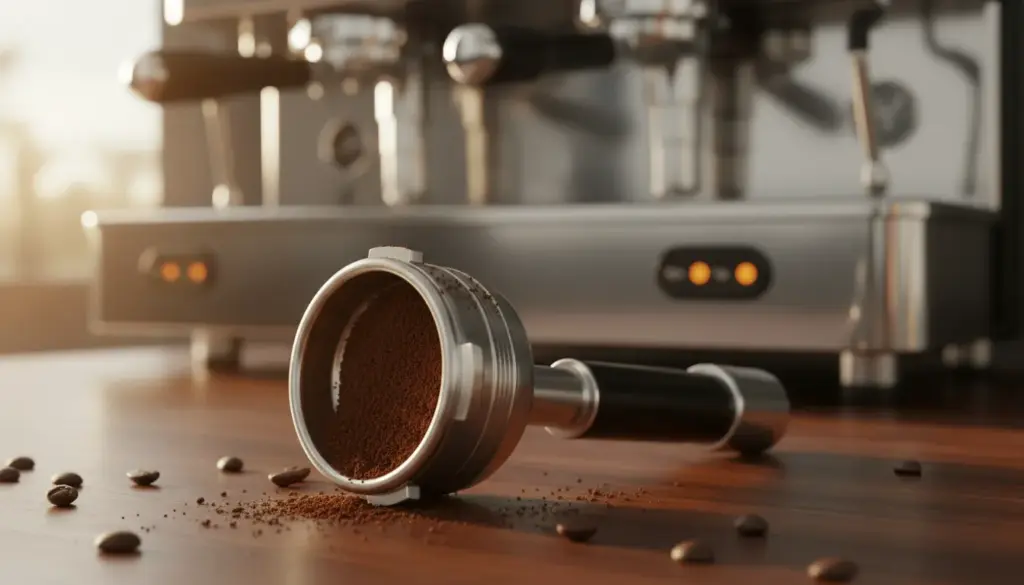
Know the common ranges: single 6–10g, double 12–20g, triple 18g+. Most home routines center on a double basket, often 18–20g.
| Basket Type | Typical Dose (g) | Common Use |
|---|---|---|
| Single | 6–10 | Very short shots, limited volume |
| Double | 12–20 (home: 14–22, often 18–20) | Standard home brewing |
| Triple | 18–20+ | High-yield recipes, commercial use |
Headspace basics and a quick diagnostic
Underfilling raises headspace and lets water channel. Overfilling can contact the group screen and block even flow.
Practical check: insert the portafilter into the group head and remove it before brewing. If a screw or group imprint appears on the surface, you may be overdosed or need a finer grind.
Recipe fit and example ratios
Match ratio to basket: ristretto 1:1–1.5, normale 1:2–3, lungo 1:3–4. Example: 18g in → 36g out (~30s) for a normale.
- Ristretto — 18g in → 18–27g out, shorter time, fuller body.
- Normale — 18g in → 36g out in ~30s, balanced.
- Lungo — 18g in → 54–72g out, cleaner clarity.
Keep dose stable while dialing grind. Changing dose alters resistance and time, so adjust grind size first to reach your target shot behavior on the matched basket.
Dial In Grind Size With an Espresso Grinder Built for Consistency
Dialing grind size gives you predictable resistance and a clearer path to the flavor you want.
Why burr grinders matter
Burr grinders produce uniform particle size, which creates even bed density and steady flow through the espresso bed.
Uneven grind yields sour pockets and bitter spots because extraction varies across the basket.
The “espresso zone” in practical terms
The espresso zone is fine enough to give resistance but coarse enough to avoid choking the machine. Aim for a test shot between 25–35 seconds when trying a new roast.
Medium to dark roasts often land at 25–30 seconds. Lighter beans usually need 35–45 seconds, then adjust by taste.
What to prioritize when shopping
- Stepless adjustment for micro-changes in grind size.
- Low retention and anti-clumps design to keep doses consistent.
- Quality burrs (flat or conical) sized for espresso use; expect decent home models under $300 and premium units above $500.
“A consistent grinder makes the rest of your routine work.”
coffee puck prep Workflow From Ground Coffee to Lock-In
The path from grinder to locked-in portafilter should be predictable and efficient. A short, ordered routine reduces waste and gives clearer feedback when you adjust grind or dose.
Clean workflow basics
Prep the portafilter, grind into the basket, distribute, tamp, and lock in. Repeat the same actions in the same order every shot to build consistency.
Why a dosing funnel matters: it keeps grounds contained, supports WDT without overflow, and cuts counter mess. That simple tool saves beans and makes distribution cleaner.
Level basket fill and why it helps
Level basket fill means starting with a consistent mound just below the rim. A uniform starting bed reduces variables during distribution and tamping.
Single dosing vs hopper grinding for home
Single dosing keeps beans fresher and lowers retention in the grinder. Hopper grinding is faster, but static and leftover grounds can skew doses.
RDT and other anti-static methods work best with single dosing. For home users who switch beans often, single dosing improves repeatability.
- Quick checklist: funnel on, dose measured, basket level, rim clean, tamp, lock-in promptly.
Distribution Techniques That Prevent Clumps and Edge Channeling
Distribution is often the decisive step that makes or breaks a home espresso shot. Proper distribution determines whether water meets even resistance across the bed. Skip or rush this step and you invite clumps, weak edges, and uneven extraction.
Using WDT tool correctly: keep the funnel on, insert the needles to the bottom, and pull upward while rotating slightly. This bottom-to-top motion de-clumps through the full depth and improves overall density, not just the surface.
When a distribution tool is optional: a polishing tool can smooth the top layer. But it cannot fix dense clumps below the surface the way using wdt tool can. If your WDT is solid, a top tool is just a cosmetic step.
Manual alternatives work well. Use vertical taps to settle grounds and collapse air pockets. Follow with palm taps to level the bed horizontally. These actions reduce voids near the edges and help prevent channeling.
Use a bottomless portafilter to evaluate results. Watch stream symmetry, early blonding, and any spurts. These signs point to edge weakness or uneven density and guide quick corrections.
“Even distribution yields steadier flow, cleaner balance, and fewer messy sprays.”
Tamping for a Flat, Even Coffee Bed Under Pressure
Tamping turns an even bed into a unified surface that resists water pressure during extraction. It is the step that locks distribution into a stable brew surface and sets the stage for steady flow.
Level tamping and the “maximum density” idea
Level tamping means keep the tamper flat and press straight down. Compress until the surface is even and smooth. Check the rim for any loose grounds before locking in.
The maximum density concept says the bed reaches its limit around 30 lb of force. After that, extra force does not improve extraction and can cause strain.
Target pressure and when to use a spring tamper
Aim for repeatable force and consistent posture. Many home baristas target roughly 20–30 lb for reliable results. If your wrist or timing varies, a spring-loaded tamper helps produce the same force every time.
Common tamping mistakes and quick self-checks
Angled tamping leads to edge channeling. Cracks or soft spots make fast paths for water. Overly soft compressions cause uneven extraction.
- Self-checks: surface looks flat, edges sealed, no gaps, rim clean.
- Tie-back: good distribution makes tamping easier; tamping cannot fix deep clumps.
| Topic | Guidance | Common Issue |
|---|---|---|
| Level tamp | Flat tamper, straight down, smooth finish | Angled tamp → edge channeling |
| Target pressure | Aim 20–30 lb; stop at max density (~30 lb) | Too hard strains joints, no extraction gain |
| Spring tamper | Use to standardize force and improve consistency | Less user variation, steadier shots |
| Mistakes | Check for cracks, soft spots, and rim debris | Fast blonding, uneven cups, spray |
“Puck should appear perfectly flat before water; tamp smooth with no gaps around the basket.”
Optional Tools That Can Improve Flow and Reduce Mess
Small, targeted accessories can tidy your workflow and change how water moves through the bed. These items are optional but can improve consistency, reduce sediment, and lower cleanup time. Adopt any tool consistently, because each one changes flow and may force a re-dial.
Bottom paper filter
Paper filters at the basket base (popularized by Scott Rao) often increase flow rate, cut fines in the cup, and reduce channeling. Faster flow with a filter usually means you can go slightly finer in grind size to regain shot time and extraction.
Be aware: add the filter and re-dial; remove it later and you may need to grind coarser again. Treat the filter as a permanent change once you commit to it.
Creped paper orientation
Correct placement matters. Place the rough side down against the basket and the smooth side up toward the grounds. That orientation helps the paper absorb fines and avoids blocking flow.
Inconsistent orientation can limit flow and reduce the filter’s effectiveness at trapping sediment.
Top screen / metal mesh puck screen
A thin metal mesh screen sits above the bed to smooth dispersion from the group head. It evens out the pressurized water spread and lowers the chance of the stream digging into a weak spot. The screen can improve saturation and make shots less sensitive to small distribution errors.
RDT for static and retention
RDT (Ross Droplet Technique) is a light spritz of water on beans before grinding. It reduces static cling and lowers retention in single-dosing workflows. This technique works best with single-dosing grinders and low-retention setups, not hopper-fed grinders.
Change management: if you add or remove any of these tools, expect shot time to shift and re-dial by adjusting the grinder.
Conclusion
Finish each session by treating your workflow as a linked chain: every step sets the next one up to succeed.
Match basket and dose, use a steady grinder, distribute thoroughly, tamp level, and lock the portafilter cleanly. This sequence makes even resistance so water flows uniformly through the puck for balanced extraction and better espresso flavor.
Keep any added screen or paper filter in place and only change one variable at a time — usually grind size — when dialing for time and taste. Common failures are wrong basket size, clumpy grounds, poor edge distribution, and an unlevel tamp; fix these first.
Use measured feedback: weigh dose and yield, log shot time, and note machine settings. Fresh coffee beans (1–2 weeks post-roast) behave best, so track age when results shift.
Next brew checklist: confirm basket rating, weigh dose, watch shot time, and change only one variable at once.
FAQ
Why does puck preparation matter in espresso?
What is puck prep and how does it change my espresso shot?
How does uneven water flow affect extraction and shot quality?
What does “channeling” look like and why does it happen?
How do I build a repeatable routine for better results?
How do I match the portafilter basket to my dose and recipe?
What is headspace and why avoid underfilling or overfilling?
Which recipes pair with different basket sizes?
Why do burr grinders matter for puck density and flow resistance?
What is the “espresso zone” for grind settings?
What features should I prioritize when buying a grinder for espresso?
What does a clean workflow from grounds to lock-in look like?
Single dosing vs hopper grinding—what’s better at home?
How do distribution techniques prevent clumps and edge channeling?
How do I use a WDT tool correctly?
When should I skip a distribution tool and rely on WDT instead?
What manual distribution options work well?
How can a bottomless portafilter help evaluate distribution and extraction?
What is level tamping and why doesn’t pushing harder always help?
What tamp pressure should I target and when use a spring-loaded tamper?
What are common tamping mistakes to avoid?
What optional tools can improve flow and reduce mess?
How should I orient a paper filter in the basket?
What does a top screen or metal mesh puck screen do?
How does RDT (Ross Droplet Technique) help when single dosing?
Ecuador Specialty Coffee: The Hidden Origin Worth Trying
» Discover special tips and stories about coffee