Moisture Content in Green Coffee Explained
Learn how to manage coffee moisture content effectively with our step-by-step guide. Discover the importance of optimal moisture levels for green coffee beans.
What this term means: In plain words, it is the wet-basis percent by weight in raw beans. Traders commonly aim for a range near 9.5%–12.5%, with about 10%–12% seen as a practical safe window for storage and shipment.
Why people check it constantly: This number guides buying, storage, and roasting choices across the United States. It affects quality consistency, safety, and fairness in trade — no one wants to pay for excess water weight or risk spoilage.
This article gives a step-by-step how-to: what “good” looks like, reliable measurement methods, and clear controls for handling beans through processing and shipment. You will learn how this lab metric links to real outcomes in the roaster and in storage.
Roadmap: We cover why it matters, standard ranges, measurement methods, processing and storage controls, roasting adjustments, and a final checklist. Numbers will reference SCAA, ICO, and ISO calibration standards so you can act with confidence.
Key Takeaways
- Typical targets are expressed wet-basis and sit near 9.5%–12.5%.
- Accurate measurement keeps quality and safety on track.
- Managing water level protects flavor and reduces financial loss.
- Moisture affects roast behavior and storage stability.
- The guide uses industry standards for comparable, actionable steps.
Why Moisture Matters in Green Coffee: Quality, Safety, and Consistency
The share of a bean’s weight that is water determines key outcomes from shipment to cup. If a sample reads 11% wet-basis, roughly 11% of its weight is water and the rest is dry matter. That simple percent guides buying, storage, and roasting decisions.
What the wet-basis percent means
Wet-basis is the common lab phrasing for this percentage by weight. It tells you how much of each bean is water vs. solids. Producers and traders use it to compare lots and to avoid paying for excess water.
What Would You Like to Learn Next?
Choose an option below:
How it affects flavor and shelf life
Stable levels help preserve freshness and reduce staling. Beans with steady water hold aromatics longer and deliver more consistent roast performance. Very low moisture makes beans brittle; they chip and oxidize faster.
Risk zones to watch
- High: elevated mold growth, insect infestation, and increased Ochratoxin A risk during transport or storage.
- Low: brittleness, higher breakage, and faster flavor decline when conditions fluctuate.
Knowing these tradeoffs makes the next section—standards and target ranges—much more useful for quality and safety control.
Coffee Moisture Content Standards and Target Ranges for Green Beans
A shared reference range helps buyers, sellers, and warehouses agree on lot fitness.
Industry baseline: The SCAA and ICO reference a 9%–13% standard for green coffee. This range serves as a global baseline so importers and exporters compare lots on the same terms. It balances preservation and trade fairness.
Contract specs made practical: Many contracts specify ~9.5%–12.5% as acceptance criteria. That translates into clear pass/fail boundaries for inspection and fewer disputes during settlement.
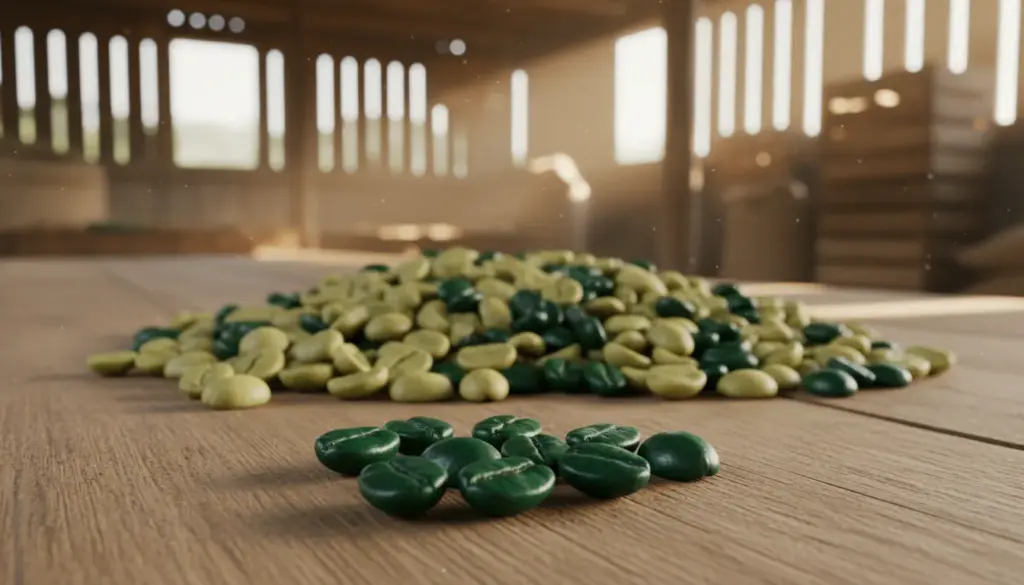
Safe storage window: Stakeholders often prefer 10%–12% for export containers and warehouses. This narrow range reduces biological risk and keeps roast behavior predictable.
- High values (above ~12.5%–13%): higher risk during shipping, greater chance of lot rejection, and need for corrective drying.
- Low values (below ~9%): brittle beans, more breakage, and a signal the lot may be past crop.
Trade clarity note: Numbers only help when both parties measure the same way. Calibration and agreed reference methods are essential; measurement detail is covered in the next section.
| Range | Typical Use | Operational Risk |
|---|---|---|
| 9%–13% | Global reference / standard | Baseline for comparison |
| 9.5%–12.5% | Contract acceptance | Acceptance testing window |
| 10%–12% | Export & storage safe range | Lowest biological and handling risk |
How to Measure Moisture Content in Green Coffee Beans
Accurate measurement starts with choosing between a reference test and a field method. Each approach has trade-offs in speed, cost, and traceability. Below are practical steps and best practices to get reliable readings.
Reference oven-dry method (ISO 6673)
Weigh a representative sample of green beans. Dry in a convection oven at 105°C (220°F) for 24 hours, then reweigh.
Compute moisture as weight loss: 1 − (after/before). A handy shortcut: start with exactly 100 g, then moisture % = 100 − post-bake weight (g).
Karl Fischer titration and accuracy tradeoffs
Karl Fischer gives high accuracy but is costly, requires skilled operators, and destroys the sample. It’s best for verification, not routine screening.
Using a capacitance meter
A portable meter infers moisture by measuring the dielectric constant of the beans. It is fast and practical but depends on calibration and sample handling.
Why devices disagree and how to get repeatable results
- Different devices may use ISO 6673 or ISO 1447 as their reference, producing different numbers for the same lot.
- Use the manufacturer’s recommended sample volume and the same fill technique each time.
- Allow samples to equilibrate to room temperature before testing.
Calibration and low-cost field checks
Ask which ISO standard your meter uses and document that in SOPs. Calibrate regularly—commonly twice per year—to prevent drift.
For quick screening, seal green beans in a plastic bag, wait a few hours for RH and temperature to equilibrate, then check trends before deciding on an oven test.
How to Manage Moisture Levels During Processing and Storage
Practical controls during processing and storage prevent quality loss and safety issues.
Checkpoints from harvest to stable green lots
Treat management as a chain of checkpoints. Start at harvest and follow through drying, depulping, hulling, and warehouse handling.
Key thresholds: cherries are often ~45–55% after harvest, reduced to ~20–30% before depulping, and finished at ~10–12% prior to hulling for best mechanical performance.
Storage controls that protect stability
Keep warehouse temperature steady and limit exposure to humid air swings. Control airflow so lots change evenly and avoid long waits on loading docks.
Responding to high or low readings
- High readings (>12.5%): quarantine the lot, increase monitoring, and apply dehumidification or faster drying to reduce mold and Ochratoxin A risk.
- Low readings (
Record everything: log readings, storage conditions, and actions. Base corrective steps on trends, not single tests, so you keep lots tradeable and safe.
How Moisture Changes Roasting Behavior and What Roasters Can Adjust
Roasters must treat measured water levels in green lots as a primary input to profile design. That number shifts the entire timeline from drying into browning and development. Use it with density and screen-size data for a repeatable starting playbook.
High-moisture green bean behavior
High wet-basis lots need extra time in the drying phase. Evaporation slows heat transfer and often delays first crack.
Practical tip: raise initial energy or extend drying time to avoid stalling later in the roast.
Low-moisture green bean behavior
Low-water lots heat up faster and can race through early stages. That raises the risk of uneven development — toasted outside, underdeveloped inside.
Reduce early aggression and manage gas so the roast moves into development steadily.
Roast-profile adjustments roasters can use
- Match charge temperature to measured wet-basis: higher for damp lots, lower for dry lots.
- Adjust airflow and heat input to keep the drying phase active without overshooting into scorching.
- Use longer, gentler development for high-moisture lots to preserve sweetness and clarity in the cup.
- Document settings per lot so teams in different sites reproduce the same roast reliably.
| Lot Condition | Early Roast Strategy | Expected Cup Result |
|---|---|---|
| Higher wet-basis | Higher initial energy; longer drying phase | More balanced acidity; fuller sweetness when managed |
| Lower wet-basis | Lower charge; controlled early heat to avoid racing | Cleaner clarity but risk of underdevelopment if too aggressive |
| Standard (10%–12%) | Baseline profile; modest drying then steady development | Consistent cup: predictable sweetness and body |
Conclusion
Conclude with clear, repeatable actions: keep green bean wet-basis within a defensible window. Aim for 10%–12% as a widely used safe range unless a contract or local standard says otherwise. Note weight and the reference method (commonly ISO 6673).
Watch the risks on both ends. Too wet raises mold and storage hazards. Too dry causes brittleness, breakage, and faster flavor decline.
Decide when to use a reference oven test versus a field meter and then measure consistently. Make sure partners compare like with like.
Operational checklist: record results at receiving, after storage changes, and before roasting. Log device, method, and the ISO or standard used.
Align standards across the supply chain: agreed language in contracts keeps disputes low. Consistent measurement plus controlled storage protects quality and makes roasting outcomes predictable.
FAQ
What does "moisture content" mean for green coffee beans?
Why does water level matter for quality, safety, and consistency?
What risk zones should I watch for regarding high levels?
What are the common industry standards and target ranges for green beans?
What does very low water indicate in a sample?
How should I choose a measurement method: lab reference or field device?
What is the oven-dry reference method?
When is Karl Fischer titration used?
How do moisture meters (capacitance) work and what are their limits?
Why do readings vary between devices and labs?
How can I get repeatable moisture results?
What are calibration best practices for meters?
Are there low-cost field alternatives to direct measurement?
What processing checkpoints affect final bean water levels?
What are typical threshold values during processing?
How should I control storage to protect bean condition?
What steps reduce mold risk if a lot is too wet?
What if the sample is too dry?
How does bean water affect roasting behavior?
What practical roast adjustments help when green beans vary in water level?
Which additional keywords are relevant for further reading or search?
Ecuador Specialty Coffee: The Hidden Origin Worth Trying
» Discover special tips and stories about coffee