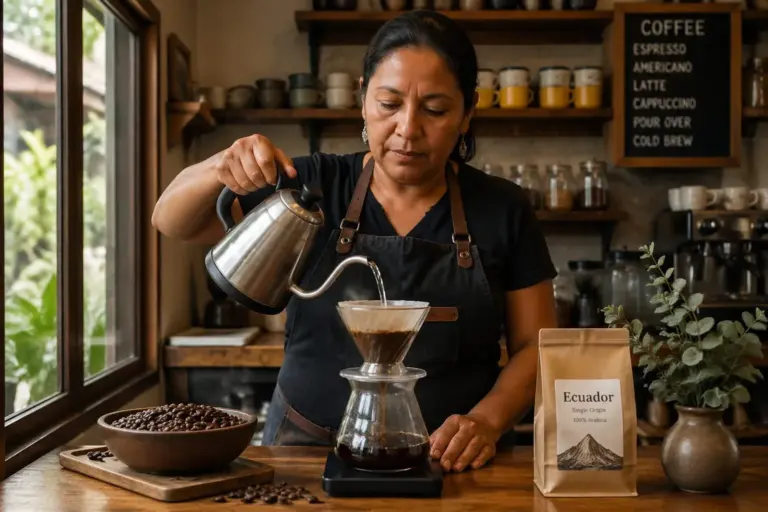
How Coffee Oils Affect Flavor and Mouthfeel
Discover how coffee oils impact flavor and mouthfeel in your daily cup. Learn more about the role of coffee oils in enhancing coffee taste.
Coffee Bean Oil is a concentrated, cold-pressed extract from roasted, ground beans that captures the lipophilic, aromatic compounds that shape what you smell and perceive.
In practical terms, these components make a brew feel fuller and more rounded. When more roasted aroma compounds are present, the cup often tastes richer and carries a familiar morning ritual quality.
This page helps you decide which product suits your needs. Expect clear guidance on how oil strength, dilution, and application change aroma intensity over time.
We also explain how the same roasted, “smells like morning” scent can be used beyond the cup — in personal care or fragrance — and what to look for when comparing specs, handling, price, and safety.
Key Takeaways
- Cold-pressed bean extracts carry the lipophilic compounds that shape flavor and mouthfeel.
- Stronger aromatic content often means a fuller, more rounded cup experience.
- Aroma intensity shifts with dilution, time, and how you apply the product.
- Products vary by how they are made; check specs, handling, and safety before buying.
- The roasted scent suits both beverage use and selected personal care or fragrance applications.
Why coffee oils matter for flavor, aroma, and mouthfeel
Aromatic lipids act like tiny carriers, holding volatile scents that shape what you perceive on the palate. These fat‑soluble compounds bind fragrant molecules so the nose and tongue work together when you taste a cup.
How scent compounds ride with lipids
The nose detects volatile compounds, while lipids hold and slowly release them as a cup cools. This means what you smell strongly influences what you call flavor.
What Would You Like to Learn Next?
Choose an option below:
Mouthfeel and body explained
Body refers to weight and coating on the tongue. More oil and fine solids give a heavier, smoother mouthfeel. Less‑filtered methods often feel fuller for this reason.
What “oil smells” can signal
“When oil-related aroma is vivid, it often points to freshness, a darker roast, or fuller extraction; muted scent can mean older beans or under-extraction.”
Use this cue when brewing: bright oil scent suggests recent roast or stronger extraction. A flat scent after short time may indicate staling.
| Sensory cue | Likely cause | What to try |
|---|---|---|
| Vivid oily aroma | Fresh roast / stronger extraction | Lower grind or shorter brew to reduce bitterness |
| Muted scent | Age or light extraction | Use fresher beans or increase contact time |
| Harsh roasty smell | Over-extraction or dark roast | Cool faster, shorten brew, or dilute |
Buyer tip: Product listings use the same sensory words—knowing these terms helps you read product information and pick the right extract or ingredient for your needs.
coffee oils and aroma profiles you can recognize at home
Start by using a familiar scent—one many U.S. kitchens call pot coffee—to judge realism and depth. A short, focused sniff gives you a consistent benchmark when comparing extracts and product descriptions.

“Smells like fresh brewed pot coffee” as a sensory benchmark
“Smells like fresh brewed pot coffee” is a useful phrase in listings. If a product truly smells like a just-poured pot, expect a straight, robust profile rather than sweet or mocha notes.
Roasty, dark notes and how they read
Roasty, dark notes can feel warm and comforting or bitter and overheated. Context matters: a darker roast often gives bold, smoky traits that some describe as “BLACK COFFEE.”
How heat and time change the morning cup
Do a simple test: sniff immediately after brewing, then again after five and thirty minutes. Top, volatile notes fade; deeper roasty tones persist over time. Use this routine to match expectations for strength and longevity in a product.
“Use pot as your reference: it’s widely recognized and helps decode reviews and specs.”
Product spotlight: Coffea arabica coffee oil and how it’s made
This product snapshot covers Coffea arabica L seed extract so you can compare specs and sensory expectations quickly.
Botanical name, plant part, and origin
Botanical name: Coffea arabica L.
Plant part: seeds.
Origin: Brazil.
Extraction method
The extract is cold pressed from roasted, ground beans. Cold pressing of roasted material concentrates roasty aromatics and yields a vegetal, aromatic product true to the source.
Visual and handling notes
What you receive is a dark brown, viscous liquid. Viscosity matters: it affects dispensing, blending, and small-batch measuring. Expect careful handling and use of pipettes or droppers for precision.
Consistency, note, and strength in practice
Consistency: medium — pours easily but still coats a dropper.
Note: medium — present without overpowering sweeter top notes.
Strength of aroma: medium — recognizable and warming, often described as smelling like a fresh brewed pot of coffee.
Buyer tip: This product reads dark and roasty rather than sweet. Use it when you want an authentic, warming roast presence in blends or formulations.
How to use coffee oil for aroma and formulation goals
Start by testing tiny amounts. Adding drops into a neutral carrier shows how dilution changes perceived intensity. Even realistic roast aroma can seem faint once spread across a serum or body oil.
Adding drops for scent: what dilution changes
Work in small batches and count drops. A 1% trial lets you judge aroma without wasting product. If the scent disappears, raise concentration slowly.
Pairing ideas inspired by tradition
Traditional pairings like cardamom with honey or beeswax round the profile. These notes add warmth and a comforting sweetness to avoid a one-note roast impression.
Using the extract in perfumes and massage blends
As a warm heart or base accent, the oil supports amber, vanilla, and spice top notes. In a massage blend it gives an invigorating edge; pair with mild carriers for glide.
In skin care: fatty-acid context for mature skin
Linoleic, Palmitic, and Oleic acids make this product useful in mature-skin serums and facial oil blends. Test for absorption and feel before scaling production.
“Do small-batch tests for scent, stability, and skin feel before you scale.”
Safety note: contains a small amount of caffeine; avoid if highly sensitive or allergic.
Price, bottle experience, and reviews that impact buying decisions
Pricing and size options to compare before you buy
Look at cost-per-ounce to match volume to your plan. Small personal sizes cost less up front but are pricier per ounce. Bulk sizes lower unit cost for production.
| Size | Retail price | Approx. $/oz |
|---|---|---|
| 0.5 oz | $16.24 | $32.48 |
| 2 oz | $56.04 | $28.02 |
| 16 oz | $273.08 | $17.07 |
| 5 lb | $1,329.08 | $4.15 |
Real-world reviews: strong aroma vs. faint after dilution
Customer reviews often say the product truly smells like fresh brewed coffee when sniffed neat. That realism is a clear selling point in many reviews.
However, multiple users report the scent drops sharply with dilution. In leave-on blends or soaps, strength can fade near 4.9% formulation levels. Plan for higher usage or test in small batches.
“Smells amazing straight from the bottle; becomes faint once mixed.”
Handling thick extracts: dropper limits and mess prevention
The oil is viscous. A small bottle dropper may clog or pour slowly. Many buyers remove the dropper and use a pipette or syringe for controlled transfers.
Simple handling tips: warm the bottle in your palms, wipe the neck after pouring, use disposable transfer pipettes, and recap promptly to avoid spills and keep consistency steady.
Buyer insight: Match chosen size and bottle style to your intended use. Use the pricing table and review information to set realistic expectations before you order.
Conclusion
A clear takeaway: roasted bean extracts shape aroma and mouthfeel, giving a dark, warming character many buyers seek.
Expect realistic roast scent to read as bold or “black” and to weaken with dilution. Plan blending to preserve presence in your final formula.
Quick buying checklist: confirm botanical identity, extraction method, origin, and viscosity/dispensing needs for the oil before choosing bottle size.
Disclaimer: this information is general and not medical advice. Consult MSDS and technical docs, test at lab scale, and follow safe handling. Avoid use during pregnancy; discontinue if adverse effects on skin or health occur, and be mindful of sensitivity to coffee.
For makers: run small trials, review regulatory guidance, and ensure proper dilution and documentation before scaling.
FAQ
How do oils affect flavor and mouthfeel in brewed coffee?
Why do oils matter for aroma and what they reveal about freshness?
How do oils carry aroma compounds and shape what you taste?
What does “body” or mouthfeel mean in relation to oil content?
What can “oil smells” indicate in a fresh brew?
How can I identify aroma profiles at home using “smells like fresh brewed pot coffee” as a benchmark?
How do roasty, dark notes appear in aroma and why do they matter?
How do heat and time change aroma in the morning cup?
What is Coffea arabica L in botanical and origin terms?
How is an Arabica-derived oil typically extracted?
What does the oil look and feel like?
How strong is the scent and what practical notes should I expect?
How many drops should I add for scent in a formula and how does dilution affect intensity?
What pairing ideas work well with an Arabica-style aroma?
Can this oil be used in natural perfumes or massage blends?
Is there skincare relevance for mature skin regarding fatty-acid profile?
What pricing and bottle sizes should buyers compare?
What do real-world reviews say about scent strength after dilution?
How do I handle viscous oils to avoid mess and dosing errors?
Are there safety or storage tips to preserve aroma and quality?
Ecuador Specialty Coffee: The Hidden Origin Worth Trying
» Discover special tips and stories about coffee