How Coffee Processing Methods Affect Sweetness and Body
Explore the effects of various coffee processing methods on coffee's sweetness and body. Get the ultimate guide to coffee processing methods today.
In this ultimate guide, you will learn how the farm-level choices that remove the seed from the cherry shape the cup you drink.
The guide previews natural, washed (wet), honey, wet-hulled, anaerobic, and hybrid approaches and links each to expected cup weight, fruit character, and clarity.
Processing happens before roast. Fermentation and drying set many flavor precursors, and roasting then locks those traits into the final bean.
We define key sensory terms up front: sweetness means sugary or fruit-like notes, body means mouthfeel or weight, and acidity means bright, lively sensation.
By the end, you will use labels to predict taste and pick beans that match your preference, while understanding why producer skill and local conditions cause batch variation.
Key Takeaways
- Processing choices change sweetness, body, and clarity before roasting.
- Natural tends to add fruit and weight; washed favors clarity and bright acidity.
- Honey and wet-hulled sit between natural and washed in body and fruit.
- Anaerobic and hybrids can amplify unique fruit or savory notes.
- Producer skill, climate, and equipment drive batch-to-batch differences.
- Labels can guide tasting expectations once you know the terms.
What coffee processing means and why it changes sweetness and body
Farm-level steps separate the seed from its surrounding flesh and prepare it for drying and export. In short, processing is what producers do to coffee cherries after picking to remove layers, control fermentation, and stabilize the green beans.
What Would You Like to Learn Next?
Choose an option below:
From cherry to roasted bean: where flavor gets “locked in”
Flavor precursors form while the seed still sits inside skins, pulp, and mucilage. Sugars, enzymes, and microbes interact during controlled fermentation and drying. These reactions shape compounds that roasting will amplify but not fully replace.
The core idea: how much fruit stays with the seed and for how long
The main variable is the amount of fruit or mucilage left on the seed and the contact time. More contact tends to increase perceived sweetness and body. A washed processing method removes fruit fast; natural and honey approaches keep more contact and weight.
- Operational definition: remove fruit, ferment, dry, hull for export.
- Where flavor develops: on-farm during fermentation and drying.
- Roast role: amplify precursors; can’t create what never formed.
| Step | What happens | Effect on sweetness | Effect on body |
|---|---|---|---|
| Depulping | Remove skin/pulp | Reduces fruit transfer | Lighter |
| Drying with mucilage | Mucilage stays on seed | Increases sugary notes | Heavier |
| Extended fermentation | Microbial activity | Complex fruit flavors | Richer mouthfeel |
Anatomy of the coffee cherry: skin, pulp, mucilage, parchment, seed
Start by picturing the cherry as a set of nested layers. Each layer controls how sugars and microbes interact during drying and fermentation.
What the sticky layer is and why it matters
Mucilage is the sticky, sugar-rich layer clinging to the seed. It feeds microbes during drying and helps transfer fruit sugars into the bean.
Mucilage left on the seed boosts perceived sweetness and can create a syrupy, heavier mouthfeel when dried slowly.
Understanding the outer layers and hulling
The skin (cascara) is the thin outer shell. Beneath it sits the pulp, the fleshy fruit that holds most sugars.
Parchment is the papery layer around the seed that stabilizes drying. Managing parchment prevents uneven moisture and protects the bean during storage.
Hulling is the practical step that removes parchment (and any dried outer layers) to produce green beans for export. The timing of hulling changes by processing approach and affects flavor outcomes.
- More retained fruit layers = stronger fermentation influence and heavier body.
- Faster removal of layers = cleaner structure and brighter acidity.
- Many process names are shorthand for which layers were left on, when, and how.
How coffee processing methods shape flavor: sweetness, body, and acidity
Small changes during drying and fermentation can shift a roast’s personality from bright and clean to rich and jammy.
Sweetness: sugar transfer and caramelized fruit character
Sweetness is an impression created by fruit sugars, fermentation aromatics, and roast caramelization. When fruit stays in contact with seeds longer, sugars move into the bean.
That longer contact often yields jammy or syrupy notes. Short contact gives a clearer, simpler sweetness with distinct separations between notes.
Body: fruit remnants, fermentation byproducts, and cup weight
Body means mouthfeel and perceived weight in the cup. Retained fruit remnants and fermentation byproducts add texture and a heavier mouthfeel.
Washed approaches tend to produce lighter weight, while naturals lean toward fuller, syrupy body due to extended fruit contact.
Acidity: why cleaner handling often tastes brighter
Acidity describes brightness and lift. Faster removal of fruit and cleaner handling let inherent acids show through with more clarity.
When microbes and sugars compete during long ferments, acidity can soften or morph into complex fruit flavors.
Consistency vs. complexity
Controlled removal and washing reduce batch variation and keep flavors predictable.
Longer, more complex fermentations raise the ceiling for exotic flavors but also increase the risk of uneven or flawed lots.
- Practical lens: these approaches don’t just change intensity; they alter how distinct notes and structure appear in your cup.
Natural process coffee: drying the whole cherry for heavy body and juicy sweetness
Leaving the whole fruit to dry concentrates sugars and shifts mouthfeel toward a syrupy, fruit-forward cup.
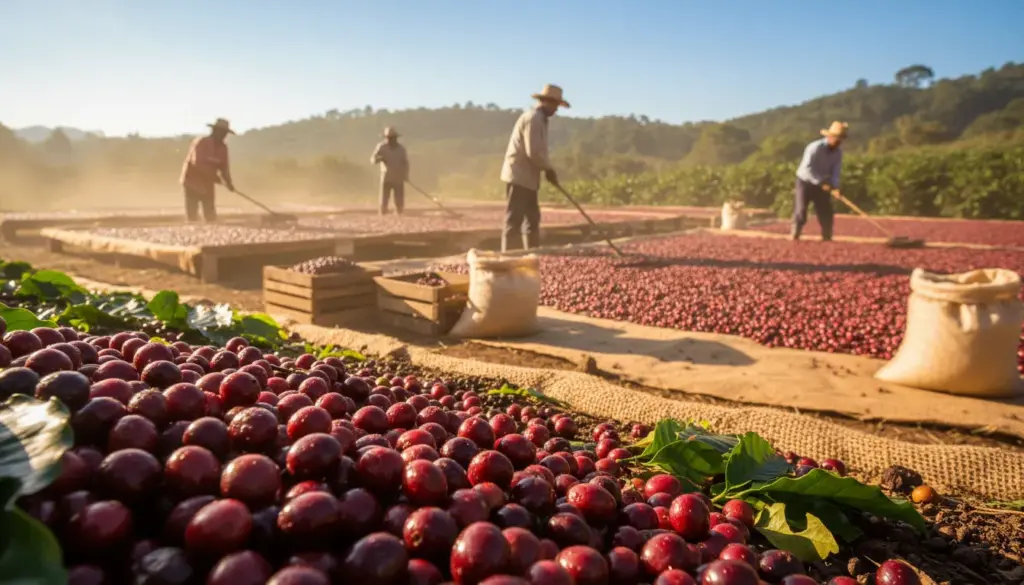
How it works
Whole cherries are spread on patios or on raised beds in the sun and turned frequently.
Drying usually takes about 3–6 weeks of steady attention to prevent hotspots.
Fermentation during drying
As fruit and mucilage sit against the seed, ongoing fermentation moves sugars inward.
That activity creates jammy notes and boosts perceived sweetness and body.
Trade-offs and repeatability
Risks: mold, uneven fermentation, and off flavors can appear if turning or weather fails.
Variability: the same lot can taste different from one harvest to the next because of ripeness and time outdoors.
| Step | Typical timing | Effect on cup |
|---|---|---|
| Whole cherry drying on beds | 3–6 weeks | Heavier body, fruity profile |
| Frequent turning/raking | Daily | Reduces mold, evens fermentation |
| Neglect or wet weather | Hours to days | Risk of spoilage and off flavors |
Reader takeaway: choose naturals when you want juicy sweetness and fuller body, and accept trade-offs in clarity and repeatability.
Washed coffee and the wet process: cleaner cups with lighter body
A wet workflow trades syrupy weight for precision, letting single-origin traits speak clearly. Washed (wet) processing depulps cherries, ferments briefly to loosen mucilage, then uses water to remove residue before drying on beds.
Key steps and what they do
Depulping removes skin and pulp. A short fermentation loosens sticky mucilage.
Washing and gentle agitation in tanks clear remaining sugars. Finally, the beans dry on raised beds until stable for storage.
Typical sensory profile
Washed lots tend to deliver crisp, easy-to-read flavors. Fruit character feels precise and acidity reads brighter because less ferment-driven weight masks notes.
Water needs and sustainability
Wet processing demands tanks, channels, and a reliable water supply. That infrastructure increases operational cost and the amount of water used.
Many producers reuse process water and manage pH to reduce waste and protect streams. This step cuts environmental impact while keeping quality high.
Pick this style if…
- You want high clarity, distinct notes, and lively acidity over syrupy body.
- You prefer a lighter mouthfeel that highlights origin traits in your cup.
Honey process coffee: balancing clean structure with syrupy sweetness
A gentle bridge exists between bright, washed clarity and jammy naturals: the honey approach leaves sticky mucilage on the seed during drying.
The term “honey” does not mean any real honey is added. It refers to the syrupy mucilage and how its color darkens as it dries.
Yellow, red, and black styles
Yellow honey sits at the cleaner end. Expect light sweetness, clearer acids, and restrained ferment influence.
Red honey shows more fruit intensity. Longer contact and controlled fermentation deepen perceived sweetness and roundness.
Black honey involves the most mucilage and time. It often reads winey or boozy with ripe-fruit notes and a syrupy mouthfeel.
Drying and buying cues
Raking and rotating matter. Heavy mucilage can trap moisture and invite mold without careful attention.
| Style | Mucilage level | Sensory profile |
|---|---|---|
| Yellow | Low | Clean, mild sweetness, brighter clarity |
| Red | Medium | Richer fruit, rounder body, more sweetness |
| Black | High | Winey, ripe-fruit, syrupy mouthfeel |
Buying tip: look for labeled honey lots to match your taste, but remember quality depends on fermentation control and drying execution.
Wet hulled coffee (giling basah): fast processing and earthy, heavy-bodied cups
Wet hulled, often called giling basah, speeds post-harvest work by removing the parchment early while beans still hold moisture.
Not the same as washed
This is not a washed approach. The key difference is earlier hulling, not extended tank washing.
Why it suits humid regions
In places like Indonesia, quick turnaround reduces the risk of spoilage during slow drying.
How the cup shifts
Wet hulled lots tend to yield heavier body and a rustic tone. Expect savory, chocolatey, nutty, and sometimes earthy notes.
Mechanically, earlier removal of the parchment and handling at higher moisture changes fermentation chemistry. That change alters how sugars and compounds express in the final cup.
- Choose wet hulled if you want depth and weight; it’s common in blends or for lower-brightness drinkers.
- Quality varies: careful drying and skilled sorting separate rich, clean lots from overly muddy ones.
| Characteristic | What happens | Typical cup result |
|---|---|---|
| Early hulling | Parchment removed while wet | Heavier body, rustic notes |
| Short drying window | Faster turnaround | Less bright acidity, more savory tone |
| Regional fit | Suited to humid climates | Common in Indonesian coffees |
Anaerobic process coffee: oxygen-free fermentation and “exotic” sweetness
Anaerobic fermentation excludes oxygen so specific microbes drive unique aromatics into the bean. This controlled, sealed approach produces vivid, sometimes surprising results.
How it works
Producers seal ripe cherry or depulped lots in airtight tanks or barrels. Typical time targets run about 48–72 hours before moving beans to drying.
What to expect in the cup
Oxygen-free conditions shift microbial activity and fermentation byproducts. That shift often amplifies tropical fruit, floral top notes, and warm spice aromatics.
When done well, the result is intense aromatics and perceived sweetness without extra sugars. Poor control can yield off or solvent-like defects, so consistency matters.
- Buyers tip: check roaster notes for anaerobic natural vs anaerobic washed—base handling affects clarity and body.
- Anaerobic lots can be striking; treat them as experimental or special-occasion coffees.
Pulped natural and semi-washed styles: the in-between methods
Some producers choose hybrid workflows to dial sweetness and body without the extremes of naturals or washed lots.
Pulped natural removes skin and pulp first, then dries the beans with mucilage still attached. This yields a rounded sweetness and more structure than a fully washed approach.
Semi-washed often uses demucilaging machines to scrub away most mucilage mechanically. That cuts water use and reduces long tank ferments, pushing the cup toward cleaner clarity than naturals.
How these hybrids land on sweetness, body, and clarity
Both styles sit between washed and whole-fruit drying on the sensory spectrum.
Pulped natural keeps more body and fruit richness. Semi-washed leans brighter and more transparent.
Mechanical demucilaging can improve repeatability, but careful drying remains the main quality driver. Poor drying makes even mechanically treated lots taste rough.
- When to pick: choose hybrid labels if you want moderate fruit richness without the full variability of naturals.
- Consistency: machines help, but drying technique still decides cleanliness and finish.
| Style | Main step | Sensory tilt | Practical note |
|---|---|---|---|
| Pulped natural | Pulp removed, mucilage retained for drying | Richer sweetness, fuller body | Needs careful drying to avoid off flavors |
| Semi-washed | Demucilaging machines remove mucilage mechanically | Cleaner clarity, brighter acids | Less water, more repeatable than naturals |
| Hybrid range | Varied pulp and mucilage handling | Balanced profile between natural and washed | Choose based on desired flavor and local climate |
Processing variables that matter most: fermentation, drying, and hulling
Three post-harvest levers decide whether a lot tastes crisp and clean or muddled and heavy.
Fermentation control: temperature, time, and pH as quality levers
Fermentation is a managed microbial stage. Producers tune temperature, time, and pH to guide desirable sugars into the bean and avoid spoilage.
Practical note: warmer tanks speed activity, longer time increases complexity, and monitoring pH helps keep off-flavors at bay.
Drying choices: sun, patios, raised beds, and target moisture
How you dry affects airflow and evenness. Patios and raised beds change drying rate; raised beds add air beneath the beans for steadier results.
Sun exposure must be balanced with frequent turning to prevent moist pockets. Aim for roughly 10.5% moisture before stable storage.
Hulling and milling: removing parchment and preparing green beans for export
Hulling removes the parchment to produce export-ready green beans. Timing matters: early hulling or rushed milling can harm appearance, roast uniformity, and shelf stability.
Remember: small differences in mucilage amount and time at each step change the final cup dramatically.
Choosing beans by processing method to match your taste preferences
A label can save you time and lead to a cup you enjoy. Use the processing name on the bag as a practical hint about expected sweetness, body, and acidity.
If you want more sweetness and heavier body: what to look for on the bag
Look for natural and darker honey-style lots. These often show riper fruit notes and a thicker mouthfeel.
Black or red honey labels point to intensified syrupy character and a fuller profile.
If you want cleaner flavor separation and brighter acidity: what to choose
Choose washed or clean semi-washed lots for crisp, defined tasting notes.
Lower-contact approaches reduce weight and let origin acids shine, so pair these with lighter roasts for clarity.
How processing labels guide expectations
Quick rule: pick the process first (structure), then origin or variety (flavor direction), then roast (intensity).
- Natural = fruit-forward sweetness and heavier body.
- Honey/pulped natural = middle ground; sweeter but clearer than naturals.
- Washed = clarity, bright acidity, precise notes.
- Wet hulled = heavier, earthy, and savory-leaning cups.
| Bag cue | What to expect | Good with |
|---|---|---|
| Natural | Jammy sweetness, fuller body | Medium roast, dessert-style brews |
| Washed | Crisp acids, clear profile | Light roast, pour-over |
| Honey / Pulped | Syrupy sweetness with structure | Allround; try espresso or filter |
Conclusion
Each path from harvest to drying writes a different flavor story into the green bean.
At its core, this guide shows that coffee processing is a primary driver of sweetness, body, and clarity. The longer the seed touches cherry layers, the more fruit-driven intensity and weight you will notice.
Tiny anatomical choices matter: whether skin and pulp are stripped early or mucilage stays on changes sugar transfer and mouthfeel. Washed lots tend to read clearer; naturals lean rich; honey styles aim for balance; wet-hulled cups offer savory weight.
Try a side-by-side tasting: buy two bags from one origin but different processing, brew them similarly, and note differences in flavor separation and texture. Use the processing label as a strong, practical filter when you shop and refine your taste over time.
FAQ
How do different processing approaches change sweetness and body?
Where do flavor and sweetness become fixed during transformation from cherry to roasted seed?
What is mucilage and why does it matter for sweetness?
What is parchment and when is hulling done?
How does natural (dry) processing produce heavy body and juicy sweetness?
Why do naturals sometimes taste uneven or risky?
What makes washed (wet) processed beans taste cleaner and brighter?
Why does wet processing need more water and infrastructure?
What is honey processing and why is it called that?
How do yellow, red, and black honey differ?
What is wet hulled (giling basah) and why does it produce earthy, heavy cups?
How does anaerobic fermentation change aromatics and sweetness?
What are pulped natural and semi-washed approaches?
Which variables most affect final flavor during transformation?
How should I choose beans if I prefer more sweetness and heavier mouthfeel?
What should I select if I want clarity and brighter acidity?
Ecuador Specialty Coffee: The Hidden Origin Worth Trying
» Discover special tips and stories about coffee