Why Your Coffee Tastes Flat and How to Fix It
Discover why your coffee tastes flat and learn simple fixes to restore rich flavor. Improve your coffee experience now.
Flat in a cup often means muted aroma, thin body, and a hollow finish. This guide helps home brewers in the United States diagnose and fix that problem with clear, repeatable steps.
Start smart: check bean freshness first, then grind consistency, water quality and temperature (~200°F), machine cleanliness, and extraction timing. Small changes—fresh roast-to-order beans, a burr grinder, filtered water, and a clean brewer—usually deliver the biggest gains.
Expect a mix of causes rather than a single fault. This post covers drip (4–5 minutes), French press (~4 minutes), and espresso (25–30 seconds). You’ll get measurable tweaks: grams of dose, seconds of contact time, and degrees for water so you can repeat success.
Goal: restore clarity, sweetness, and a satisfying finish—not just make the drink stronger. The steps include roast choice, storage, and simple weather-based adjustments to help your cup show its true coffee flavor and improve your coffee experience.
Key Takeaways
- Fresh beans and a good grinder give the fastest improvement.
- Water temp (~200°F), clean equipment, and filtered water matter.
- Use grams, seconds, and degrees for repeatable results.
- Troubleshoot in order: beans → grind → water → cleaning → extraction.
- Espresso and drip show issues differently; adjust timing accordingly.
How to Tell If You’re Dealing With Flat Coffee Taste (Not Just “Strong” or “Weak”)
Use your senses as tools: specific descriptors tell you whether the problem is beans, grind, or extraction. Listen for muted aroma, a light or watery mouthfeel, and a quick, hollow finish. These clues point to a loss of aromatics or uneven extraction rather than simply a weak brew.
Common sensory clues — a muted smell when hot, a thin body on the tongue, and an aftertaste that disappears fast — usually means aromatics are gone or extraction missed key solubles.
What Would You Like to Learn Next?
Choose an option below:
“Words like ‘baked’ and ‘baggy’ are diagnostic — they tell you where to look.”
Match descriptors to causes: “baggy” often signals old or poorly stored beans; “baked” points to roast issues or staling; “thin” suggests under-extraction, low dose, or grind mismatch. Espresso can feel hollow even with normal shot time if grind or freshness is off.
Quick at-home check: sip, let the liquid coat your palate, then ask — is there sweetness? Is acidity bright or flat? Does bitterness hit early or linger? Compare two cups side-by-side, changing one variable (grind, dose, or beans) to reveal what to fix next.
- Focus on aroma intensity, body, sweetness, acidity, and finish length to separate true quality problems from strength complaints.
Start With the Beans: Freshness and Quality Make the Biggest Difference
Start with beans you can trust — they set the ceiling for every cup you make. Freshness is not cosmetic: oxygen strips aromatics and breaks down oils that carry body and sweetness. When aromatics fade, the brew will taste muted even if all other steps are correct.
Why staling happens
Air exposure oxidizes volatile compounds and degrades oils. That loss shows up fast: fruit and floral notes dull, and the cup feels thin.
How to buy better in the US
Prioritize a clear roast date over a generic “best by.” Buy smaller bags and use beans within a few days to keep peak aromatics. Treat long-sitting grocery coffees as likely “dead on arrival” — long warehouse times and open shelves flatten flavors before you brew.
Roast-to-order and shopping tips
Small-batch or roast-to-order roasters preserve the intended flavor profile of origin coffees. Shop local roasters, reliable online roasters that ship soon after roast, or coffee shops that rotate retail bags frequently. If beans are stale, no grinder or machine tweak will restore aroma or sweetness—swap the beans first.
Fix Your Grind: Consistency Is the Fastest Way to Improve Coffee Flavor
Consistent particle size is the single fastest habit to improve extraction and clarity. Uneven particles pull solubles at different rates. That mismatch mutes sweetness and aromatics across the brew bed.
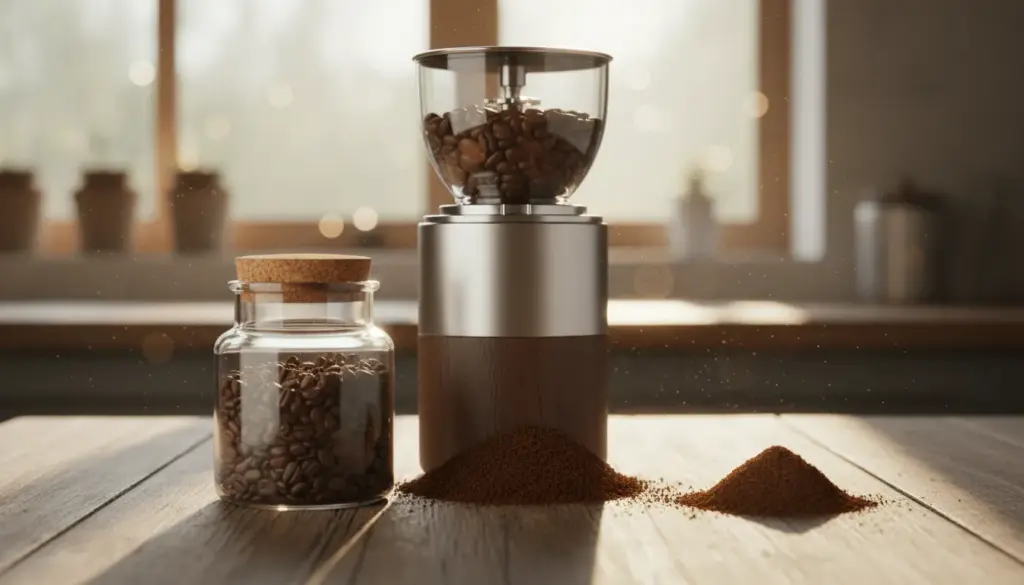
Blade grinders chop irregularly, creating dust and chunks that drive uneven extraction. Burr grinders produce a steady particle distribution and are the most direct path to repeatable results for filter and espresso.
Match grind to your method
Drip and pour-over usually need medium to medium-fine. French press needs coarse. Espresso needs fine. Adjust by small steps and note how extraction and time shift.
Timing and day-to-day care
Grind right before brewing. Ground coffee loses aroma fast and will make the cup feel muted if left sitting.
Humidity and static cause clumps and uneven flow. On humid days, watch for pockets of over- or under-extraction and tweak grind or distribution.
“Keep one recipe per brewer, change only one variable, and record settings for consistent results.”
- Use a burr grinder for steady size.
- Grind fresh, adjust for moisture, and keep a written recipe.
- If espresso shot times swing, suspect clumping and revisit grind and puck prep.
Upgrade Your Water: The Invisible Ingredient That Can Ruin a Cup
Water makes up about 98% of a brewed drink, so its character directly changes what you perceive in the cup.
Tap H2O with chlorine or a metallic edge will carry those notes into the brew and mute sweetness. Poor source minerals can push imbalance and hide the coffee’s finer points.
Filtered water basics
Simple filters — a pitcher cartridge or a faucet-mounted unit — remove chlorine and reduce metals. Expect clearer aroma and a cleaner finish after switching. That clarity often makes the same beans taste noticeably brighter.
Water temperature targets
Aim for roughly 200°F, or just off the boil. If you don’t have a thermometer, let a full boil rest 30 to 45 seconds before pouring.
Too cool extraction can taste sour or flat and miss sweetness. Too hot can increase bitterness and make the finish feel harsh.
- Consistency: use the same water source and heating approach so grind and ratio tweaks remain meaningful.
- Espresso machines usually control temperature, but filtered water still matters for flavor and to limit scale buildup.
“Treat water like an ingredient — small upgrades yield big gains in balance.”
Clean Your Coffee Maker or Espresso Machine to Remove Old Oils and Buildup
Grease and mineral scale in your brewer can quietly erase aroma and change extraction.
Why it matters: old coffee oils go rancid and coat internal surfaces. That coating mutes aromatics and adds stale bitterness, so the same beans can brew into a dull cup.
Easy deep-clean steps
Run a vinegar-and-water cycle (50:50) through drip machine reservoirs. Then run at least two full cycles of clean water until no vinegar smell remains.
For descaling, follow the manufacturer guide or use a store descaler. Mineral buildup lowers heat transfer and slows flow, which alters extraction time and flattens perceived flavors.
Don’t forget removable parts
- Carafe lids and carafes
- Filter baskets and shower screens
- French press mesh screens and portafilters
- Gaskets and any small parts that trap oils
Espresso-specific care: keep groupheads and baskets scrubbed. A dirty grouphead makes shots taste harsh, hollow, or inconsistent from one cup to the next.
“Clean the equipment and then brew the same bean to hear what the machine was hiding.”
| Component | Routine | Why |
|---|---|---|
| Carafe / Carafe lid | Rinse after each use; weekly wash | Prevents oily film and stale odor |
| Filter basket / Shower screen | Clean weekly; backflush espresso weekly | Restores even flow and consistent extraction |
| Descale internal lines | Every 1–3 months (depends on water) | Maintains heat transfer and correct flow |
| Gaskets & small parts | Inspect monthly; deep clean as needed | Stops trapped oils that cause rancid notes |
Testing tip: brew the same recipe immediately after cleaning. If aroma and body improve, the machine was the issue, not the beans or grind.
Dial In Brew Time and Coffee-to-Water Ratio for Better Balance
Tuning extraction with precise timing and weighing gives predictable flavor results.
Define extraction by what you taste: under-extraction reads sour, weak in body, and oddly flat. Over-extraction shows up as sharp bitterness, harsh notes, or a muddy finish.
Reference times and baselines
Use these as starting points: drip and pour-over ~4–5 minutes; French press ~4 minutes. For espresso, aim for a 25–30 second shot and tune from there.
How ratio changes perception
Too little coffee makes a cup thin and hollow even with correct time. Too much coffee can compress flavors and push bitterness forward.
- Weigh in grams: small ratio tweaks (±1–2 g) give consistent, repeatable shifts.
- Troubleshooting ladder: confirm brew time is in range → adjust grind → fine-tune ratio.
- Log one recipe per method: track dose, time, grind, and results for consistent improvement.
“Measure seconds and grams first; intuition second.”
Choose a Roast That Matches Your Preferences and the Bean’s Natural Flavors
Roast level is a powerful control — it can either reveal a bean’s brightness or bury it under charred notes. Pick a roast that supports the flavors you want to enjoy, not one that competes with them.
Dark roast vs lighter roasts
Dark roast often brings roast-driven notes like smoky, ashy, or carbon-like characters. Those notes can mask origin sweetness and acidity.
Lighter roasts preserve delicate aromatics — fruity, floral, and bright acidity — so origin clarity shows through the profile.
How to pick a flavor profile
Decide what you want: chocolatey, caramel, or nutty lean toward medium-to-dark roasts. Choose lighter roasts for fruity or floral highlights.
When ashy or carbon flavors signal roast-driven taste
If “ashy” or “carbon” is the first impression, the roast is likely dominating and the cup can read one-dimensional.
- Shop tip: buy bags with roast level and tasting notes, and sample at local coffee shops before committing to a full bag.
- Test: brew the same method with a medium and a lighter roast to verify whether roast choice is the real difference.
“The right roast is subjective; match roast, brewer, and your flavor goals for the best results.”
Store Beans the Right Way to Protect Them From Air, Light, Heat, and Moisture
How you keep beans after roast has a big effect on the cup days later. Protecting aromatics keeps the brew lively and makes your brewing work pay off.
A simple setup that preserves quality
Transfer beans to an airtight, opaque container and place it in a cool, dark cabinet away from the stove and windows. This shields against light and heat and reduces exposure to air and moisture.
Common mistakes and quick fixes
Leaving bags loosely sealed on the counter increases air contact and speeds staling. Avoid the refrigerator; cold storage often adds moisture and allows odor transfer from other foods.
- Buy amounts you will use within a few days to keep freshness high.
- Don’t rely on storage to rescue old coffee beans — it preserves, not restores.
- Consistent storage prevents uneven aging that makes grind and extraction behave unpredictably.
“Proper storage protects the improvements you get from fresher beans and a tuned grind.”
Account for Weather and Your Kitchen Environment to Keep Brewing Consistent
Small changes in the kitchen’s air and heat can make a familiar brew suddenly feel out of balance. Noticeable shifts often come from humidity, air pressure, and room temperature rather than the beans or grinder.
How humidity and moisture affect your beans and grounds
Beans are hygroscopic and will absorb moisture from humid air. That extra moisture makes grounds clump and can cause uneven extraction, which mutes sweetness and alters balance.
Why air pressure matters for espresso and flow
Lower atmospheric pressure can slow flow through an espresso puck and lengthen extraction. Watch your shot time closely; if pulls slow before a storm, make tiny grind changes to restore the intended flow.
Temperature and heat loss in a cold kitchen
Cold gear steals heat from brewing water and lowers effective extraction temperature. Preheat kettles, drippers, and mugs with hot water to keep temperature consistent and preserve clarity.
Borrow a café habit: calibrate by taste
Baristas and many coffee shops recalibrate regularly. At home, check one recipe each morning and adjust grind or time in small steps based on how the cup tastes.
- Check local humidity on a weather app before you brew.
- Taste, then change only one variable—grind or time—and note the result.
- Preheat equipment on cold days and dry beans briefly if very humid.
“Consistency comes from attention to environment as much as the recipe.”
Conclusion
Small, measured steps let you find and fix what’s hiding in the cup.
Follow the troubleshooting order: confirm fresh beans first, then lock in a consistent burr grind, use filtered water near 200°F, clean your equipment, and finally dial brew time and ratio to restore balance.
Sensory goal: bring back aroma, sweetness, and a satisfying finish so the coffee flavor is defined and not hollow.
Next-cup checklist: use fresh coffee, weigh your dose, grind just before brewing, use filtered water, preheat gear, and time the brew.
Change one variable at a time and take quick notes. With steady attention you’ll repeat improvements across cups. If flatness still appears, reassess roast level, stale inventory, or a method-to-grind mismatch for the real difference.
FAQ
Why does my cup taste flat even when I use fresh beans?
How can I tell if the problem is truly flat flavor and not just weak or strong?
How long do roasted beans stay fresh, and what should I look for on the bag?
Does my grinder really make that much difference?
What role does humidity play in brewing?
How important is water quality and temperature?
Could my machine be making the brew taste dull?
How do I know if I’m under- or over-extracting, and how do I fix it?
Should I pick a lighter or darker roast to avoid flatness?
What’s the best way to store beans to preserve their profile?
Why does my espresso shot pull differently on some days?
Can small ratio or time tweaks really restore flavor?
What parts of my gear should I clean most often to avoid off-flavors?
How can I replicate café-quality results at home consistently?
Cold Brew with Single Origin Beans: Bright vs Chocolatey Results by Region
» Discover special tips and stories about coffee