Washed Ethiopia vs Natural Ethiopia: Which Tasting Notes to Expect Before You Buy
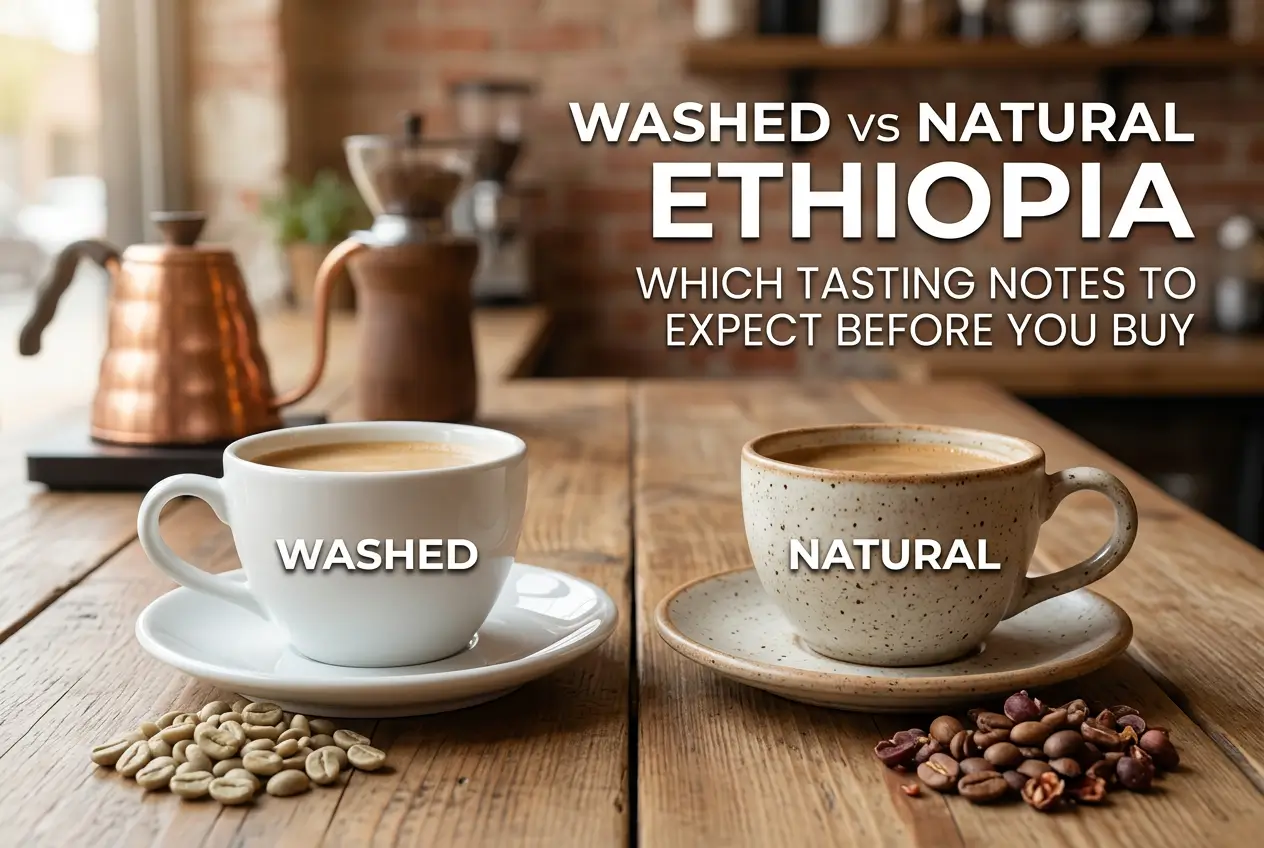
Ever wonder about Washed vs. Natural Ethiopian coffee? The difference is huge and directly impacts the flavor in your cup.
One tastes bright, clean, and floral. The other is fruity, sweet, and complex. This choice determines your entire coffee experience.
This guide will show you exactly what to expect from each. You’ll learn how to choose the right beans for your taste before you spend a dime.
Why Processing Method Is Everything for Ethiopian Coffee
Ethiopian coffees are famous for their amazing flavor diversity. This is due to unique heirloom varieties and high-altitude growing conditions.
But the most critical factor influencing taste is the processing method. This happens right after the coffee cherries are harvested.
How the fruit is removed from the bean determines if your coffee will be zesty and tea-like or jammy and bold. It’s a fundamental split in flavor profiles.
What Would You Like to Learn Next?
Choose an option below:
Understanding this difference is the key to buying Ethiopian coffee you’ll actually love.
Washed Ethiopian Coffee: Clean, Bright, and Floral
Washed processing, also called “wet” processing, is a meticulous method. It focuses on the bean’s true, intrinsic flavor.
Soon after harvest, the coffee cherry’s skin and pulp are washed off. The beans are then fermented in water to remove any remaining fruit mucilage.
Finally, they are thoroughly washed again and dried on raised beds. This process strips away the fruit’s influence before drying.
The result is a cup that is remarkably clean, bright, and often delicate. It highlights the coffee’s origin, not the processing.
Expected Tasting Notes in Washed Ethiopian Coffee
When you see “Washed” on a bag of Ethiopian coffee, get ready for a specific set of flavors. They are crisp, defined, and nuanced.
- Bright Acidity: A crisp, zesty quality. Think of lemon, bergamot, or other lively citrus fruits.
- Clean and Delicate Body: A light to medium mouthfeel. It is often described as smooth and tea-like.
- Floral Aromas: Expect pronounced notes of jasmine, honeysuckle, and orange blossom.
- Subtle Fruit Flavors: You might also find hints of stone fruit, such as peach or apricot, or even candied lemon.
This method is popular in regions like Yirgacheffe. It showcases the exceptional clarity and floral notes that make these coffees world-renowned.
Natural Ethiopian Coffee: Fruity, Sweet, and Complex
Natural processing is the oldest and most traditional coffee method. It’s also known as “dry” processing.
Here, the entire coffee cherry is left intact after harvesting. The whole fruits are spread out on raised beds to dry in the sun for weeks.
During this time, the sugars and fruity compounds from the cherry pulp slowly infuse into the bean. It’s like the bean marinates in its own fruit juice.
This creates a flavor profile that is bold, sweet, and intensely aromatic. The influence of the fruit is the star of the show.
Expected Tasting Notes in Natural Ethiopian Coffee
If you choose a “Natural” Ethiopian coffee, prepare for a completely different adventure. The flavors are big, bold, and fruit-forward.
- Intense Fruitiness: Dominant notes of blueberry are very common. You can also find strawberry, tropical fruit, or jammy flavors.
- Fuller Body and Sweetness: The coffee often has a heavier, more viscous mouthfeel. Think syrupy and rich.
- Complex and Wine-Like: It can have a pleasant fermented character, sometimes similar to a red wine or blackberry.
- Ripe Fruit Notes: Besides berries, look for notes of ripe peach and apricot.
This process is strongly associated with regions like Sidama, Guji, and Harrar. It amplifies the beans’ inherent fruit-forward qualities.
Quick Guide: Washed vs. Natural at a Glance
Still not sure which to choose? Here is a simple breakdown to help you decide which tasting notes sound best for you.
| Characteristic | Washed Ethiopian | Natural Ethiopian |
|---|---|---|
| Primary Flavor | Floral, Citrus, Tea-Like | Fruity, Berry, Jammy |
| Acidity | Bright, Crisp, Zesty | Muted, sometimes wine-like |
| Body (Mouthfeel) | Light, Clean, Delicate | Heavy, Syrupy, Full |
| Sweetness | Subtle, like honey | Intense, like ripe fruit |
| Best For | Fans of clean, nuanced cups | Fans of bold, fruity flavors |
Use this table as your cheat sheet when you are browsing online or at a local coffee shop. It simplifies the choice instantly.
How to Choose Before You Buy
When you are ready to purchase, the processing method on the label is your best guide to the flavor inside the bag.
For a clean, bright, and floral cup: Look for “Washed” or “Wet Processed” on the label. This is your go-to for refined flavors.
These coffees are ideal for people who prefer crisp, defined notes and a lighter body. They shine when brewed with pour-over methods.
For a bold, fruity, and sweet cup: Choose “Natural” or “Dry Processed.” This promises a more adventurous, jammy experience.
Natural coffees are perfect for those who love intense fruit flavors. They work wonderfully for espresso, immersion, or even cold brew.
Tips for Brewing Each Type
Your brewing method can either highlight or hide a coffee’s best qualities. Choosing the right technique is crucial.
For Washed Ethiopian coffees, use a method that emphasizes clarity and delicate aromas. This means pour-over brewers are your best friend.
- Pour-Over (V60, Kalita): This method allows the bright acidity and floral notes to shine through without any muddiness.
- Drip Coffee Maker: A quality automatic dripper can also produce a clean cup that highlights the coffee’s subtleties.
For Natural Ethiopian coffees, you can use methods that embrace their full body and intense sweetness.
- Immersion (French Press): This method creates a rich, full-bodied brew that complements the jammy flavors.
- Espresso: Natural coffees often produce sweet, syrupy shots of espresso with a heavy crema and strong berry notes.
- Cold Brew: Their low acidity and intense sweetness make them a fantastic choice for smooth, fruity cold brew.
Your Next Step to Amazing Coffee
Now you have the knowledge to confidently explore Ethiopian coffee. You can read a label and know exactly what kind of flavors to expect.
The best way to learn is by tasting. Try a washed and a natural coffee side-by-side to truly understand their unique profiles.
Next time you shop, look for these key terms. Let your taste preference guide you to a truly exceptional cup of coffee.
Building a Home “Origin Flight” Tasting: Four Coffees That Teach Your Palate Fast
» Discover special tips and stories about coffee