Why Espresso Tastes Sour and How to Fix It
Learn why your espresso tastes sour and discover simple fixes to improve the flavor of your sour espresso. Get expert tips now.
What is sour espresso in plain terms? It’s a sharp, bright flavor that hits the tongue too early in a shot. That bite is frustrating, but it usually means the brew is under-extracted and can be fixed with focused changes.
Start with a baseline recipe, then change one variable at a time: grind, brew ratio, shot time, temperature, puck prep, water quality, and machine upkeep. Small moves make big differences because espresso extraction is fast and sensitive.
The high-level why: water moves quickly through the puck, pulling early acids first. That creates pronounced sourness if flow is too fast or the grind is too coarse. To restore balance, you’ll learn practical fixes like a finer grind, correct ratio, proper shot time, slightly hotter water within the ideal range, and better puck prep to avoid channeling.
Note: some coffee beans, especially light roasts, naturally show more acidity. The goal is clarity and balance, not killing all bright flavors. Use a scale and timer so results are repeatable.
Key Takeaways
- Sharp sour notes often mean under-extraction and fast flow.
- Change one variable at a time from a baseline recipe.
- Primary fixes: finer grind, correct ratio, proper shot time, hotter water, better puck prep.
- Light roasts can be naturally brighter—aim for balance.
- Use a scale and timer for consistent, repeatable results.
What Sour Espresso Tastes Like and Why It Happens
A quick, tangy hit on the tongue often points to incomplete extraction during the shot. The result is a sharp profile with little sweetness and a short finish.
Sensory profile: think lemon-like acidity, thin body, and a flat aftertaste. Pleasant brightness has balance and a clean finish; the problematic version feels one-note and abrupt.
What Would You Like to Learn Next?
Choose an option below:
Under-extraction as the main cause
Under-extraction happens when water contacts grounds too briefly or unevenly. Early compounds—acids and oils—come out first, but sugars that add balance need more time.
Sour vs. bitter and extraction order
Extraction follows an order: acids early, sugars mid, bitter compounds late. A fast run emphasizes acids and skips sweetness, so the cup tastes sour rather than rounded or bitter.
Quick signs your shot is extracting too fast
- Low puck resistance and a thin stream
- Fast blonding and watery crema
- Yield reached well before target seconds
| Sensory cue | Likely cause | Quick fix |
|---|---|---|
| Sharp, lemon-like acidity | Too-fast flow / coarse grind | Grind finer; increase dose |
| Thin body, flat finish | Under-extraction | Improve puck prep; slow flow |
| Blonding in seconds | Channeling or low resistance | Even tamp; check distribution |
| Watery crema | Fast brew time | Adjust grind and shot profile |
Measure before you change: if the cup shows sourness and the extraction time is short, the flow rate is the usual culprit. Use grams and seconds to diagnose the problem before tweaking variables.
Set a Baseline Recipe Before You Change Anything
Before changing anything, lock in a repeatable recipe so you know which tweak really moved the dial.
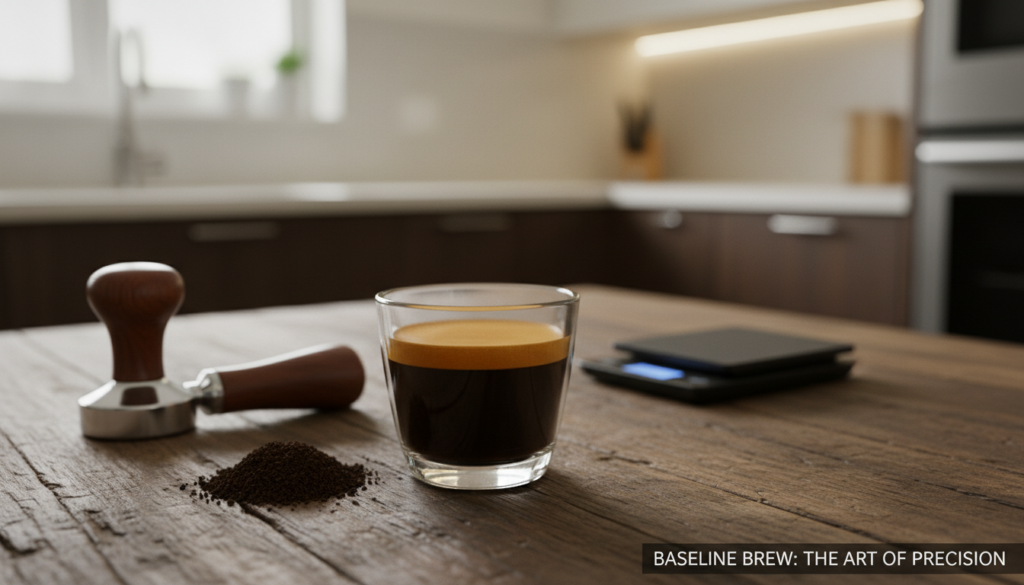
A reliable starting point for balance: dose, yield, and seconds
Try this baseline: use a double basket with 18 grams of coffee in and aim for 36 grams out. Target 25–30 seconds total shot time. This 1:2 brew ratio gives a balanced cup to begin dialing.
How to measure coffee in, espresso out, and extraction time
Coffee in means the dry dose of grounds in the portafilter. Espresso out is the final beverage weight in the cup. Weight beats volume because grounds settle differently between baskets.
“Measure, then change one variable at a time.”
Workflow: place the cup on a scale, tare, start the shot and the timer together, stop when the scale hits 36 g, and note the seconds. If the yield finishes too fast, grind finer or increase puck resistance. If it runs slow, open the flow slightly.
- Why it matters: consistent dose, yield, and time let you trace which change fixed a problem.
- Practical note: some baskets fit slightly more or less than 18 g—use the target as a guide.
Use this baseline as the foundation for dialing toward a perfect espresso with any bean and roast.
Fix Sour Espresso by Adjusting Grind Size and Flow Rate
Taming an overly fast brew starts with dialing the grind finer in measured steps.
Why a coarse grind tastes bright: large particles create open pathways so water moves too fast. Early acids exit first and the cup feels under-extracted.
How to adjust finer without overshooting
Make small changes—one click or step at a time—then pull another espresso shot and compare time and flavor. Note seconds and weight to track progress.
“Adjust slowly and record results; that prevents chasing new problems.”
Consistency with your grinder and grounds
Use a quality burr grinder for uniform particles. Dose the same, purge a short clear shot after big moves, and keep the hopper clean to reduce retention.
Grind, pressure, and puck resistance
Finer grind raises puck resistance so the machine builds proper pressure and improves extraction. Too fine causes stall and shifts taste toward bitter and dry.
| Issue | Cause | Action |
|---|---|---|
| Fast flow, bright cup | Coarse grind / low resistance | Grind finer; small steps; retest |
| Stalled shot, bitter | Too fine grind / high resistance | Open grind slightly; test yield/time |
| Inconsistent taste | Grinder retention/clumping | Clean grinder; purge; consistent dose |
Dial In Brew Ratio and Brew Time for a Balanced Extraction
Getting the brew ratio and seconds right gives you the best chance to pull a balanced shot.
Why proportions matter: dose and yield control how long water contacts the coffee grounds. Too high a yield reached quickly will taste thin and acidic. Too low a yield can be intense but still feel under-extracted if time is short.
Targets to aim for
Start point: 18 grams in, 36 grams out in 25–30 seconds. This 1:2 ratio helps sugars develop and balances acidity.
How dose changes affect extraction and acidity
- Increase dose → more puck resistance → slower flow and fuller extraction.
- Decrease dose → less resistance → faster flow and brighter acidity.
- Match dose to basket capacity; overfilling causes uneven contact and odd flavors.
Slow down a fast shot without choking the machine
First, grind slightly finer and test. If still fast, raise dose a gram or two and improve distribution and tamp. Avoid extreme fines that stall extraction.
Document every change—dose, yield, and seconds—so you can repeat the best result reliably.
Check Water Temperature, Water Quality, and Machine Maintenance
The temperature and mineral makeup of your water matter as much as grind and dose when dialing flavor.
Ideal water temperature and why cooler water tastes sharp
Aim for about 195°F–205°F (90°C–96°C). Many recipes sit near 93°C–96°C to balance acids and sugars.
Cooler water extracts fewer soluble compounds in the short espresso shot. That leaves early acids dominant and the cup tastes overly bright and thin.
Soft vs. hard water: minerals, alkalinity, and perceived acidity
Minerals and alkalinity buffer acids and shape flavor. Very soft water can make coffee taste sharper.
Practical reference: around 5 °dH (German degrees) is a common target for espresso water, but local tap water and taste vary.
Descaling and filters to prevent temperature and flow problems
Limescale reduces boiler efficiency and clogs flow paths, causing unstable temperature and uneven extraction that may read as acidity.
Descale roughly every 3 months, more often if your tap hardness is high. Use an in-tank or inline filter to slow scale buildup and protect the machine.
“A warm machine, stable water temperature, and balanced mineral content make brewing predictable and repeatable.”
- Verify machine settings and allow full warm-up before shots.
- Preheat portafilter and cup to avoid heat loss at the puck.
- Use filtered water at recommended hardness and keep a regular descale schedule.
Rule Out Bean, Roast, and Equipment Issues That Keep Espresso Sour
Check the beans, roast, and machine before you assume the recipe is to blame. Small defects in input or gear often create a bright, sharp cup even when technique is correct.
Freshness and roast timing
Buy coffee with a clear roast date and use beans within a few weeks. Many baristas find peak flavour from roast day up to about 21 days.
Store airtight, away from heat and light to keep oils and aroma stable.
Roast level and perceived acidity
Light roast beans often present brighter acidity. If under-extracted, that brightness reads as harsh.
Darker roasts lean toward caramel or chocolate notes and mask sharp acid.
Brewing pressure and machine checks
Most machines aim for ~9 bar at the puck. Low pressure can produce thin, acidic shots.
If pressure seems off or sounds odd, have the machine serviced or check pump and seals.
Spotting channeling and portafilter tips
Uneven flow, sprays, or split streams show channeling. Use better distribution, a WDT to break clumps, and a level, firm tamp.
A bottomless portafilter helps you see trouble immediately and speeds diagnosis.
Rare defective beans
“If a single bad bean causes a sour hit, re-grind and pull another shot before assuming a batch issue.”
If sour notes persist across multiple shots and bags, contact the roaster with roast date and batch info.
| Issue | Likely cause | Action |
|---|---|---|
| Bright, thin cup | Old or very fresh bean; light roast | Check roast date; rest beans 5–21 days; adjust grind/time |
| Uneven flow or sprays | Channeling from poor prep | Use WDT, level tamp, test with bottomless portafilter |
| Persistent bright taste | Low machine pressure or faulty parts | Measure pressure; service machine; test another bean |
Conclusion
When a shot tastes overly bright, the root cause is often water moving too quickly or through gaps in the puck, producing under-extraction and sour espresso notes.
Set a baseline and change one thing at a time: 18 g in → 36 g out in 25–30 seconds. Start by dialing grind and brew ratio since they most directly shape extraction and flavour.
Keep brewing water near 195°F–205°F (90°C–96°C), use filtered water, and descale regularly so temperature and flow stay stable.
Use fresh beans and choose roast level to match your preference. Weigh, time, and write results so adjustments are deliberate.
With small, measured steps you can turn bright, sharp coffee into a balanced, sweet, and more perfect espresso.
FAQ
Why does my espresso taste sour and how can I fix it?
What does a tart espresso taste like and why does it happen?
How can I tell if under-extraction is the main culprit?
How is bright vs. bitter flavor related to extraction order?
What are quick signs my shot is extracting too fast?
What baseline recipe should I set before changing variables?
What is a reliable starting point for dose, yield, and time?
How do I measure coffee in, espresso out, and extraction time with a scale?
Why does a coarse grind produce a bright shot?
How should I adjust grind finer in small steps without causing bitterness?
Any tips to improve consistency with burr grinders and uniform grounds?
How does grind size interact with pressure and puck resistance?
When do brew proportions cause a bright shot?
What targets should I aim for: dose, yield, and time?
How do dose changes affect extraction and perceived acidity?
How can I slow down a fast shot without choking the machine?
What is the ideal water temperature range and why does cooler water taste bright?
How do soft vs. hard water affect acidity and flavor?
How do descaling and filters prevent temperature and flow problems?
How do bean freshness and roast date affect espresso balance?
Why do light roasts read as more acidic on the palate?
What brewing pressure basics should I know and how does low pressure affect taste?
How can I spot channeling with puck prep and a bottomless portafilter?
What if I’ve tried everything and the cup still tastes bright — could beans be defective?
Why Cheap Coffee Often Tastes Burnt
» Discover special tips and stories about coffee