Papua New Guinea Coffee Explained: The Under-The-Radar Origin U.S. Drinkers Should Try
Looking for a unique coffee that flies under the radar? Papua New Guinea (PNG) coffee offers a complex and vibrant flavor you won’t find anywhere else.
It’s the perfect middle ground between earthy Sumatran and fruity Ethiopian beans. Think tropical fruit, caramel, and a clean finish.
This guide will show you exactly what makes PNG coffee special, how to buy the best beans in the U.S., and how to brew them for amazing results.
What Makes Papua New Guinea Coffee Special?
Papua New Guinea coffee isn’t just another bag of beans. It’s a product of a unique environment and traditional farming methods.
The secret lies in its exceptional terroir. Beans are grown in volcanic highlands, often 1,400 to 1,850 meters above sea level.
This high altitude and mineral-rich soil allow the coffee cherries to mature slowly. This slow process develops deeper, more complex flavors.
What Would You Like to Learn Next?
Choose an option below:
Most of the coffee comes from small, family-run farms. These “smallholders” use sustainable methods passed down through generations.
This often means the coffee is organic by default, grown without harsh chemical pesticides or fertilizers. It’s a more natural approach.
Furthermore, the cherries are almost always picked by hand. This ensures only the ripest, most flavorful fruits are selected for processing.
The “Washed Process” Difference
Unlike many coffees from the Indo-Pacific region, PNG beans are typically “wet-processed,” also known as fully washed.
This processing method is crucial. It involves removing the fruit pulp from the bean before it is dried.
The result is a remarkably clean and bright cup of coffee. It strips away the earthy or funky notes you might find in other regional beans.
This process highlights the coffee’s natural sweetness and vibrant acidity. It lets the true origin flavors shine through without interference.
Decoding the Flavor Profile: A Sensory Journey
So, what does Papua New Guinea coffee actually taste like? Prepare for a complex and layered experience.
It balances the rich, earthy tones of a Sumatran coffee with the bright, fruity notes of an African or Central American bean.
Here are some of the most common tasting notes you can expect to find in a quality bag of PNG coffee.
- Tropical & Fruity: Notes of mango, papaya, passion fruit, pineapple, and stone fruits like peach or apricot.
- Sweet & Caramelized: Flavors of caramel, honey, brown sugar, and even nutty notes like caramelized almonds.
- Floral & Herbal: Delicate floral aromas are common, along with hints of green tea or chamomile.
- Chocolate & Earthy: Subtle undertones of milk chocolate, cocoa, and a gentle, clean earthiness.
- Spices & More: You might also detect hints of gingerbread, hazelnut, tobacco, or raisin.
Overall, it delivers a lively, balanced acidity with a medium body. The finish is typically clean, crisp, and refreshing.
How to Buy Quality PNG Coffee in the U.S.
Finding great Papua New Guinea coffee requires a bit of know-how. Quality can vary, so knowing what to look for is key.
Focus on buying from specialty coffee roasters who are transparent about their sourcing. They often have direct relationships with farms.
Here’s your checklist for choosing a high-quality bag.
- Check the Roast Date: Freshness is non-negotiable for specialty coffee. Look for a “roasted on” date, not an expiration date.
- Confirm the Process: Look for “wet-processed” or “fully washed” on the label. This ensures the clean flavor profile PNG is known for.
- Note the Region: Labels that mention specific regions like Western Highlands or Eastern Highlands often indicate higher quality control.
- Trust Specialty Roasters: Companies that highlight single-origin coffees are your best bet. Look for roasters who provide detailed origin info.
Buyer’s Alert: Because of infrastructure challenges in PNG, quality can be inconsistent. Always buy from a trusted source that provides details.
Understanding the Harvest and Availability Calendar
To get the freshest possible coffee, it helps to understand its seasonal cycle. Coffee, like any crop, has a harvest season.
Knowing when the beans are harvested and shipped can help you buy from the most recent crop, ensuring peak flavor.
Here is a general timeline for consumers in the United States.
- Main Harvest in PNG: This typically runs from February through September, depending on the specific region.
- Secondary “Fly Crop”: A smaller harvest may occur between January and March.
- Arrival in the U.S.: Fresh beans from the main harvest usually start arriving in the U.S. around October and November.
Keep in mind that shipping and logistics can cause delays. A little patience can be rewarded with exceptionally fresh coffee.
Best Brewing Methods for Papua New Guinea Coffee
How you brew your coffee can dramatically change the final taste. For PNG beans, you want to highlight their complexity and clean finish.
First, consider the roast level. A medium roast is often ideal. It preserves the bright, fruity, and floral notes without overpowering them.
A medium-dark roast can also work well, especially if you want to bring out more of the chocolate and caramelized sugar flavors.
Here are the best brewing methods to unlock the full potential of PNG coffee.
- French Press: Excellent for a full-bodied cup. This method enhances the chocolate and spice notes by preserving the coffee’s natural oils.
- Pour-Over: The perfect choice for highlighting clarity and nuance. A pour-over will showcase the bright acidity and delicate floral aromas.
- Espresso: As an espresso, PNG coffee can be a delightful surprise, pulling out intense fruit and floral notes with a creamy body.
- Cold Brew: This method reduces acidity and creates a smooth, rich concentrate. It emphasizes the deeper chocolate and nutty flavors.
Pro tip: if you use a pour-over, try a metal filter instead of paper. It will allow more of the flavorful oils to pass into your cup.
Your Next Coffee Adventure Awaits
Exploring coffee from Papua New Guinea is more than just trying a new flavor. It’s about supporting small-scale farmers and sustainable practices.
You’re tasting the result of a rich volcanic terroir, meticulous hand-picking, and a clean processing method that is unique for its region.
Don’t be intimidated by the unfamiliar name. If you enjoy coffees that are both sweet and bright, PNG offers a rewarding and delicious experience.
The next time you visit your local roaster or shop online, ask for a coffee from Papua New Guinea. You might just discover your new favorite origin.
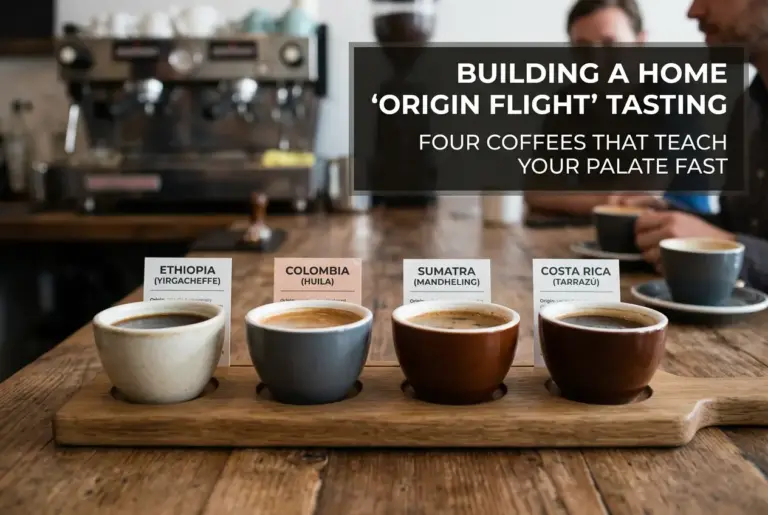
Building a Home “Origin Flight” Tasting: Four Coffees That Teach Your Palate Fast
» Discover special tips and stories about coffee