How to Spot Stale Beans Online: Red Flags in Listings, Photos, and Descriptions
Buying specialty coffee online should be exciting, but receiving stale beans is a huge letdown. That flat, lifeless cup is a waste of money.
Learning how to spot stale beans before you buy is the key. This guide will show you the red flags in listings, photos, and descriptions.
You’ll learn to identify fresh coffee, avoid bad sellers, and know what to do if you get a bad batch. Let’s make every cup worth it.
Why Coffee Freshness Is Non-Negotiable
Coffee is a fresh product, just like bread or produce. Once roasted, its complex flavors and aromas begin to fade.
Oxygen is the enemy. It breaks down the oils and aromatic compounds that make specialty coffee taste so vibrant and unique.
Stale beans result in a dull, bitter, or even rancid brew. All the unique notes of fruit, chocolate, or flowers from its origin are lost.
What Would You Like to Learn Next?
Choose an option below:
For the best experience, coffee should be brewed within a specific window after roasting. That’s why freshness isn’t a luxury; it’s essential.
The “Roast Date”: Your Most Important Clue
Forget “Best-By” or “Enjoy By” dates. The single most important piece of information on a coffee bag is the roast date.
This tells you exactly when the beans were roasted, giving you full control over freshness. Reputable roasters are proud to display this.
Red Flag: If a listing only shows a “Best-By” date, be very suspicious. This date can be a year after roasting and hides the coffee’s true age.
The ideal window for brewing most specialty coffees is between 7 and 21 days after roasting. This allows the beans to degas properly.
- For pour-over/filter: The sweet spot is often 7 to 21 days post-roast.
- For espresso: Many prefer a slightly longer rest, around 10 to 15 days.
If you can’t find the roast date in the product description or photos, contact the seller directly. No date? No deal.
Decoding Descriptions: Vague vs. Transparent
A detailed product description shows a seller’s passion and expertise. Vague listings are often a sign of old, mass-market coffee.
Look for sellers who provide rich, specific information. This demonstrates a commitment to quality and transparency.
Here’s what a trustworthy listing should include:
- Specific Origin: Not just “Colombia,” but the region or even the farm.
- Bean Variety: Like Geisha, Bourbon, or Typica.
- Tasting Notes: Detailed flavors like “raspberry, milk chocolate, almond.”
- Roast Level: Clearly stated as light, medium, or dark.
- Processing Method: Washed, natural, or honey processed.
If the description just says “100% Arabica” or “Rich, Bold Flavor,” it’s a major red flag. This generic language is used to move old inventory.
Analyzing Photos: What the Bag and Beans Reveal
Product photos offer more clues than you think. Zoom in and examine both the packaging and the beans if they are visible.
First, inspect the bag itself. Modern specialty coffee bags are designed to preserve freshness.
Look for a one-way degassing valve. This small, circular valve lets CO2 escape from freshly roasted beans without letting oxygen in.
Its absence can mean the packaging isn’t suitable for maintaining freshness, or the coffee is too old to need degassing.
If you can see the beans, pay attention to their surface.
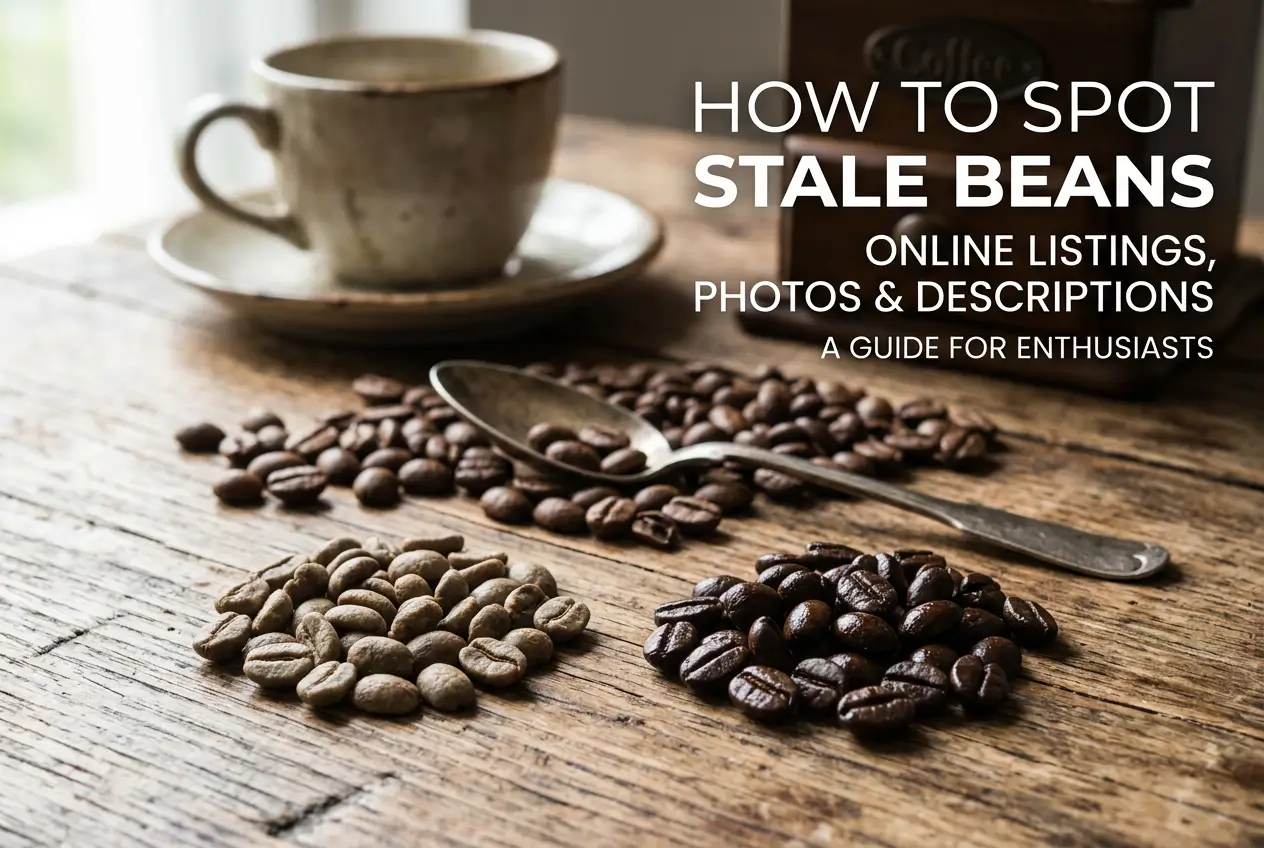
- Excessive Oil: While dark roasts have a sheen, overly oily beans can be a sign of age. The oils have migrated to the surface and will go rancid.
- Dull and Dry: Beans that look chalky, matte, or lifeless are likely old. They have lost their essential oils and moisture.
- Inconsistent Color: Freshly roasted beans should have a relatively uniform color. Splotchy or faded beans can indicate poor roasting or age.
Never buy coffee if you see any signs of mold in the photos. This indicates severe moisture problems and is unsafe.
The Final Test: Aroma and Taste After Arrival
Even with careful online shopping, the ultimate test happens when you open the bag. Your senses will tell you the truth.
Upon opening, you should be hit with a powerful, complex, and pleasant aroma. Fresh coffee fills the room with its scent.
If the aroma is weak, dusty, or smells like cardboard, the beans are stale. A musty or sour smell is an even worse sign.
The final confirmation is in the cup. Stale coffee tastes:
- Flat and Lifeless: Lacking any distinct flavor notes or complexity.
- Overly Bitter: A harsh, unpleasant bitterness not related to the roast profile.
- Rancid or Sour: An “off” taste that is sharp and disagreeable.
- Weak: The brew may seem thin and watery, regardless of your brew ratio.
If your coffee fails these sensory tests, it’s a clear sign you’ve received a stale product, even if the roast date seemed okay.
Where to Buy for Maximum Freshness
Your choice of vendor dramatically impacts the freshness of your coffee. Not all online sellers are created equal.
Buying directly from roasters is almost always the best option. Most specialty roasters roast to order or in small, frequent batches.
This means the coffee you receive was likely roasted just days before it was shipped. You can’t get much fresher than that.
Be cautious with large online marketplaces like Amazon. While convenient, their warehouse system can be a problem for a fresh product like coffee.
Coffee bags can sit in a fulfillment center for months. Always check if the product is “shipped from” the roaster directly, not the marketplace’s warehouse.
Online coffee communities and forums are excellent resources. Fellow enthusiasts often share reviews and recommendations for reliable roasters.
What To Do If You Receive Stale Beans
Discovering your expensive specialty coffee is stale is frustrating. But you may have recourse. Here are the steps to take.
First, inspect and document everything immediately upon arrival. Don’t wait. Time is critical for perishable goods claims.
- Check the Roast Date: Confirm it’s missing, old, or different from what was advertised.
- Take Photos: Snap clear pictures of the bag (front and back), the roast date (or lack thereof), and the beans themselves.
- Contact the Seller: Email customer service right away. Provide your order number, a clear description of the issue, and attach your photos.
Return policies for coffee vary. Some roasters have a satisfaction guarantee and will happily send a replacement or issue a refund.
Others may not accept returns on coffee unless it’s damaged or the wrong item was sent. However, “not as described” is a valid complaint.
Know Your Rights: If a product is advertised as “freshly roasted” and arrives with a 3-month-old roast date, it is not as described. Reputable sellers will fix this.
If the seller is unresponsive, you can escalate the issue through the marketplace’s dispute resolution process if you used one.
Next Steps for a Perfect Cup
Now you’re equipped to dodge stale coffee and find the best beans online. To keep them fresh, proper storage is key.
Store your whole beans in an airtight container in a cool, dark, and dry place like a pantry. Avoid the refrigerator or freezer.
Consider buying smaller bags more frequently. This ensures you’re always brewing coffee within its peak flavor window.
Use this knowledge on your next purchase. Trust your judgment, look for the details, and never settle for a stale cup of coffee again.
Building a Home “Origin Flight” Tasting: Four Coffees That Teach Your Palate Fast
» Discover special tips and stories about coffee