How to Read a Specialty Coffee Bag: Altitude, Varietal, Process, and What It Means in Your Cup
That bag of specialty coffee holds more than just beans. It’s a map to your perfect cup, telling a story of its origin and flavor.
Understanding terms like altitude, varietal, and process is the key. This guide will teach you how to read a coffee bag like an expert.
You’ll learn to pick beans that match your taste and unlock a better brewing experience at home. Let’s decode that label together.
Why Reading the Label Is a Game-Changer
Think of a coffee bag label as a cheat sheet. It gives you all the clues you need to predict how the coffee will taste before you even buy it.
Ignoring these details is like buying a bottle of wine just because the bottle looks nice. You might get lucky, but you’ll often be disappointed.
Learning this language empowers you. It turns a confusing shelf of options into a curated selection where you can confidently find your next favorite coffee.
What Would You Like to Learn Next?
Choose an option below:
Altitude: Higher Means Brighter Flavors
Altitude is one of the biggest factors in a coffee’s flavor. It’s measured in “meters above sea level” or MASL.
At high elevations, cooler temperatures slow down the coffee cherry’s growth. This gives the bean more time to develop complex sugars and acids.
The result is a denser, more flavorful bean. The general rule is simple: the higher the coffee is grown, the more vibrant and acidic it tends to be.
- High Altitude (1,500+ MASL): Expect bright, floral, and fruit-forward notes like citrus or berries. These coffees have a crisp acidity and a lighter body.
- Mid-Altitude (1,000-1,800 MASL): Look for a balanced profile with notes of caramel, brown sugar, or stone fruit. They offer a great mix of sweetness and acidity.
- Low Altitude (Below 1,000 MASL): These coffees are known for heavier, simpler flavors. Think chocolate, nuts, and earthy tones with very low acidity.
Action Tip: Love bright, tea-like coffees? Look for beans grown above 1,500 MASL. Prefer a classic, smooth, chocolatey cup? Aim for lower altitudes.
Varietal: The Coffee Plant’s Family Tree
Just like there are different types of apples (Granny Smith vs. Fuji), there are different types of coffee plants. These are called varietals.
Each varietal has its own genetic blueprint for flavor, size, and shape. While the environment plays a role, the varietal sets the foundation for taste.
You don’t need to memorize them all. But knowing a few key names can help you spot coffees you’re more likely to enjoy.
- Gesha (or Geisha): The superstar. Famous for its intense floral and jasmine-like aroma, tea-like body, and notes of tropical fruit or bergamot.
- Bourbon: A classic varietal prized for its deep sweetness, rich caramel or chocolate notes, and balanced acidity.
- Typica: One of the original varietals. It’s known for a clean, sweet flavor with mild acidity and notes of chocolate and nuts.
- Caturra: A natural mutation of Bourbon. It often has a brighter, citrus-like acidity and a lighter body.
- Heirloom: This term refers to the thousands of wild, unclassified varietals from Ethiopia, coffee’s birthplace. They can taste floral, fruity, or complex.
If you find a coffee you absolutely love, check the varietal. It’s a great way to find other coffees with a similar flavor profile.
Processing: How the Bean is Prepared
Processing is the method used to remove the coffee bean from the fruit cherry after it’s picked. This step has a massive impact on the final taste.
The way sugars and acids from the fruit interact with the bean during this stage can either amplify or mute certain flavors. Think of it as a flavor filter.
There are three main methods you’ll see on a coffee bag. Each one creates a distinct style of coffee.
The Washed (or Wet) Process
In this method, all the fruit is washed off the bean before it’s dried. It’s all about creating a clean, pure flavor.
Washed coffees let the bean’s inherent characteristics shine. You’ll taste the true flavors of the varietal and the region where it was grown.
Flavor Impact: Expect high clarity, bright acidity, and a crisp finish. These coffees often have delicate floral or citrus notes.
The Natural (or Dry) Process
This is the oldest method. The entire coffee cherry is left intact and dried in the sun, like a raisin.
As the fruit dries, the bean absorbs its sugars. This results in a much sweeter, fruitier, and heavier-bodied coffee.
Flavor Impact: Look for bold, expressive flavors. You’ll often find notes of strawberry, blueberry, or tropical fruit, with a wine-like quality.
The Honey (or Pulped Natural) Process
This method is a hybrid of the other two. The skin of the cherry is removed, but some of the sticky fruit pulp is left on the bean as it dries.
Honey processing creates a beautiful balance. You get the sweetness and body of a natural coffee, but with more clarity than a washed coffee.
Flavor Impact: Expect a sweet and well-rounded cup. Common notes include caramel, brown sugar, and ripe fruit, with a balanced acidity.
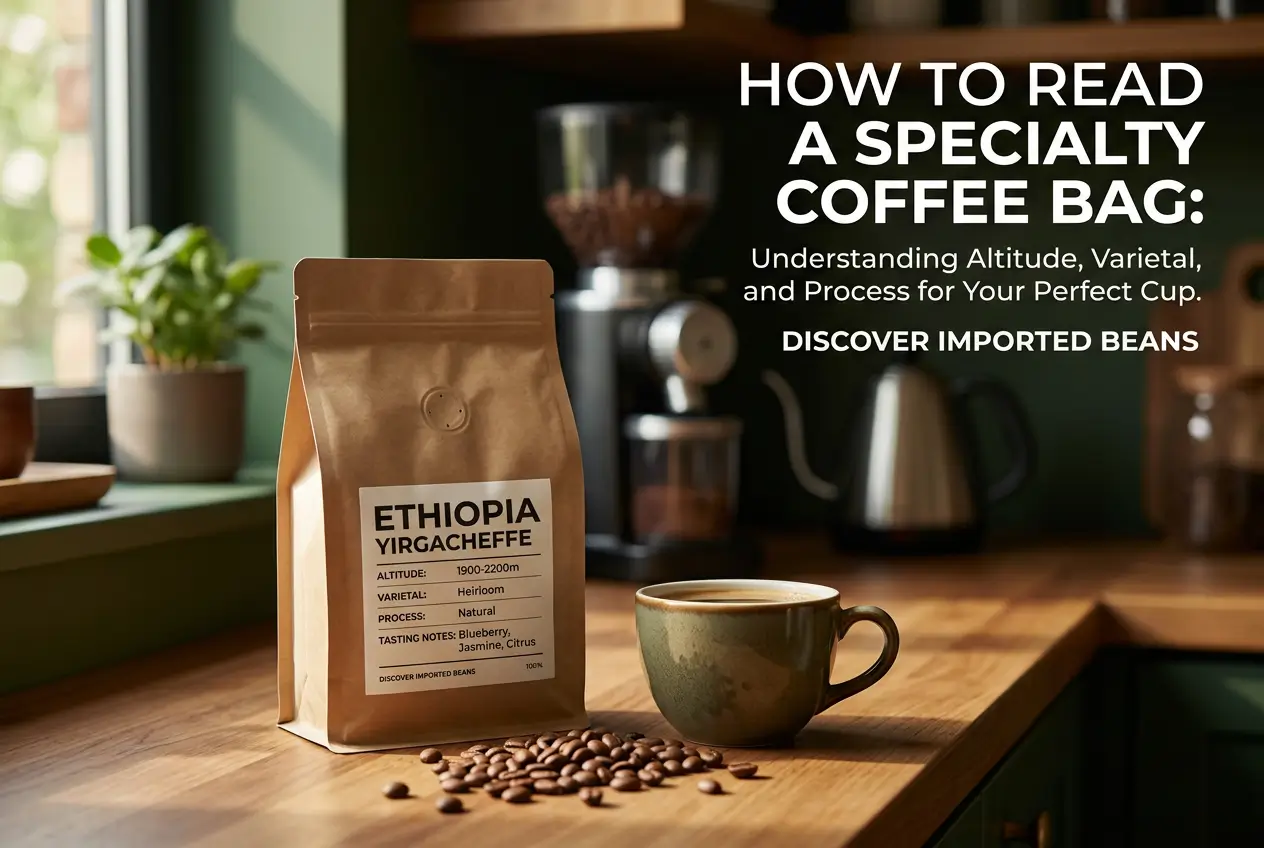
Key Alerts for Smart Coffee Buyers
Knowing the terms is half the battle. Now, here are a few critical things to look for to ensure you’re buying high-quality, fresh coffee.
- Always Check the Roast Date: Freshness is everything. Look for a “roasted on” date, not a “best by” date. Coffee is best 1-4 weeks after roasting.
- Tasting Notes Aren’t Additives: Notes like “blueberry” or “caramel” are the roaster’s description of natural flavors, not artificial flavorings.
- Vague Labels are a Red Flag: Specialty roasters are proud of their sourcing. If a bag only says “100% Arabica,” it lacks the transparency of a true specialty coffee.
Warning: Coffee sold in supermarket bins without any packaging information is almost never fresh and lacks any of the details you need to make a good choice.
Your Quick Guide to Choosing a Bag
Okay, you’re in the store. Let’s put this all together into a simple, step-by-step process to find the perfect bag.
- Find the Key Details: Scan the bag for Altitude (MASL), Varietal, and Process. Reputable roasters make this information easy to find.
- Connect Details to Flavor: High MASL + Washed Process = Bright & Clean. Low MASL + Natural Process = Sweet & Fruity.
- Read the Tasting Notes: Use the roaster’s notes to confirm your expectations. If the details point to a bright coffee, the notes should reflect that.
- Check the Roast Date: This is your final quality check. Make sure the coffee was roasted within the last month for the best possible flavor.
The next time you shop for coffee, don’t just grab a bag. Read it. You now have the knowledge to choose with confidence and brew a better cup.
Building a Home “Origin Flight” Tasting: Four Coffees That Teach Your Palate Fast
» Discover special tips and stories about coffee