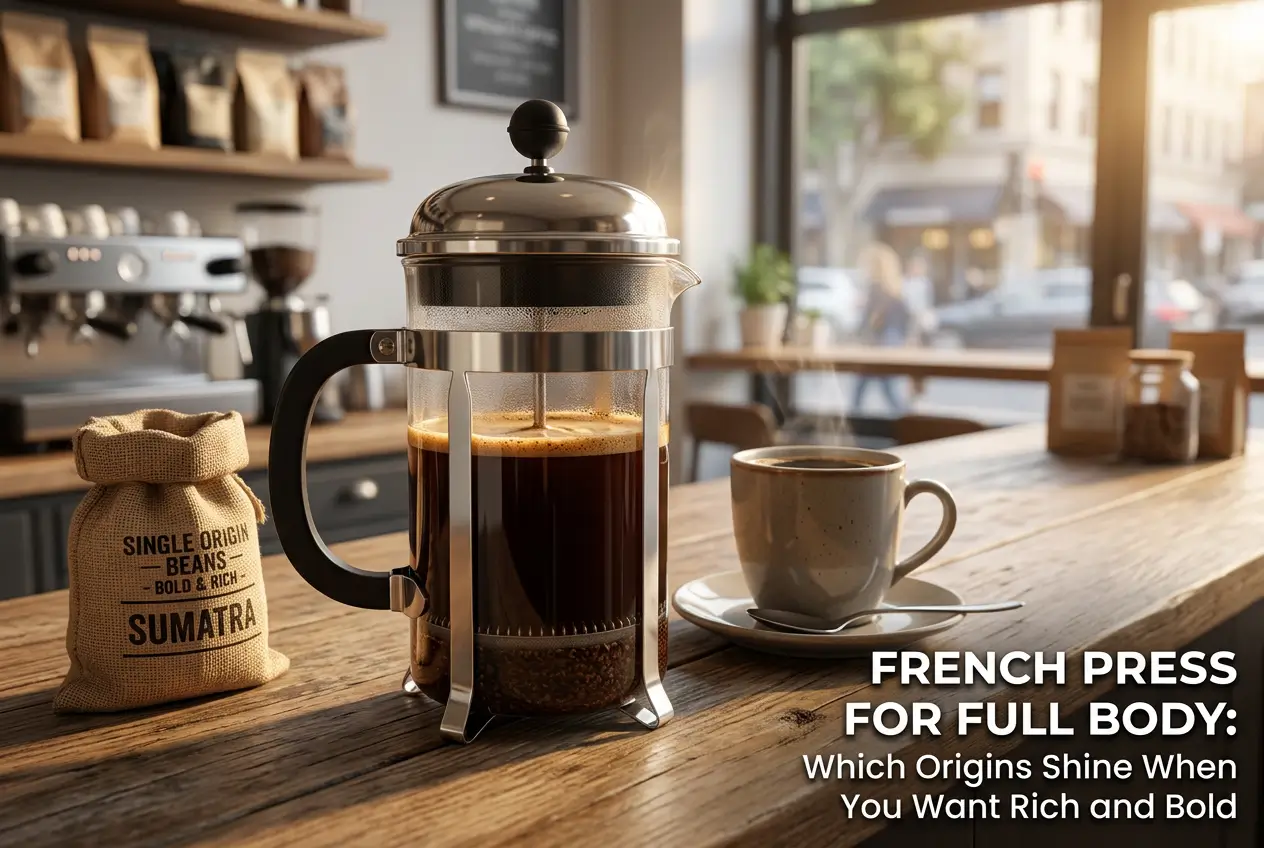
French Press for Full Body: Which Origins Shine When You Want Rich and Bold
- Sumatra (Indonesia): The king of earthy coffee. It delivers a heavy, syrupy body with flavors of dark chocolate, cedar, and spice.
- Sulawesi (Indonesia): Similar to Sumatra but often cleaner. It has a heavy body, low acidity, and deep, earthy notes.
- India: Look for Monsooned Malabar for a unique experience. It’s extremely low in acidity with a thick body and an earthy, musty profile.
Heads up: The bold, earthy flavors of Indonesian coffees are a love-it-or-hate-it profile. Start with a small bag if you’re new to them.
Beyond the Beans: Why Roast Level Matters
Origin is crucial, but the roast level is what truly unlocks the potential for a full-bodied French press.
For this brewing method, you generally want to stick to medium or medium-dark roasts.
A light roast can taste underdeveloped or sour in a French press because the oils haven’t fully developed.
A very dark roast can easily become bitter and lose its unique origin flavors, tasting only of the roast itself.
Medium to medium-dark roasts provide the perfect balance. They develop the sugars and oils needed for a heavy body.
What Would You Like to Learn Next?
Choose an option below:
This sweet spot highlights the bean’s inherent notes without introducing excessive bitterness.
The Step-by-Step Guide to a Perfect Press
Having the right beans is half the battle. The other half is technique. Follow these steps for a flawless brew.
- Use Fresh, Whole Beans: Coffee is best within two weeks of its roast date. Always grind just before you brew.
- Get the Grind Right: This is critical. You need a coarse, even grind, like the texture of sea salt or breadcrumbs.
- Heat Water Correctly: Aim for 195°F to 205°F. The easy way? Bring water to a boil, then let it sit for about 30 seconds.
- Measure Your Coffee: A great starting point is a 1:15 ratio. That’s 1 gram of coffee for every 15 grams of water.
- Preheat the Brewer: Swirl some hot water in your French press carafe before brewing. This keeps the temperature stable.
- Bloom and Steep: Add grounds, then pour in just enough hot water to saturate them. Let it “bloom” for 30 seconds. Then add the rest of the water.
- Set a Timer: Place the lid on top and let it steep for exactly 4 minutes. Don’t guess. Use a timer.
- Plunge Slowly: After 4 minutes, press the plunger down slowly and steadily. This should take about 30-45 seconds.
Common Mistakes to Avoid
Even with the best beans, a few simple errors can ruin your cup. Watch out for these common pitfalls.
- Grinding Too Fine: This is the number one mistake. It leads to over-extraction (bitterness) and a muddy, gritty cup.
- Plunging Too Fast: Rushing the plunge stirs up the fine particles at the bottom, making your coffee silty. Go slow.
- Letting Coffee Sit: Never let coffee sit in the French press after plunging. It will continue to extract and become bitter.
Critical Tip: Pour all the coffee out of the press immediately after plunging. If you don’t drink it all, pour it into a separate thermal carafe.
Your Next Step to a Bolder Brew
You now have the playbook for a perfect, full-bodied French press coffee. It starts with the right origin and ends with proper technique.
Whether you choose the chocolatey notes of a Brazilian bean or the earthy depth of a Sumatran, you’re in control.
Start by picking one of the recommended origins and pay close attention to your grind size and steep time.
Your journey to a richer, bolder cup of coffee begins with your very next brew. Enjoy the process.
Craving a rich, bold coffee from your French press? The secret isn’t just the brewer; it’s the bean.
Choosing the right coffee origin is the key to unlocking that full-bodied flavor you’re looking for.
This guide will show you exactly which beans shine in a French press and how to brew them for maximum richness.
Why the French Press is a Full-Body Champion
The French press is unique among brewing methods. It doesn’t use a paper filter to strain your coffee.
Instead, it uses a metal mesh filter. This small detail makes a massive difference in your cup.
Paper filters trap most of the coffee’s natural oils and microscopic grounds, or “fines.”
The metal filter in a French press allows these oils and fines to pass directly into your mug.
This is what creates that signature heavy body, rich texture, and intense flavor. You’re tasting more of the actual bean.
South & Central America: The Crowd-Pleasers
When you want a dependably smooth, rich, and balanced cup, look to South and Central America.
These coffees are famous for their full body and comforting flavors. They are perfect for daily drinking.
The French press amplifies their natural sweetness and chocolatey notes, creating a deeply satisfying experience.
- Brazil: Expect a heavy body with smooth, nutty, and pronounced chocolate flavors. It’s the coffee equivalent of a warm hug.
- Colombia: Known for balance. You’ll find notes of caramel and chocolate with a clean finish. A true classic.
- Guatemala: Often brings a wonderful complexity with chocolate, toffee, and sometimes subtle spice notes.
- Costa Rica: Can offer a bright, clean cup with a full body and notes of brown sugar and citrus.
Asia & Pacific: For Deep, Earthy, and Bold Flavors
If your definition of “bold” includes earthy, deep, and complex flavors, turn to beans from Asia and the Pacific.
These coffees are prized for their heavy, almost syrupy body and low acidity. They are anything but subtle.
The immersion brewing of a French press is the ideal method to extract their powerful and lingering character.
- Sumatra (Indonesia): The king of earthy coffee. It delivers a heavy, syrupy body with flavors of dark chocolate, cedar, and spice.
- Sulawesi (Indonesia): Similar to Sumatra but often cleaner. It has a heavy body, low acidity, and deep, earthy notes.
- India: Look for Monsooned Malabar for a unique experience. It’s extremely low in acidity with a thick body and an earthy, musty profile.
Heads up: The bold, earthy flavors of Indonesian coffees are a love-it-or-hate-it profile. Start with a small bag if you’re new to them.
Beyond the Beans: Why Roast Level Matters
Origin is crucial, but the roast level is what truly unlocks the potential for a full-bodied French press.
For this brewing method, you generally want to stick to medium or medium-dark roasts.
A light roast can taste underdeveloped or sour in a French press because the oils haven’t fully developed.
A very dark roast can easily become bitter and lose its unique origin flavors, tasting only of the roast itself.
Medium to medium-dark roasts provide the perfect balance. They develop the sugars and oils needed for a heavy body.
This sweet spot highlights the bean’s inherent notes without introducing excessive bitterness.
The Step-by-Step Guide to a Perfect Press
Having the right beans is half the battle. The other half is technique. Follow these steps for a flawless brew.
- Use Fresh, Whole Beans: Coffee is best within two weeks of its roast date. Always grind just before you brew.
- Get the Grind Right: This is critical. You need a coarse, even grind, like the texture of sea salt or breadcrumbs.
- Heat Water Correctly: Aim for 195°F to 205°F. The easy way? Bring water to a boil, then let it sit for about 30 seconds.
- Measure Your Coffee: A great starting point is a 1:15 ratio. That’s 1 gram of coffee for every 15 grams of water.
- Preheat the Brewer: Swirl some hot water in your French press carafe before brewing. This keeps the temperature stable.
- Bloom and Steep: Add grounds, then pour in just enough hot water to saturate them. Let it “bloom” for 30 seconds. Then add the rest of the water.
- Set a Timer: Place the lid on top and let it steep for exactly 4 minutes. Don’t guess. Use a timer.
- Plunge Slowly: After 4 minutes, press the plunger down slowly and steadily. This should take about 30-45 seconds.
Common Mistakes to Avoid
Even with the best beans, a few simple errors can ruin your cup. Watch out for these common pitfalls.
- Grinding Too Fine: This is the number one mistake. It leads to over-extraction (bitterness) and a muddy, gritty cup.
- Plunging Too Fast: Rushing the plunge stirs up the fine particles at the bottom, making your coffee silty. Go slow.
- Letting Coffee Sit: Never let coffee sit in the French press after plunging. It will continue to extract and become bitter.
Critical Tip: Pour all the coffee out of the press immediately after plunging. If you don’t drink it all, pour it into a separate thermal carafe.
Your Next Step to a Bolder Brew
You now have the playbook for a perfect, full-bodied French press coffee. It starts with the right origin and ends with proper technique.
Whether you choose the chocolatey notes of a Brazilian bean or the earthy depth of a Sumatran, you’re in control.
Start by picking one of the recommended origins and pay close attention to your grind size and steep time.
Your journey to a richer, bolder cup of coffee begins with your very next brew. Enjoy the process.
Building a Home “Origin Flight” Tasting: Four Coffees That Teach Your Palate Fast
» Discover special tips and stories about coffee