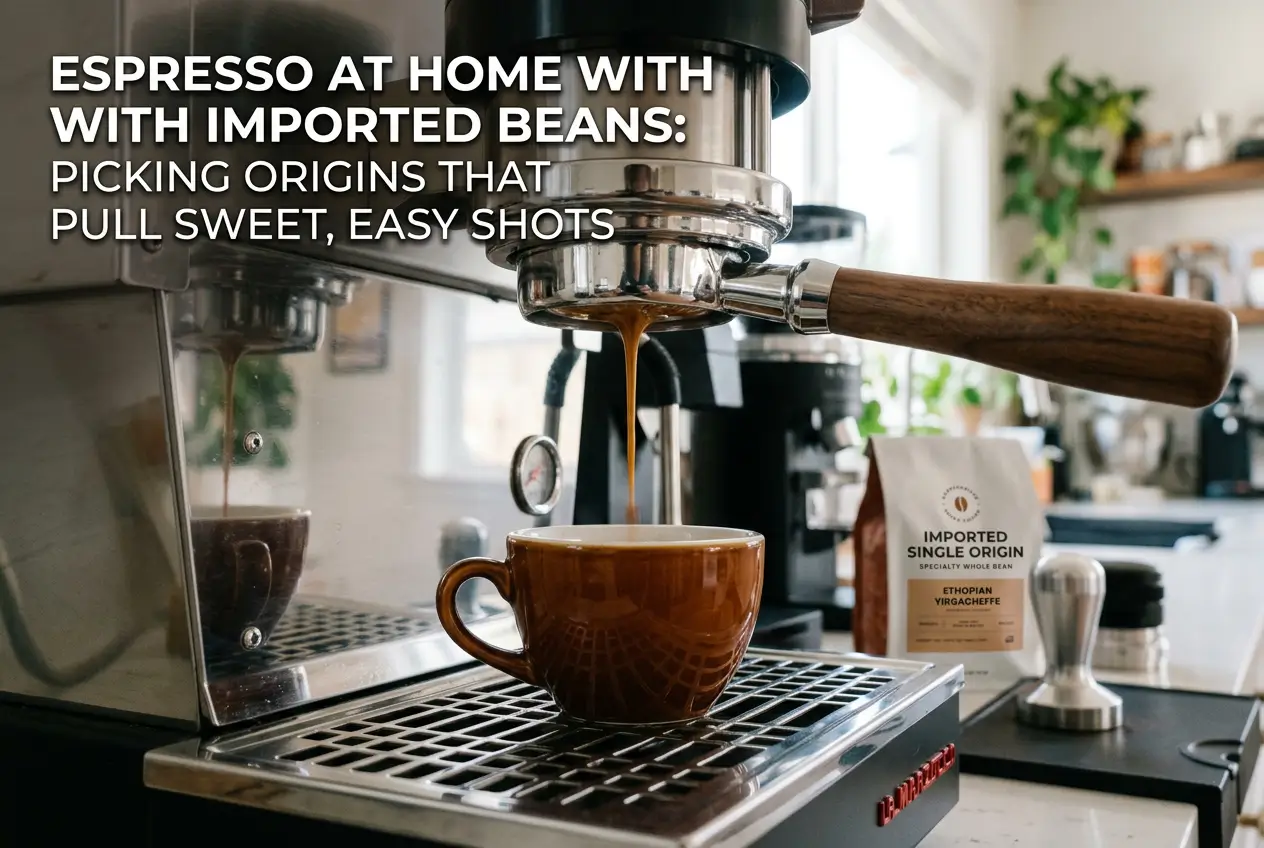
Espresso at Home with Imported Beans: Picking Origins That Pull Sweet, Easy Shots
Pulling a sweet, balanced espresso at home with imported beans can feel tricky. Often, the result is sour or bitter, not the rich shot you wanted.
The secret isn’t just your machine; it’s the origin of the coffee. Certain beans are naturally more forgiving and deliver that sweetness you’re looking for.
This guide gives you a clear path. We’ll show you which imported beans to buy and how to easily turn them into delicious, sweet espresso shots.
What to Look for in Espresso-Friendly Imported Beans
For a sweet and easy shot, three things matter most: the roast level, the bean type, and the flavor profile. Let’s break down what you need to know.
Think of it as setting yourself up for success. The right bean does most of the hard work for you, making the extraction process much more forgiving.
- Roast Level: Medium to medium-dark roasts are your best friends. They caramelize the sugars perfectly, reducing acidity and boosting sweetness.
- For Beginners: These roasts are more soluble and easier to extract correctly, preventing those frustratingly sour shots.
- Dark Roasts: A great choice for a classic, intense Italian-style espresso with notes of dark chocolate and very low acidity.
- Light Roasts: These can be amazing, with fruity and floral notes, but they are much harder to dial in. Save these for when you’re more experienced.
Top Origins for Sweet, Easy-to-Pull Espresso Shots
Where your coffee grows has a huge impact on its taste. For sweet, balanced espresso, some regions are simply more reliable starting points.
What Would You Like to Learn Next?
Choose an option below:
Here are the go-to origins that consistently produce beans with low acidity and classic, sweet flavors like chocolate, caramel, and nuts.
Pro Tip: Start with beans from Brazil or Colombia. They are known for being incredibly forgiving and are often the base for many espresso blends.
| Region | Common Flavor Profile | Why It’s Good for Espresso |
|---|---|---|
| South America (Brazil, Colombia) | Chocolate, Nuts, Caramel | Low acidity, great body. Extremely forgiving and consistent. |
| Central America (Guatemala, Honduras) | Chocolate, Toffee, Brown Sugar | Well-balanced and sweet. A classic, crowd-pleasing profile. |
| Asia (Sumatra, Indonesia) | Earthy, Dark Chocolate, Syrupy | Very low acidity, heavy body. Great for a deep, rich sweetness. |
While African beans from Ethiopia or Kenya can be delicious, their bright, fruity, and acidic profiles are often challenging for home espresso. Master the basics first.
How to Select Your Beans: A Step-by-Step Guide
Walking into a coffee shop or browsing online can be overwhelming. Follow these simple steps to confidently choose the perfect beans every time.
- Check the Roast Date. This is the single most important factor. Look for a “roasted on” date, not an expiration date.
- Find the Flavor Notes. Read the bag. Look for descriptions like “chocolate,” “caramel,” “nougat,” or “brown sugar.” These point to sweetness.
- Choose Whole Beans. Always. Pre-ground coffee loses its flavor and aroma in minutes. Grinding just before you brew is non-negotiable for good espresso.
- Blend or Single Origin? Start with a blend. Roasters design blends specifically for espresso to be balanced and consistent. They are a safer bet.
Single origin coffees highlight the unique flavors of one farm. They’re fantastic for exploring, but can be less consistent and harder to work with.
The Freshness Window: Why Timing Is Everything
Coffee needs to “rest” after roasting. This process, called degassing, allows CO2 to escape. Using beans that are too fresh will ruin your shot.
On the other hand, old beans will taste flat and produce very little crema, that beautiful reddish-brown foam on top of a good espresso.
- The Sweet Spot: For espresso, beans are at their best 7 to 21 days after the roast date. This is the peak freshness window.
- Too Fresh (Under 7 Days): Excess CO2 will cause channeling and an unstable, often sour extraction. It will look bubbly and aggressive.
- Too Old (Over 4 Weeks): The beans have lost their vibrancy. Your shot will be less aromatic and may taste bland or stale.
Actionable Tip: Buy smaller bags of coffee more frequently. This ensures you’re always using beans within that crucial 3-week window.
Where to Buy High-Quality Imported Beans
Your local supermarket is not the place for fresh espresso beans. The bags there can sit on shelves for months, long past their peak.
Instead, focus on sources that prioritize freshness and quality. This is where you’ll find beans that make a real difference in your cup.
- Online Specialty Roasters: This is your best option. Roasters like Onyx, Black & White, or Intelligentsia often roast to order and ship quickly.
- Local Coffee Roasters: Building a relationship with a local roaster is invaluable. You get fresh beans and expert advice tailored to your setup.
- Coffee Subscriptions: A great way to explore different origins while ensuring a steady supply of fresh coffee arrives at your door.
Look for roasters who are transparent about their sourcing and provide clear roast dates and flavor profiles on their packaging.
Critical Alerts for Home Baristas
Avoid common pitfalls that can sabotage your espresso, even if you have the best beans. A few simple rules will protect your investment and your coffee’s flavor.
Never store your coffee beans in the freezer or refrigerator. Coffee is porous and will absorb moisture and odors, destroying its delicate flavors.
The best storage method is simple. Keep your beans in an airtight container or the original bag (if it has a one-way valve) in a cool, dark place like a pantry.
And remember, avoid pre-ground coffee at all costs. The moment coffee is ground, it begins to go stale. A quality burr grinder is an essential tool, not a luxury.
Your Next Step to a Sweeter Shot
You now have the knowledge to choose the right beans. The key is to start simple. Pick up a medium-roast blend from Brazil or a roaster’s signature espresso blend.
Pay close attention to the roast date and give the beans at least a week to rest. This small change alone will dramatically improve your shots.
Your journey to great home espresso starts with the right bag of beans. Go explore some of the origins we’ve mentioned and taste the sweet difference for yourself.
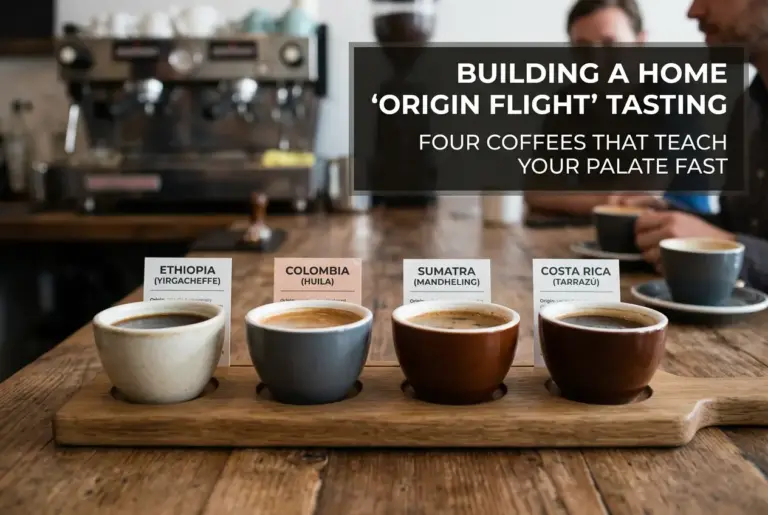
Building a Home “Origin Flight” Tasting: Four Coffees That Teach Your Palate Fast
» Discover special tips and stories about coffee