Fresh doesn’t always mean better. Beans need time to degas and settle, so the best brew window is a range, not a single day. Many specialty roasts hit a sweet spot between 7 and 21 days from the roast date, with flavors leveling off after about three weeks.
Look for the roasted-on date on the bag and plan your brew around it. Filter brews and espresso have different peak windows: filter often shines 2 days to 4 weeks, while espresso can be great from 1 to 6 weeks.
This guide explains what “coffee freshness after roasting” means in practical terms — aroma, clarity, sweetness — and covers degassing, oxidation, and smart storage at home. You’ll learn when to brew, how to store beans, and when freezing makes sense.
Key Takeaways
- Roast date matters — use it to time your brews.
- Many beans taste best 7–21 days post-roast for balanced flavor.
- Filter and espresso have different peak windows.
- Proper room storage can keep beans tasting good for weeks.
- Degassing and oxidation are the main factors that change flavor.
What Changes in Roasted Coffee Beans After Roasting
Roasted beans continue to change in the minutes and days after they leave the drum, and those shifts shape what ends up in your cup.
Degassing and carbon dioxide release
Degassing is simple: heat builds gases inside the bean and they escape once the roast stops. This release includes carbon dioxide and affects how water moves through grounds.
Why a very fresh bag can taste worse
Too much trapped gas can push water around and cause uneven extraction. That leads to a thin, hollow, or sharp cup even with high-quality beans.
“Too-fresh beans often taste unsettled. Letting them rest helps flavors settle and blend.”
Oxidation and flavor loss
Once oxygen touches oils and aromatics, vibrancy fades. Over days and weeks, notes grow flatter and less distinct.
Roast style and roasting process effects
Different roasters and machines change timelines. Fluid-bed (non-preheated) roasts may peak sooner than preheated drum roasts. Resting is a guideline, not a rule.
| Factor | Early effect | Later effect |
|---|---|---|
| Degassing | Can cause uneven extraction | Subsides in days |
| Oxidation | Slow loss of aromatics | Flat, muted taste |
| Roast style | Peak varies by method | Rest window shifts |
Practical point: If a bag tastes tight, give it more days. If it tastes muted, oxygen has likely taken over.
coffee freshness after roasting: The Best Time to Brew for Peak Flavor
The right time to brew is more of a window than a single day — and that window matters.
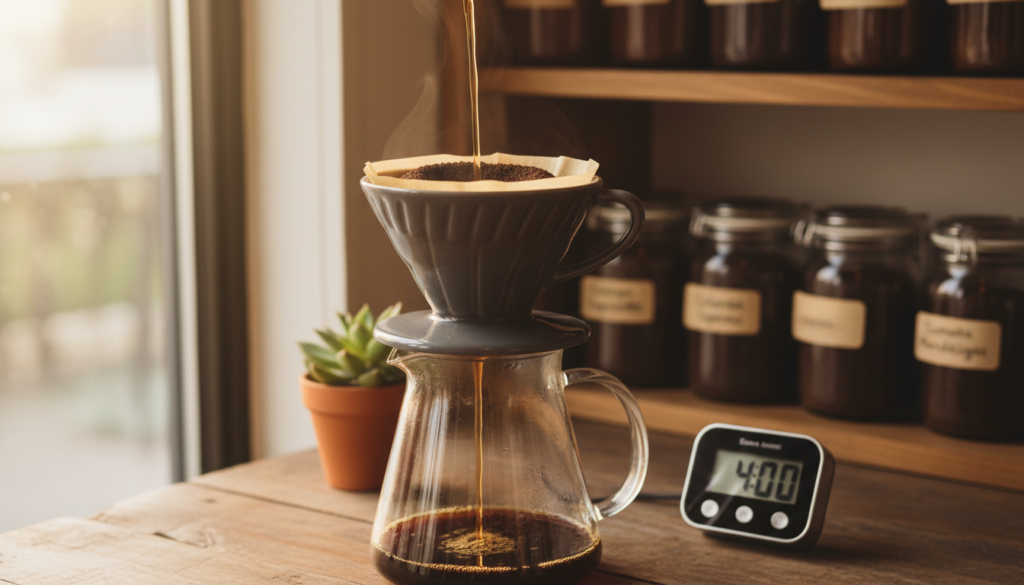
The sweet spot many roasters recommend for whole beans
Most specialty roasters point to about 7–21 days post-roast as the working sweet spot for whole beans. In that span, many coffees show clearer notes, balanced acidity, and fuller sweetness.
Filter coffee vs espresso freshness windows
Filter brews often taste great earlier. Many drinkers enjoy filter from roughly 2 days up to 4 weeks.
Espresso usually needs more rest. A common range is 1–6 weeks so degassing and extraction stabilize.
What to expect as flavors evolve from week to week
Early days can be bright and punchy, with vivid notes and high acidity. As weeks pass, flavors smooth and blend. Peak is gradual — not a switch you flip.
- Working rule: if a bag tastes tight, wait a few days. If it tastes flat after several weeks, buy smaller amounts.
- Track roast date, brew date, and quick taste notes to find your personal peak.
- Roast level and processing shift the window. Treat the range as a guide, not a fixed calendar date.
“Peak flavor is clarity, sweeter balance, less harshness, and consistent results day to day.”
| Use | Typical Window | What to Expect |
|---|---|---|
| Whole beans (general) | 7–21 days | Best clarity and balance |
| Filter | 2 days–4 weeks | Bright early; broad window |
| Espresso | 1–6 weeks | Needs rest for stable shots |
How to Store Coffee Beans to Keep Them Fresh Longer at Home
The goal of home storage is simple: slow chemical change and prevent moisture or light damage while allowing safe CO2 release during the resting phase.
Choose the right bag or container
Use the original resealable bag with a one-way valve when possible. That bag limits air while letting gases escape during degassing.
If you buy a bulk pack, portion into an airtight container for daily use and keep the rest sealed. An airtight container is best for short-term home storage.
Why one-way valves matter
One-way valves reduce oxygen contact while allowing carbon dioxide to leave. That helps resting go well without letting oxygen in and dulling the cup.
Pick the best place and protect against hazards
Store beans in a cool, dark, dry place with a steady temperature—like a pantry or cabinet. Avoid sunlight, clear jars in bright spots, and areas near stoves or vents.
Moisture and strong odors transfer fast. Keep containers sealed to stop humidity and off-aromas from ruining the experience.
Grind timing and hopper advice
Grind only what you plan to brew now. Ground coffee exposes far more surface area to air and stales quickly.
Most grinder hoppers are not airtight. Do not leave beans in the hopper all week; dose from a sealed container and clean the grinder regularly to keep oils from building up.
- Quick checklist: limit air movement, avoid light, keep steady temperature, grind on demand, and clean equipment.
Freezer vs Room Temperature Storage: When Freezing Helps and When It Hurts
Deciding whether to freeze your beans or keep them at room temp comes down to volume, timing, and technique.
The refrigerator is a no-go. The fridge is humid and full of odors. Roasted coffee is hygroscopic and will absorb smells and moisture. Repeated door openings also create temperature swings that harm delicate notes.
How to freeze the right way
Portion into small lots you will finish within one to two weeks. Use a vacuum sealer or heavy-duty freezer bag and remove as much air as possible.
- Label each pack with the roast date and lot.
- Freeze quickly and keep packs sealed until use.
- Let a sealed bag come fully to room temperature before opening to prevent condensation.
When freezing makes sense — and when it backfires
Freezing helps for bulk buys, rare coffees, or travel backups. It can preserve peak flavor longer when you control air and moisture.
It hurts when bags are loosely sealed, opened and refrozen, or stored near strong-smelling foods. In those cases, the taste can go flat or pick up off-notes.
“If you chase delicate notes, portioning and sealing matter more than simply choosing a cold place.”
Conclusion
Treat the roast date as a roadmap for timing brews and storage. Let beans rest a few days, expect a multi-week window of strong quality, and know that gradual decline comes mainly from oxygen exposure.
Practical rules: allow a short resting period, note the roast date, and expect good results across several days to weeks. For bulk buys, vacuum-sealed freezer packs help. For most people, room storage and smaller purchases work best.
High-impact home habits: keep beans sealed, avoid heat and light, and grind just before brewing for the cleanest cup.
Action plan: check the roast date today, pick a simple storage setup, and taste across a few days to find your personal best point.