Coffee Brewing Temperature: How Hot Is Too Hot?
Learn the ideal coffee brewing temperature for perfect cups. Discover how to adjust your brewing technique for optimal flavor and aroma in our step-by-step guide.
Practical heat means the water heat the grounds meet, not just the kettle readout. A common home target sits near 195–205°F (90–96°C), with many guides citing roughly 200°F as a solid starting point.
The point of dialing heat is consistent extraction that yields balanced flavor, not hotter equals better. For most home methods, “too hot” is usually above about 205°F (~96°C), which can push drinks toward harsh or bitter notes.
Heat is one lever among many — grind size, brew time, dose, and agitation also shape the result. Different methods (espresso, pour-over, French press, AeroPress, cold brew) respond differently, so the best number depends on how you make your cup.
Later sections will show simple, no-guess ways to land in range (cooling after boil) and when a thermometer is worth using. This article aims to teach target ranges, taste-based tweaks, and method-by-method guidance so you can get reliable, repeatable results at home.
Key Takeaways
- Target roughly 195–205°F as a reliable starting range.
- “Too hot” is typically above ~205°F and can harm balance.
- Heat matters, but so do grind, time, ratio, and agitation.
- Different methods need different heat approaches.
- Simple cooling after boil gets most home brewers into range.
Why Brewing Temperature Matters for Extraction and Flavor
How hot the water is changes which compounds dissolve and how fast extraction runs. Hotter water gives more energy to dissolve soluble material from the grounds into the water. That extra energy speeds extraction and shifts what appears in the final cup.
Extraction sequence
What Would You Like to Learn Next?
Choose an option below:
- Acids first: bright, fruity notes show up early.
- Sweetness next: sugars and round body follow.
- Bitterness and caffeine later: these come last and grow with longer, hotter extraction.
Higher water temperature pulls compounds faster. That can bring out roasty or bitter flavors if grind or time aren’t adjusted. Lower water favors acids and floral notes but risks under-extraction: a thin, sharp, or hollow brew.
Too-cold brews taste sour and weak. Too-hot brews feel drying and harsh, with a muddier finish from late-stage bitter compounds. Remember: perceived strength can come from over-extraction, not just more dissolved solids.
| Extraction Stage | Dominant Compounds | Likely Taste |
|---|---|---|
| Early | Acids, volatile aromatics | Bright, fruity |
| Middle | Sugars, lipids | Sweet, full |
| Late | Bitter alkaloids, caffeine | Astringent, bitter |
Quick note: Later sections will show how to tweak grind and time to match these effects so the final cup stays balanced.
Ideal coffee brewing temperature range for most hot brewing
A practical heat band makes it easier to get a balanced cup without complex tools.
The SCA-backed target and why it works
Aim for about 195–205°F (90–96°C), with many people centering near 200°F (93°C). This band gives steady extraction for typical medium roasts and fits drip and pour-over methods well.
Simple 30-second-after-boil routine
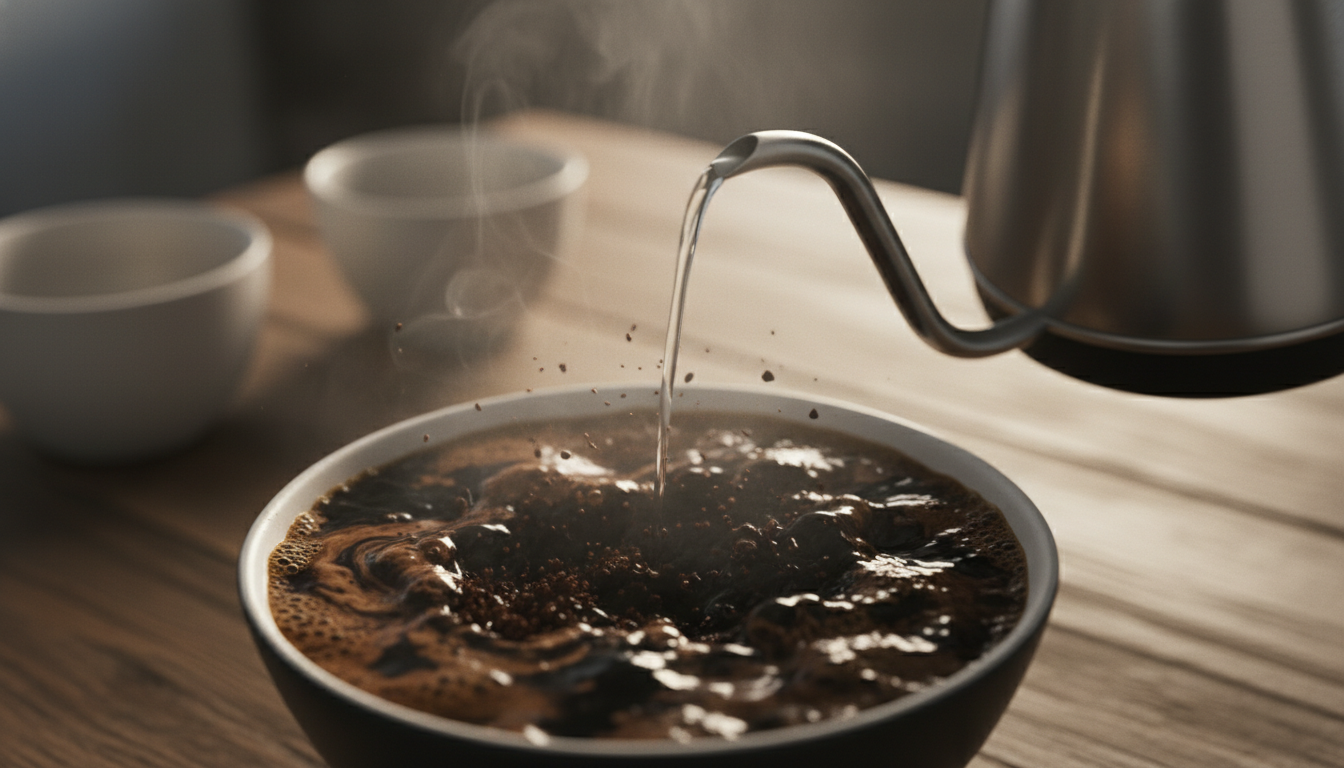
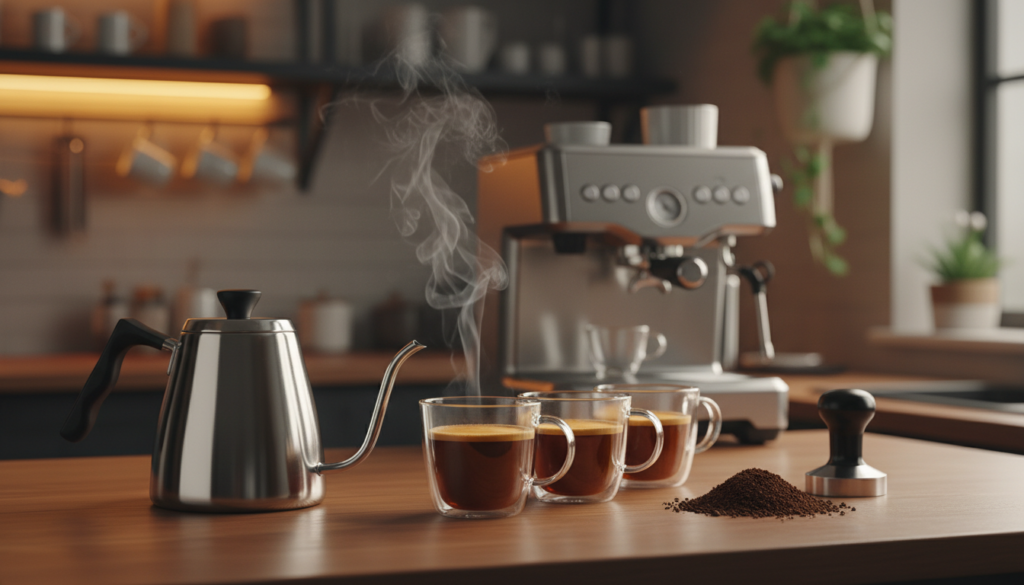
Step-by-step: bring water to a full boil, remove from heat, wait ~30 seconds, then pour over grounds. This reliably lands in the target range without tools.
For precision, use a kitchen thermometer or a kettle with temp control. Those tools help but are not required for good results.
Why actively bubbling water can hurt evenness
Pouring while water is still vigorously boiling adds turbulence. That can disturb the grounds, cause channeling in pour-over, and change contact time. The result is uneven extraction and more bitter or astringent notes.
Defining “too hot” in practice
Water above ~205°F (96°C) often speeds late-stage extraction. Expect more bitterness, drying astringency, and harsher caffeine edge. The target band exists to favor sweetness and clarity over those harsh traits.
How to choose a brewing temperature based on roast, grind, and time
Let roast density and grind size dictate small changes to your brew warmth.
Start in the standard 195–205°F band, then adjust based on the roast and what you taste. Light roast beans are denser and often need a bit hotter water to release sweetness and round body. Dark roast beans extract more quickly and can benefit from slightly cooler water to avoid harsh notes.
Match tweaks with grind and time. If a cup tastes sour or thin, raise the heat or make the grind finer and add a little more brew time. If it tastes bitter or drying, lower the heat, shorten contact time, or coarsen the grind.
Practical compensation examples
- Raise water slightly but coarsen grind one step to keep clarity while increasing sweetness.
- Lower water and shorten time if the cup shows late-stage bitterness.
- For dense light roasts, try hotter water with moderate grind to expose floral and fruit flavors.
| Issue in Cup | First Fix | Secondary Fix | Why it works |
|---|---|---|---|
| Sour / thin | Raise water slightly | Finer grind / longer time | Increases extraction of sugars and body |
| Bitter / drying | Lower water slightly | Coarser grind / shorter time | Reduces late-stage bitter compounds |
| Muddled / flat | Adjust grind finer | Refine pour or filter | Improves evenness and clarity |
Tip: Change only one variable at a time—temperature, grind, or time—and record results. Equipment (kettle control, brewer shape, and filter) affects outcomes, so use small, repeatable steps to find the best balance of acidity, sweetness, and bitterness for each coffee and method.
Method-by-method brewing temperatures: drip, pour over, French press, AeroPress, espresso, and cold brew
What works for an espresso machine won’t always suit a French press or AeroPress. Below is a compact, method-by-method guide to help you match water settings to your gear and goals.
Pour over and drip brewers
Aim for the standard hot-brew range to get balanced cup coffee. Many home drip brewers run closer to ~180°F, which can make brewed coffee taste flat or under-extracted.
If a machine runs cool, compensate with a finer grind or slightly longer contact to avoid a weak cup.
French press
Cooler water often yields a smoother, less bitter profile. Hotter water increases intensity and body.
Adjust steep time and grind with small steps to tune flavors for light or dark roasts.
AeroPress
Competition recipes commonly use ~175–180°F. Short contact and pressure favor lower settings.
Expect clearer, less bitter notes at a lower setting.
Espresso
Espresso is very sensitive: a few degrees can shift sourness or balance. Small temperature changes show up fast because extraction is rapid.
Moka pot
Try starting with just-boiled water in the base. That reduces time on the stove and helps preserve sweetness over harshness.
Cold brew
Cold or room-temperature extraction takes much longer (Toddy-style can need ~30 hours). The result is less acidic, less bitter, and often sweeter.
“Match temperature choices to your brewer; if a device runs cool, tweak grind or recipe—not the roast.”
| Method | Typical setting | Note |
|---|---|---|
| Pour over / Drip | 195–205°F | Some machines run ~180°F; adjust grind/time |
| AeroPress | 175–180°F | Short contact, clearer cup |
| Cold brew | Room/Fridge | Long steep (~30 hrs), less acid |
What the science says: temperature vs. TDS and percent extraction
When strength and percent extraction are matched, heat makes surprisingly little direct difference to what people report tasting.
Quick definitions
TDS (total dissolved solids) is the concentration of dissolved brew material. For example, ~1% TDS means about 1 part coffee material to 99 parts water. That number maps closely to perceived strength.
Percent extraction (PE) is the share of dry grounds dissolved into the cup. Two brews can have the same TDS but different PE, and those combos change balance and which compounds dominate.
Key research summary
“UC Davis and the SCA found that across 87–93°C, sensory differences were minimal when TDS and PE were matched.”
This means small hot-water shifts matter less than the actual dissolved solids and extraction yield you achieve.
Practical takeaways
- Control ratio, grind, and time so TDS and PE stay consistent during tests.
- Most perceived changes when people tweak heat at home come from accidental shifts in strength or extraction.
- Consumers cluster by preferred strength—some like ~1% TDS, others >1.25%—so aim your routine at a TDS you enjoy.
| Group | Typical TDS | Preference |
|---|---|---|
| Light | ~1.0% | Delicate, brighter notes |
| Strong | >1.25% | Fuller, bolder profile |
| Balanced | 1.05–1.25% | Mix of clarity and body |
Bottom line: measure and standardize what you can, then use heat as one tool to hit your target strength and extraction.
Conclusion
Quick rule, use the standard hot-brew band as your baseline and tune from there. Start near the middle of the range, then adjust for roast and method while watching the cup.
Simple at-home practice: bring water to a boil, wait ~30 seconds, then pour. That step gets most people into the right zone without a thermometer.
Too hot often shows as bitter, dry, or astringent. Too cold usually tastes sour, thin, or weak. Use those cues to decide whether to lower heat, coarsen the grind, or shorten time.
Change one variable at a time, take notes, and aim for repeatable results. Science says small shifts matter less when strength and extraction match, so focus on consistency across methods—espresso and AeroPress need finer tweaks, and cold brew relies on time, not heat.
FAQ
What range of water heat gives the best extraction for most hot methods?
Why does water heat matter for extraction and flavor?
What extracts first and what comes later during the pour?
How does under-heating compare with overheating in taste?
How can I hit the ideal range at home without a thermometer?
Why should I avoid pouring actively bubbling water?
What does “too hot” mean in practice and what happens above the upper limit?
How should I adjust heat for light versus dark roasts?
Can I use grind size and time to compensate for different temperatures?
How do I balance acidity, sweetness, and bitterness when dialing in a new bag?
Do different methods need different temperatures — drip, pour over, press, AeroPress, espresso?
Why do many award-winning AeroPress recipes use cooler water?
Is the Moka pot an exception to these rules?
How does temperature affect cold or room-temperature extraction?
What are TDS and percent extraction, and why do they matter more than heat alone?
Does research show temperature has a big sensory impact when TDS and extraction match?
What do most drinkers prefer in real-world tests?
Cold Brew with Single Origin Beans: Bright vs Chocolatey Results by Region
» Discover special tips and stories about coffee