How Agitation Changes Coffee Extraction
Learn how coffee brew agitation impacts extraction in this step-by-step guide. Discover the best techniques for optimal flavor.
Agitation refers to how much you move the grounds and water during a pour. In a practical home setting, it is one of the simplest levers to change without new gear. A little more movement speeds extraction; less motion preserves clarity.
This short guide focuses on taste, not tricks. The goal is to use controlled movement to get repeatable results and avoid accidental bitterness or drying astringency. Expect plain, actionable steps you can follow in busy mornings.
We’ll start with what this term means and how it affects flavor. Next, we explain what happens inside the coffee bed, then show a step-by-step dialing process. Later sections cover low-motion options for common US home brewers, like pour-over kettles and immersion drippers.
Right agitation depends on whether you want clarity or more body. This guide helps you pick a direction and then control variables consistently so results match your taste over years of practice.
Key Takeaways
- Agitation is a simple way to change extraction without new equipment.
- Controlled movement helps avoid bitterness and astringency.
- The article gives a clear sequence: definition, mechanics, dialing, brewer options, troubleshooting.
- Typical US home gear and morning constraints are considered.
- Choose agitation based on desired clarity versus body, then be consistent.
What Coffee Brew Agitation Is and Why It Changes Extraction
Movement inside the filter — caused by pouring, stirring, or rising gases — alters extraction and flavor.
A simple definition
Agitation means how much the coffee slurry moves during the brewing process. The main sources are the pour itself, deliberate stir actions, and CO₂ bubbles pushing through the bed.
What Would You Like to Learn Next?
Choose an option below:
How that motion shifts taste
Motion refreshes the water around grounds so soluble compounds dissolve faster. That speeds extraction and can make the cup more intense.
Too much motion can slow flow, push fines into the filter, or pull bitter compounds out of the grounds. That raises drying astringency and harshness in the cup.
Controlled versus chaotic motion
Think in repeatable actions: consistent pour height and steady speed, minimal stirring. Controlled agitation gives predictable results; chaotic movement creates uneven extraction and inconsistent taste.
Even with the same recipe, different pouring or stirring habits explain why two pours rarely taste identical. Choosing more movement favors body and intensity, while less movement favors clarity and reduced harshness.
What’s Actually Happening in the Coffee Bed When You Agitate
Inside the filter bed, movement changes how water and particles interact at a microscopic level.
Refreshing the water around grounds
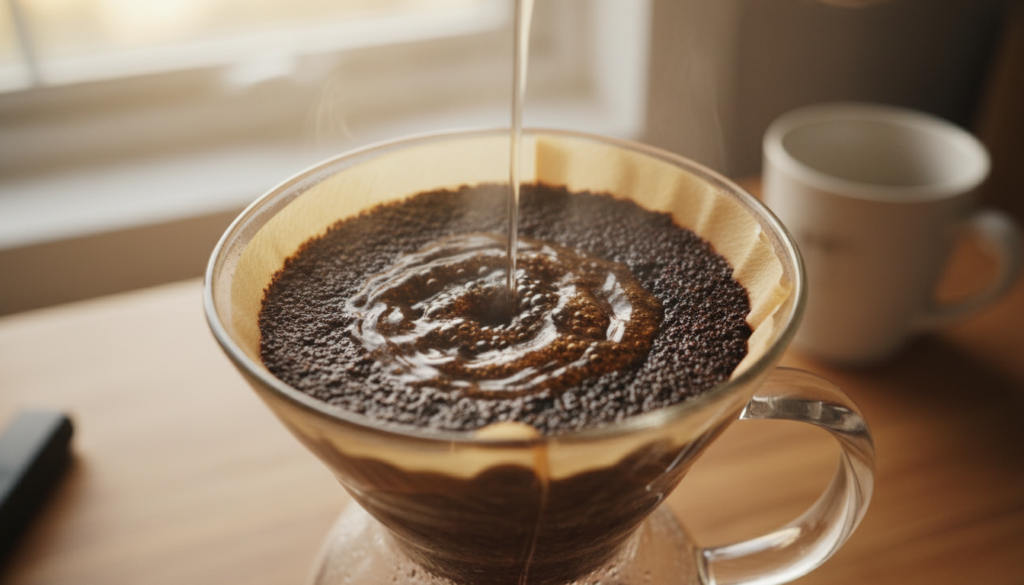
Moving the slurry continually brings fresh water into contact with particles. That keeps the concentration gradient steep and speeds extraction.
This is why a little motion often makes the cup more intense quickly.
How fines migrate and clog flow
Tiny fragments shift downward when the bed moves. Those fines can pack against the filter and cut permeability.
When the filter constricts, flow slows and drawdown time rises. A slow drawdown often raises bitterness and a drying astringency.
Bed shape, channeling, and small mistakes that matter
Uneven bed geometry creates easy paths for water. Channeling gives mixed zones: some parts under‑extracted, others over‑extracted, which hurts overall results.
Even small actions — carrying an immersion dripper, tapping a carafe, or strong bubbling from fresh coffee — can make holes and change flow.
Quick check: if the bed looks cratered or drawdown suddenly stalls, suspect fines packing and local clogging, not only bean quality. Adjust grind size, reduce disturbance, and watch the next run for cleaner flow.
How to Dial In Agitation Step by Step for Better Taste Results
Lock a baseline recipe first; that makes it easy to test different movement methods without confusion. Set dose, ratio, grind, and water temperature so changes in taste link to motion, not multiple variables.
Choose a target profile: pick clarity or body. More body needs firmer technique and a few more pours. More clarity needs gentler pouring and less stirring.
Practical pouring and stirring checklist
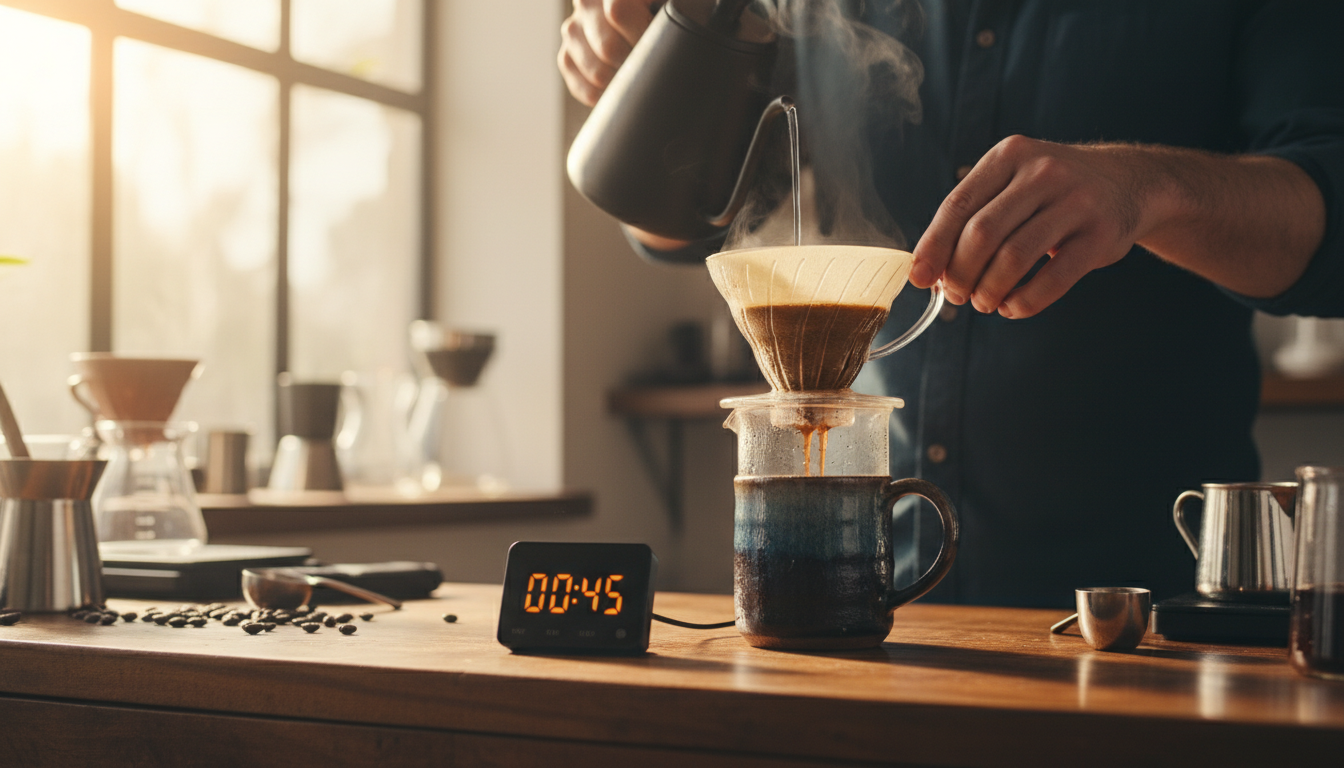
- Keep pour height and speed steady; use gentle circular pours that avoid blasting holes into the coffee bed.
- Use a light stir only to wet dry pockets or during bloom; avoid late stirring that resuspends fines and clogs filters.
- Level with a spoon back, chopstick handle, or WDT tool to flatten the bed without vortexing.
Manage bloom as a wetting step. Try “water-first” or half-water first to reduce early disturbance. Watch drawdown time and bed shape for in-brew feedback.
Repeatable plan: change one variable at a time—pour height, number of pours, stir or no-stir—then taste and log results to refine your method.
Low-Agitation Techniques by Brewer and Method
Different brewers reward gentle handling; technique matters more than elaborate gear. Below are practical, low-motion sequences by brewer so you can repeat results each morning.
Clever Dripper (immersion-first)
Use a simple water-first routine: add a little hot water, then the grounds, then the rest of the hot water.
Gently stir or nudge with a spoon or chopstick handle just enough to wet the bed. Wait for grounds to settle, then open the dripper and leave it undisturbed to drain.
Classic pour-over brewers
Lower pour height and softer pouring water minimize turbulence. Keep pours slow and round to avoid blasting fines toward the filter.
If your grinder makes a lot of fines, cut the number of pours and use a light leveling move with a WDT tool or spoon instead of late stirring.
Valve-controlled drippers (NextLevel Pulsar style)
Close the valve for an immersion-style bloom so the bed fully wets and fines settle. Use a short wetting stir, then perform one slow, continuous pour.
Open the valve gradually to reach ~6–8 minutes total time rather than doing multiple disruptive pours.
When multiple pours help—and when they don’t
“Multiple pours can refresh water and boost extraction, but each pour adds motion that risks clogging the filter and moving fines.”
- If drawdown stalls or the bed looks muddy: reduce pours and soft‑step your pouring energy.
- If the cup tastes thin or hollow: add one controlled agitation step, not several chaotic pours.
Repeatability wins: choose the low-agitation method you can perform the same way every day. That consistency, not one perfect run, gives reliable flavor.
Fix Common Extraction Problems Caused by Too Much or Too Little Agitation
Small changes in how you move water during a run often fix the most common extraction faults. Use visual cues and drawdown numbers to decide whether to change motion or grind next.
If your cup tastes bitter or drying: reduce motion and protect flow rate
If the cup is harsh, separate true high extraction from high extraction caused by clogging. The latter often tastes drying and bitter.
Fixes: lower pour height, slow your pour, stop late stirring, and keep the brewer stable during drawdown. Try a water-first or partial-water-first routine to reduce early disturbance.
If your run stalls: address fines, grind size, and filter clogging
When drawdown time balloons, check the bed for a muddy look or packed fines. That indicates clogging, not necessarily over-extraction.
- Confirm grind size isn’t too fine for your filter and device.
- Reduce disruptive pours so fines settle instead of packing the filter.
- Remember a grinder that produces many fines will make the same technique behave worse.
If your cup tastes thin or hollow: add controlled motion without chaos
For a weak cup, add one controlled action only — a gentle wetting stir during bloom or a slightly stronger single pour. Avoid increasing motion at every step.
Use drawdown time and bed appearance as objective feedback. Change one variable per run so the process stays learnable and repeatable.
Calibration rule: adjust motion first when daily taste swings occur. If the same fault persists despite consistent technique, change grind size next.
Conclusion
, Consistent handling is the easiest way to get steady results at home.
Small, unintentional movement often explains a bad cup more than beans or recipe changes. Reduce needless motion and you protect flow and clarity.
More motion can bring body and higher extraction; less motion preserves sweetness and limits astringency when fines are present. That tradeoff is central to choosing a method.
Keep dose, ratio, and water consistent, then change one motion variable at a time and log the cup. Pick a single low‑agitation routine (hands‑off drain or a slow single pour) and test it for a week.
Little things at the end — stable drawdown, gentle bed care, and steady pouring — usually decide whether your cups improve over years.
FAQ
What does agitation mean in the brewing process?
How does stirring or pouring affect extraction and flavor?
What happens inside the grounds when I agitate?
Why can agitation cause flow to slow or clog the filter?
How does a longer drawdown time influence taste?
How do uneven grounds or channeling relate to agitation?
What steps should I take before changing my agitation technique?
How do I choose between clarity and body when adjusting agitation?
What practical pouring tips control agitation?
When should I stir and when should I avoid it?
Which simple tools help level the bed without overdoing motion?
How should I manage the bloom to get good wetting without over-disturbing the slurry?
What visual cues should I watch for during drawdown?
How do low-disturbance methods differ by brewer type?
When do multiple pours help and when do they add too much motion?
What should I do if my cup tastes bitter or drying?
How do I fix a stalled or very slow drawdown?
What if the cup tastes thin or hollow after low motion?
Why Cheap Coffee Often Tastes Burnt
» Discover special tips and stories about coffee