Why Coffee Tastes Worse After Several Cups
Struggling with coffee sensory fatigue? Find out why your coffee tastes worse after several cups and get practical advice on how to overcome it.
Coffee sensory fatigue is a common, normal response when your nose and mouth stop registering the same intensity after repeated exposure. Olfactory adaptation, sometimes called nose blindness, makes familiar aromas feel muted or dull even when the brew is unchanged. This happens in minutes for many people.
Flavor is a mix of smell, taste, and mouthfeel. If one pathway dims, the whole cup can taste flatter or harsher. Your senses adapt, and context matters: time of day, hydration, air quality, and health all shift perception.
This article explains how to diagnose why later rounds taste off and what to do right away. Expect practical steps for pacing cups, taking clean-air breaks, managing water and temperature, and avoiding common reset myths. The advice draws on olfaction research and specialty tasting methods so you get clearer, more consistent notes from cup one through later pours.
Key Takeaways
- Olfactory adaptation makes repeated cups seem less vibrant.
- Flavor combines smell, taste, and mouthfeel; one change alters the whole experience.
- Simple fixes include pacing cups and short clean-air breaks.
- Water quality and serving temperature affect perceived flavor.
- Evidence from olfaction research and tasting practice guides the tips.
What’s Happening When Coffee Starts to Taste “Off”
Repeated sipping changes how your brain ranks sensations, so the same cup can feel flatter over time. Olfactory adaptation—often called nose blindness—occurs with prolonged exposure and reduces how strongly aromas register. You may stop noticing smells that others still detect.
Sensory adaptation and nose blindness
Nose blindness is desensitization from steady exposure. Aroma-driven notes like fruity or sweet impressions fade first. That makes later pours seem dull, papery, or more bitter even when the brew is unchanged.
Why perception shifts while the drink stays the same
Your nervous system prioritizes novelty and contrast. The mind reduces attention to repeated signals, so perceived differences shrink with time.
What Would You Like to Learn Next?
Choose an option below:
- Sensitivity loss is uneven: aromas drop faster than basic tastes.
- Cooling temperature and lingering aftertaste amplify the “off” impression.
- People often interpret adaptation as the drink going bad when it’s really a perception change.
“You may stop noticing a scent on yourself while others still can.”
Flavor is a system—smell, taste buds, and mouthfeel—so the next section breaks down each part to help troubleshoot why later cups lose their spark.
The Coffee Flavor System: How Smell, Taste Buds, and Mouthfeel Work Together
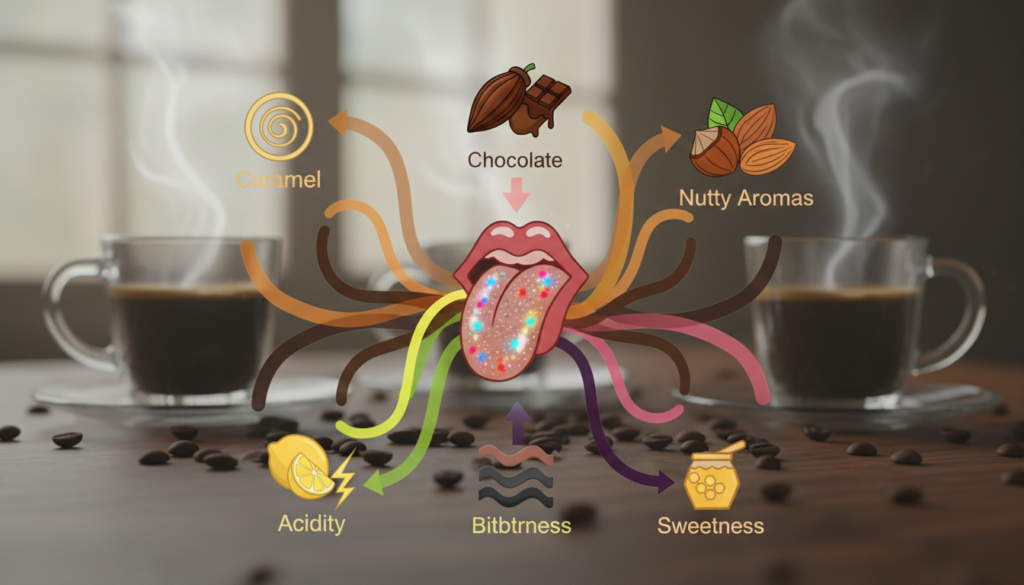
The brain combines separate inputs into the single impression you call flavor. Fragrance is the dry grounds smell. Aroma is the brewed scent you get from the cup. Taste is what the tongue registers: sweetness, saltiness, sourness, and bitterness.
Many familiar flavors and notes come mainly from volatile aromas rather than the taste buds alone. That is why fruity or floral descriptors often vanish while basic tastes remain.
Orthonasal vs. retronasal
Orthonasal is the sniff in front of the nose. Retronasal is the aroma you perceive when air moves behind the tongue while swallowing.
Early sips give strong retronasal impact. Later cups can feel flatter as olfactory pathways adapt, so aroma-driven notes fade faster than bitterness.
Gustation and taction
Humans are most sensitive to bitterness, so when nuanced aromas drop, bitterness often dominates. That makes the cup taste harsher after many sips.
Taction — temperature, body, coating, and aftertaste — also changes how you describe flavors. Cooler temperature or longer aftertaste can make a brew seem heavier or thinner.
- Practical tip: If fruit notes disappear but bitterness persists, prioritize short air breaks or cooling rather than blaming the beans.
Coffee Sensory Fatigue: The Most Common Reasons Your Later Cups Taste Worse
Repeated pours tend to flatten bright notes and let bitterness take center stage. When you drink cup after cup, adaptation and palate wear reduce the perceived nuance of the brew.
Too much caffeine and repeated cups
Drinking many cups in succession lowers tongue sensitivity. Caffeine compounds this effect, so later sips often taste harsher and less sweet even if the brew is identical.
Time of day and overall tiredness
Early-day tasting usually feels clearer. By the end of the day, senses are taxed and tasting becomes less reliable.
Diet and context
A full stomach, heavy sugar, or salty meals reduce contrast. Lighter food before tasting keeps tastes more defined and easier to parse.
Environmental overload
Perfume, candles, or kitchen smells in the air mask aroma-driven notes. Ventilate or move to a neutral space to prevent misreading the cup.
Health and nasal factors
Congestion and a dry nose blunt retronasal aroma. Steam or a clear sinus helps restore aroma perception and balances what you taste.
Quick self-check
- How many cups have you had today?
- What time is it and how tired are you?
- Did you just eat or are there strong smells nearby?
- Is your nose clear?
“Identify the likely driver—pacing, time of day, diet, overload, or nasal issues—then use targeted resets.”
How to Reset Your Palate and Nose Between Cups (What Works and What Doesn’t)
A short pause and a breath of fresh air often restore clarity far better than sniffing another item. Use simple, repeatable actions between pours to reduce olfactory adaptation and keep flavors consistent.
Skip the coffee-bean “reset” myth
Do not rely on coffee beans as a reset. Research shows beans, lemon, or stepping outside give similar relief. Sniffing beans can mask notes because odor molecules occupy receptors instead of restoring them.
Practical resets that work
- Clean air and time: Step outside or ventilate the room for 60–120 seconds before the next cup.
- Neutral baseline: Smell unscented skin (inside elbow) to re-center perception without adding new aromas.
- Hydration and water: Sip clean water. Moist nasal passages and sipping room-temperature water help aromas return.
- Temperature and pacing: Drink slower and let the cup cool slightly to reduce overload and improve clarity.
“Short breaks with fresh air beat ritual props for restoring perception.”
Do this, not that: do reduce competing smells and give your system a break. Do not add strong fragrances or chase resets with more intense stimuli. These steps improve your chance of perceiving consistent flavors across cups instead of chasing a moving target.
A Better Approach for Specialty Coffee Tasting and Cupping When You’re Getting Tired
A reliable result comes from a controlled design, not heroic palate stamina. When sessions run long, build a protocol that makes differences traceable to the samples instead of the process.
Designing out common errors
Lock preparation variables: fix water composition, set water temperature, standardize grind size, and use a consistent roast level. These steps ensure perceived differences reflect the coffees, not the parameters.
Managing human factors
Expectation, excitement, and bad days change what you report. Even expert cuppers get tired. Build breaks, limit samples per flight, and rotate tasks so the team stays calibrated.
Improve reliability with repetition and group tasting
Taste the same sample more than once and compare notes across people and weeks. Group agreement adds statistical strength and reduces individual bias in sensory analysis.
“Work like a lab: control variables, plan pauses, repeat tests, and let the system reveal true notes.”
Conclusion
After a few rounds, what once tasted bright may seem flat as receptors reset to less sensitive levels.
The basic explanation is simple: repeated tasting lowers aroma and tongue sensitivity, so bitterness and aftertaste can dominate what you call taste even when the brew is unchanged.
Remember that flavor is the sum of smell, taste, and mouthfeel. Loss of aroma alone can erase subtle notes and make later cups seem worse.
Use a quick reset: step into fresh air, wait 60–120 seconds, sip plain water, and return to the cup slowly at a cooler temperature.
Don’t rely on sniffing beans — it often masks real aromas. For reliable cupping, control brew variables, limit back-to-back cups, and use repetition or group tasting to reduce bias.
Following these simple steps will help your tasting stay consistent and let the true qualities of the coffee come through.
FAQ
Why does my cup taste worse after a few servings?
What causes the shift in flavor when a brew starts to taste “off”?
How do smell, taste buds, and mouthfeel combine to create what I perceive?
What’s the difference between fragrance, aroma, taste, and flavor in a cup?
Why do later cups often feel flatter even if the brew hasn’t changed?
Why does bitterness seem stronger as I drink more?
Can too much caffeine affect how subsequent servings taste?
How does time of day change my tasting ability?
Can my diet or recent food choices impact perception?
Do ambient smells like perfume or cooking affect what I taste?
How do congestion or nasal dryness change what I perceive?
Will sniffing a fresh bean or ground dose restore my sense between cups?
What short breaks or practices help reset my nose and palate?
Does drinking water help when flavors feel muted?
How should I adjust temperature and pacing to avoid overload?
What preparation variables matter most for consistent tasting?
Can group tastings improve reliability when people get tired?
How do experts handle sensory decline during formal cupping?
Cold Brew with Single Origin Beans: Bright vs Chocolatey Results by Region
» Discover special tips and stories about coffee