Coffee Aftertaste Explained: What Lingers and Why
Discover the secrets behind coffee aftertaste. Learn what causes it and how to manage it effectively in our comprehensive guide.
What lingers in your mouth after you swallow is the finish of the drink: the blend of retronasal aroma and lingering notes that follow a sip. A clear, layered finish can signal a quality cup, while harsh or metallic notes often point to issues you can fix.
This guide is a practical how-to to help you tell if the lingering taste is balanced or distracting. We preview the main drivers—beans, roast, brew method, water and cleanliness—so you know where to look when diagnosing a problem.
Remember: not all lingering is bad. A clean, pleasant finish can be a hallmark of flavor depth. The same beans can finish differently with changes in temperature, grind, or brew ratio, so use a consistent method when you test.
Key Takeaways
- After a sip, what stays in your mouth helps judge cup quality.
- Good lingering notes are clean, layered, and not overly bitter.
- Beans, roast, brewing variables, and cleanliness drive the finish.
- Keep brewing method consistent when troubleshooting flavor.
- Later sections offer fixes to reduce harsh lingering without losing nuance.
What Coffee Aftertaste Is and How to Taste It on Purpose
To taste what really lingers, learn to separate the sip on your tongue from the notes that stay after you swallow. The finish is the blend of retronasal aroma and lingering sensations you notice as you breathe out.
Aftertaste vs. immediate flavor
Immediate flavor hits the tongue: body, acidity, sweetness, and initial bitterness. The finish is what follows—aroma carried retronasally and the lasting mouthfeel.
Five stacking characteristics
The common characteristics are acidity, aroma, bitterness, body, and finish. Together they can read as chocolatey, nutty, dry, or clean depending on balance.
What Would You Like to Learn Next?
Choose an option below:
A simple tasting method
Take a small sip and let it coat your mouth. Swallow, then breathe slowly through the nose to pick up lingering aroma and notes.
What pleasant lingering signals
Pleasingly lingering feels clean, slightly sweet, gently bitter, and aromatic. By contrast, a dry or metallic finish usually points to roast, grind, or extraction issues.
Quick tips
- Define acidity as liveliness or crispness, not low pH.
- Pause between sips so sweetness can build or bitterness can fade.
- Note that aroma is strongest early; tasting on purpose helps separate aroma loss from extraction faults.
coffee aftertaste: The Most Common Lingering Flavors and What They Mean
What stays on the tongue after a sip reveals the real balance of the brew. Small changes in roast, grind, or brew time can shift pleasant cocoa or nutty notes into sharp, drying bitterness.
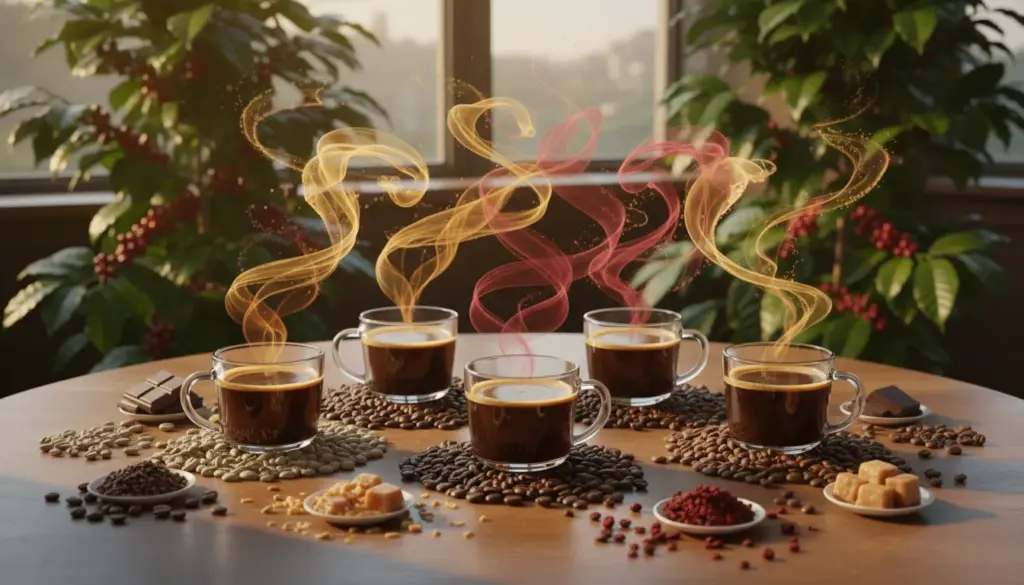
Common lingering profiles and likely causes
- Chocolatey / nutty: Often signals balanced bitterness and good extraction.
- Smoky or ashy: Can point to very dark roast or scorching during roasting.
- Dry / papery: May indicate over-extraction or stale beans.
- Clean / sweet: Typical of specialty beans brewed correctly.
- Astringent or metallic: Usually a sign of brewing errors or equipment residue.
Balanced bitterness vs. intrusive bitterness
Balanced bitterness reads like dark chocolate or toasted nuts. It sits under sweetness and aroma, rounding the cup without dominating it.
Harsh or intrusive bitterness dries the mouth and overwhelms flavors. This finish often points to over-extraction, too-fine grind, or an overly dark roast.
Aroma, body, and how they change over time
Aroma is strongest at the first pour and fades as you sip. When smell drops, perceived bitterness can seem louder even if extraction stayed steady.
Body affects linger: a thin cup leaves a short, sharp finish, while a syrupy cup carries sweetness and aromatic compounds longer in the mouth.
| Lingering Note | Common Cause | Sensory Cue |
|---|---|---|
| Chocolate / Nutty | Balanced roast, correct extraction | Coating cocoa, pleasant warmth on tongue |
| Smoky / Ashy | Very dark roast or scorched beans | Bitter burnt edge, lingering charcoal |
| Dry / Papery | Over-extraction or stale beans | Thin mouthfeel, dryness at the edges |
| Clean / Sweet | High-quality beans, correct brew | Long sweet finish, floral or fruit notes |
Bean Quality, Coffee Beans, and Roast Level: How They Shape the Finish
Bean origin and roast level set the limits for how clean or harsh a cup can finish. Start with better lots and you give the brew room to show nuance. Lower-grade lots or defects tend to produce blunt bitterness and dull, short lingering notes.
Arabica vs. Robusta: practical differences
Arabica usually delivers clearer aromatics and more sweetness. Choose 100% Arabica or Arabica-forward blends for a cleaner finish aimed at clarity and floral or fruity notes.
Robusta brings higher caffeine and firmer body, which can push bitterness. That can be useful in some espresso blends for crema and punch, but it often reduces perceived sweetness.
How roast level alters lingering flavor
Light to medium roast preserves aromatics and a brighter, cleaner finish. Very dark roast shifts flavors toward smoked, toasted, and bitter notes.
Roasting chemistry matters: sugars caramelize and then, if pushed too far, turn into burnt compounds. That shift is why darker profiles can mean more lingering bitterness.
Not all dark roasts are bad. Controlled dark roasting can remain balanced, but the margin for harshness is smaller.
Specialty-grade outcome and shopping tips
Specialty-grade beans tend to produce a cleaner cup with distinct lingering notes. In practical terms, this means clearer aromatics and a long, pleasant finish.
- Look for roast date, roast level, and tasting notes on the bag.
- Pick Arabica-forward options for sweetness and clarity.
- Consider small Robusta percentages only if you want a bolder, bitter edge for espresso.
| Factor | Effect on Finish | What to Look For |
|---|---|---|
| Bean quality | Sets ceiling for cleanliness and nuance | Fresh lots, single-origin or traceable sources |
| Blend type | Robusta adds body and bitterness; Arabica adds sweetness | Blend ratio, intended espresso vs. filter use |
| Roast level | Light: bright/clean. Dark: smoky/bitter risk | Roast date and level, roast shop notes |
Brewing and Extraction Mistakes That Create a Bitter Aftertaste
Many bitter cups trace back to a few simple brewing mistakes you can fix at home. This section lists the usual suspects and how they change what ends up in the cup.
Over-extraction explained
Over-extraction happens when you pull too much from the grounds so late-stage compounds dominate. That shift often shows as a dry, lingering bitterness in the finish.
Grind size problems
Too-fine grounds boost surface area and slow flow. Water spends more time with the particles and can “overwork” the dose, intensifying bitter notes.
Brew time issues by method
French press: long steeping pushes extraction past the sweet spot.
Pour-over: a slow drawdown can over-extract; speed up slightly if the cup is harsh.
Espresso: long shot timing pulls bitter, astringent compounds and makes the espresso taste harsh.
Water temperature
Target 195–205°F for a balanced result. Hotter water (above ~201°F) increases bitterness, especially with robust blends or dark roasts.
Coffee-to-water ratio
Using too much water per dose keeps extracting after the balanced flavors are gone. A stripped, bitter finish can be the result.
“If the finish is dry and muted, suspect over-extraction; if it tastes sharp and sour, look to under-extraction.”
Quick diagnostic way: change only one variable at a time, re-brew, and compare the finish. The next section shows practical fixes that preserve flavor while reducing harshness.
How to Manage Coffee Aftertaste at Home Without Losing Flavor
Small, deliberate tweaks at home can turn a harsh finish into something sweet and clean. Start by tasting the finish and note whether it’s bitter, thin, or muted. Then change only one variable and re-taste.
Make one change at a time
Adjusting a single element prevents swapping bitterness for sourness. Make small steps and repeat until you hit the sweet spot.
Grind coarser to reduce extraction intensity
Coarser grounds lower extraction and often smooth harsh lingering notes. This is the most common first fix for pour-over and French press.
Shorten contact time
Reduce steep or drawdown time to avoid late-stage bitter compounds. For press methods, lift the plunger earlier. For pour-over, speed the drawdown slightly. For espresso, trim shot time carefully.
Cool water briefly
Let boiled water stand 1–2 minutes so temperature falls into the balanced brewing range. Slightly cooler water protects delicate aroma and sweetness.
Dial in water amount and clean gear
Use a consistent ratio so the cup stays sweet and full rather than thin. Clean equipment often: old oils, residue, and limescale dull aroma and add dull bitterness.
If you want more bitterness
Choose darker roast or a stronger espresso profile intentionally. Keep extraction controlled so bitterness reads as chocolatey rather than burnt.
| Action | Effect | When to use |
|---|---|---|
| Grind coarser | Reduces extraction intensity and harsh lingering notes | When finish is dry or overpowering |
| Shorten contact time | Prevents late bitter compounds from dominating | Long steeps or slow drawdowns |
| Cool water 1–2 min | Protects aroma and supports sweetness | When brew tastes overly hot and sharp |
| Clean equipment | Restores clear aroma and reduces stale bitterness | Regular maintenance, monthly deep clean |
Conclusion
A cup’s lingering notes act like a report card for beans and brewing. , The finish is part aroma, part body, and part sweetness or bitter edge. It shapes the overall drinking experience and helps you judge quality quickly.
Use a simple tasting habit: sip, swallow, then breathe through your nose to identify the lasting notes. That practice guides useful tweaks instead of guessing.
Fixes in order: grind a touch coarser, shorten brew time, let water cool a minute, confirm ratio, and keep gear clean. Make small, controlled changes.
Treat each bag of beans as new. When you can describe the finish, you can pick beans and methods that match your taste—whether you want a bright, clean cup or a richer, chocolate-leaning experience.
FAQ
What does the term "aftertaste" mean and how is it different from flavor?
How can I taste the finish on purpose?
What does a "pleasantly lingering" finish signal about bean quality?
What are the most common lingering flavors and their meanings?
When does bitterness feel balanced versus intrusive?
How does aroma change from the first pour to the last sip and affect the finish?
How does mouthfeel influence what lingers?
Do Arabica and Robusta affect the finish differently?
How does roast level shape the aftertaste?
Why do specialty-grade beans often produce a cleaner finish?
What brewing mistakes create a bitter finish?
How does grind size influence bitterness?
How should I manage brew time across different methods to avoid bitterness?
What is the ideal water temperature for balanced extraction?
How does the coffee-to-water ratio affect the finish?
How can I manage lingering bitterness at home without losing flavor?
When might I actually want bitterness in the cup?
How often should I clean my brewer to prevent dull or bitter finishes?
Cold Brew with Single Origin Beans: Bright vs Chocolatey Results by Region
» Discover special tips and stories about coffee