Paper vs Metal Coffee Filters: How They Change Taste
Explore the impact of paper and metal coffee filters on your coffee's taste. Learn more from our in-depth coffee filters comparison.
This short guide helps home brewers in the United States make a practical paper vs metal decision that shapes taste and cup texture.
A filter is more than a barrier for grounds; it controls how much oil, sediment, and fine particles reach the mug. That mix alters clarity, mouthfeel, and perceived quality.
Paper options tend to trap oils and yield a cleaner, brighter profile. Metal options let oils and tiny solids through for a fuller-bodied feel and richer texture.
This section previews trade-offs, brand examples like V60 and Chemex papers, and real-world drawbacks such as cleanup effort and oxidation risk. We also touch on filter size, flow rate, and simple technique tweaks that make the same beans taste noticeably different.
Key Takeaways
- Paper filters usually produce a clearer cup with fewer oils and less sediment.
- Metal filters create a fuller mouthfeel and more pronounced body.
- Choice depends on preference: clarity vs richness, not absolute quality.
- Match filter material, shape, and brew method for best results.
- Small changes in grind, flow, and steep time alter taste across filter types.
Why coffee filters change taste, body, and cup quality
A filter governs which dissolved compounds and solids end up in your cup, and that selection shapes taste and texture.
When hot water is poured over coffee grounds, the barrier stops gritty solids while letting brewed liquid pass. That separation decides what compounds reach the mug.
What Would You Like to Learn Next?
Choose an option below:
How filters separate grounds from brewed liquid
The material and pore size trap grounds and larger particles. Some tiny particles and oils can slip through depending on the barrier’s weave or thickness.
What gets trapped and what passes
Oils add aroma and a heavier body. Sediment and fine particles give texture, haze, and sometimes bitterness.
Flow rate, steep time, and extraction
Faster drainage cuts contact time and can cause under-extraction. Slower drainage raises steep time and can push flavors toward bitterness if other variables stay the same.
| Filter trait | Effect on drainage | Flavor outcome |
|---|---|---|
| Thick, dense paper | Slower flow | Cleaner cup, fewer oils |
| Thin paper or fine mesh | Faster flow | Brighter but risk of under-extraction |
| Open metal mesh | Fastest flow with fines transfer | Fuller body, more texture |
Paper filter coffee: the clean, bright profile
When you brew with paper, the result often highlights clarity and a lighter body. In the U.S., “paper filter” brewing usually means fewer oils and almost no sediment, which favors floral or bright single-origin beans.
Bleached vs unbleached and the idea of paper taste
Bleached papers (often oxygen-bleached) tend to give a neutral cup. Unbleached paper can hold natural fibers that may show as a woody or papery note unless rinsed first.
Thickness, pore density, and what passes
Thicker, denser paper traps more oils and fines. That thickness reduces bitterness and cloudiness but also lowers body.
Popular pour-over papers and tasting notes
Examples match the science: Hario V60 papers are fine and dense; Chemex paper is about 20–30% thicker with very fine pores; Melitta-style bags used thicker unbleached stock and showed a stronger paper taste in soak tests.
Why results vary and next steps
Variations in processing, fiber, and porosity explain why some drinkers note woody sweetness, a sour hint, or near-neutral results. The core advantage: paper gives high clarity and a sediment-free finish many prefer for light roasts. Next, we examine metal options and how they change body and texture.
Metal filters: fuller body, more oils, and more texture
Using a reusable mesh changes the brew by allowing more natural oils and micro-particles into the final cup. That shift alters aroma intensity and gives a heavier mouthfeel compared with paper.
Stainless steel and mesh design: what gets through
Stainless steel mesh or gold-tone screens use fine perforations rather than dense paper. Mesh size and weave decide how many tiny particles and oils pass through. A coarser weave brings more texture; a finer mesh keeps some fines back while still passing oils.
Sediment and cloudiness vs richness
Brews from metal tend to look darker and may show light sediment. Many drinkers note a richer body and fuller aroma because more soluble oils reach the mug.
Practical drawbacks
The main trade-offs are cleanup and maintenance. Trapped grounds and oils must be removed to avoid stale notes, and lower-quality builds can produce a faint metallic taste. Still, reusable metal options appeal to those cutting waste and long-term disposable costs.
Ultimately, choosing between clarity and richness depends on what you value in a given cup.
Paper vs metal coffee filters: taste differences you can actually notice
Small changes in filtration can flip a brew from razor‑sharp to plush and syrupy.
Cleanliness and clarity vs intensity and aroma
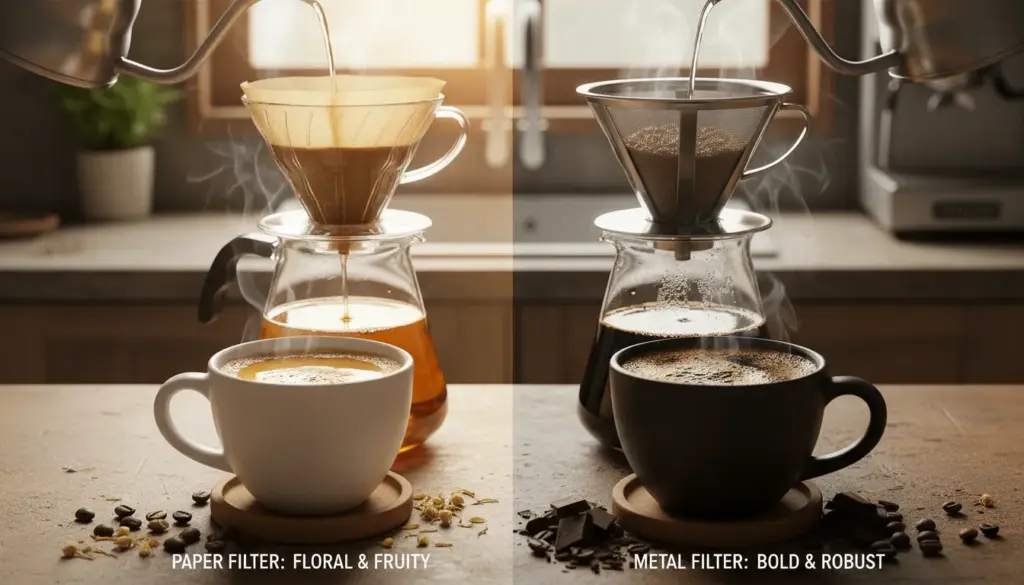
Paper tends to trap oils and fines, so the cup is clearer and cleaner. That gives bright fruit and floral notes more room to pop.
Metal lets more oils and micro‑solids through. Expect fuller body, stronger aroma, and a richer mouthfeel that carries more intensity.
Bitterness, acidity, and aftertaste
Trapping fines and oils often smooths harsh aftertaste and tames bitterness. Letting those elements into the cup can amplify perceived acidity and make bitter notes linger longer.
Light roasts vs dark roasts
Light beans usually benefit from paper’s clarity; their brightness reads cleaner. Dark roasts often feel more classic and rounded with metal, though they can also come across heavier or a bit sharper depending on method.
What happens as the cup sits
More oils in the mug speed flavor change as the brew cools. Metal‑brewed cups may taste “stale” sooner than paper‑filtered ones because oxidation alters aroma and balance.
| Trait | Paper filter | Metal filter |
|---|---|---|
| Clarity | High — clean, clear cup | Lower — more haze, some sediment |
| Body & aroma | Light to medium | Fuller, richer, pronounced aroma |
| Bitterness & aftertaste | Less harsh, shorter finish | Can be stronger and longer |
| Suitability by roast | Best for light, bright beans | Best for dark, full‑bodied brews |
Decision cue: choose “clean and articulate” for clarity, or “rounded and textured” for richness in your cup coffee.
coffee filters comparison: how to choose based on your taste goals
Your choice of filter steers the cup toward either clarity or texture, so pick with the flavor you want in mind.
Choose paper filters if you want a lighter, smoother, sediment-free cup
Paper filters suit drinkers who prefer a clean, bright profile and very little grit. They reduce oils and give delicate floral and fruity notes room to shine.
They are disposable and cut cleanup time, but create ongoing cost and waste. Rinsing papers before use helps remove any faint papery notes.
Choose metal filters if you want a richer brew with more body and natural oils
Metal filters let oils and micro‑solids pass, producing a fuller mouthfeel and stronger aroma. Expect some sediment and a more textured cup.
They cost more up front but lower recurring spend. Cleaning matters: old oils change taste quickly.
Consider maintenance, cost over time, and waste reduction
Third option: cloth filters fall between paper and metal. They can deliver body with less sediment but need careful washing and drying to avoid off‑flavors or mold.
“Neglecting a reusable filter can bake old oils into each brew and mask bean quality.”
- Goal = clarity: pick paper for light, high‑acid beans and short cleanup.
- Goal = body: pick metal for intensity and a fuller profile.
- Goal = balance: consider cloth but plan routine care.
| Goal | Recommended filter | Trade-offs |
|---|---|---|
| Bright, clean cups | Paper filters | Less body; recurring cost and waste |
| Full-bodied, rich aroma | Metal filters | Some sediment; higher upfront cost; more cleaning |
| Balanced body with low grit | Cloth filters | Good mouthfeel; requires thorough washing/drying |
Filter shape and size considerations that affect extraction
Filter geometry decides where water concentrates, how deep the bed becomes, and how extraction unfolds. Shape and size change contact and flow before material matters.
Cone versus flat‑bottom: bed depth, contact, and flow
Cone designs concentrate grounds into a deeper bed. That slows flow and increases contact, which often yields a more concentrated cup with pronounced intensity.
Flat‑bottom designs spread grounds over a wider surface. That creates steadier flow and more even extraction. Many home drip machines use this for consistency.
What common sizes mean for home brewers
In the U.S., cone sizes are usually labeled #2 and #4. Flat‑bottom baskets often use #6 and #8. Match numbers to brewer capacity to avoid overflow or collapse.
Remember: filters come in shapes that may not seat correctly across brands. Some filters made for one brewer will bypass or gap in another, causing uneven extraction. Choose the right size for your batch volume and pour method.
| Shape | Typical sizes | Effect on brew |
|---|---|---|
| Cone | #2, #4 | Deeper bed, slower flow, concentrated cup |
| Flat-bottom | #6, #8 | Wider bed, steadier flow, even extraction |
| Practical tip | Match size to brewer | Prevents overflow, maintains consistent flavor |
Brewing adjustments to get better taste from either filter material
Simple ritual tweaks—like rinse, grind, and pour—shift how much oil and fine particles land in the mug.
Pre-wet paper to cut papery notes and seat the paper
Rinse a paper filter with hot water before brewing. This removes loose fibers and a faint papery taste.
Rinsing also warms the brewer and helps the paper seat properly. That lowers the risk of collapse or uneven flow.
Grind size and pouring to control drain and time
Use a coarser grind for fast-draining screens, and a finer grind for slow, thick paper. Adjust until brew time matches your goal.
Pour in stages by hand to control extraction. A steady, circular pour evens saturation and reduces channeling.
Dose and temperature: balance oils, particles, and flavor
Higher dose or hotter water increases extraction and draws more oils and particles into the cup. That boosts body but can raise bitterness.
Lower dose or slightly cooler water mutes sharp edges and gives a softer finish. Change one variable at a time to find balance.
Keep metal screens clean to avoid stale carryover
Rinse a reusable metal screen after each use. Periodically deep clean with a mild detergent or baking soda to remove old oils.
“Neglecting a reusable screen bakes old oils into each brew and masks bean quality.”
Quick checklist:
- Pre-wet paper with hot water.
- Match grind to drain speed and desired time.
- Adjust dose and water temperature cautiously.
- Clean metal screens regularly to prevent flavor carryover.
Conclusion
.
Your filter choice reshapes how aromas, oils, and tiny solids show up in each mug.
Paper typically yields a clean, bright cup by trapping oils and sediment. Metal brings more body and oil-driven intensity but can add haze and faster oxidation.
Cloth sits between those options but needs careful washing and drying to stay neutral and safe.
Taste and bean roast matter most: light beans often sing with paper; darker beans can thrive with metal. Treat the filter as a brewing variable alongside grind and dose.
Try a simple experiment: brew one batch with paper and the same recipe with metal. Compare the result and choose by what you prefer in the cup.
FAQ
How do paper and metal filters change taste, body, and cup quality?
How do filters separate grounds from the brewed drink?
What gets trapped and what passes through — oils, sediments, and fine particles?
How do flow rate and steep time influence extraction and clarity?
Do bleached and unbleached paper filters affect taste differently?
How do thickness and pore density change bitterness and oil retention?
What differences do popular pour‑over papers produce (V60, Chemex, Melitta)?
Why can some papers taste woody, sour, or neutral?
What do stainless steel and mesh designs let into the cup?
How does sediment and cloudiness relate to richness and mouthfeel?
What are common drawbacks of metal options?
How do filtration differences affect bitterness, acidity, and aftertaste?
Which filter is better for light roasts versus dark roasts?
What happens as brewed drink sits when more oils pass through?
How should I choose based on my taste goals?
How do cone and flat‑bottom shapes affect extraction?
What do filter size numbers mean for home brewers?
Will pre‑wetting paper reduce paper taste and help seating?
How do grind size and pouring method affect drainage and brew time?
How do coffee dose and water temperature impact oils, particles, and balance?
How should I clean metal filters to prevent stale oils and flavor carryover?
Cold Brew with Single Origin Beans: Bright vs Chocolatey Results by Region
» Discover special tips and stories about coffee