How Water Chemistry Changes the Taste of Coffee
Improve your coffee brewing skills by understanding the role of water for coffee brewing. Follow our guide for a better-tasting cup of coffee.
Liquid chemistry is often the unseen lever that shifts a cup from flat or harsh to clear and balanced. By volume, plain liquid makes up roughly 98.5% of a brewed cup and about 90% of an espresso shot, so small composition changes can alter extraction, balance, and aftertaste.
This guide treats the issue as measurable, not mystical. You will learn which parameters matter—TDS, hardness, alkalinity, and disinfectants—and how to measure, interpret, and adjust them at home. That practical approach helps you chase steadier results without swapping beans or tools.
Different methods shift priorities: filter pours aim for flavor clarity, while espresso stresses scale control and consistency. Many faults people blame on bad beans—sour, dull, overly bitter—often trace back to the cup’s chemistry and can be fixed without changing the roast.
Key Takeaways
- The liquid is the main ingredient by volume; small changes cause big taste swings.
- Control TDS, hardness, alkalinity, and disinfectants to improve consistency.
- Measure → interpret → adjust is the practical workflow to follow.
- Filter and espresso have different priorities: clarity versus scale control.
- Many common cup flaws are solvable through chemistry, not new beans.
Why Water Chemistry Matters for Coffee Flavor and Extraction
What dissolves into the cup depends less on the beans and more on the solvent they meet. Extraction is simply how the liquid pulls soluble compounds out of grounds and carries them into your cup.
The solvent’s mineral makeup changes which compounds dissolve quickly and which take longer. Moderate calcium and magnesium tend to add body and structure. Too little mineral content can leave a sour, under-extracted taste. Too much can make the sip harsh or flat.
How minerals shape taste
Think of minerals as helpers that lock onto acids and oils. That shifts perceived acidity and sweetness. Chlorine or chloramine can add off-notes that mask subtle coffee flavor.
What Would You Like to Learn Next?
Choose an option below:
Why the same beans taste different
Cafés often treat their supply—carbon filters, RO blends, or mineral recipes—to keep chemistry steady across seasons. At home, tap sources, pipes, and municipal treatment can change results even with the same roast.
- Mental model: solvent chemistry → extraction (what gets pulled) → perception (how acidity and sweetness appear).
- Next you’ll learn the core numbers: ppm/TDS, hardness, alkalinity (KH), and disinfectant levels and how each maps to taste.
The Core Water Metrics That Change Taste in the Cup
A few ppm of dissolved minerals can push a cup from bright and clean to dull and heavy.
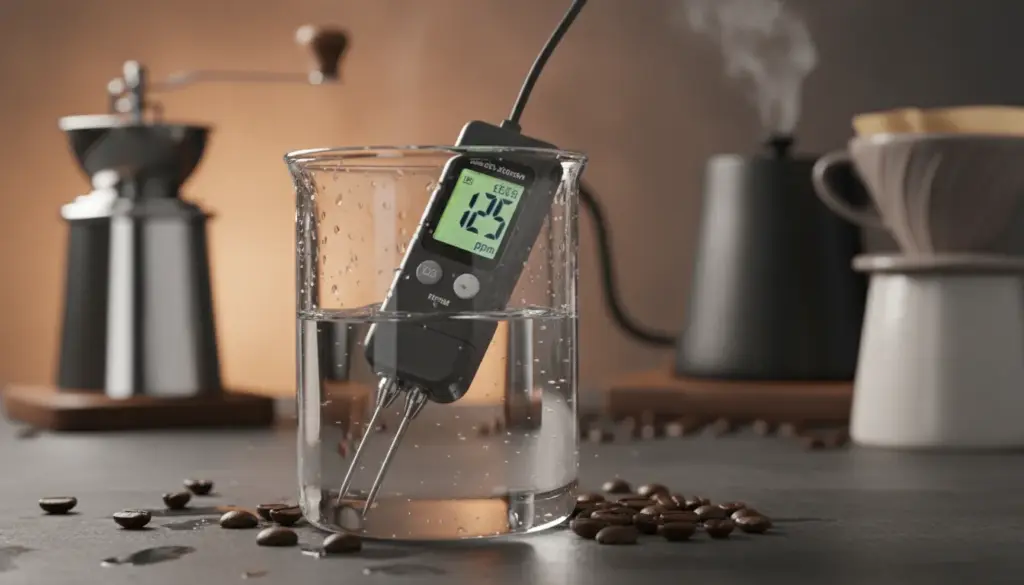
Total dissolved solids and ppm: practical meaning
A handheld meter reads tds in ppm and gives a big-picture value for total dissolved solids. It does not identify which minerals are present. Use that number as a starting baseline.
Hardness versus alkalinity
Hardness is mainly calcium and magnesium. Moderate levels add body and extraction stability. Very hard water pulls more bitterness and risks scale.
Alkalinity (bicarbonate) buffers acidity. Low alkalinity makes the cup taste sharper. High alkalinity mutes bright notes and flattens acidity.
Chlorine and chloramine
Trace chlorine or chloramine in tap water can create chemical or bitter notes. Activated carbon removes these disinfectants and restores clean flavor.
| Metric | What it measures | Effect on cup | Action |
|---|---|---|---|
| TDS (ppm) | Total dissolved solids | Baseline clarity; too low = thin, too high = muddled | Measure with meter |
| Hardness (GH) | Calcium & magnesium | Adds body; excess = bitterness & scale | Blend or soften |
| Alkalinity (KH) | Bicarbonate buffer | Controls perceived acidity | Adjust to balance brightness |
| Disinfectants | Chlorine/chloramine | Off-notes, chemical tastes | Use carbon filtration |
Quick checklist: check alkalinity (as CaCO₃), hardness, and disinfectant method on your municipal report. In short: use tds to start, manage hardness to control body and scale, dial alkalinity to shape acidity, and remove chlorine for a clean cup.
Target Ranges to Aim for When Brewing Coffee at Home
Numeric targets help translate tasting notes into actionable changes at home. Use simple ranges to guide adjustments without overcomplicating testing.
Start with tds around 150 ppm as a practical baseline. Aim near around 150 when you want a balanced cup that extracts steadily. Below ~75 ppm often tastes thin; above ~250 ppm can push muddled or heavy notes.
Dialing in alkalinity and why it matters
Set alkalinity to about 30–40 ppm (as CaCO₃) to keep brightness while smoothing sharp edges. This buffer shapes perceived acidity more than pH does.
Hardness-to-alkalinity balance
A practical target is a roughly 2:1 hardness-to-alkalinity ratio. That balance helps avoid sourness or a flat taste. Too much hardness can taste bitter and cause scale. Too little hardness can feel weak.
- Sour/sharp: slightly raise alkalinity.
- Flat: lower alkalinity or reduce bicarbonate.
- Harsh/mineral: reduce hardness or lower total tds and remove disinfectants.
These ranges are starting points. Adjust by roast level and brew method to match your taste goals. The easiest next step is choosing the right source and small blends to hit these targets consistently.
Choosing the Best Water for Coffee Brewing: Tap, Filtered, RO, Distilled, and Bottled
Your home’s supply or bottle choice often determines whether a cup tastes bright, flat, or muddled.
Tap: when it works and when it doesn’t
Tap water can be fine when municipal reports show moderate alkalinity, low hardness, and little chlorine. Check your city’s Consumer Confidence Report to spot high bicarbonate or chloramine.
If you notice odor, clear chemical notes, or heavy scale, the tap option may be the problem. In those cases, pickup an alternative.
Filtered: the practical default
Activated carbon filters (Brita-style pitchers and fridge filters) remove chlorine while keeping useful minerals. That keeps extraction balanced and tastes cleaner without extra steps.
Reverse osmosis and distilled
Reverse osmosis and distilled water are very pure. That purity often yields an empty, under-extracted cup unless you remineralize or blend with a tap bypass.
Many RO systems include a remineralization stage or a bypass to restore minerals and consistency.
Bottled and alkaline options
Choose a spring brand with moderate mineral content over purified labels that list osmosis alone. Some bottled choices are too mineral-heavy and taste harsh.
Alkaline water (higher pH and buffering) can mute delicate acidity in light roasts. That can be useful if you prefer a softer profile, but it reduces clarity.
Next step: once you pick a source, measure TDS and adjust by blending or remineralizing to lock in repeatable results.
How to Dial In Your Water Step by Step for Better-Tasting Coffee
A quick measurement turns an opinion into data — and data beats guessing when chasing consistency.
Measure first: use a tds meter at room temperature and record several samples. Consistent sampling prevents wild swings in your routine. Small changes in readings suggest small tweaks; large shifts mean source or pipe issues.
Use RO as a blank canvas
Mix reverse osmosis with a carbon-filtered tap source to restore minerals predictably. Aim for ~30–40 ppm alkalinity. Example: if tap alkalinity is 100 ppm and RO is 0 ppm, a 30% tap / 70% RO mix yields about 30 ppm.
Remineralize with control
Choose pre-measured packets (Third Wave Water), drops (Lotus), or simple DIY recipes. For espresso, RPavlis-style concentrates using potassium bicarbonate give reliable buffering. Avoid lone Epsom salt recipes: magnesium sulfate can spike sulfate and create a harsh, chemical taste.
A repeatable home process
- Measure baseline.
- Set a taste goal (bright vs. smooth).
- Adjust in small steps and log results.
Decision guide: simplest → filtered tap; consistency → RO + bypass; maximum control → RO/distilled plus a reputable mineral system. Use only potable, food-safe minerals in DIY blends.
Method-Specific Tips: Drip Coffee Makers vs. Espresso Machines
Choosing the right supply often means weighing flavor goals against repair bills. Drip machines generally favor moderate minerals to lift mouthfeel and clarity. A little calcium and magnesium help extraction and give a fuller cup.
Drip machine guidance
Use carbon-filtered water if your tap is not extremely hard. That removes chlorine while keeping useful minerals.
If scale appears fast, consider a remineralized RO mix to nail consistent quality without constant repairs.
Espresso priorities
Espresso units heat under pressure and are very scale-sensitive. Reduce hardness and control bicarbonate to limit limescale. RPavlis-style blends and espresso profiles from trusted brands (Third Wave Water) strike a balance between shot quality and low scale risk.
Protecting equipment
Scale is mostly calcium carbonate precipitation. High hardness plus bicarbonate speeds deposits in boilers and thermoblocks.
- Risk check: quick scaling on kettles and showerheads means higher machine risk.
- Even with treated liquid, follow descaling schedules to keep temperature and flow steady.
Conclusion
Improving your cup usually starts by fixing the liquid you use, not by buying new gear.
Start simple: remove chlorine or chloramine to restore clean taste, aim for a moderate mineral level to aid extraction, and manage alkalinity to shape acidity. These three priorities drive the best quality gains.
Use a TDS meter as a quick baseline, but focus on what changes flavor (especially alkalinity) and what causes maintenance issues (hardness plus bicarbonate).
Next action: check your local report, try a filtered sample, then decide on an RO blend or a remineralizing solution. Consistent liquid makes grind, ratio, and time adjustments repeatable.
Once you control supply chemistry, dialing in reliable taste from each coffee becomes much easier during daily brewing.
FAQ
What role does chemistry play in changing the taste of brewed coffee?
How does water act as a solvent to pull flavor from grounds?
Why can the same beans taste different at home than at a café?
What do TDS and ppm mean and how do they affect brewing?
How do calcium and magnesium change extraction and body?
What is alkalinity and why does bicarbonate matter?
Can trace chlorine or chloramine ruin a cup?
Is 150 ppm a good target and when should I deviate?
How should I dial alkalinity toward 30–40 ppm?
What balance between hardness and alkalinity prevents sour or bitter notes?
When is tap supply acceptable and what should I check in reports?
Do typical carbon filters harm flavor by removing helpful minerals?
Why do RO and distilled supplies sometimes under-extract?
Is bottled spring preferable to RO-purified brands?
What about alkaline bottled options with higher pH?
How do I start dialing in my supply step by step?
What are practical remineralizing options at home?
What common pitfalls should I avoid when adjusting minerals?
How should I choose water for drip makers versus espresso machines?
Are there recommended recipes for espresso that minimize scale?
How does mineral content affect machine protection and limescale?
Cold Brew with Single Origin Beans: Bright vs Chocolatey Results by Region
» Discover special tips and stories about coffee