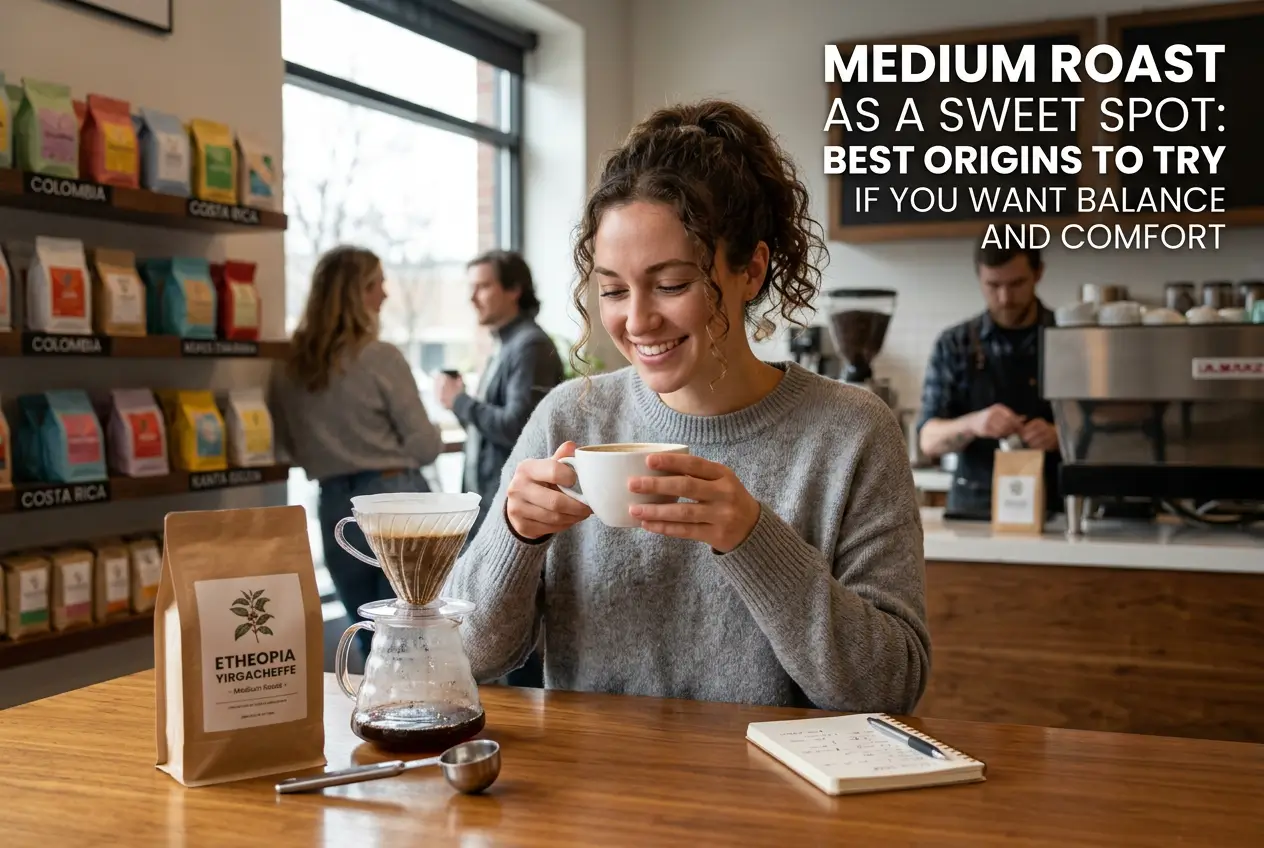
Medium Roast as a Sweet Spot: Best Origins to Try If You Want Balance and Comfort
Searching for the perfect coffee? Many find it in a medium roast, the ideal sweet spot for balance and comfort in every cup.
This roast level unlocks a world of flavor without the sharp acidity of light roasts or the intense bitterness of dark ones.
This guide will show you exactly which origins to try and how to brew them. Get ready to discover your new favorite coffee.
What Exactly Defines a Medium Roast?
A medium roast, often called an “American Roast,” is a true middle ground. The beans are heated to internal temperatures of 410°F to 428°F.
Roasters stop the process right before the “second crack.” This results in a medium brown bean with no oil on the surface.
This careful timing creates a profile that is both complex and incredibly approachable. It highlights the best of both worlds.
What Would You Like to Learn Next?
Choose an option below:
Here’s what makes a medium roast stand out:
- Balanced Acidity: It has a pleasant brightness that is easy on the palate and stomach. No sharp or sour notes here.
- Enhanced Sweetness: The roasting process caramelizes the natural sugars, bringing out notes of chocolate, caramel, and nuts.
- Moderate Body: The coffee feels substantial in your mouth, but not heavy like some dark roasts can be.
- True to Origin: It preserves the unique flavors of where the bean was grown, letting you taste the region’s character.
- Versatile: This profile is a crowd-pleaser and works wonderfully with almost any brewing method you can think of.
Best Origins for a Balanced, Comforting Cup
Not all beans are created equal for a medium roast. Certain regions produce coffee that truly shines with this balanced approach.
If you want a smooth, sweet, and comforting experience, start with beans from these specific areas.
The key is finding beans with inherent sweetness and a solid flavor foundation.
Look for these origins on the bag:
- Central & South America: This is classic comfort coffee territory. Beans from Colombia, Brazil, and Peru are famous for it.
- Colombia: Expect a smooth, full body with notes of dark chocolate, mango, and even peach. It’s aromatic and consistently delicious.
- Brazil: Often the backbone of espresso blends, Brazilian beans offer deep notes of brown sugar, nuts, and creamy chocolate.
- Costa Rica & Honduras: These origins provide a clean, sweet cup, often with hints of citrus and milk chocolate.
- Africa (Ethiopia): For something more adventurous, an Ethiopian Yirgacheffe medium roast is a must. It keeps its floral and berry notes.
How to Spot Quality Medium Roast Beans
Choosing the right beans is the most important step. A great brew starts long before you add hot water.
Don’t just grab any bag off the shelf. Use these tips to ensure you’re buying high-quality, fresh coffee that will deliver on flavor.
- Check the Roast Date: This is non-negotiable. Look for a “roasted on” date, not a “best by” date. Coffee is best within weeks of roasting.
- Choose Whole Beans: Pre-ground coffee loses its flavor and aroma fast. Grinding just before brewing makes a huge difference.
- Single Origin vs. Blend: For unique flavors, try a single origin. For a consistent and balanced cup, a well-crafted blend is a great choice.
- Trust Your Nose: If you can, smell the beans. They should have a strong, inviting aroma of fruit, flowers, or nuts. A faint smell means old coffee.
- Look for Certifications: If sustainability matters to you, look for labels like Fair Trade or Organic. They often indicate higher quality control.
Your Perfect Brew: A Step-by-Step Guide
Medium roast is forgiving, but a little technique goes a long way. The right method can highlight its best qualities.
Let’s match your brewing style to the perfect grind and timing. Small adjustments create big flavor improvements.
First, always use filtered water heated to 195-205°F. Water that’s too hot will scorch the grounds and create bitterness.
Here are the most popular methods:
| Brew Method | Grind Size | Quick Tip |
|---|---|---|
| Pour-Over (V60) | Medium-Fine | Highlights sweet and fruity notes with clarity. Aim for a 4-6 minute brew time. |
| French Press | Coarse | Creates a rich, full-bodied cup. Let it steep for 4 minutes before plunging. |
| Drip Coffee Maker | Medium | The classic, reliable method. Use a 1:16 coffee-to-water ratio for balance. |
| Cold Brew | Coarse | Results in a super smooth, low-acid drink. Steep for 12-18 hours. |
Start with a coffee-to-water ratio of 1:15 (1 part coffee to 15 parts water) and adjust to your taste. This is your baseline for a great cup.
Common Myths and Consumer Alerts
There’s a lot of misinformation about coffee. Let’s clear up a few things to help you make smarter choices.
Knowing the facts saves you from buying bad coffee and lets you appreciate what’s truly in your cup.
Keep these points in mind:
- Myth: Dark Roast Has More Caffeine. It’s the opposite. Measured by weight, medium roasts can have slightly more caffeine. Roasting burns it off.
- “Strength” is Flavor, Not Caffeine: The “strong” taste of dark roast comes from the intense, roasty flavor, not a bigger kick.
- Beware of Oily Beans: While some dark roasts are oily, if a medium roast bean looks greasy, it might be old or poorly roasted.
- Dark Roasts Can Hide Bad Beans: An extremely dark roast can mask the flavor of low-quality, defective green coffee. Medium roasts can’t hide imperfections.
How to Store Your Coffee Beans Correctly
You’ve bought great beans. Don’t let them go stale! Proper storage is crucial for preserving that fresh, vibrant flavor.
Oxygen, light, heat, and moisture are the enemies of fresh coffee. Your goal is to protect your beans from all four.
Follow these simple rules:
- Use an Airtight Container: Store your beans in a canister that seals tightly. Many coffee bags have a one-way valve, which is also great.
- Keep it in a Dark, Cool Place: A pantry or cabinet is perfect. Avoid storing coffee on the counter where sunlight can hit it.
- Never Freeze or Refrigerate: The fridge is full of moisture and odors. The freezer can damage the cellular structure of the beans.
- Buy Smaller Batches: It’s better to buy a fresh bag of coffee every one or two weeks than to store a giant bag for months.
Now you have the knowledge to explore medium roasts with confidence. Go find a great bag of beans from a recommended origin and taste the difference.
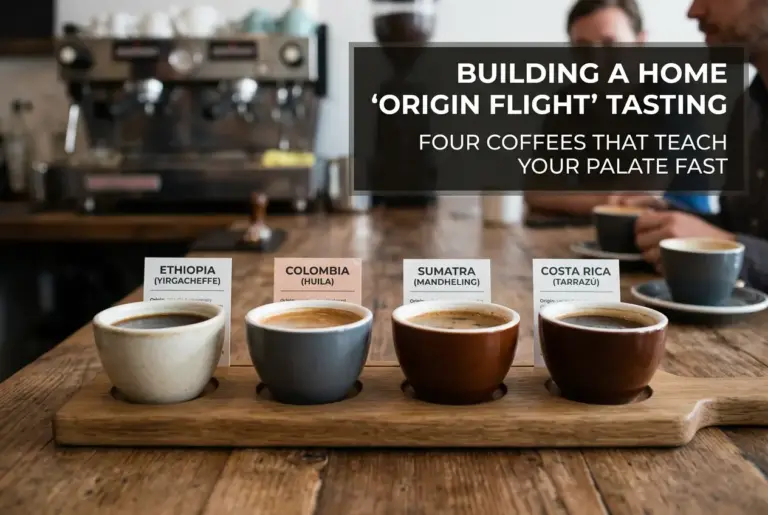
Building a Home “Origin Flight” Tasting: Four Coffees That Teach Your Palate Fast
» Discover special tips and stories about coffee