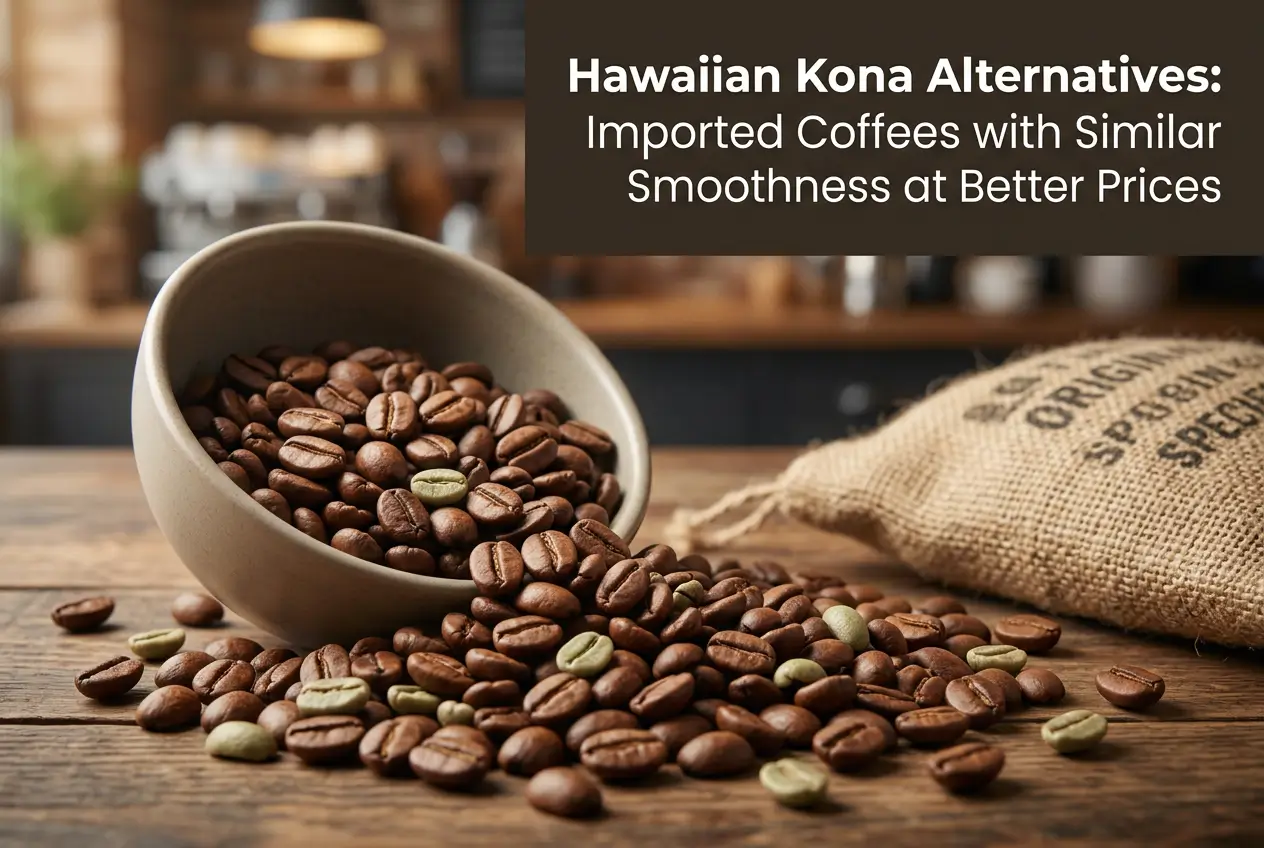
Hawaiian Kona Alternatives: Imported Coffees with Similar Smoothness at Better Prices
Love the smooth, rich taste of Hawaiian Kona coffee but not the high price? You’re not alone. Many coffee lovers seek that same low-acidity experience.
The great news is you don’t have to spend a fortune. There are amazing imported coffees that deliver similar smoothness at a much friendlier price point.
This guide will show you exactly what to look for, where to find it, and how to avoid common traps when buying specialty coffee.
Why Is True Kona Coffee So Expensive?
Hawaiian Kona is famous for a reason. Its unique character comes from the perfect mix of volcanic soil, high elevation, and meticulous farming in Hawaii.
This results in a coffee with very low acidity and a complex flavor, often with notes of chocolate, nuts, and fruit. It’s incredibly smooth.
However, the Kona coffee growing region is tiny. This limited production, combined with high demand, drives the price up significantly.
What Would You Like to Learn Next?
Choose an option below:
A single pound of 100% Kona coffee can easily cost between $45 and $95. That can translate to $2 to $4 for every cup you brew at home.
Top Regions for Kona-Like Coffee on a Budget
To find a great alternative, we need to look for regions with similar growing conditions. Think volcanic soil, high altitudes, and balanced flavor profiles.
Many countries in Central and South America offer fantastic specialty coffees that fit this description perfectly, often for a fraction of the cost.
- Costa Rica: Known for a clean, light-bodied coffee with a smooth finish. Its volcanic soils produce sweet, fruity, and floral notes.
- Guatemala: Offers a deep, complex flavor. Look for prominent dark chocolate notes, a smooth taste, and a rich, nutty aroma.
- Colombia: A powerhouse of balanced, smooth, and rich Arabica. Flavors often include caramel, honey, and dried fruits.
- Brazil: The world’s largest producer is a go-to for low-acidity coffee. Expect consistent, mellow flavors of chocolate and nuts.
- Honduras, El Salvador & Nicaragua: These regions produce very approachable coffees with caramel, mild fruit, and chocolatey profiles.
Premium Alternatives: Jamaica and Other Hawaiian Islands
If your budget has a bit more room, there are other premium options that share Kona’s prized smoothness without the absolute highest price tag.
Consider these a “special occasion” substitute for Kona. They offer incredible quality but are still more expensive than Central American options.
- Jamaica Blue Mountain: Famous for its exceptional smoothness and low acidity. It has a mild, balanced flavor with subtle floral and nutty hints.
- Ka’u Coffee (Hawaii): Also from the Big Island, Ka’u coffee has a smooth, velvety texture with notes of caramel, fruit, and floral tones.
- Maui Mokka (Hawaii): A rarer varietal from Maui with small beans. It features intense chocolate, citrus, and spice notes.
How to Choose High-Quality Imported Coffee
Finding a great Kona alternative means knowing how to spot quality. Don’t rely on fancy packaging alone. Look for these key signs of a great bean.
These simple checks will help you avoid low-grade coffee and ensure you get fresh, flavorful beans every single time you buy.
- Check the Roast Date: Freshness is critical. Look for a “roasted on” date. The best flavor is usually 5 days to 6 weeks after roasting.
- Look for Origin Details: Good roasters tell you the country, region, and sometimes even the farm. Transparency is a sign of quality.
- Buy Whole Beans: Always buy whole beans and grind them right before brewing. This preserves the coffee’s aroma and flavor.
- Inspect the Beans: Quality beans should be uniform in size and color. Avoid beans with chips, cracks, or discoloration. A slight sheen is good.
- Ethical Sourcing: Terms like “Direct Trade” or “Fair Trade” often mean farmers are paid better, which usually leads to higher-quality coffee.
Brewing Methods for Maximum Smoothness
How you brew your coffee has a huge impact on its final taste. For a smooth, low-acidity cup similar to Kona, your technique matters.
Certain methods naturally reduce bitterness and highlight the mellow, rich flavors of the beans. Try these adjustments for a smoother result.
- Cold Brew: Steeping coarse grounds in cold water for 12-24 hours can reduce acidity by nearly 70%. It creates a super smooth, rich concentrate.
- French Press: This immersion method extracts flavors slowly, which helps minimize acidity. Use a coarse grind and steep for four minutes.
- Lower Water Temperature: For pour-over, try water around 185°F instead of boiling. This extracts fewer acidic compounds.
- Coarser Grind: A coarser grind size reduces the surface area touching the water, which results in a less acidic extraction for any brew method.
Alert: How to Avoid Common Coffee Scams
The high price of specialty coffee makes it a target for fraud. Knowing the warning signs can protect your wallet and your taste buds.
Watch out for “Kona Blends.” By law, these can contain as little as 10% Kona coffee. Always look for “100% Kona Coffee” on the label.
Phrases like “Kona Style” or “Kona Roast” are marketing terms. They do not guarantee any Kona beans are in the bag at all.
Be skeptical of very cheap coffee with strong flavor descriptions. It might be low-quality beans masked with artificial, synthetic flavorings.
Finally, extremely dark roasting can be a way to hide defective, cheap beans. This results in a bitter, ashy taste, not true complexity.
Where to Buy Great Imported Coffee Alternatives
For coffee lovers in the US, finding high-quality imported beans is easier than ever. You have great options both online and in your local community.
- Online Specialty Roasters: Sites like Counter Culture, Stumptown, and Intelligentsia source and roast excellent traceable coffees from around the world.
- Curated Marketplaces: Platforms like Bean Box allow you to sample coffees from multiple top-tier roasters, making exploration easy.
- Local Coffee Shops: Visiting a specialty shop lets you talk to experts. Baristas can guide you to fresh, locally roasted beans that match your taste.
Exploring these alternatives is a rewarding journey. You can enjoy an incredibly smooth and flavorful cup of coffee without the premium Kona price tag.
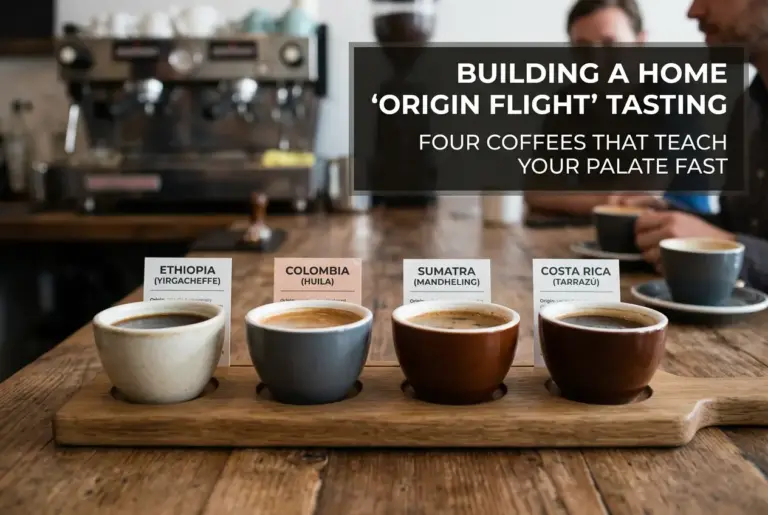
Building a Home “Origin Flight” Tasting: Four Coffees That Teach Your Palate Fast
» Discover special tips and stories about coffee