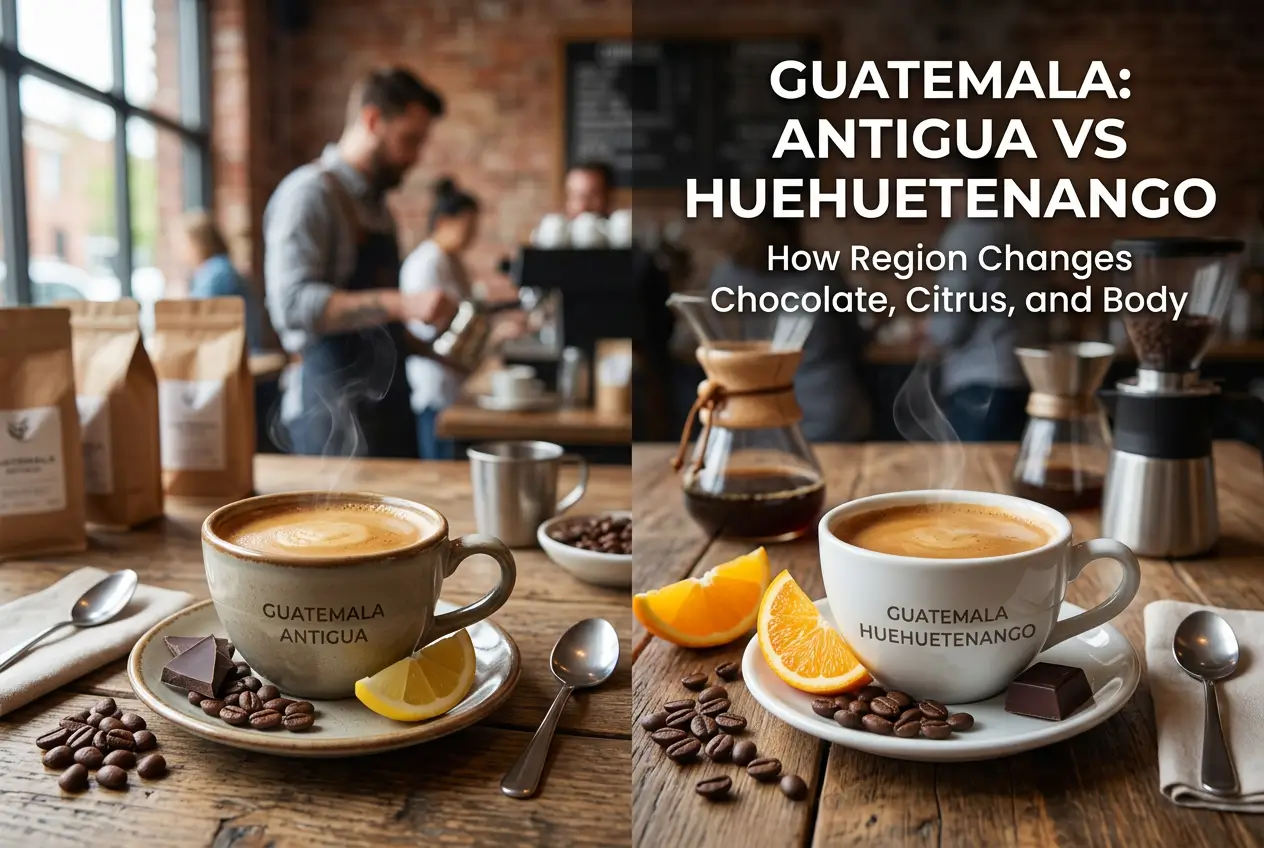
Guatemala Antigua vs Huehuetenango: How Region Changes Chocolate, Citrus, and Body
Choosing between Guatemala Antigua and Huehuetenango coffee? It often comes down to one question: do you prefer rich chocolate or bright citrus?
These two famous regions produce wildly different coffees. Understanding their unique flavors is the key to finding your perfect Guatemalan cup.
This guide breaks down exactly what to expect from each. You’ll learn how to choose, what to look for when buying, and how to brew them best.
Why Region Changes Everything in Your Cup
Guatemala is a world-renowned coffee powerhouse. Its secret lies in diverse microclimates, where soil and altitude create unique flavor profiles.
Think of it like wine. A grape grown in one valley tastes completely different from one grown just a few miles away. Coffee is the exact same.
Antigua and Huehuetenango are two of Guatemala’s most celebrated regions. Tasting them side-by-side is like a journey through the country’s landscape.
What Would You Like to Learn Next?
Choose an option below:
Guatemala Antigua: The Classic Chocolate & Smooth Body
Antigua coffee is often what people think of as a classic “Guatemalan” taste. It’s grown in a valley surrounded by three massive volcanoes.
This volcanic soil is incredibly fertile and rich in minerals. It’s the foundation for Antigua’s signature flavor.
Expect a cup that is smooth, rich, and incredibly balanced. It’s approachable and comforting, perfect for a daily brew.
- Flavor Profile: Strong notes of milk and dark chocolate are the star. You’ll often find hints of caramel, toffee, and roasted nuts.
- Acidity: The acidity is mild and gentle. It’s more like a subtle hint of orange or spice, not a sharp tang.
- Body: Antigua coffees have a full, velvety body. The mouthfeel is heavy and rich, coating your palate smoothly.
Huehuetenango: Vibrant Citrus & Lively Acidity
Head to the Western Highlands near Mexico and you’ll find Huehuetenango. It’s one of the highest and driest coffee regions in Guatemala.
Unlike Antigua, this is a non-volcanic region. Its unique profile comes from extreme altitudes and dry winds that protect the plants from frost.
This allows the coffee cherries to mature slowly, developing complex sugars. The result is a cup that is dynamic, bright, and exciting.
- Flavor Profile: Get ready for bright, sparkling citrus. Think orange zest, lime, and even green apple. Floral notes like jasmine are also common.
- Acidity: The acidity is the main event here. It’s lively and vibrant but not overwhelming. It makes the coffee taste crisp and clean.
- Body: The body is generally medium to light. It’s smooth and has a velvety finish, but feels much lighter than an Antigua.
Antigua vs. Huehuetenango: How to Choose Your Perfect Cup
So, how do you decide? Your personal preference for flavor and feel is the most important factor. There’s no right or wrong answer.
Choose Antigua if you love: Rich chocolate, caramel, and nutty flavors. You prefer a smooth, balanced, and full-bodied cup with low acidity.
Choose Huehuetenango if you love: Bright citrus, fruity notes, and floral aromas. You chase a lively, dynamic cup with sparkling acidity.
The best way to truly understand the difference is to buy a bag of each from the same roaster and taste them side-by-side.
Best Brewing Methods to Highlight Each Region
Your brewing method can either highlight or hide a coffee’s best traits. Using the right tool makes a huge difference.
For Antigua, you want methods that emphasize its full body and deep, sweet notes of chocolate and caramel.
- Antigua’s Best Friends: French press, espresso, and automatic drip coffee makers are excellent choices.
For Huehuetenango, the goal is to accentuate its delicate floral aromas and bright, sparkling citrus notes.
- Huehuetenango’s Best Friends: Pour-over methods (like a V60 or Chemex) and the AeroPress are perfect for this.
How to Identify Quality Beans When You Buy
Walking into a store or browsing online can be overwhelming. Look for these key details on the bag to ensure you’re getting quality beans.
- Region Name: The bag must clearly state “Antigua” or “Huehuetenango.” Vague labels like “Guatemalan Coffee” are a red flag.
- Roast Date: This is critical. Look for a “Roasted On” date, not a “Best By” date. Fresh is always best.
- Altitude (MASL): Higher altitudes mean more complex beans. Look for 1,500+ meters for Antigua and 1,700+ for Huehuetenango.
- Tasting Notes: Check if the flavor descriptions match what you expect. Chocolate for Antigua, citrus for Huehuetenango.
- Quality Grade: The term “Strictly Hard Bean” (SHB) means the coffee was grown at high altitudes, leading to denser, more flavorful beans.
Where to Find Authentic Guatemalan Coffee
Finding fresh, well-sourced coffee is easier than ever. Here are the most reliable places to look.
Direct from Specialty Roasters: This is your best bet. Roasters often have direct relationships with farms, ensuring freshness and quality.
Check their websites for roast dates and detailed information about where the coffee comes from. Many roast to order.
Local Specialty Coffee Shops: A great local café is a fantastic resource. You can often try the coffee before you buy a bag.
Ask the baristas for their recommendations and always check the roast date on the bag before you purchase.
What Coffee Certifications Mean for You
You might see different logos or certifications on coffee bags. These labels offer a promise about how the coffee was grown and traded.
- Organic: Grown without synthetic pesticides or fertilizers. This is a choice for healthier ecosystems and personal health.
- Fair Trade: Ensures farmers received a fair price for their coffee, supporting community development and better working conditions.
- Rainforest Alliance: Focuses on environmental and social sustainability, promoting biodiversity and protecting natural resources.
- Direct Trade: While not an official certification, it means the roaster works directly with farmers. This often leads to higher quality and fairer pay.
Choose certifications that align with your personal values. Each one represents a commitment to a better coffee industry.
Final Tips for a Perfect Brew
No matter which Guatemalan region you choose, a few universal rules will always improve your coffee experience.
First, always use freshly ground beans. Grinding just before you brew preserves the coffee’s delicate aromatic compounds.
Next, pay attention to water temperature. The ideal range is between 195–205°F (90-96°C). Water that’s too hot can scorch the grounds.
Finally, start with a 1:15 coffee-to-water ratio (1 gram of coffee for every 15 grams of water) and adjust from there to suit your taste.
Now you have the knowledge to explore Guatemala’s amazing coffee. Pick a region that sounds good and start your tasting journey today.
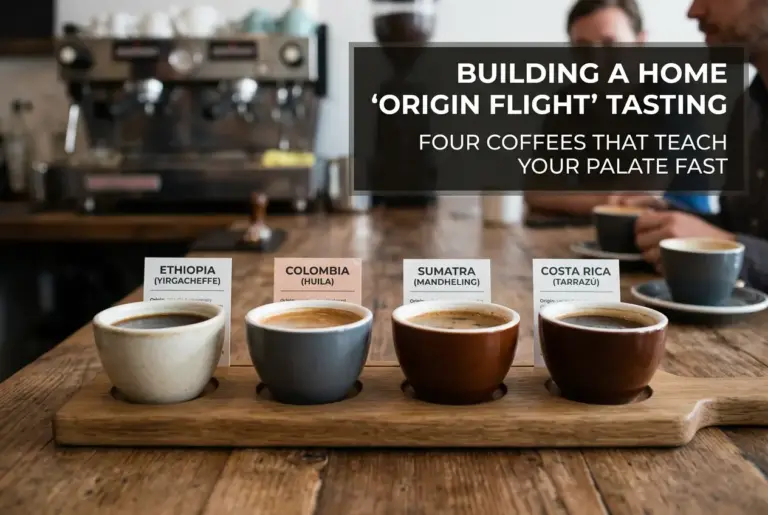
Building a Home “Origin Flight” Tasting: Four Coffees That Teach Your Palate Fast
» Discover special tips and stories about coffee