How Humidity Ruins Coffee Beans
Understand the impact of coffee storage humidity on your coffee beans. Get tips on how to store coffee effectively to maintain its quality.
Understanding the moisture level around roasted beans makes the difference between a bright cup and a dull one. In practical terms, “coffee storage humidity” is the amount of water in the air near your beans and inside their container. It affects flavor fast, more than many people expect.
This guide shows you how to prevent humidity-driven quality loss. It covers home setups and small roasting operations, with clear steps to protect freshness and avoid mold or over-dry, flat profiles.
High humidity can add unwanted moisture and cause musty or moldy notes. Low moisture dries beans, leaving a flat, papery taste. Both happen in common U.S. kitchens when temps and air vary.
At a glance, moisture works with oxygen, temperature swings, and weak packaging to speed staling. The practical goal here is simple: create stable conditions and pick containers that limit air and moisture exchange without making your routine hard.
Later sections cite Royal Coffee and Roast Magazine and offer study-backed setups: pantry placement, portioning, labeling, and correct freezing.
Key Takeaways
- “Coffee storage humidity” means the moisture level around and inside containers.
- Both excess moisture and excessive dryness harm flavor and freshness.
- Temperature swings and air exposure speed staling alongside moisture.
- Keep conditions stable and use containers that limit air and moisture exchange.
- Later sections include expert studies and practical, easy setups for home and small roasters.
Why Humidity Is the Fastest Way to Lose Coffee Quality
When water moves in or out of roasted beans, flavor and aroma vanish faster than time alone. Moisture near the roast changes how much water the beans hold. That water then reacts with oxygen in the air and speeds oxidation, which flattens taste.
What Would You Like to Learn Next?
Choose an option below:
Moisture speeds staling and dulls aroma
Moisture exchange accelerates chemical breakdown. Volatile aroma compounds escape faster in unstable conditions, so a fresh roast can smell weak within days.
High moisture raises safety and quality risk
Excess moisture invites mold and mildew growth. Musty notes, clumping, or visible film are red flags that beans are unsafe and off-flavor.
Too dry strips oils and flattens flavor
Very dry air can pull oils and fragile volatiles from the surface, leaving brittle beans and a papery, muted cup.
Opening containers often or storing near a kettle, dishwasher, or sunny window creates the moisture and temperature swings that speed this process.
“Moisture exchange plus oxygen exposure is often the fastest route to lost quality.”
How coffee storage humidity changes beans at the chemical and physical level
Roasted beans change quickly when air moisture shifts, altering both texture and taste. Relative humidity simply means how “full” the air is of water; when that balance moves, beans absorb or release moisture to match the environment.
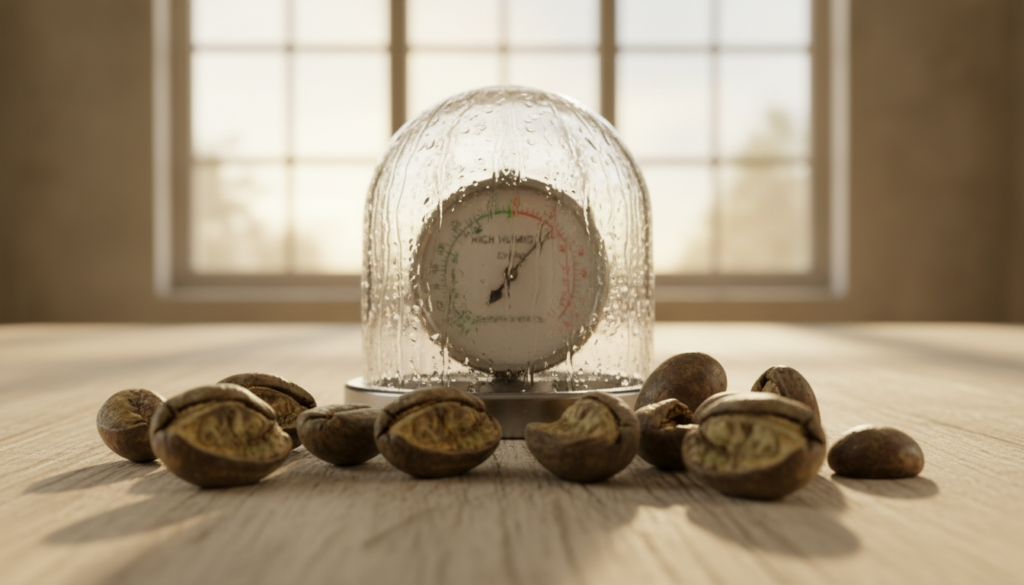
Relative humidity and water movement
Beans and grounds are porous. Water moves from higher to lower concentration, so a dry room will pull moisture from beans and a damp room will force water in.
This exchange affects volatile compounds and surface oils, which shape aroma and body in the cup.
Condensation from temperature swings
When you move a package between cold and warm zones, the air inside can reach dew point and form condensation. That liquid settles on beans and speeds chemical change.
“Condensation inside a container creates a microclimate that accelerates quality loss.”
Sensory signs of storage damage
- Musty or earthy notes often point to excess moisture or mold contact.
- Papery or cardboard flavors signal staling and loss of volatile compounds.
- Clumping or visible dampness are physical red flags for poor conditions.
Green coffee tolerates moisture shifts differently; its internal metrics are higher and it resists mold longer. Roasted beans, however, lose aroma and oils fast when exposed to unstable room temperature and changing air.
Target Storage Conditions: Relative Humidity and Temperature Ranges That Work
A stable, moderate room is the single best defense against rapid flavor loss. For home use, aim for an operating window near 15–24°C (59–75°F) in a cool, dark cabinet away from ovens or sunny windows.
Practical temperature band
Keep the beans in a consistent room temperature range rather than moving them. Avoid hotspots above appliances or by heated walls.
Relative humidity target
About 60% relative humidity is a practical benchmark. It reduces extreme drying while limiting excess moisture that invites mold and off-odors.
Why stability beats perfection
Frequent swings in temperature or humidity trigger condensation and accelerate quality loss. Stability prevents microclimates that strip aroma or foster spoilage.
- Choose one cabinet and leave containers there.
- Avoid counters near steam sources and sunny windows.
- If the room feels damp or you notice clumping or musty smells, act: use a hygrometer, move the container, or change packaging.
“Preventing swings is more effective than chasing an exact number.”
What the Royal Coffee storage study reveals about humidity, packaging, and flavor
Royal Coffee’s controlled trial shows green coffee shifts moisture and sensory profile in weeks, even at steady room conditions. The study tracked two green lots at ~49% relative humidity and ~70°F to test how packaging and materials change bean water balance and taste over time.
Speed of response under stable room conditions
The high-moisture Sumatra (15%) lost almost 1% moisture per day in jute for three days, then settled near 9%. That rapid shift shows how unprotected materials drive change fast.
Jute versus airtight outcomes
Jute bags let the high-moisture lot dry and allowed the low-moisture Bolivia (8.7%) to absorb water, peaking near 11% by August. In contrast, Ziploc-style airtight packaging slowed change: Sumatra stayed above 14% for months and Bolivia stayed below ~9.1%.
Sensory implications and practical takeaways
Sensory results favored sealed materials. Jute-stored lots had more “musty/earthy,” “rough,” and “dry acidity” descriptors. Airtight storage read smoother and sweeter in cupping.
- Key practices: keep a stable room temperature and consider near-hermetic packaging like GrainPro to limit moisture swings.
- Preserve liner integrity, use FIFO, and roast closer to arrival to protect flavor and overall quality.
- Remember: no method preserves cup indefinitely—packaging and handling are major factors in real results.
How to Store Coffee Beans to Control Humidity Day-to-Day
A few simple daily habits make the biggest difference in keeping a roast tasting fresh. Focus on consistent placement, limited exposure, and clear labeling.
Choose the right spot
Place jars in a cool, dark pantry cabinet away from the stove, dishwasher steam, sink splash zone, and direct sunlight.
This reduces sudden temperature and moisture air swings that harm the cup.
Portioning to limit exposure
Divide a fresh bag into smaller, airtight containers. Only open the small daily jar and leave the main supply sealed.
Tip: refill the daily container quickly to cut time unsealed and limit air exchange.
Labeling for freshness
Write roast date, open date, and a practical use-by window—about 30 days after opening for home use.
Consistent labels help you track shelf life and protect overall freshness and flavor life.
- Daily routine: keep the container in one place, open briefly, and reseal immediately.
- In damp rooms, add a hygrometer and consider desiccants placed outside direct contact with beans.
These habits prevent both too much moisture uptake and excessive drying, keeping aroma and cup quality more stable day-to-day.
Containers and Packaging That Block Moisture and Oxygen
Pick containers that stop air and light first—those two factors wreck aroma faster than time alone.
Good containers use an airtight seal and opaque materials such as stainless steel, ceramic, or dark glass. These materials cut oxygen and light exposure, slowing oxidation and protecting delicate aroma compounds.
One-way valve versus vacuum seal
If you open a jar daily, a one-way valve (Airscape-style) pushes excess air out while staying easy to use. For longer holds, vacuum-seal (Atmos-style) options reduce oxygen more thoroughly between opens.
Industry approaches made simple
Roasters use hermetic barriers, vacuum-sealed packs, and nitrogen-flushed bags to lock in condition and limit oxygen and moisture exchange during shipping and warehousing.
Fit and headspace matter: choose a container that matches bean volume. Less excess air means slower flavor loss.
| Type | Best for | Protects against | Example |
|---|---|---|---|
| Airtight opaque jar | Daily use | Air, light | Stainless steel canister |
| One-way valve | Frequent opening | Air exchange control | Airscape-style |
| Vacuum seal | Longer holds | Oxygen reduction | Atmos-style |
| Industrial packaging | Shipping/warehousing | Oxygen & moisture | GrainPro / nitrogen-flushed bags |
Reducing oxygen and limiting light preserves flavor compounds and keeps a roast tasting closer to the original cup.
Common Humidity Mistakes That Ruin Coffee (and what to do instead)
Everyday routines can create the temperature swings and air exchange that destroy cup clarity.
Why the refrigerator backfires: frequent door-opening causes rapid temperature shifts and condensation. Cold surfaces plus warm kitchen air form liquid on beans. The result is much moisture clinging to surfaces and fast flavor loss.
Freezing the right way for long-term holds
Vacuum-seal portions before freezing and move them to the most stable part of the freezer. Avoid taking bags in and out; repeated thawing creates condensation and ruins oils.
Thaw once: let a sealed portion reach room temperature before opening. Do not refreeze the same batch.
Using the original bag honestly
The factory bag can work short-term if you reseal it well and keep it in a cool, dry cabinet. But most original bags are not fully airtight and fail under high humidity or frequent opening.
- Do instead: keep daily supplies in airtight packaging at steady temperature and limit exposure to open air.
- Why it matters: temperature + moisture + air exchange explain nearly every common failure in preserving coffee quality.
“Condensation and odor transfer are the usual culprits when a roast suddenly tastes flat or off.”
Conclusion
Consistency in environment and handling is the single best defense against rapid quality loss. Controlling coffee storage humidity is less about gadgets and more about keeping steady conditions and limiting oxygen and moisture exchange.
Baseline setup for most U.S. homes: a cool, dark pantry spot with minimal temperature swings and an airtight, opaque container. Portion small amounts for daily use and label roast and open dates.
Quick action checklist: pick the spot, pick the container, portion as needed, label dates, and avoid the refrigerator. Watch the cup for musty or earthy notes, papery/cardboard flavors, or a flattened aroma—these flag poor results.
Green coffee responds strongly to moisture shifts over time. Roasted beans age faster from oxygen-driven staling that unstable conditions accelerate. Keep a simple routine and your brewing will more closely match the roaster’s intent.
FAQ
How does moisture ruin beans?
Why does high air moisture increase mold risk?
Can very dry conditions harm beans?
What relative humidity range keeps beans stable?
How do temperature swings create condensation inside containers?
What flavors indicate storage damage from moisture?
How quickly do green beans change under normal room conditions?
Is jute better or worse than airtight bags?
What daily habits help control moisture exposure?
What container features best block air and moisture?
How do one-way valves compare with vacuum systems?
Why is refrigeration usually a bad idea?
Can I freeze beans safely for long-term keeping?
When is the original retail bag acceptable?
What industry practices help protect flavor from humidity?
How to Spot Stale Beans Online: Red Flags in Listings, Photos, and Descriptions
» Discover special tips and stories about coffee