Coffee Packaging Explained: What the One-Way Valve Does
Understand the function of the coffee packaging valve and its significance in maintaining coffee quality. Get the details.
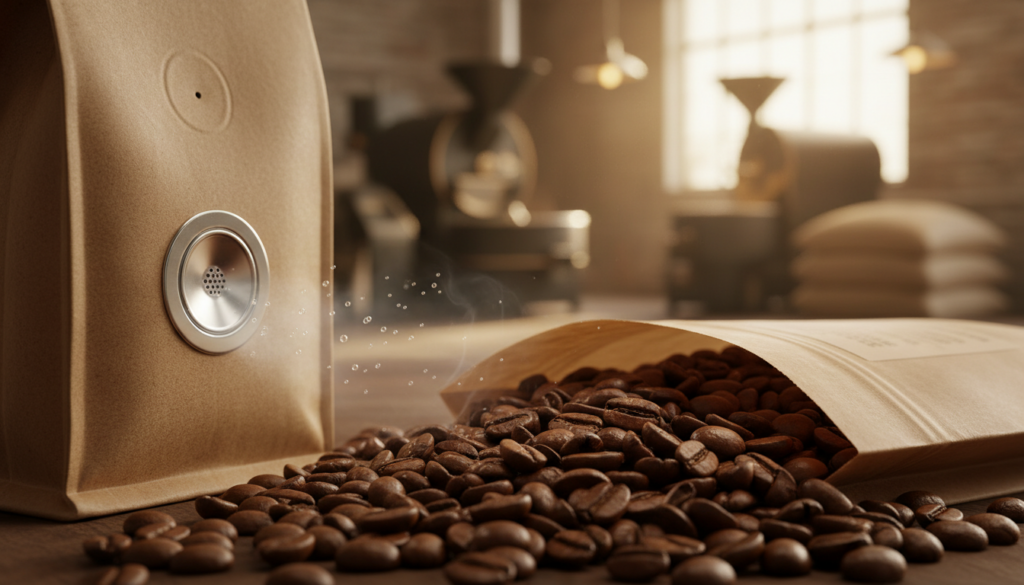
A one-way vent built into a coffee bag lets gas exit while keeping outside air out. This small part is functional, not decorative, and it matters for freshness and shelf life.
The guide that follows will explain what the component does, how it works, what it protects, and when products need it. Roasted beans release CO₂ after roast, and sealed bags must manage that gas without inviting oxygen in.
Why this matters: using the right system helps with freshness, shipping durability, and retail presentation for U.S. brands. Design choices—film layers, barrier strength, and placement—shape quality and brand perception on shelf.
One common misconception is that the vent exists mainly to let aroma out. Smelling aroma can happen, but the primary job is to release gas and prevent air from entering. Later sections show how to decide when to spec this feature based on format, distribution, and time to consumption.
Key Takeaways
- The one-way part on a bag lets CO₂ escape while blocking oxygen.
- It is a functional element, not a marketing detail.
- Proper use improves freshness, shelf life, and shipping resilience.
- Smell at the vent is not the primary purpose.
- Material choices and placement affect product quality and brand image.
- Decide to spec a valve by format, timeline, and distribution needs.
What a degassing valve is and why roasted coffee needs it
Once beans cool, a stream of volatile gases continues to escape for days and weeks. This natural off-gassing includes large amounts of carbon dioxide plus smaller volatile compounds formed during roast.
What happens after roasting
The chemical reactions in roasted beans trap gases inside the cell structure. The heaviest release happens in the first few days, but measurable degassing can continue for weeks.
What Would You Like to Learn Next?
Choose an option below:
Why trapped gas can bloat a bag
If headspace fills with gas, internal pressure rises and the bag will puff or bloat. That swelling stresses seals and can reduce package integrity, raising the chance of leaks or bursts during storage and transit.
“Managing off-gassing is a practical step to protect product quality and prevent costly failures in the supply chain.”
Both whole and ground beans release gas; finer grinds release it faster. Roasters decide at roast time whether to wait for off-gassing or to use a controlled one-way release so the product can ship sooner.
- Definition: A degassing valve is a one-way vent installed to let internal gas escape without letting outside air enter.
- Risk: Uncontrolled gas build-up can bloat bags and damage seals.
- Action: Valves respond to pressure changes and vent gas in one direction to protect the product.
| Issue | Cause | Impact |
|---|---|---|
| Rapid off-gassing | Fresh roast chemistry | High headspace pressure, visual puffing |
| Seal stress | Repeated expansion/contraction | Leaks, compromised shelf life |
| Shipping bursts | Accumulated internal gas | Product loss, returns, brand damage |
How a coffee packaging valve works as a one-way vent
A small, engineered vent responds to internal headspace pressure to protect product quality and bag integrity.
Pressure-triggered release
- Internal gases build after roast or heat exposure.
- When pressure reaches a set threshold, the mechanism opens briefly.
- CO2 escapes; the path then reseals so outside air cannot re-enter.
Oxygen control and staling
Blocking oxygen matters because exposure speeds oxidation and causes staling. A reliable one-way system keeps oxygen out while letting gases leave.
Why you can smell aroma
Scent can pass during venting, but that is a byproduct. The principal role is freshness protection, not aroma display. A gentle squeeze may force more scent out, but controlled venting happens during storage and transit.
Internal filter and attachment
Most units include a tiny mesh filter to limit micro-particle escape during degassing. Attachment methods vary: ultrasonic bonding preserves artwork and reduces film stress, while glued placement is a common, simpler alternative.
| Feature | Benefit | Design impact |
|---|---|---|
| Pressure threshold | Timed venting of gases | Controls puffing and seal stress |
| Mesh filter | Reduces micro-particle release | Keeps vent path cleaner |
| Attachment method | Preserves film and artwork (ultrasonic) or simplifies fit (glue) | Affects durability and aesthetics |
What the valve protects: freshness, shelf life, and your coffee bag’s shape
A small component inside a bag does more than release gas; it preserves flavor and keeps the package stable.
Freshness and flavor over time
Limiting oxygen exposure slows oxidation and keeps flavor more consistent from roast date through purchase. Over time, less oxygen contact equals fewer stale tastes and firmer aroma retention.
Package performance
Controlled venting reduces puffing and bloating. That lowers seal stress and cuts the chance of leaks or a sudden burst risk during storage and shipping.
Operational payoff
Using a one-way system lets roasters pack sooner after roast. This shortens the hold time by days and improves line throughput without sacrificing product quality for customers.
- Protects shelf life by keeping oxygen out and CO₂ moving out.
- Maintains bag shape for better shelf presentation.
- Supports consistent quality across multi-state distribution.
| Protection goal | How it works | Real-world benefit |
|---|---|---|
| Freshness / flavor | Blocks oxygen, allows CO₂ release | More consistent cup quality for customers |
| Package integrity | Relieves internal pressure | Fewer leaks, less puffing, improved shelf look |
| Operational efficiency | Packing without long off-gas delays | Faster throughput and reliable supply timing |
When to use degassing valves in coffee packaging and when you can skip them
Deciding whether to add a degassing unit starts with the product format and expected time on shelf.
Best-fit products
Whole bean and larger retail bags
Use degassing and degassing valves for whole bean and ground coffee sold in larger bags. These products often sit in stores or travel long distances. Controlled degassing preserves quality and reduces bag puffing.
When you can skip it
Single-serve, small packs, stick packs, and other quick-consumption formats usually do not need a degassing valve. These items are used fast enough that oxygen exposure before use is minimal.
Timing and distribution
Consider roast-to-pack-to-customer time. If a product ships across the country, spends days in transit, or sits on retailer shelves for weeks, degassing valves become important.
Design pairings and team alignment
Pair a degassing valve with high-barrier films and reseal closures to limit oxygen and moisture ingress. Operations, brand, and packaging teams should agree on specs to protect quality, reduce returns, and support shelf presentation.
| Factor | Use degassing | Skip degassing |
|---|---|---|
| Pack size | Large bags | Single-serve/small packs |
| Time to customer | Days–weeks | Hours–days |
| Distribution | Cross-country, retail | Local, quick turnover |
Conclusion
The small valve is a one-way degassing device that releases CO₂ while keeping oxygen out. Its primary role is to protect freshness and packaging performance, not to showcase aroma.
The mechanism is simple: internal pressure opens a path outward, then reseals so outside air cannot enter. This control preserves bag shape, reduces leaks, and improves shipping outcomes.
Quick decision checklist: consider product format, bag size, roast-to-pack timeline, distribution distance, and retailer shelf time. Match the degassing solution with proper barrier films and reseal features.
Finally, align operations, brand, and suppliers to confirm valve type and attachment method—ultrasonic or glued—before finalizing the design and process.
FAQ
What does a one-way degassing valve do?
Why do roasted beans release gases after roasting?
How can trapped gas damage a sealed bag?
How does a one-way vent open and close?
Do valves keep oxygen out as well as let gas escape?
Why can I sometimes still smell the aroma through the valve?
What components are inside a degassing valve?
How are valves attached to bags?
How do valves protect freshness and extend shelf life?
How do valves improve package performance during shipping?
What operational benefits do valves provide manufacturers?
Which product formats benefit most from degassing valves?
When might a valve be unnecessary?
How do timelines from roast to shelf affect the need for a valve?
How does distribution distance influence valve use?
What packaging features should be paired with a valve?
Light Roast vs Medium Roast: Which Preserves Flavor Better?
» Discover special tips and stories about coffee