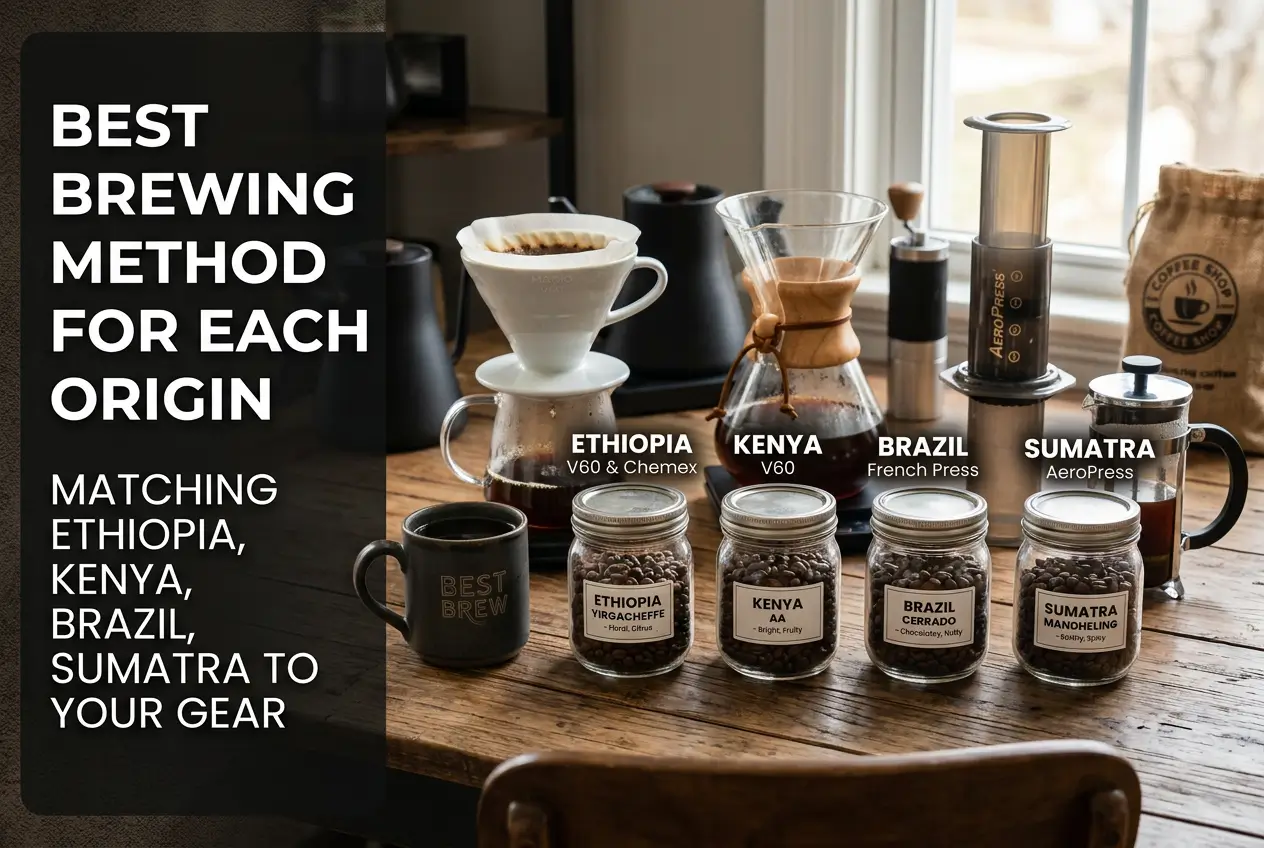
Best Brewing Method for Each Origin: Matching Ethiopia, Kenya, Brazil, and Sumatra to Your Gear
You have a bag of amazing single-origin coffee. But are you using the right gear to make it truly shine? It’s a game-changer.
The best brewing method for your coffee depends entirely on its origin. What works for a floral Ethiopian bean might not suit a bold Sumatran one.
This guide matches four popular origins (Ethiopia, Kenya, Brazil, Sumatra) to the perfect brewing gear, ensuring you get the best cup every time.
The Golden Rules for Any Great Brew
Before we dive into specific origins, a few universal rules apply to any quality coffee. Nailing these basics is half the battle.
- Grind Fresh: Always grind your beans right before brewing. This preserves the delicate aromas and flavors that are lost minutes after grinding.
- Use Good Water: Your coffee is mostly water. Use filtered water to avoid any off-tastes. The ideal temperature is 195°F to 205°F.
- Weigh Everything: A digital scale is your best friend. Start with a 1:16 ratio (1 gram of coffee to 16 grams of water) and adjust to your taste.
- Let It Bloom: Pour a little hot water over the grounds (twice the coffee’s weight) and wait 30-45 seconds. This releases gas and preps the coffee for a better extraction.
Ethiopia: For Bright, Floral, and Fruity Notes
Ethiopian coffee is the OG. It’s known for its vibrant, complex, and often tea-like body. Think bright citrus, jasmine, and berries.
A light to medium roast is ideal to keep those delicate floral and fruit notes from getting lost. Your goal here is clarity and brightness.
What Would You Like to Learn Next?
Choose an option below:
Pro Tip: Washed Ethiopian coffees are cleaner and more floral. Natural processed ones are juicier, with heavy berry or jam-like sweetness.
Here are the best ways to brew these delicate beans.
- Pour-Over (V60/Chemex): This is the top choice. It produces a super clean cup that lets every floral and citrus note shine. Its paper filter traps oils, enhancing clarity.
- AeroPress: In a hurry? The AeroPress is fantastic. It yields a clean, bright cup in under two minutes, highlighting the coffee’s vibrant acidity.
- French Press: If you prefer a heavier body, the French Press works. It will mute some delicate notes but amplify chocolate or rich fruit flavors.
- Cold Brew: This method pulls out the natural sweetness and fruit tones, creating a smooth, low-acid concentrate perfect for hot days.
Kenya: For Vibrant Acidity and Berry Flavors
Kenyan coffees are famous for their bold, juicy acidity. Imagine the crisp snap of a red apple or the tartness of a blackberry.
These coffees often have a savory-sweet quality, with notes of blackcurrant, tomato, or grapefruit. They finish clean and crisp.
Like Ethiopian beans, a light to medium roast is best to preserve the unique, bright flavors that make Kenyan coffee so special.
- Pour-Over (V60/Chemex): Again, the winner for clarity. A pour-over will highlight the bright, wine-like acidity and complex fruit notes of a great Kenyan bean.
- Drip Machine: A high-quality automatic drip machine can make a balanced cup, bringing out both the fruity tones and any underlying chocolate notes.
- AeroPress: Perfect for a quick, clean, and zesty cup. It captures the signature acidity without any of the heaviness from other methods.
- French Press: This method will give you a richer, fuller-bodied experience. It’s a good option if you find the acidity of a pour-over a bit too intense.
Brazil: For Smooth, Nutty, and Chocolatey Flavors
Brazilian coffee is like a warm hug in a mug. It’s known for being smooth, low in acidity, and incredibly crowd-pleasing.
Expect classic flavors of chocolate, caramel, and nuts like almonds or peanuts. These beans have a soft, full body and a pleasant finish.
A medium to medium-dark roast works wonders, enhancing those deep chocolate and nutty flavors without introducing too much bitterness.
Heads Up: Because Brazilian coffee often grows at lower altitudes, it can benefit from slightly cooler water (around 190°F) to prevent over-extraction.
Here’s how to get the most out of these comforting beans.
- French Press: This is a perfect match. The French Press enhances the full body and rich chocolatey flavors, creating a bold and satisfying cup.
- Drip Machine: A simple drip coffee maker is great for a balanced and smooth daily driver. It reliably brings out the nutty and caramel notes.
- Pour-Over (V60): While it makes a cleaner cup, a pour-over can also highlight the subtle complexities and balanced sweetness of a high-quality Brazilian bean.
Sumatra: For Bold, Earthy, and Full-Bodied Brews
Sumatran coffee is unmistakable. It’s known for its heavy, syrupy body, low acidity, and deep, earthy flavors like cedar, tobacco, and dark chocolate.
This unique profile comes from a special processing method called “wet-hulling,” which contributes to its rustic and complex character.
Go for a medium-dark to dark roast. This develops the deep sweetness, enhances the heavy body, and brings out those rich, earthy notes.
- French Press: The absolute best choice for Sumatra. It celebrates the coffee’s heavy body and robust flavors by retaining the natural oils and fine particles.
- Moka Pot: For a strong, espresso-like cup, the Moka Pot is excellent. It creates a concentrated brew that highlights the bold cocoa and spicy notes.
- Espresso: As a shot of espresso, Sumatran beans produce a thick, rich crema and a complex, bold flavor profile that stands up well in lattes.
- Pour-Over (V60): A pour-over can be interesting here. It will reduce the body slightly but can reveal hidden complexities and a cleaner finish.
Your Gear, Your Rules: Final Tips for Success
Think of this guide as a starting point, not a set of strict rules. The best brewing method is ultimately the one you enjoy the most.
Don’t be afraid to experiment. Try your Ethiopian coffee in a French Press or your Brazilian beans in an AeroPress. You might be surprised.
Pay attention to your grind size. A finer grind means faster extraction; a coarser grind means slower. Small adjustments can make a big difference.
The fun is in the discovery. Grab your favorite mug, pick a method, and start brewing. Your perfect cup of coffee is waiting to be found.
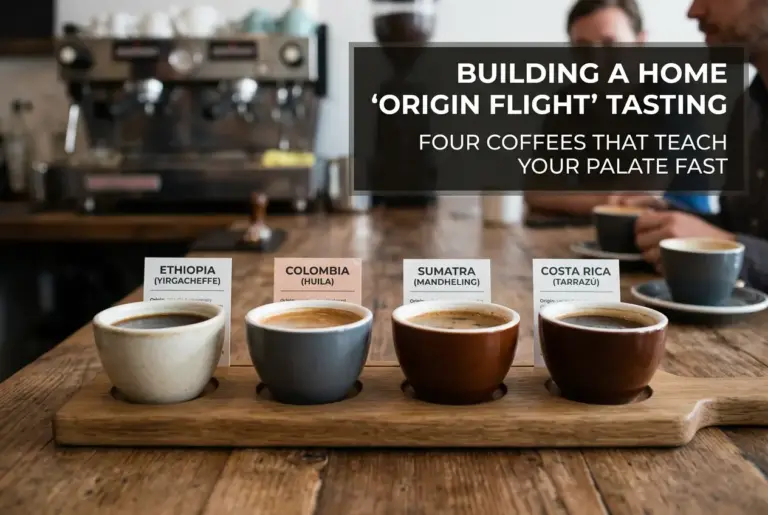
Building a Home “Origin Flight” Tasting: Four Coffees That Teach Your Palate Fast
» Discover special tips and stories about coffee