A Coffee Lover’s Guide to South American Beans
Exploring South American coffee beans can feel overwhelming. With so many options, how do you pick the right one for your morning cup?
This guide cuts through the noise. We’ll give you a simple roadmap to understanding the unique flavors of each region.
You’ll learn exactly how to select high-quality beans, brew them perfectly, and avoid common scams. Let’s get started.
Why South American Coffee Belongs in Your Cup
South America is a giant in the coffee world for a reason. Its beans are famous for being smooth, balanced, and having a medium body.
Think sweet, fruity, and nutty notes. These coffees are approachable and consistently delicious, making them a perfect daily brew.
The continent’s geography is ideal for coffee. High altitudes, tropical climates, and rich volcanic soil help grow top-tier Arabica beans.
What Would You Like to Learn Next?
Choose an option below:
This is the gold standard for specialty coffee, known for its complex aromas and delicate flavors over Robusta’s harshness.
A Flavor Map: From Brazil to Bolivia
Not all South American coffee tastes the same. The country of origin has a huge impact on what you’ll find in your cup.
Here’s a quick guide to the most prominent producers and their signature flavor profiles.
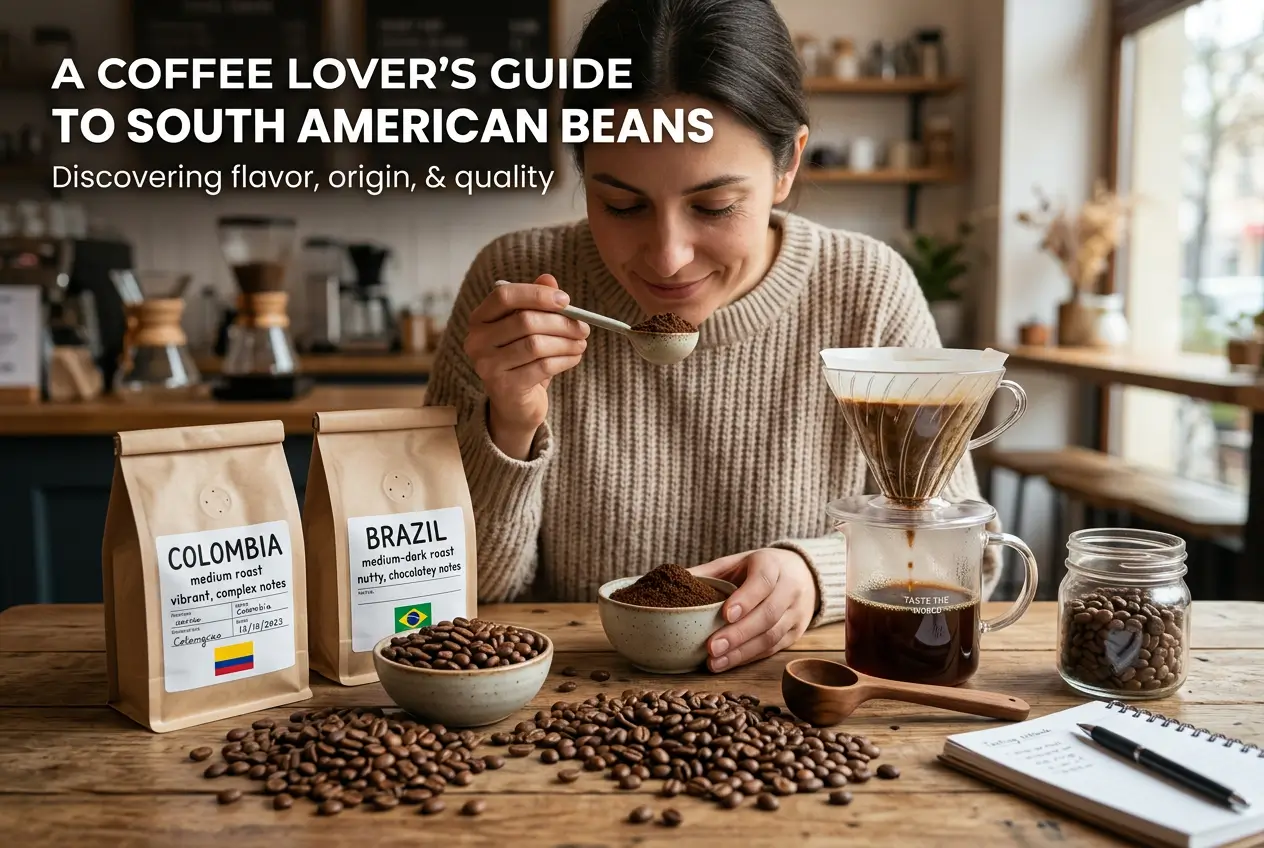
- Brazil: The world’s largest producer. Expect bold, chocolatey, and nutty flavors with low acidity. Perfect for a classic espresso.
- Colombia: Famous for its smooth, mild taste. Look for notes of caramel, sweet citrus, and a bright, clean finish.
- Peru: A rising star. Peruvian beans are often soft and well-balanced with floral notes, plum, and a sweet brown sugar undertone.
- Bolivia: A hidden gem. These high-altitude beans offer a complex, sweet, and fruity profile with a distinctly bright acidity.
- Ecuador: Known for diversity. Beans often have juicy, jam-like fruit flavors alongside classic chocolate or caramel notes.
- Venezuela: While less common, it produces notable coffee. Western beans are rich with light sweetness, similar to Colombian profiles.
How to Spot Truly Great South American Beans
To make sure you’re buying the best, you need to know what to look for on the bag. A few key details separate specialty coffee from the rest.
Follow these steps to choose with confidence.
- Look for a “Roasted On” Date: This is more important than a “Best By” date. Freshness is key. Aim for beans roasted within the last few weeks.
- Seek Detailed Origin Info: Good coffee tells a story. The label should list the country, region, and sometimes even the specific farm.
- Understand Roast Levels: A medium-dark roast brings out chocolate notes in Brazilian beans. A light-medium roast highlights the acidity in Colombian coffee.
- Prioritize Whole Beans: Pre-ground coffee loses its flavor and aroma much faster. Grinding right before you brew makes a world of difference.
- Check for Certifications: Labels like “Organic” or “Fair Trade” can indicate sustainable and ethical practices, which often go hand-in-hand with quality.
Pro Tip: Transparency is the biggest sign of quality. If a roaster isn’t proud to share details about their beans, be skeptical.
Brewing Methods to Unlock the Best Flavors
The right brewing method can make or break your coffee experience. Different beans shine with different techniques.
Here’s how to match your brew method to your South American beans for the best results.
- French Press: Perfect for Brazilian beans. This method enhances their rich flavors and full, creamy body. Use a coarse grind.
- Pour-Over (V60, Chemex): Ideal for highlighting the bright, delicate floral notes in Peruvian or high-acidity Colombian beans.
- Espresso: Brazilian and Colombian beans are industry standards for espresso, creating a balanced shot with a thick, golden crema.
- Aeropress: A versatile method that delivers a rich, smooth cup quickly. It works well with almost any bean profile.
- Cold Brew: Excellent for a smooth, low-acid coffee. The chocolatey notes of Brazilian beans are fantastic for this.
Simple Tips for a Perfect Cup Every Time
Beyond the brew method, a few small details can dramatically improve your coffee. Pay attention to these simple variables.
Use the right water temperature. Aim for water between 195°F and 205°F. Too hot, and you’ll burn the coffee; too cold, and it will taste weak.
Quality water matters. Your coffee is 98% water. Use clean, filtered water to allow the bean’s true flavors to emerge.
Get your ratio right. A good starting point for most methods is a 1:16 ratio (1 part coffee to 16 parts water). Adjust from there to your taste.
Don’t forget to “bloom.” Before brewing, pour a little hot water over the grounds and let them sit for about 30 seconds. This releases trapped gas for a better extraction.
How to Avoid Common Coffee Scams
The growing popularity of specialty coffee has also led to more scams. It’s crucial to be a smart shopper to ensure you get what you pay for.
Watch out for these red flags when buying coffee, especially online.
- Unrealistically Low Prices: Genuine specialty coffee costs more to produce. A price that seems too good to be true usually is.
- Vague “Gourmet” Claims: Look for specifics, not just marketing fluff. Terms like “premium” mean nothing without origin or quality scores.
- Lack of Roast Information: Reputable sellers are proud of their craft. They will provide clear details on the roast level and date.
- Missing Contact or Return Info: A legitimate business will have clear customer service channels and a fair return policy.
Warning: One common tactic is masking low-quality beans with artificial flavoring or an overly dark roast. Always buy whole beans so you can inspect their quality.
If you’re unsure, don’t hesitate to ask the seller questions. A passionate roaster will be happy to talk about their coffee’s origin and processing.
Where to Find Reliable Beans and Information
For coffee lovers in the U.S., there are excellent resources to guide your journey and help you find trustworthy sellers.
The Specialty Coffee Association (SCA) is a leading authority that sets standards for quality. Their website is a great source of education.
The National Coffee Association (NCA) also offers consumer guides on coffee labeling and food safety that can help you make informed choices.
When shopping online, look for established U.S. roasters known for their commitment to quality and transparent sourcing.
Companies like Onyx Coffee Lab, Verve Coffee Roasters, and Bird Rock often feature exceptional South American coffees with detailed origin stories.
If you have an issue with a purchase, contact the retailer directly. Reputable companies stand by their products and value customer satisfaction.
Your best bet is to start exploring and find a roaster you trust. The perfect cup of South American coffee is waiting for you.
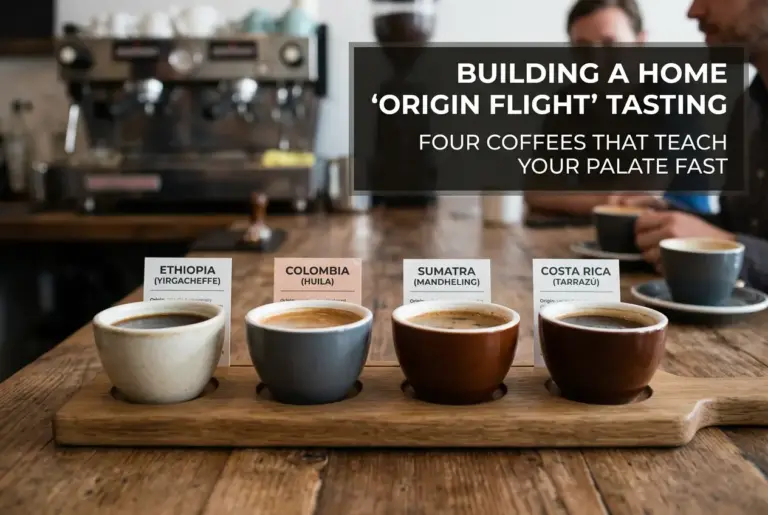
Building a Home “Origin Flight” Tasting: Four Coffees That Teach Your Palate Fast
» Discover special tips and stories about coffee