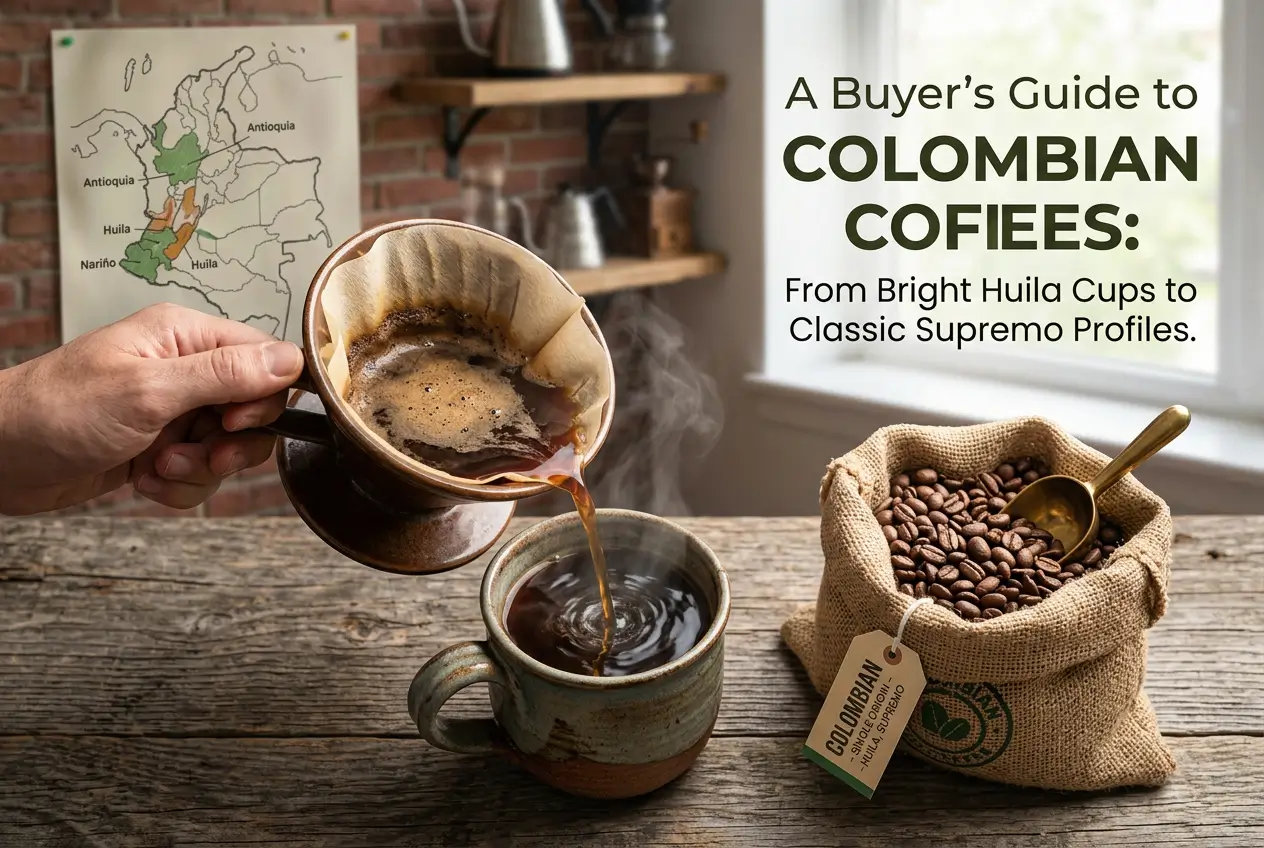
A Buyer’s Guide to Colombian Coffees: From Bright Huila Cups to Classic Supremo Profiles
Navigating the world of Colombian coffees can feel overwhelming. This guide cuts through the noise to help you choose the perfect bag.
We’ll cover everything from the bright, citrusy notes of Huila to the classic, balanced profiles of Supremo beans.
You will learn exactly how to identify, buy, and brew high-quality Colombian coffee for an amazing experience at home.
What Makes Colombian Coffee So Special?
Colombia’s magic lies in its unique geography. High-altitude farms, volcanic soil, and a tropical climate create perfect conditions for coffee.
The country grows 100% Arabica beans. These are known for a smooth body, mild acidity, and incredibly complex flavors.
Unlike the more bitter Robusta variety, Arabica offers a much cleaner and sweeter cup. This is a key reason for its global fame.
What Would You Like to Learn Next?
Choose an option below:
Most beans are also hand-picked at peak ripeness. They are then wet-processed, which results in a consistently bright and clean flavor profile.
Understanding Coffee Grades: Supremo vs. Excelso
When you shop for Colombian coffee, you will see terms like “Supremo” and “Excelso.” These labels refer to bean size, not directly to flavor.
Knowing the difference helps you understand what you are buying. It is simpler than it sounds.
- Supremo: This indicates the largest bean size (screen 17 or 18). It is often associated with a very smooth and uniform flavor.
- Excelso: These beans are slightly smaller (screen 15/16). They are still high-quality and can offer a vibrant, lively taste.
- Good to know: Both Supremo and Excelso beans can come from the exact same coffee tree. The sorting happens after processing.
Exploring Colombia’s Coffee Regions and Flavors
Colombia has 22 distinct coffee-growing regions. Each one produces beans with a unique personality shaped by its specific microclimate.
Here are some of the most important regions and what to expect from their flavor profiles. This will help you find your perfect match.
- Huila: Considered a top specialty region. Expect bright citrus acidity, caramel sweetness, and notes of red fruit and cocoa.
- Nariño: Grown at very high elevations. These coffees feature bright citrus, floral notes, and a smooth, chocolatey body.
- Antioquia: A classic region producing lighter-bodied coffees. Look for notes of caramel, nuts, chocolate, and a hint of spice.
- Cauca: Known for its juicy acidity and berry-like sweetness. It often has undertones of cocoa, sweet almond, and honeycomb.
- Tolima: An up-and-coming region with many organic farms. It offers a smooth cup with notes of red berries and panela (cane sugar).
- Northern Regions (Sierra Nevada, Santander): Typically bolder and balanced. Expect deep notes of dark chocolate, nuts, and dried fruits.
- Central Regions (Coffee Triangle): Delivers a balanced, sweet profile with notes of caramel, toffee, and soft stone fruits.
How to Buy High-Quality Colombian Coffee
Finding authentic, high-quality Colombian coffee is easy when you know what to look for. Follow these simple steps to avoid disappointment.
- Look for 100% Arabica: The label must say “100% Arabica.” Colombia only grows this type, so avoid any blends with Robusta.
- Check the Roast Date: Freshness is crucial. Choose beans roasted within the last two to four weeks. A roast date is better than a “best-by” date.
- Prioritize Single-Origin: Look for labels that name a specific region, like “Huila” or “Nariño.” This signals higher quality and traceability.
- Buy Whole Beans: For the best flavor, always buy whole beans and grind them right before you brew. The difference is massive.
- Assess the Aroma: Fresh, high-quality beans should have a sweet, complex, and inviting smell. If it smells flat or stale, move on.
Expert Tip: A specific region on the bag is a great sign. Vague labels like “Colombian Blend” often hide lower-quality beans.
Understanding Certifications and Roast Levels
Certifications help guarantee authenticity, while the roast level dramatically affects the final taste in your cup.
The “Café de Colombia” logo is a seal of approval from the National Federation of Coffee Growers. It guarantees the beans are 100% Colombian.
You might also see sustainability certifications like Fair Trade, Rainforest Alliance, or Organic. These point to ethical and environmental care.
Choosing the right roast level is all about personal preference.
- Light Roasts: Preserve the bean’s origin flavors. This is where you’ll find those bright, floral, and citrus notes.
- Medium Roasts: A great starting point. They bring out caramel, nutty, and chocolate flavors with balanced acidity.
- Dark Roasts: Offer a bold, smoky taste with deep chocolate notes but much lower acidity. Many origin flavors are lost.
Where to Find Authentic Colombian Coffee
You have several great options for buying top-tier Colombian coffee in the United States, both online and in stores.
- Specialty Coffee Roasters: Your local roaster is often the best source. They provide fresh beans and detailed information on origin.
- Online Retailers: Sites like Volcanica Coffee and even the official Juan Valdez store offer a huge selection of single-origin beans.
- Specialty Grocery Stores: Chains like Whole Foods and Trader Joe’s often carry high-quality organic and fair-trade Colombian options.
When buying online, always double-check the roast date and look for specific regional information to ensure you’re getting a quality product.
Brewing Tips to Unlock the Best Flavors
You have the perfect beans. Now, how do you make them shine? The right brewing technique can make all the difference.
Small adjustments to your process will highlight the unique, delicate flavors of your Colombian coffee.
- Use Filtered Water: Tap water can contain minerals that dull your coffee’s flavor. Filtered water provides a clean slate.
- Get the Temperature Right: Brew with water between 195 and 205°F (90-96°C). Too hot, and it becomes bitter; too cool, and it’s sour.
- Store Beans Properly: Keep your beans in a cool, dark place in an opaque, airtight container. Avoid the refrigerator or freezer.
Matching your grind size to your brew method is also essential for proper extraction.
- Coarse Grind: Perfect for a French press, which produces a bold and robust cup.
- Medium Grind: The go-to for standard drip coffee makers, offering a balanced brew.
- Fine Grind: Necessary for espresso, creating intense flavor and rich crema.
Try This: Use a pour-over method like a V60 or Chemex. It beautifully highlights the clean acidity and sweetness of Colombian beans.
With this guide, you’re ready to explore the diverse and rewarding world of Colombian coffee. Start by trying a single-origin bag from Huila or Nariño.
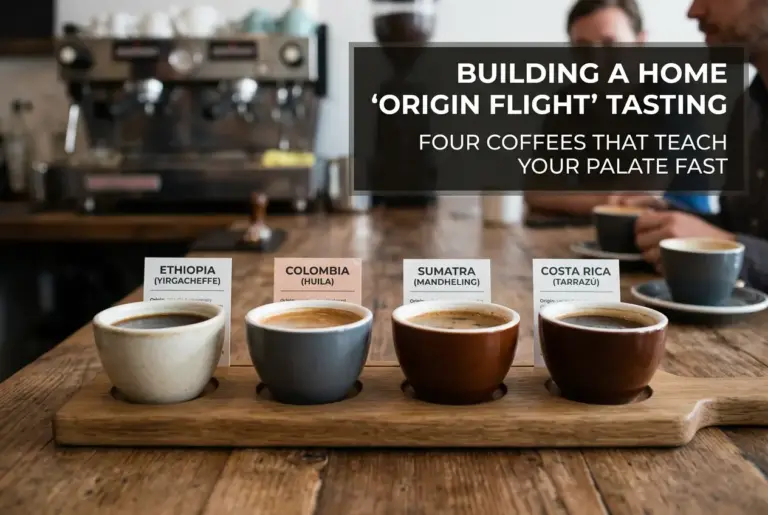
Building a Home “Origin Flight” Tasting: Four Coffees That Teach Your Palate Fast
» Discover special tips and stories about coffee